
Category
Web & API Development
Web platform standards, HTTP, REST and API design — the protocols, methods and architecture patterns behind building and modernising production web services.
-
SES tracking overrides land, but the bulk-send API can't do per-recipient consent
SES added per-request open and click tracking overrides on 21 Aug 2026. But the API reference says an override applies to every message in a SendBulkEmail call, so mixed-consent lists still need split sends.
 Manu Shukla
 -
Vercel custom metrics bill at $1.20 per million events, and the docs omit the plan gate
Vercel's new metric() function emits custom metrics from Vercel Functions. Every data point counts as one Observability event at $1.20 per million, with hard caps of 100 metrics per invocation and 50 attributes each.
Manu Shukla -
Bun 1.4 shipped on 20 August 2026: 5 breaking changes before you upgrade
Bun v1.4.0 was published at 14:07 UTC on 20 August 2026, 99 days after 1.3.14. It reports Node 26, changes five defaults, and Vercel gates the upgrade behind an explicit opt-in.
Manu Shukla -
Angular development company: scoping an enterprise front-end build in 2026
Angular v22 arrived on 3 June 2026 and changed the release cadence from six months to twelve. Zone.js has not shipped by default since v21, ng update refuses multi-major jumps, and Angular v20 leaves LTS on 28 November
Manu Shukla -
Node.js development company: 5 dates that decide your 2026 backend
Choosing a Node.js development company in 2026 is mostly a question about version support. Node.js 20 is unpatched, Node.js 24 leaves Active LTS in October, and the runtime's release model changes with version 27. Here
Manu Shukla -
Python development company: 6 checks before the 31 October 2026 cutoff
Python 3.10 loses security support in October 2026, the AWS Lambda python3.10 runtime deprecates on 31 October 2026, and Django 6.0 already requires Python 3.12 or newer. What to check before you hire.
Manu Shukla -
SaaS development company: multi-tenancy, billing and compliance in 2026
Tenant isolation, billing rates from 0.7% to 5%, and a DPDP compliance date of 13 May 2027. What a SaaS development company actually has to decide before writing code, with vendor list prices retrieved in August 2026.
Manu Shukla -
WordPress development company: 7 checks before the 19 August 2026 release
WordPress 7.1 lands 19 August 2026 with a deprecation wave across roughly 20 components, and Patchstack counted 11,334 new ecosystem vulnerabilities in 2025. What to check before you hire.
Manu Shukla -

Agent-ready websites in 2026: what a WebMCP build actually takes
Browser agents currently complete checkout by guessing at your DOM. WebMCP lets the page declare its tools instead. What that build involves, in what order, and where the DPDP questions start.
Manu Shukla -
Web development company in Gurgaon: what a serious 2026 build includes
Haryana's GCC Policy 2026 targets over 100 new centres and 30,000 jobs, and Gurugram is the centre of it. What a serious web development engagement includes in 2026, and the four things most Gurgaon quotes quietly leave
Manu Shukla -
WebMCP in Chrome 149: build agent tools without DOM scraping
Chrome 149 opened the WebMCP origin trial and the docs were revised on 7 August 2026. What both APIs do, what the permissions model blocks, and the order to ship tools in.
Manu Shukla -
Rspack 2.0 vs Rolldown: the 2026 migration decision for a legacy Webpack app
Rspack 2.0 shipped 22 April 2026 and Vite 8 with Rolldown shipped 12 March 2026. One keeps your webpack configuration, the other asks you to rebuild around it. Here is what the numbers actually support.
Manu Shukla -
EWS is blocked from 1 October 2026: set the allow list before September
Microsoft starts disabling Exchange Web Services on 1 October 2026 and finishes on 1 April 2027. The decision point is earlier: the end of August 2026 allow list deadline.
Manu Shukla -
Shopify's 26 August 2026 checkout deadline: the non-Plus migration guide with pixel code
Twenty days from Shopify's non-Plus Thank you and Order status deadline: what the Help Center says, working custom pixel code, the subdomain requirement that silently breaks consent, and why event counts drop.
Manu Shukla -
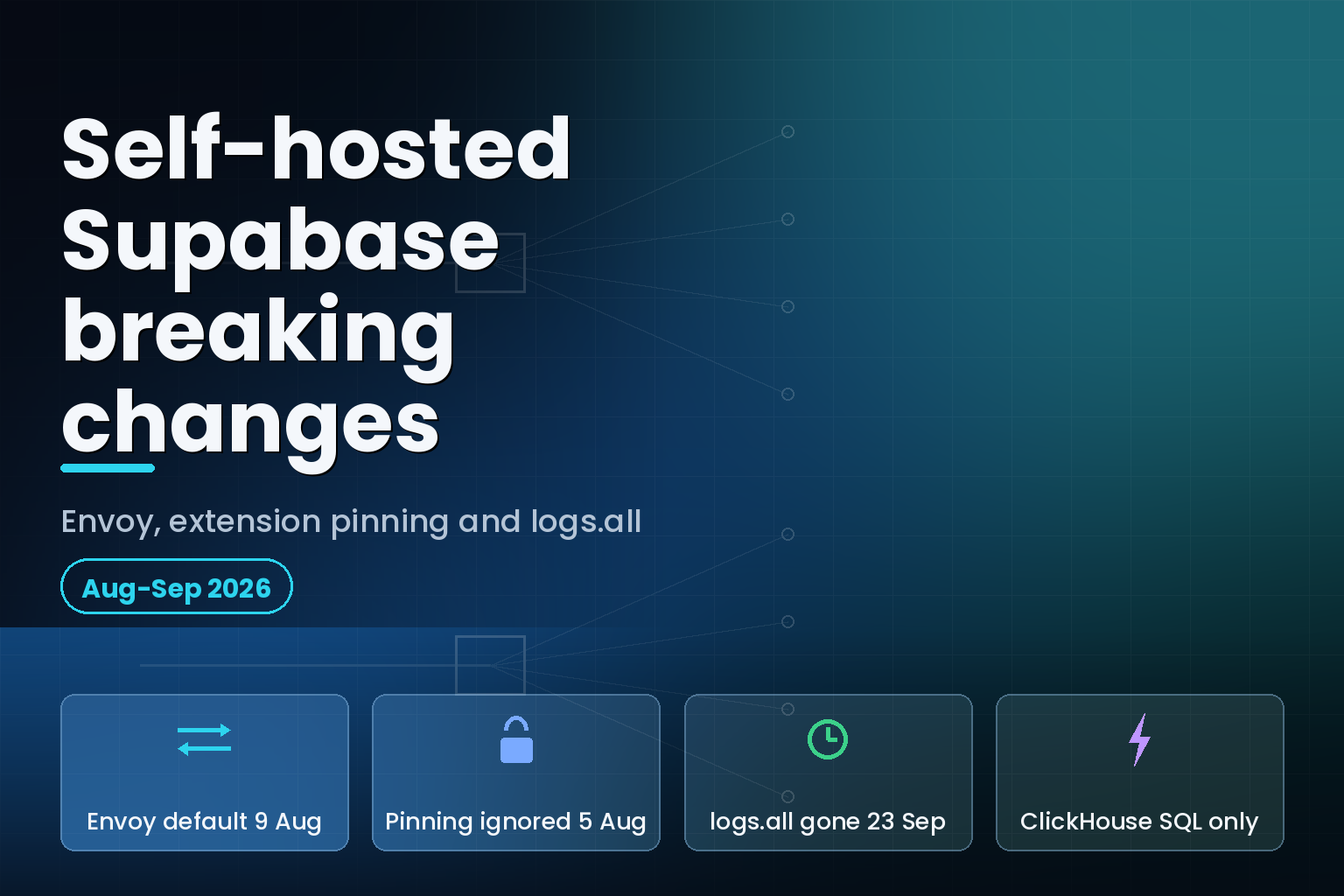
3 self-hosted Supabase breaking changes land between 5 August and 23 September 2026
Three separate breaking changes hit self-hosted Supabase inside seven weeks: the default API gateway swaps from Kong to Envoy, CREATE EXTENSION stops honouring pinned versions, and the logs.all Management API endpoint
Manu Shukla -
CVE-2026-34486: one moved line turned Tomcat's cluster encryption into RCE
The fix for a padding-oracle bug in Apache Tomcat's cluster encryption moved super.messageReceived() outside its try block. On the affected versions, a decrypt failure now forwards attacker bytes to a bare
Manu Shukla -
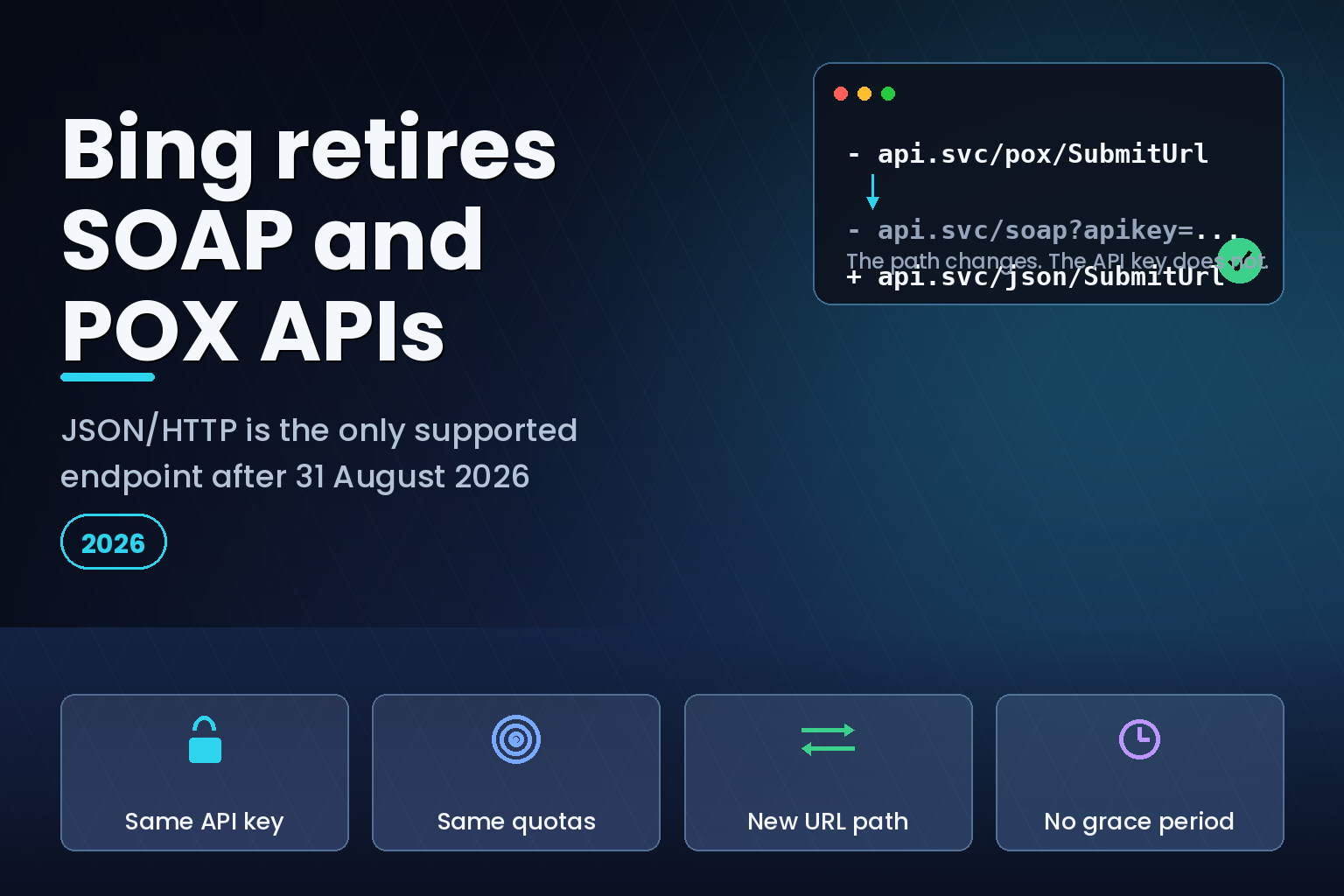
Bing SOAP and POX APIs retire 31 August 2026: the JSON migration checklist
Microsoft retires the Bing Webmaster Tools SOAP and POX/HTTP APIs on 31 August 2026. Your API key, quotas and method names survive. The URL path and the response envelope do not. Here is the cutover.
Manu Shukla -
CKYC 2.0 in 2026: 6 changes banks, NBFCs and fintechs must ship
CERSAI's CKYCRR 2.0 turns India's 103 crore KYC records into a real-time, API-first registry with Aadhaar masking and OTP consent. Here is what banks, NBFCs and fintechs actually have to build, in what order, and where
Manu Shukla -
RBI two-factor authentication: the 1 October 2026 cross-border CNP deadline and how to retrofit an existing app
RBI's authentication Directions took effect on 1 April 2026 and card issuers must validate cross-border CNP transactions by 1 October 2026. What the three principles require in code, which exemptions survive, and how
Manu Shukla -
11 scopes and one quote token: letting an AI agent register domains without a runaway bill in 2026
GoDaddy, Cloudflare and AWS now all register domains over an API, and coding agents can call them. The three purchase contracts differ in ways that decide whether a retry costs you nothing or charges you twice.
Manu Shukla -
Press Note 3 of 2026 opens FDI export e-commerce: the platform build checklist
India's 23 July 2026 Press Note 3 carves an export-only exception into the FDI ban on inventory-based e-commerce. The policy is short. The engineering behind a compliant export-inventory platform is not.
Manu Shukla -
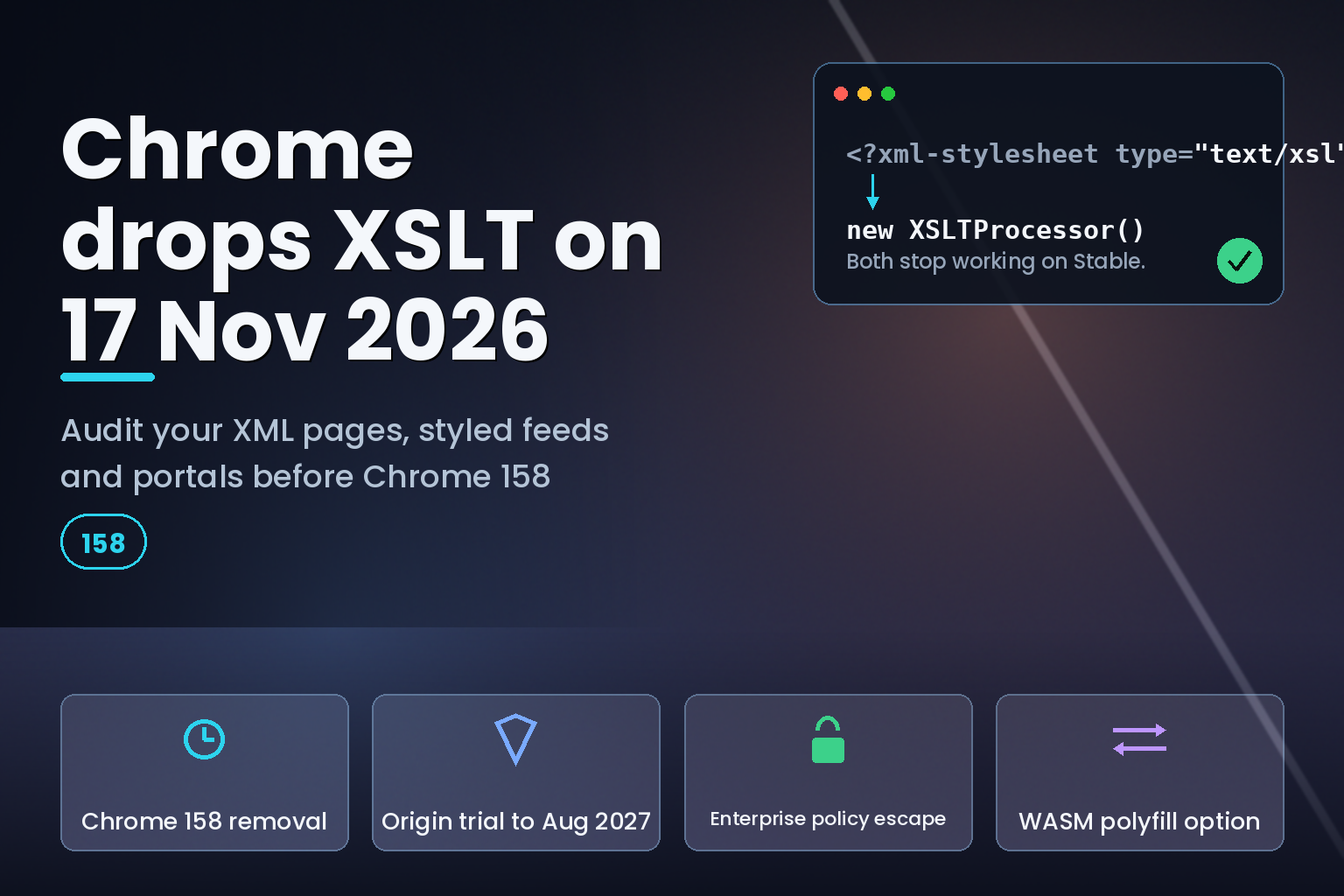
Chrome removes XSLT on 17 November 2026: audit and migrate before Chrome 158
Chrome 158 stops running XSLT on 17 November 2026, and the origin trial and enterprise policy escape hatches expire on 17 August 2027. Here is how to find every XSLT dependency you own and choose a migration path
Manu Shukla -
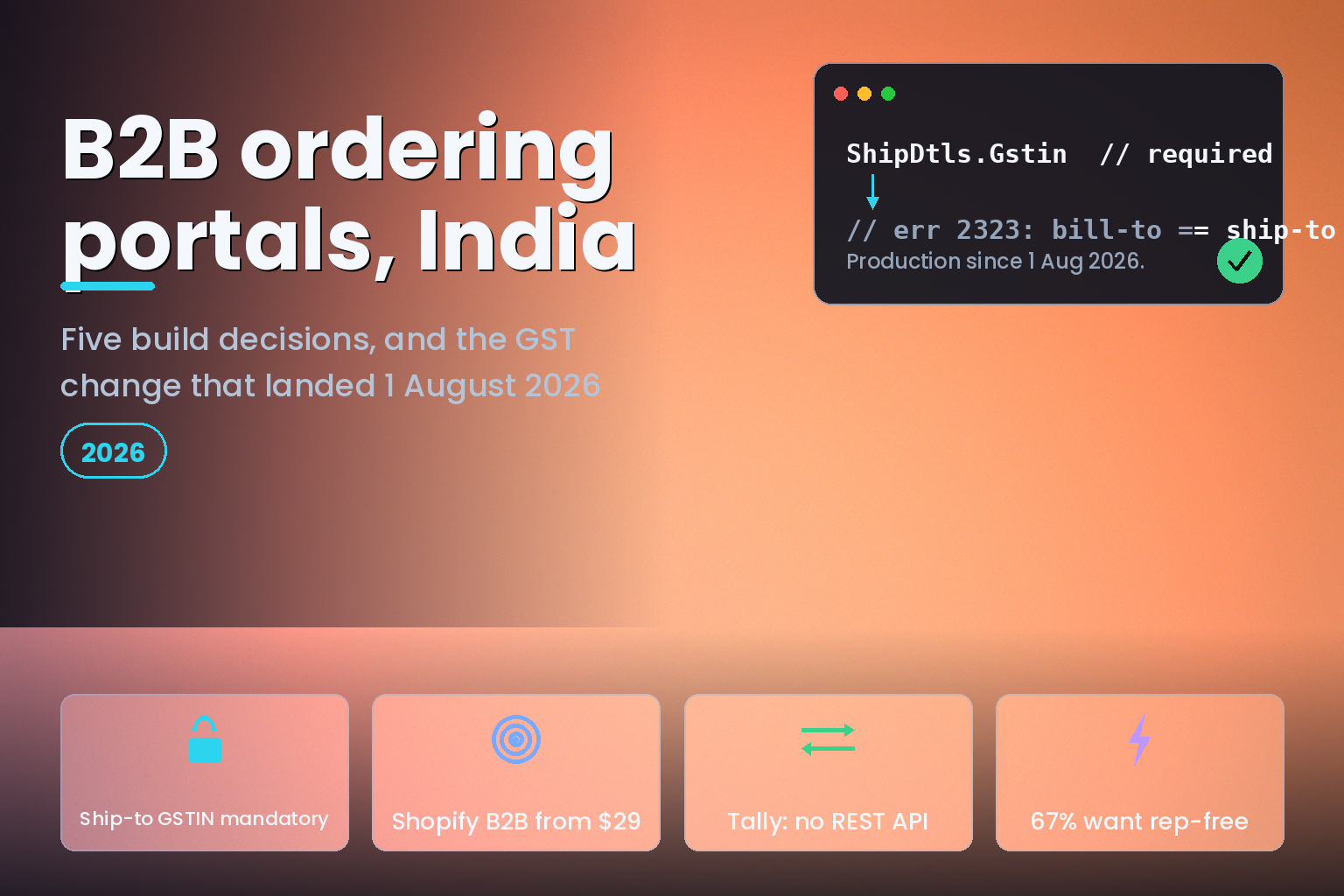
B2B ordering portals in India: 5 build decisions and the 1 August 2026 GST change
Ship-to GSTIN went mandatory on 1 August 2026, Shopify B2B is no longer Plus-only, and Tally still has no REST API. Five decisions that set what an Indian dealer portal costs to build.
Manu Shukla -
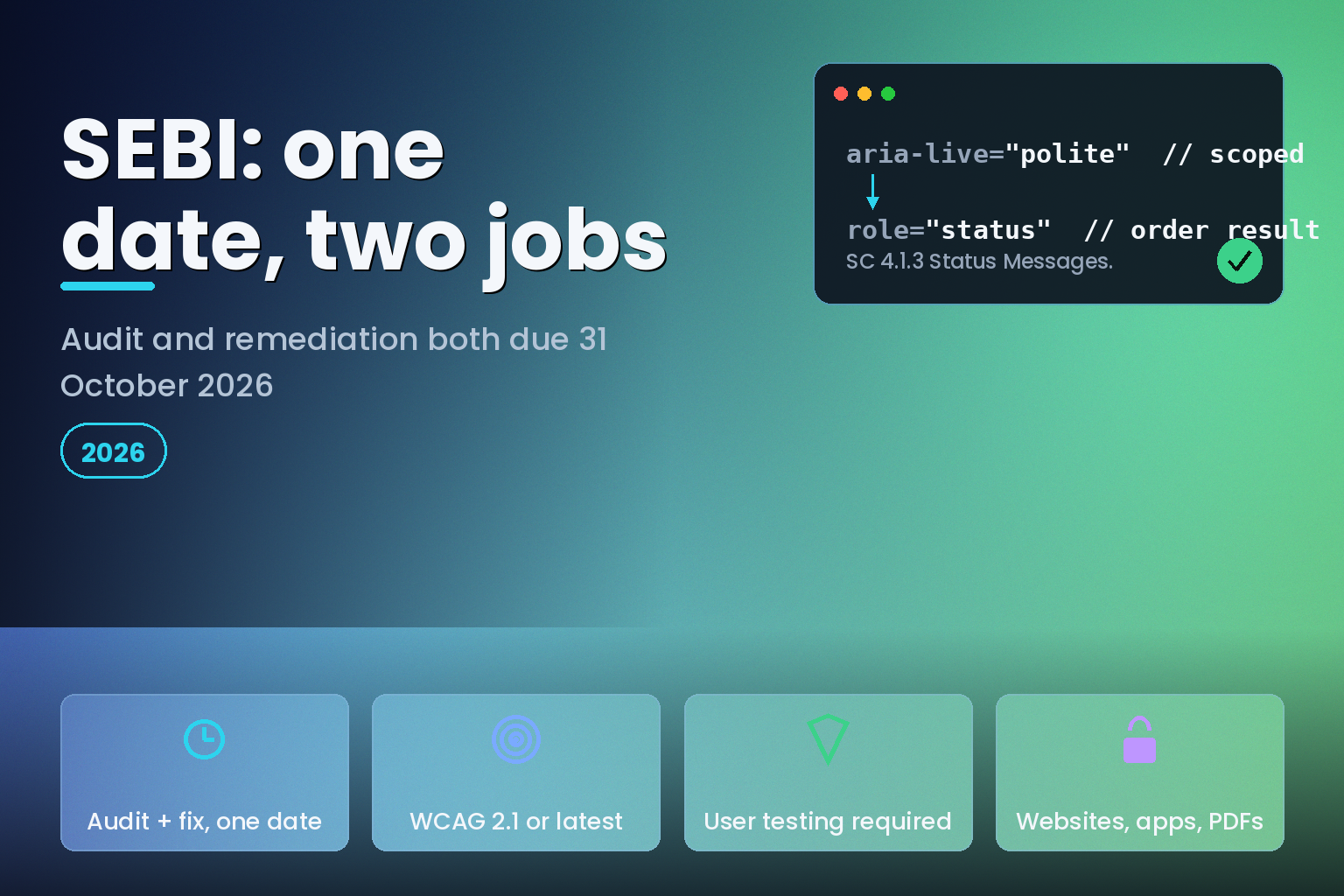
SEBI's 31 October 2026 accessibility deadline: audit and remediation now share one date
SEBI's extension collapsed two milestones into one 31 October 2026 date: audit and remediation, both. What the circulars actually require, and the WCAG criteria that fail on trading platforms.
Manu Shukla -
Self-Host Next.js Without Vercel in 2026: A Production Guide to the Stable Adapter API
Next.js 16.2's stable Adapter API and OpenNext let you run Next.js on AWS, Cloudflare, or Netlify instead of Vercel. The options, the caching that breaks at scale, and the 2026 cost math.
Manu Shukla -
8 Slack SDK packages went major on 14 July 2026: the axios-to-fetch changes that break your bot
On 14 July 2026 Slack shipped new majors across eight Node SDK packages. Five only need Node 20. Three rewrote the HTTP transport, removed the agent option, and changed how errors surface.
Manu Shukla -
Neon vs Supabase in 2026: scale-to-zero cost, branching, and auth compared
A senior engineer's 2026 comparison of Neon and Supabase: scale-to-zero economics, instant branching, built-in auth, real pricing in dollars, and which serverless Postgres fits your SaaS backend.
Manu Shukla -
Next.js 16.3 Turbopack build cache: cut CI build time up to 5.5x (2026)
Next.js 16.3 brings Turbopack's persistent file-system cache to next build and adds an experimental Rust React Compiler. Here is how to wire both into CI, the real numbers from Vercel, and where they break.
Manu Shukla -
Temporal Swift SDK: build durable workflows in server-side Swift (2026)
Apple open-sourced the Temporal Swift SDK on 10 November 2025, and 1.1.0 shipped on 21 May 2026. This guide explains durable execution, the workflow-activity-worker model, determinism rules, and shows a working Swift
Manu Shukla -
Deno vs Bun vs Node.js in 2026: the production backend runtime decision
Node.js still runs most of the world's backends, but Deno 2.9 and Bun 1.3.14 have removed the compatibility excuse. A senior engineer's decision framework, with 2026 benchmarks, npm compatibility, security defaults
Manu Shukla -
REST vs GraphQL vs gRPC for AI agent tools: the 2026 token-cost decision
The protocol your agent's tools speak has a cost the usual API debate ignores: the tokens each schema burns inside the model's context. A 2026 decision guide across REST, GraphQL and gRPC, with token math, latency
Manu Shukla -
Astro 6 vs Next.js 16 for content sites in 2026: speed, hosting cost, and when to switch
Cloudflare bought Astro in January 2026 and Astro 6 shipped in March. For content-heavy sites the choice against Next.js 16 comes down to JavaScript weight, hosting cost, and how much app logic you actually run.
Manu Shukla -
2026 guide to Azure Storage SAS in Rust: keyless user-delegation tokens
Azure's first Rust client capability for Shared Access Signatures landed in July 2026 as azure_storage_sas 0.1.0. It builds user-delegation SAS signed by Entra ID, with no account keys in your code. Here is how it
Manu Shukla -
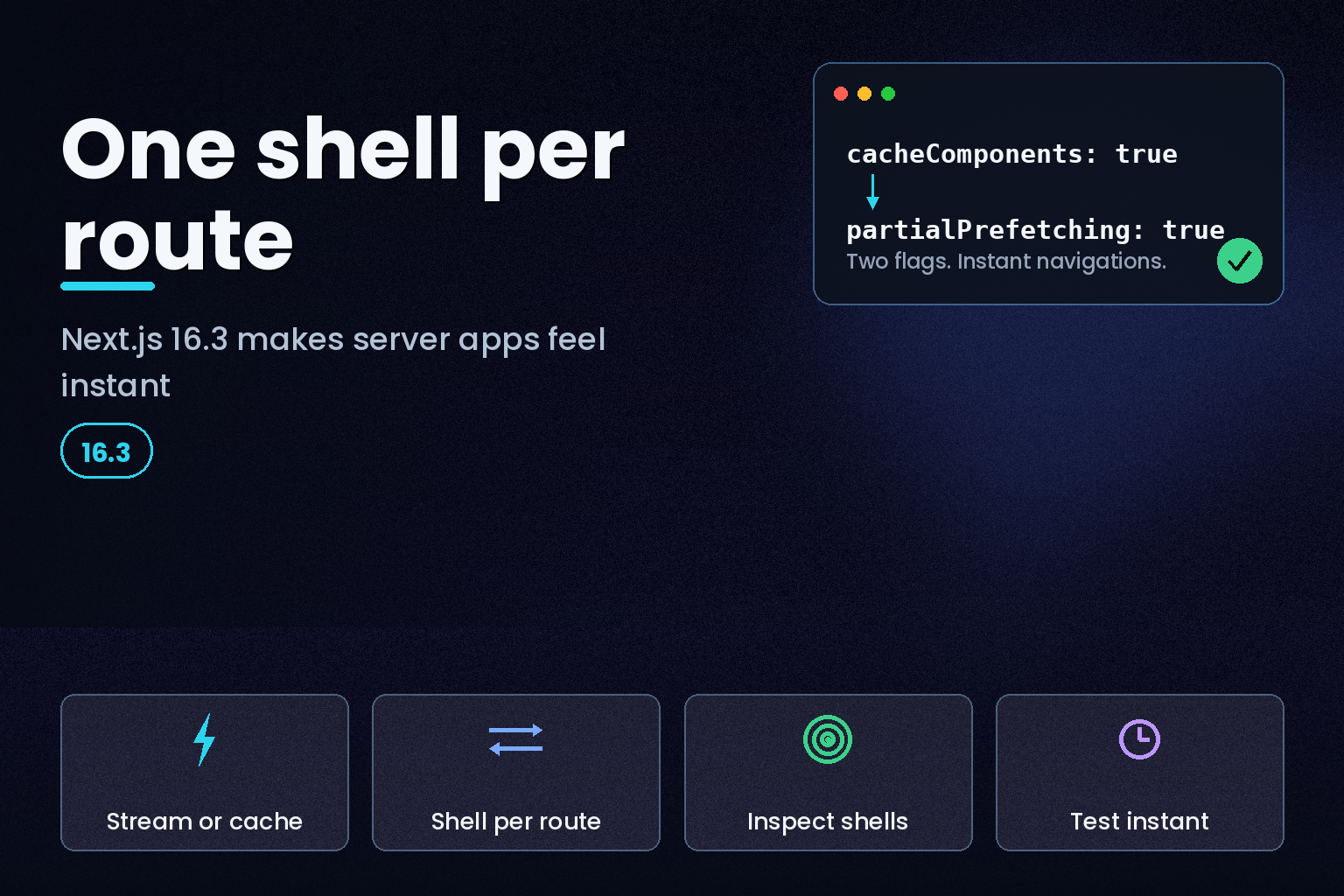
Next.js 16.3 Instant Navigations: how the per-route shell works and when to adopt it
Next.js 16.3 Preview adds Instant Navigations: instant SPA-like page shells on a server-driven app, with one reusable shell prefetched per route instead of one per link. Here is how Cache Components and Partial
Manu Shukla -
Passkeys in India (2026): add WebAuthn login to iOS and Android apps
Visa Payment Passkey is live in India and the RBI's authentication directions took effect on 1 April 2026. A build guide for adding FIDO2 passkeys to iOS and Android apps, with the SMS OTP decision made plain.
Manu Shukla -
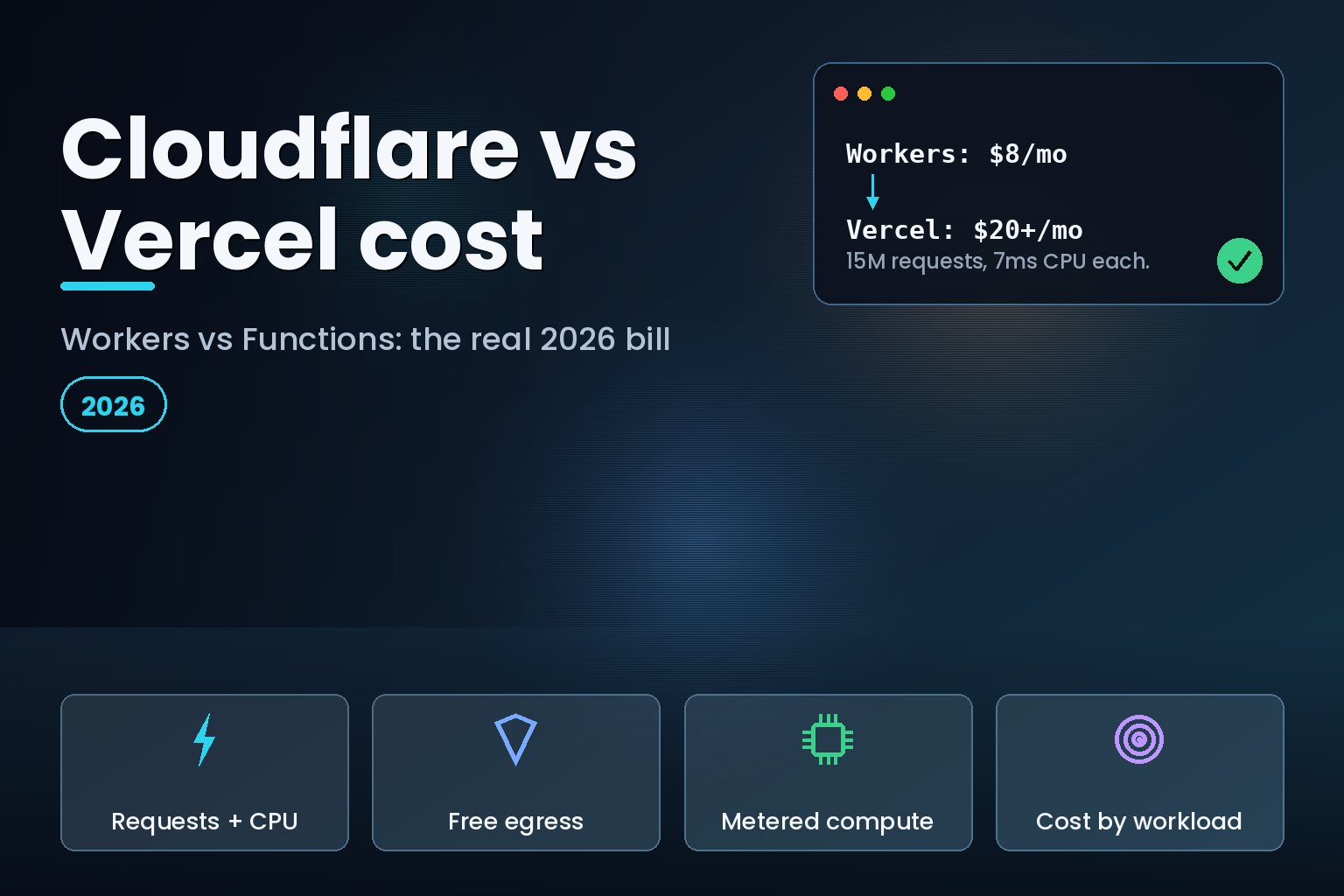
Cloudflare Workers vs Vercel Functions: the real 2026 cost for a production app
Cloudflare Workers bills $5/month plus requests and CPU with no egress; Vercel Pro is $20 per seat plus metered compute and transfer. A 2026 cost breakdown with worked monthly examples.
Manu Shukla -
Node.js 25 permission model: scope --allow-net and --allow-fs for production (2026)
The Node.js permission model gained --allow-net in v25 (October 2025). This guide shows how to scope file, network and process access in production, using the 2026 npm supply-chain attacks as motivation.
Manu Shukla -
x402 joined the Linux Foundation: should you build agent payments on it in 2026?
On 14 July 2026 the Linux Foundation launched the x402 Foundation with 40 members, from AWS to Visa. We compare x402 to Google's AP2 and OpenAI's ACP, and give an adopt-now-versus-wait call by use case.
Manu Shukla -
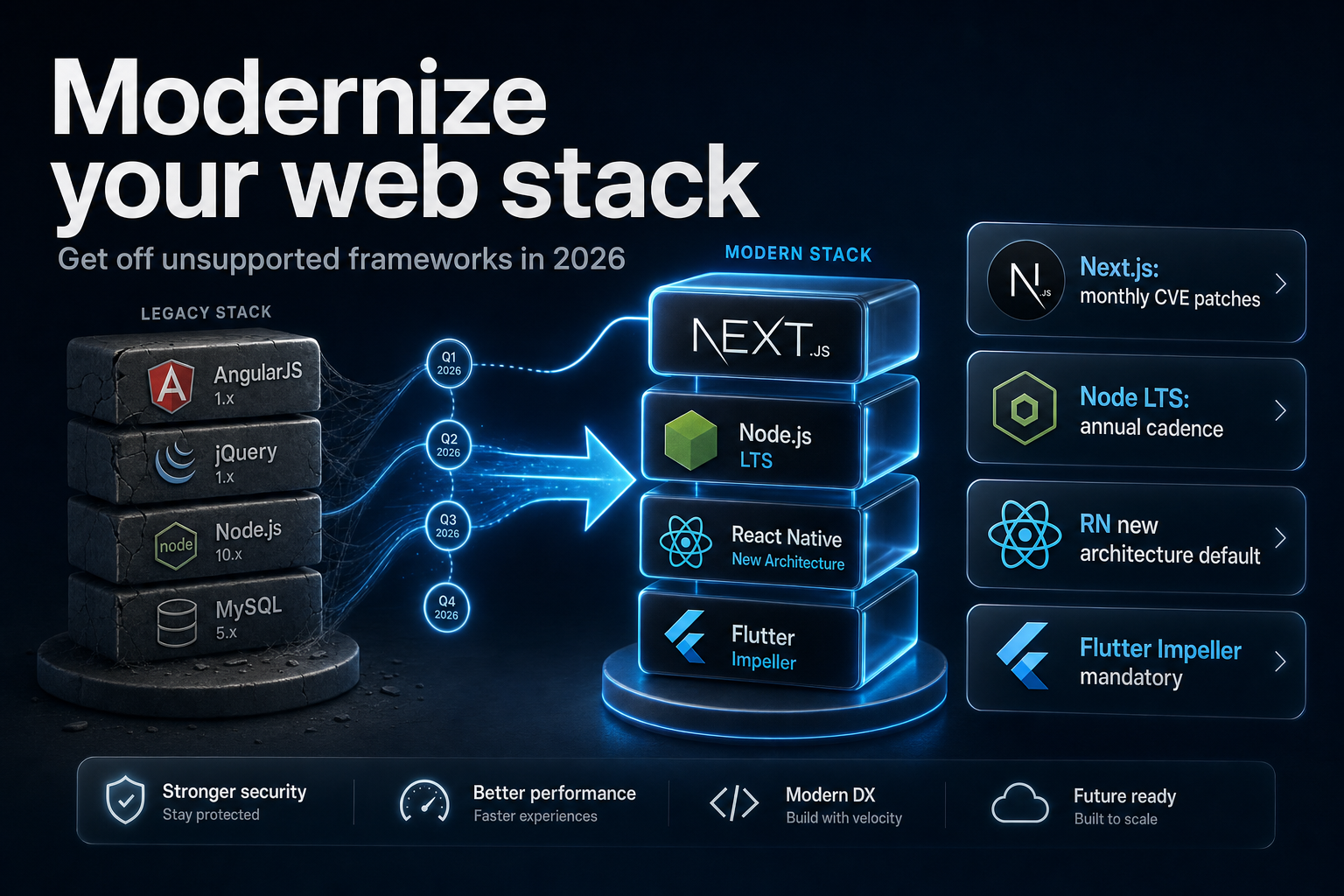
Application modernization in 2026: escape unsupported Next.js, Node, React Native and Flutter
Node 18 and 20 have reached end of life, Next.js 15 ends October 21, 2026, and React Native, Flutter and iOS enforce migrations this year. A 2026 playbook for modernizing an aging web or mobile stack.
Manu Shukla -
Node.js July 2026 security release: your fast-patch playbook and version matrix
On July 27, 2026, Node.js patched HIGH-severity flaws across the 26.x, 24.x and 22.x lines, days after Next.js shipped its own. Here is which version to run and how to patch fast without breaking production.
Manu Shukla -
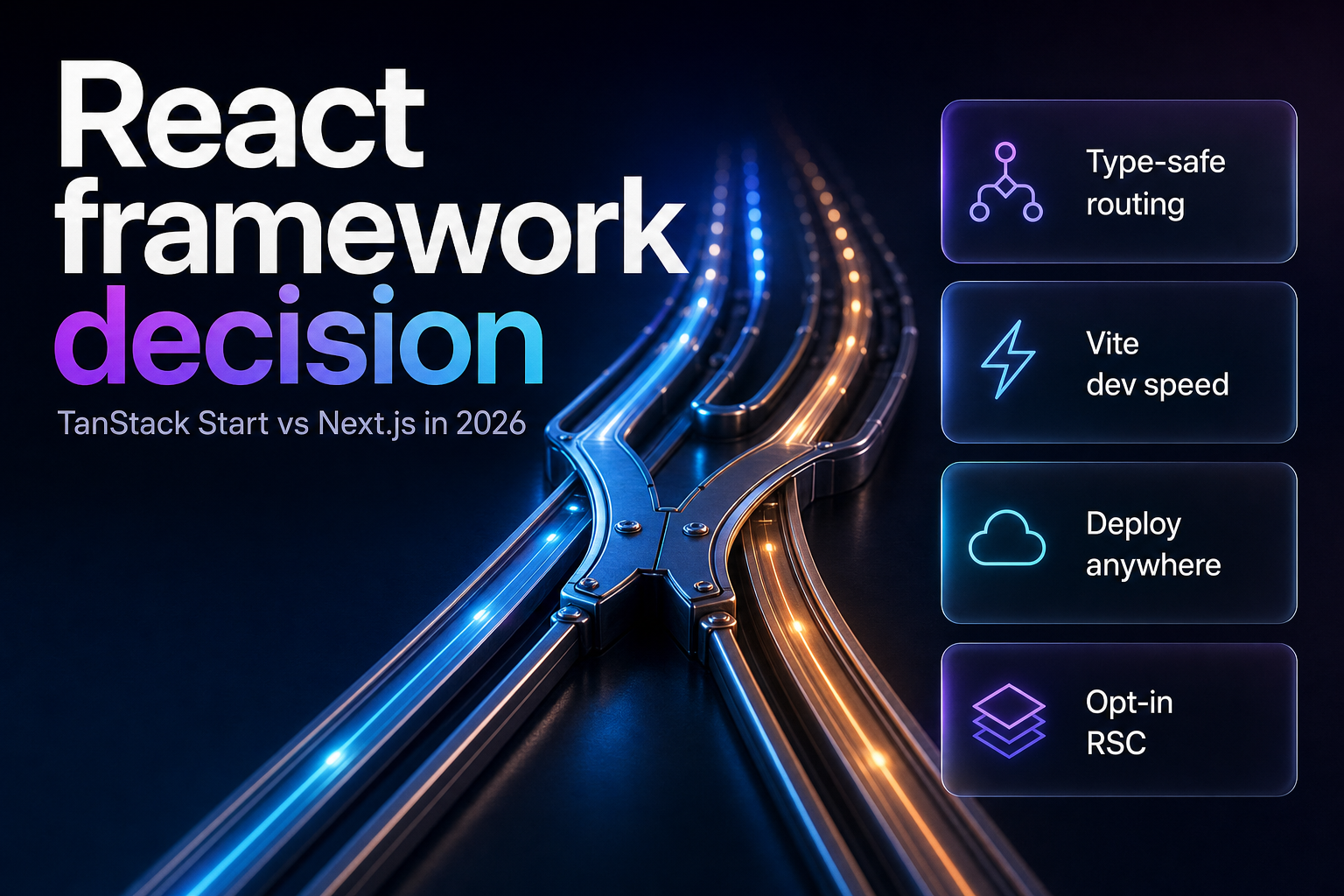
TanStack Start vs Next.js 16 in 2026: which React framework wins for production SaaS
Next.js 16 made Turbopack the default and rebuilt caching around the use cache directive. TanStack Start reached its v1 release candidate on Vite and TanStack Router. Here is how the two React frameworks actually differ
Manu Shukla -
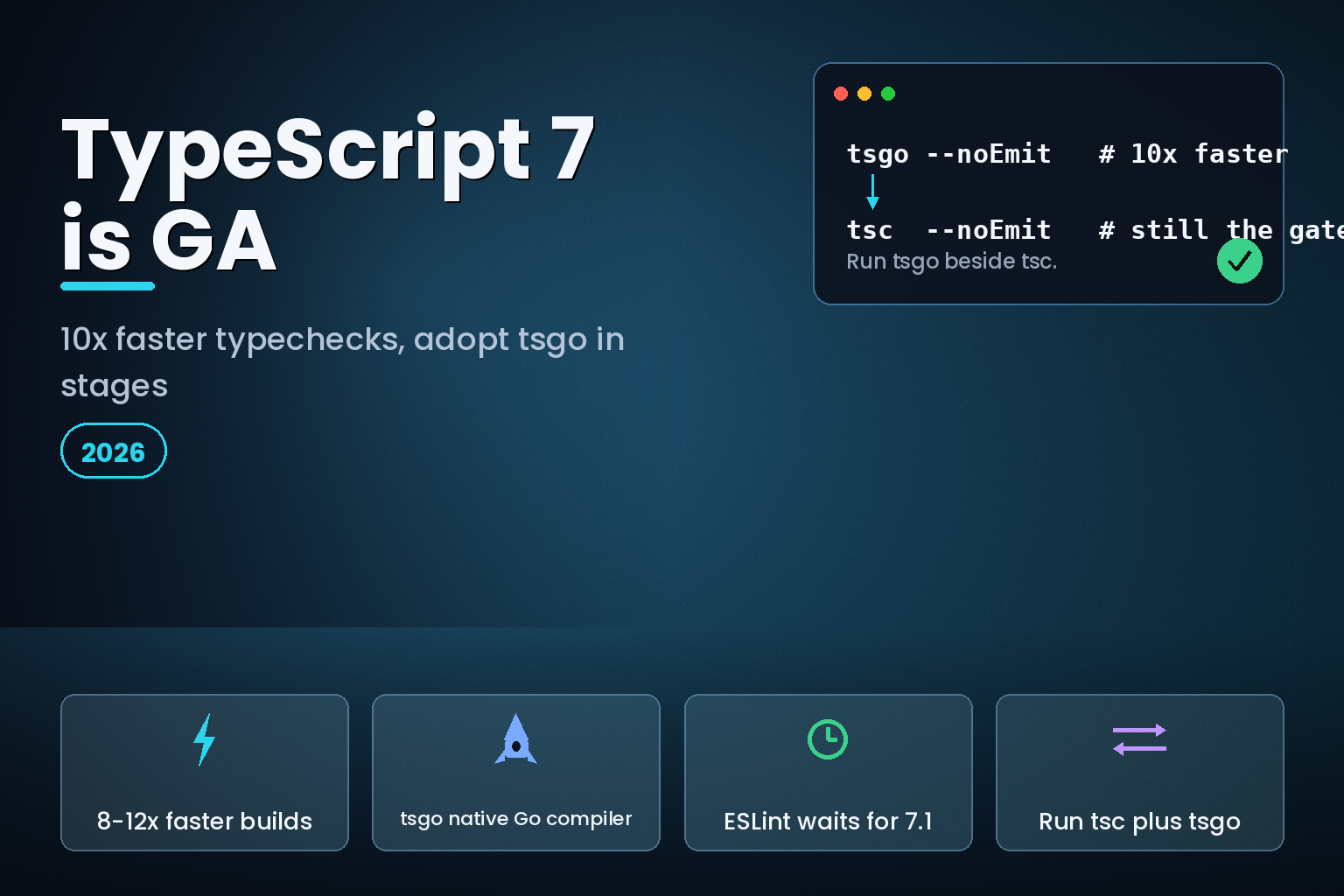
TypeScript 7.0 is GA: a 10x compiler to adopt in stages (2026)
TypeScript 7.0 is generally available and 8-12x faster, but typescript-eslint, ts-jest and Vue, Svelte and Astro template checks cannot run on it until 7.1. Here is a phased plan to get the speed now without breaking
Manu Shukla -

How to charge AI agents for your API and content in 2026: x402 and Cloudflare's Monetization Gateway
The x402 protocol and Cloudflare's Monetization Gateway let APIs, SaaS and publishers charge AI agents per request in stablecoins. A 2026 guide to pricing models, setup, the HTTP 402 flow, and when to charge, block
Manu Shukla -
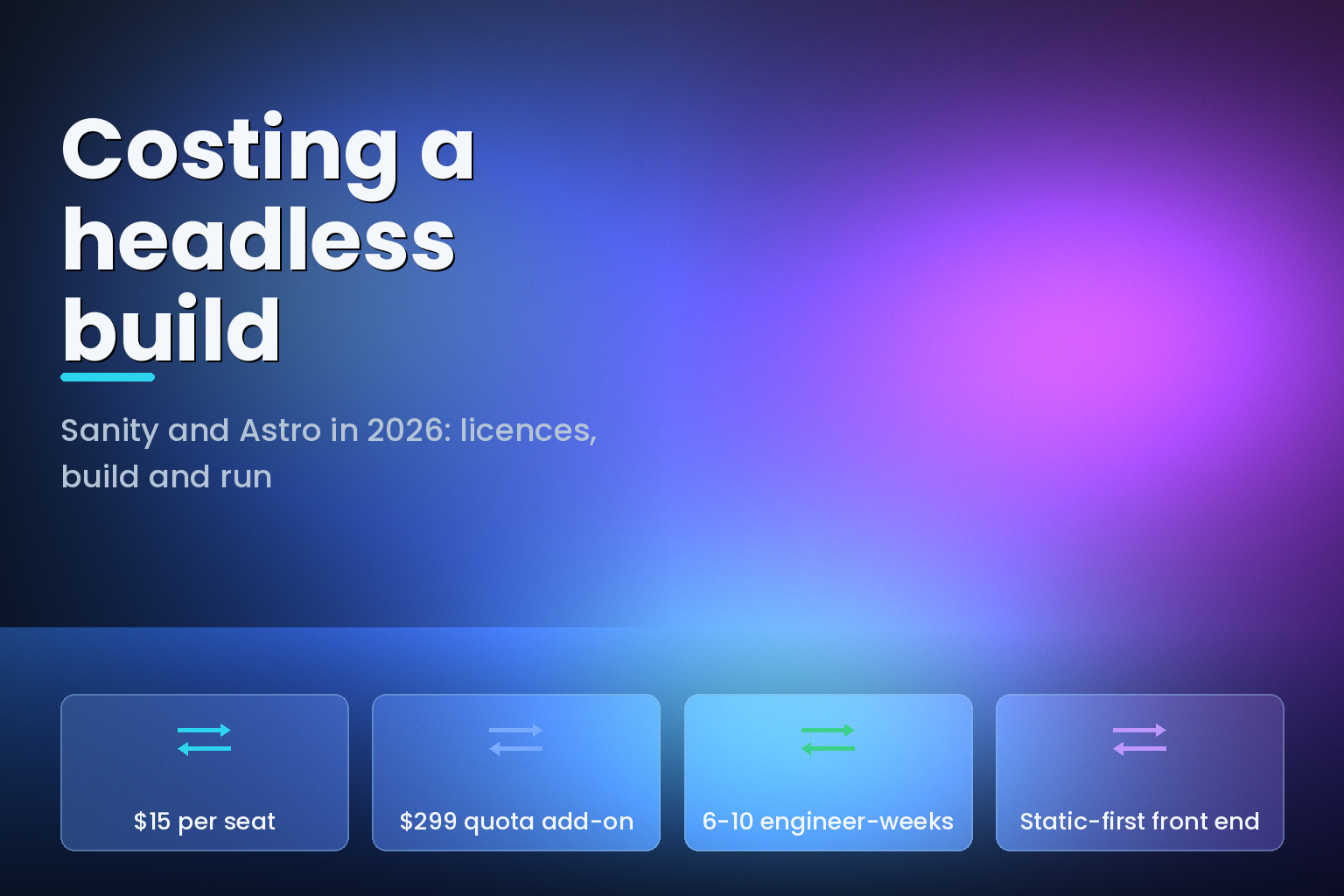
$15 a seat plus the build: what a Sanity and Astro content platform costs in 2026
Headless CMS licence pages are easy to read and easy to misread. Sanity Growth is $15 per seat per month with 25k documents; the increased-quota add-on is another $299. Here is what a Sanity and Astro build actually
Manu Shukla -
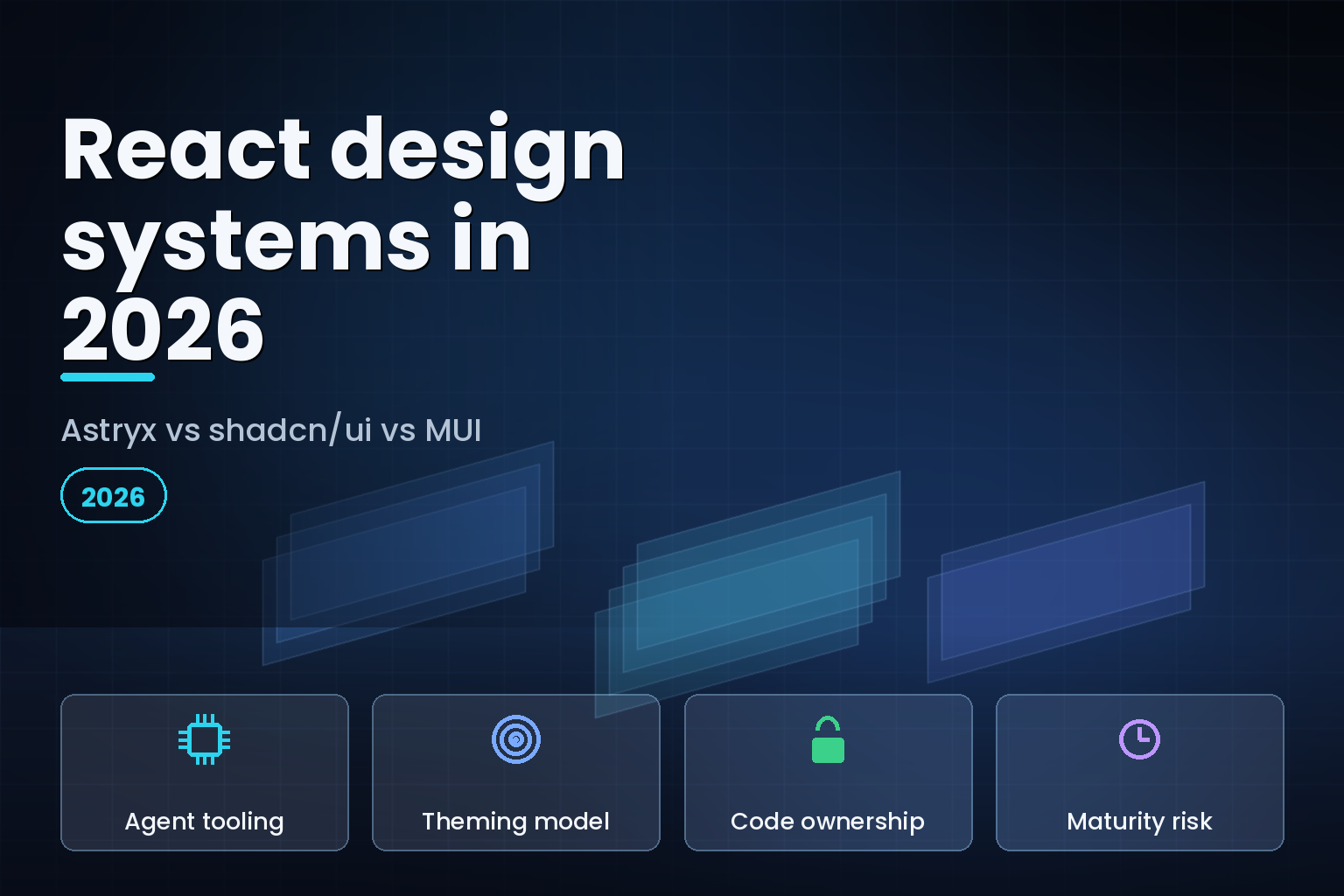
Astryx vs shadcn/ui vs MUI: 3 React design systems compared for 2026
Astryx, shadcn/ui and MUI now sit at 9.1k, 119k and 98.4k GitHub stars. Only one is Beta, only one has a price tag, and all three ship agent tooling. Here is the decision, with the numbers behind it.
Manu Shukla -
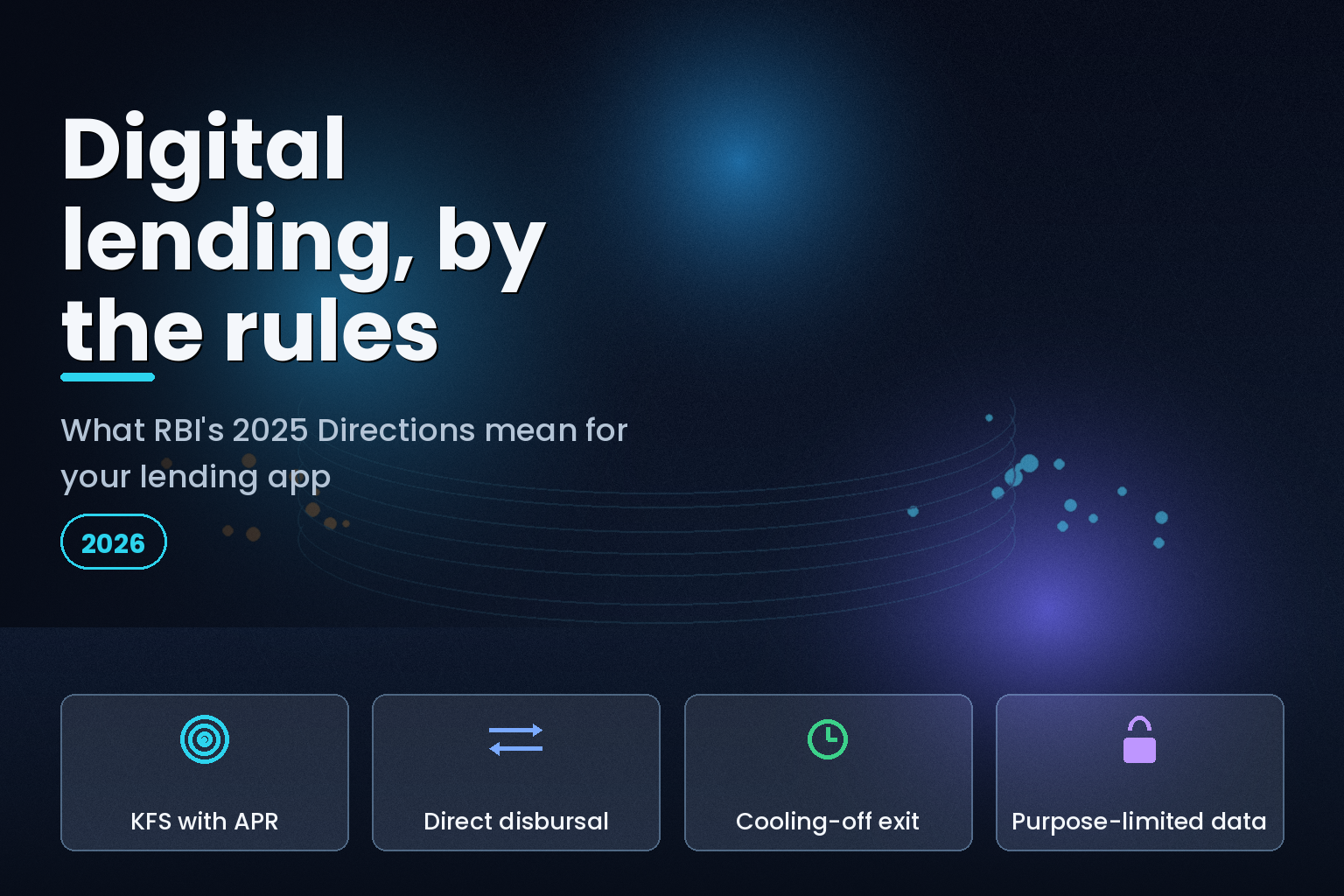
RBI Digital Lending Directions 2025: the 11-point engineering checklist for lending apps
The Reserve Bank of India (Digital Lending) Directions, 2025 are not a policy document you hand to legal. They specify what your app may read from a phone, where data may sit, and how money must move. Here is the build
Manu Shukla -
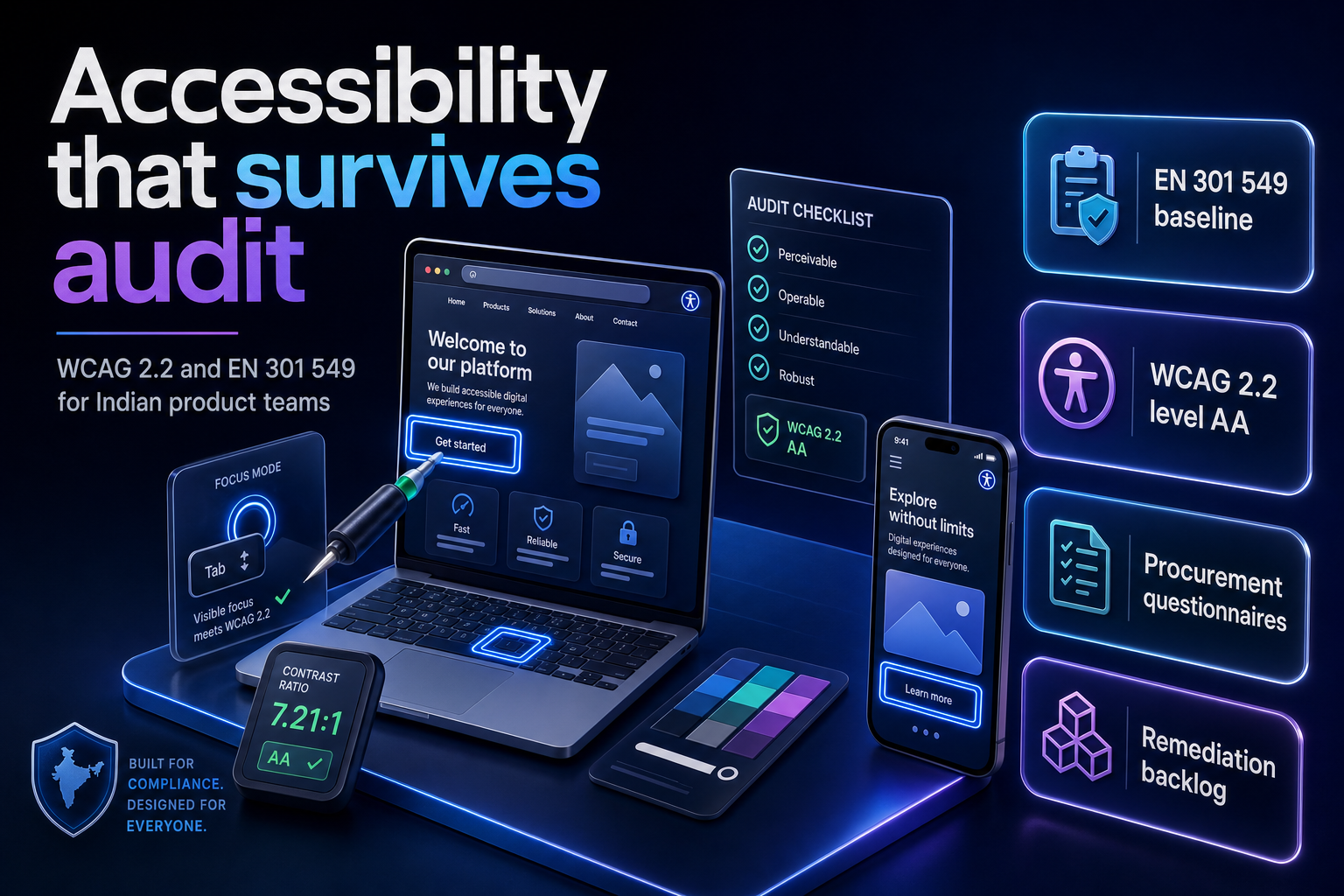
Accessibility compliance for Indian SaaS: 6 WCAG 2.2 criteria that decide EU deals in 2026
Most Indian B2B SaaS products are not legally in scope for the European Accessibility Act. Their buyers ask for WCAG 2.2 conformance anyway. Here is how to tell the two apart, and what an audit that survives procurement
Manu Shukla -

Core Web Vitals in 2026: how redBus cut INP 72% and lifted sales 7%
The 200 ms INP threshold has not moved, whatever the 2026 update posts claim. Here is what Google's own documentation says, what redBus changed to lift sales by 7%, and how to find the same wins in your own stack.
Manu Shukla -
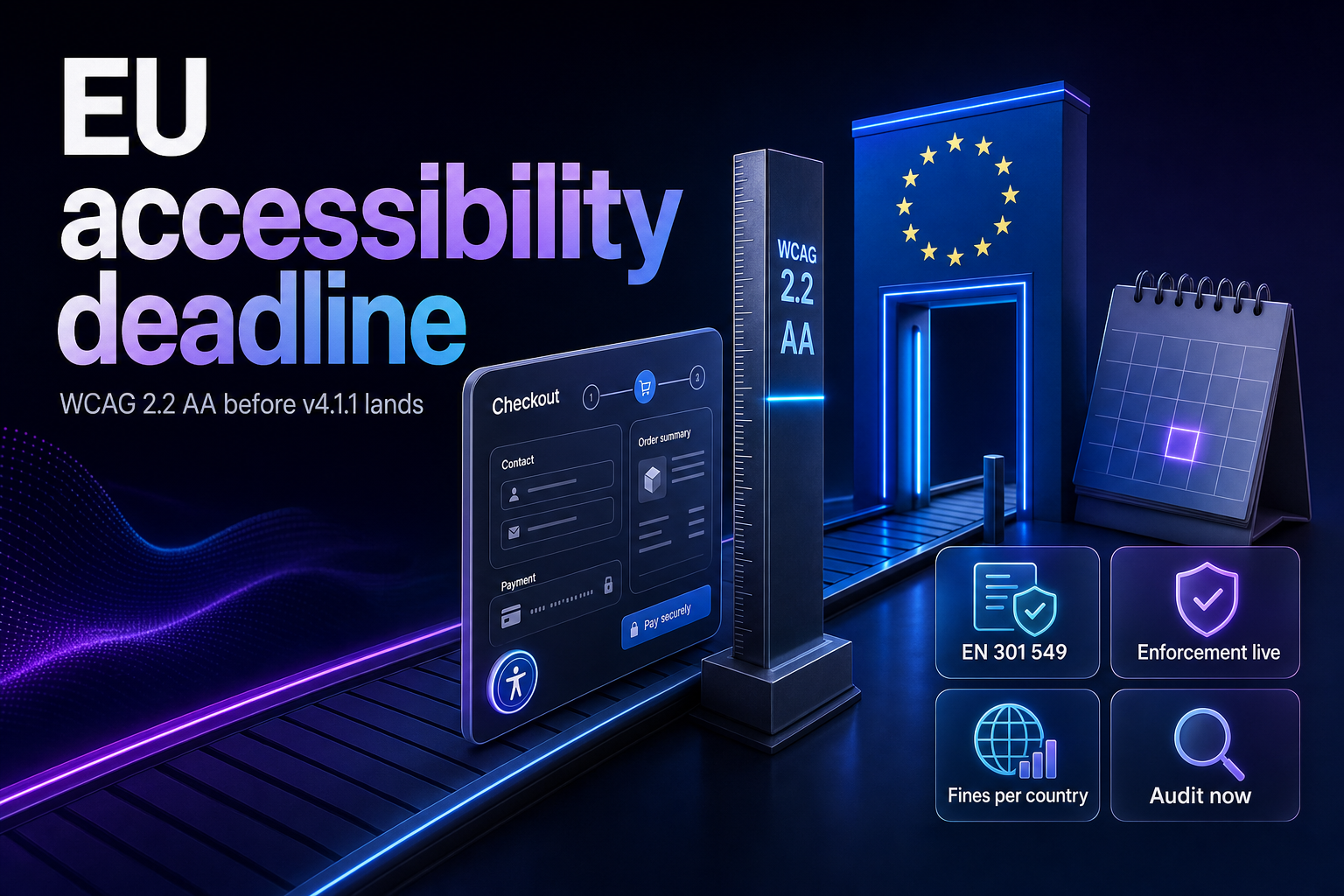
EU Accessibility Act 2026: 5 compliance claims that are wrong, and what the legal text says
Compliance guides tell Indian teams that EN 301 549 v3.2.1 is the EAA's harmonised standard, that v4.1.1 lands in October 2026, and that non-EU sellers must appoint an EU representative. The legal text says otherwise
Manu Shukla -
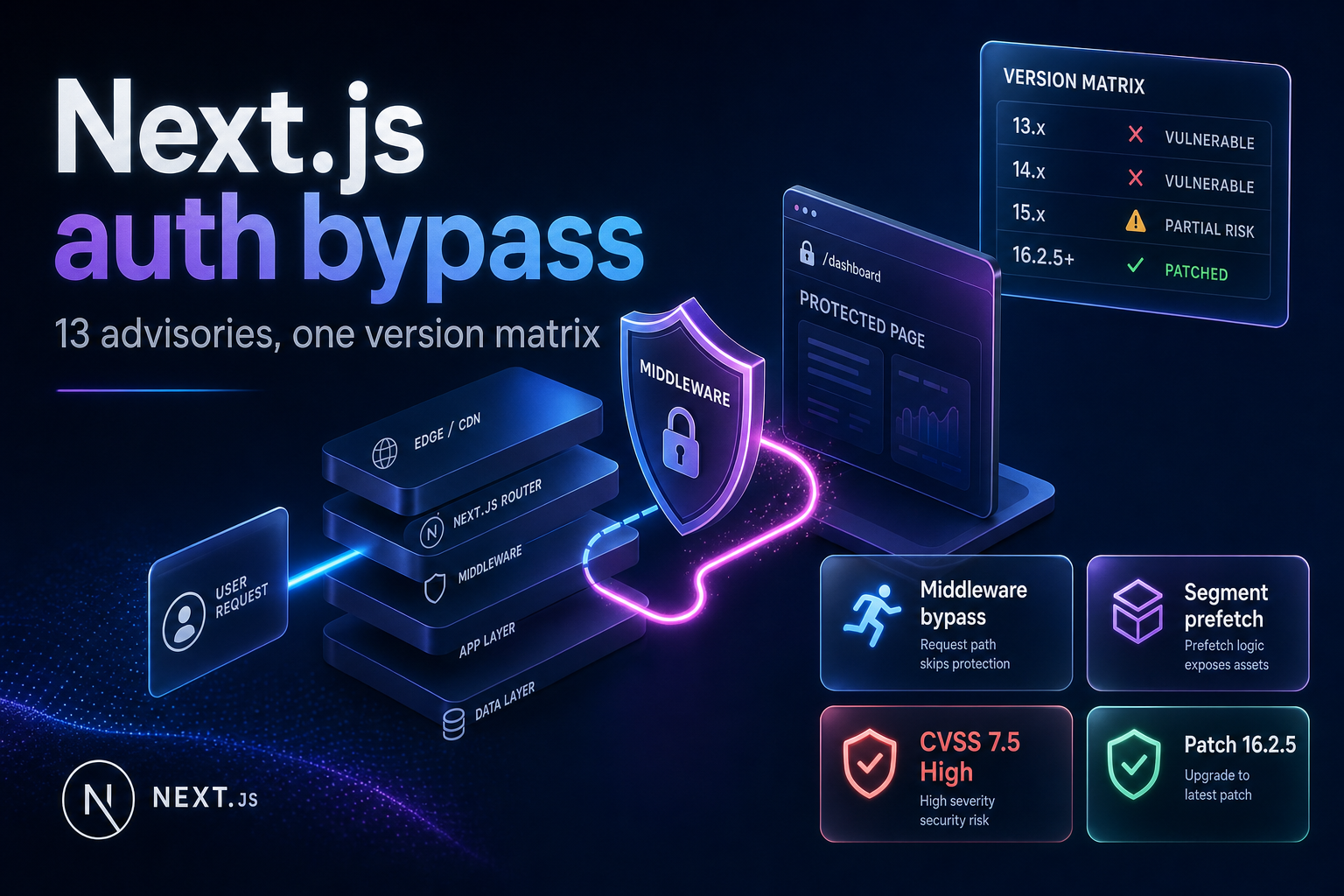
13 Next.js security advisories: which ones break middleware auth and the exact versions that fix them
Four of the 13 Next.js advisories published in May 2026 let attackers reach protected pages without passing middleware. Patching to 16.2.5 does not close all of them, and the reason is Turbopack.
Manu Shukla -

RBI's 1 October 2026 cross-border CNP deadline: what card issuers must build in 73 days
The RBI authentication directions took effect on 1 April 2026, but the cross-border card-not-present provisions have their own date: 1 October 2026. Two separate mechanisms are due, plus BIN registration with the card
Manu Shukla -
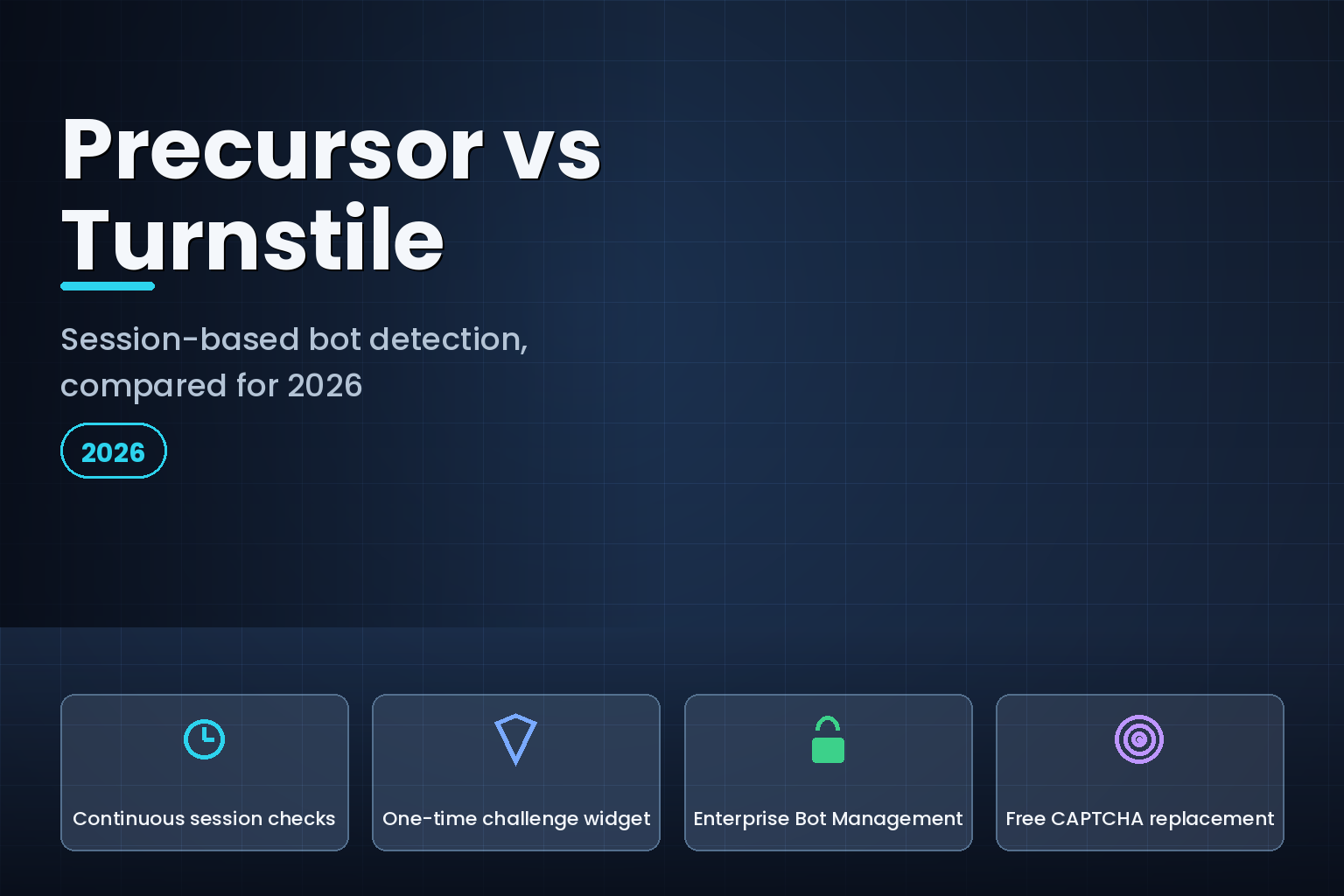
Cloudflare Precursor vs Turnstile: which bot defense fits your 2026 stack?
Precursor is Cloudflare's continuous, session-level bot detection for Enterprise Bot Management, live since July 13, 2026. Turnstile is the free challenge widget. This guide shows which to switch on, and when to run
Manu Shukla -
Programmable digital rupee in 2026: a CBDC integration playbook for India fintech builders
The digital rupee stopped chasing UPI on volume and became programmable money. Here is how fintech teams integrate e-rupee wallets, conditional welfare tokens, offline NFC and cross-border CBDC rails in 2026.
Manu Shukla -
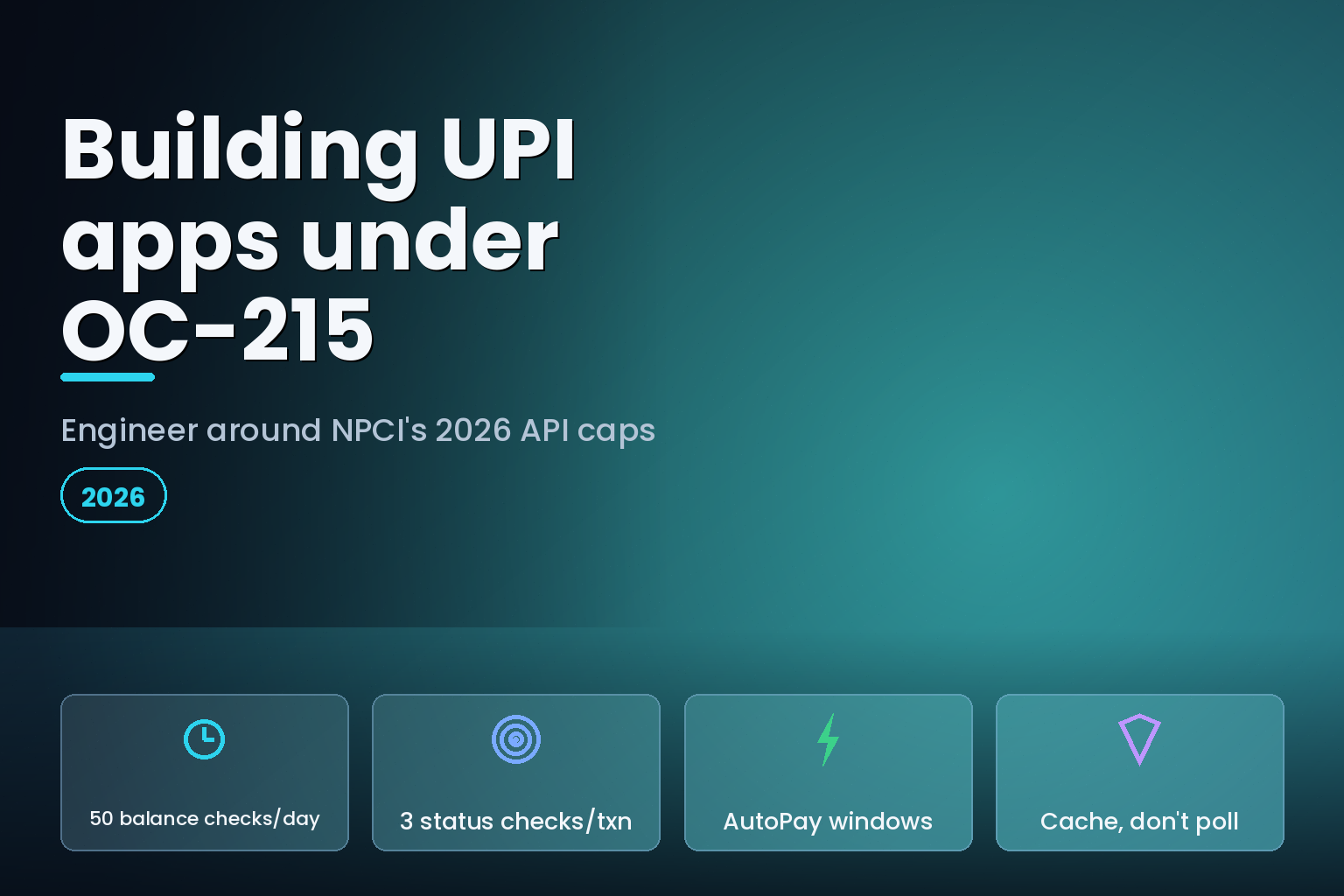
UPI's 50 balance-checks-a-day cap: engineering your app around NPCI OC-215 in 2026
NPCI's OC-215 guidelines cap balance checks at 50 per day, account lists at 25, and status checks at 3 per transaction. Here is how to re-architect a UPI app around the limits: caching, webhooks over polling, AutoPay
Manu Shukla -

Agentic UPI payments: how to prepare your app for NPCI's Unified Agent Protocol (2026)
India's NPCI is designing a Unified Agent Protocol so AI agents can be registered and authorised to make UPI payments, pending RBI approval. For fintech teams, prep starts now: identity, limits and logs.
Manu Shukla -

Account Aggregator integration in 2026: consent architecture, DPDP overlap and what the SRO changes
India's Account Aggregator network spans 1,120 regulated entities and 450 million fulfilled consents. A technical guide to the consent artefact, ReBIT APIs, FIU eligibility and the DPDP consent manager overlap.
Manu Shukla -
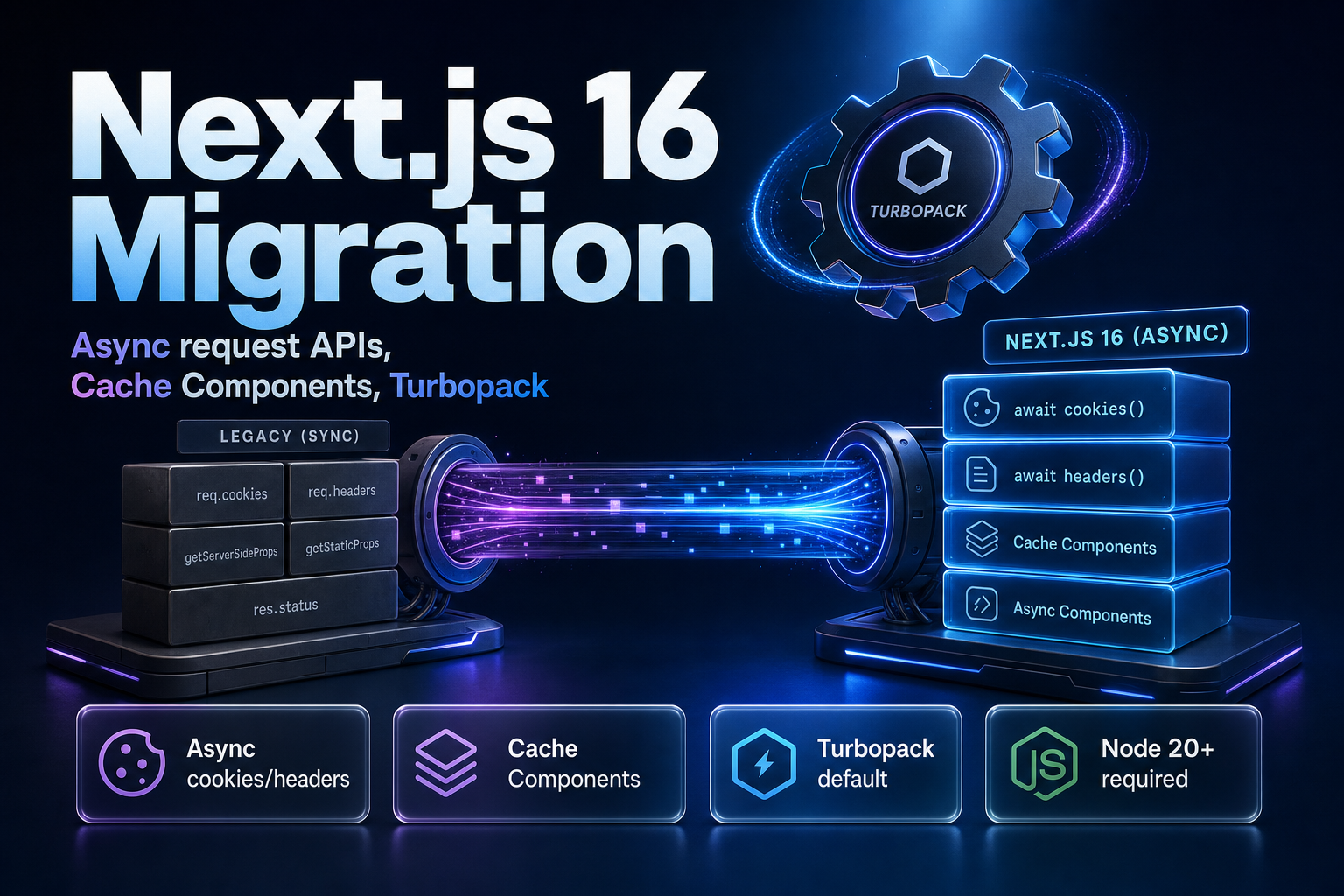
Next.js 16 migration: async request APIs, Cache Components and proxy.ts, with code
Next.js 16 shipped 21 October 2025 and turns Turbopack on by default, deletes synchronous request APIs, and renames middleware. Here is every breaking change that will stop your build, with the codemods that fix them.
Manu Shukla -

WordPress 7.1 ships 19 August 2026: the iframed editor, apiVersion 3, and why most blocks need no changes
WordPress 7.1 is set for 19 August 2026, with the iframed editor planned for block themes first. apiVersion 3 changes no API, and most blocks need no changes. What actually breaks, and how to test.
Manu Shukla -
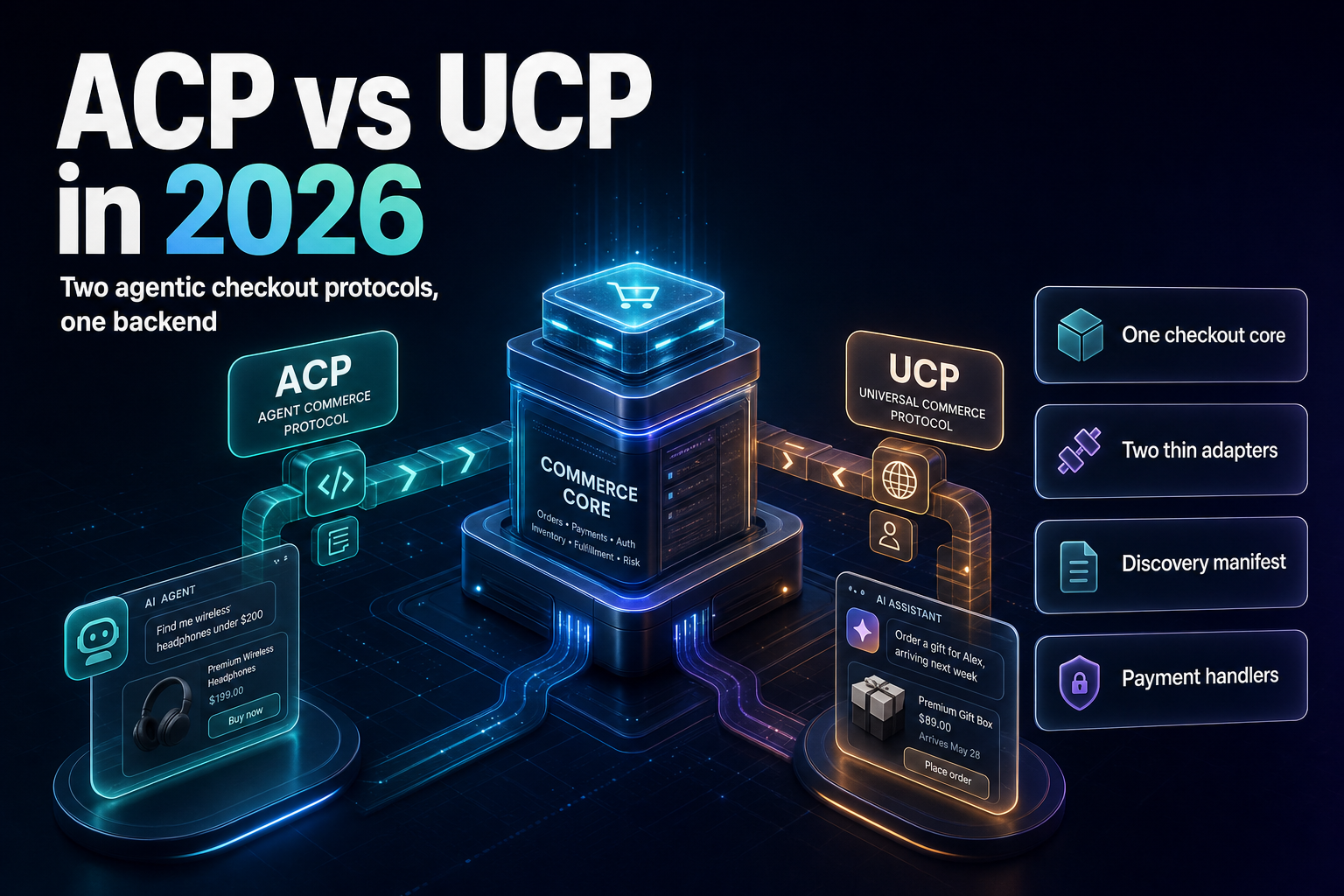
ACP vs UCP in 2026: one checkout core, two adapters, and why UCP ships first
OpenAI and Stripe's ACP and Google's UCP now overlap enough that one checkout core plus two thin adapters is the sane build. The March 2026 pullback changes which adapter you ship first.
Manu Shukla -
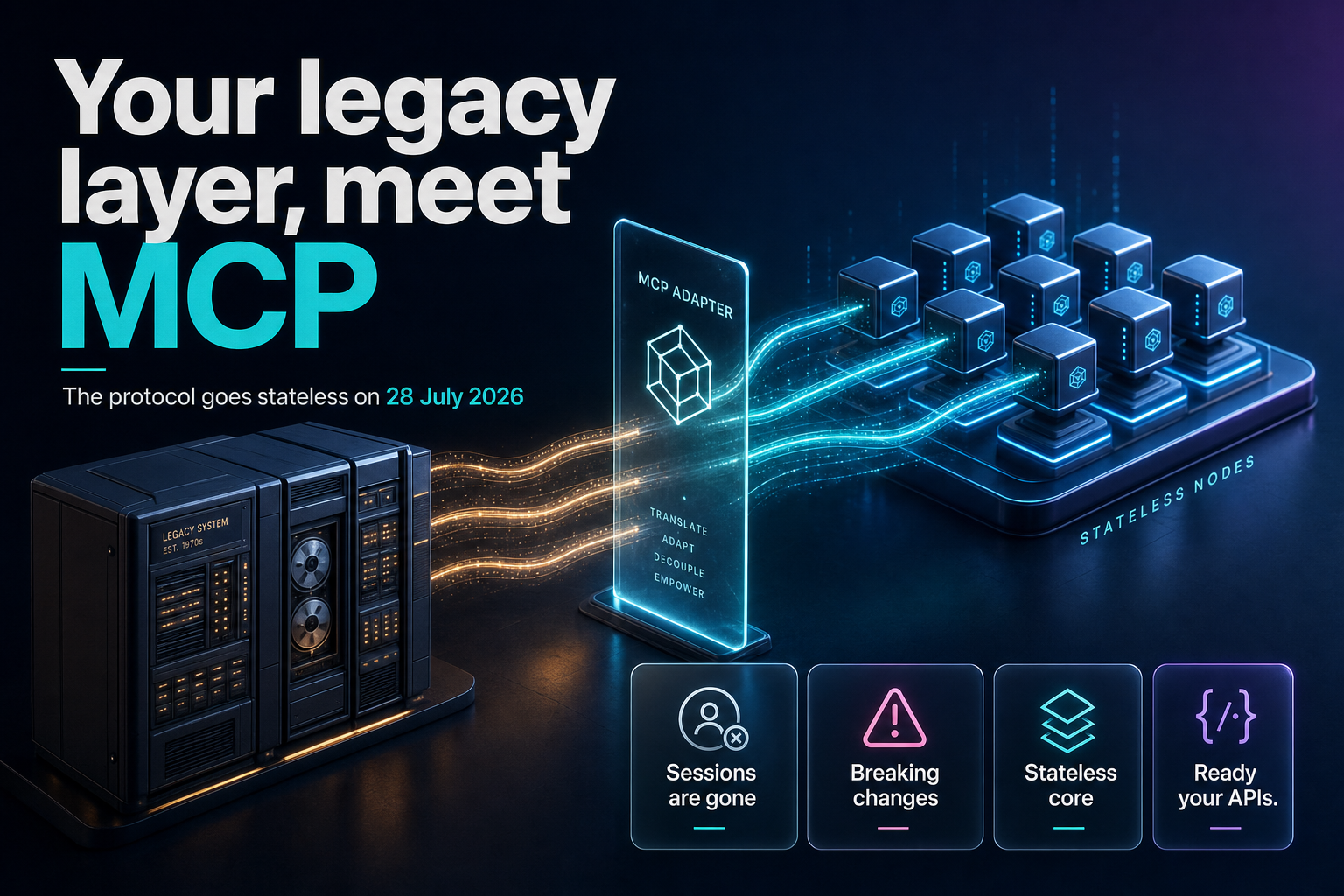
3 ways to expose legacy APIs to AI agents before the 28 July 2026 MCP switch
MCP's 2026-07-28 spec is the largest revision since launch and it breaks things: the initialize handshake and Mcp-Session-Id are gone. Three ways to expose legacy systems to AI agents, and what each actually costs.
Manu Shukla -
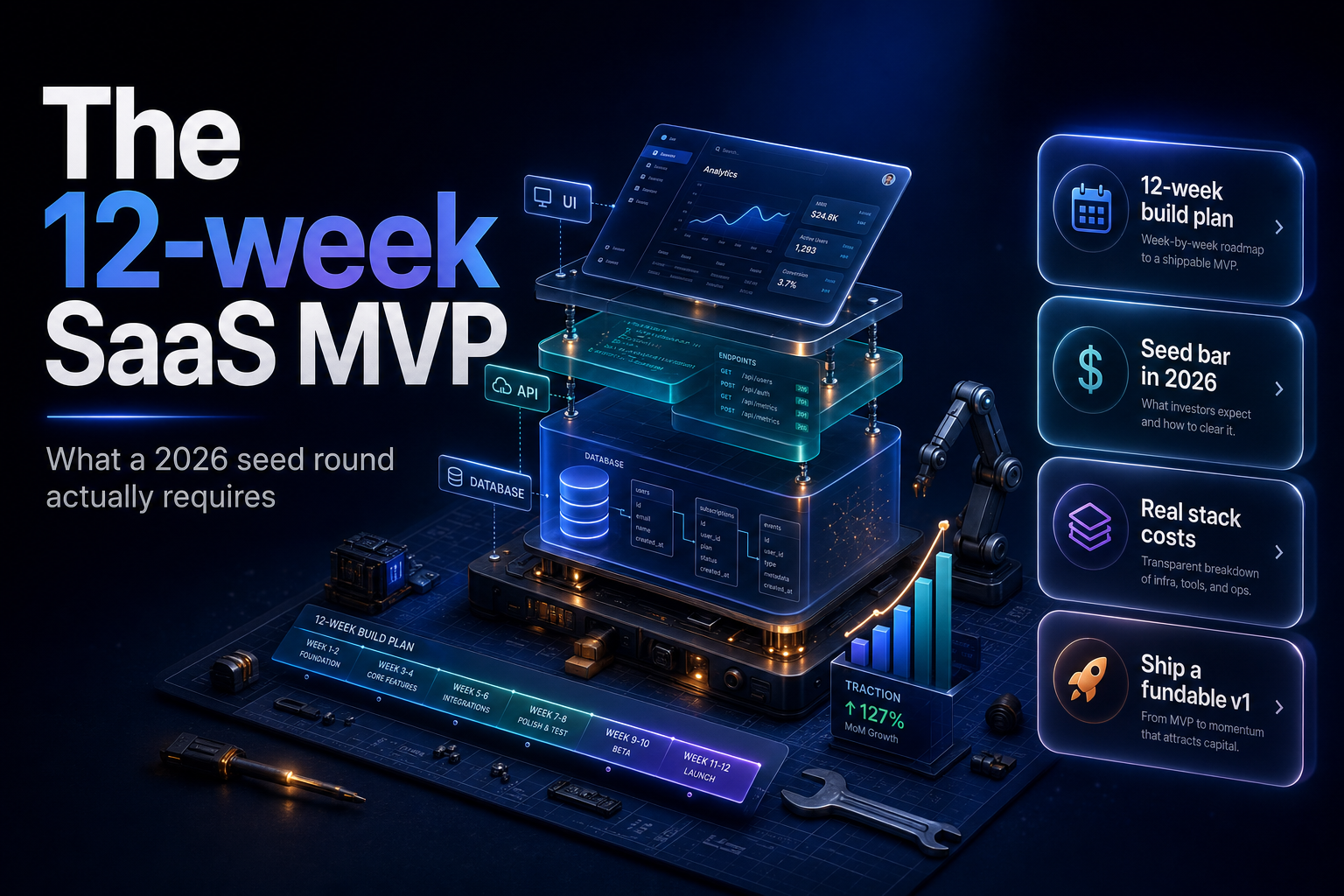
12-week SaaS MVP development in India: what a 2026 seed round actually requires
Seed startups in India raised $478 Mn in H1 2026, up 18% YoY, at a $1 Mn median ticket. A 12-week SaaS MVP has to prove more than a demo. The build plan, the stack costs, and the engineering that survives diligence.
Manu Shukla -

Shopify's Hydrogen rebuild in 2026: 6 frameworks, 1 preview, no customer accounts
Shopify rebuilt Hydrogen with Vercel as a toolkit that runs on Next.js, Astro, SvelteKit and three more. It is the biggest headless change since launch, and the reason most D2C brands should not replatform onto it this
Manu Shukla -
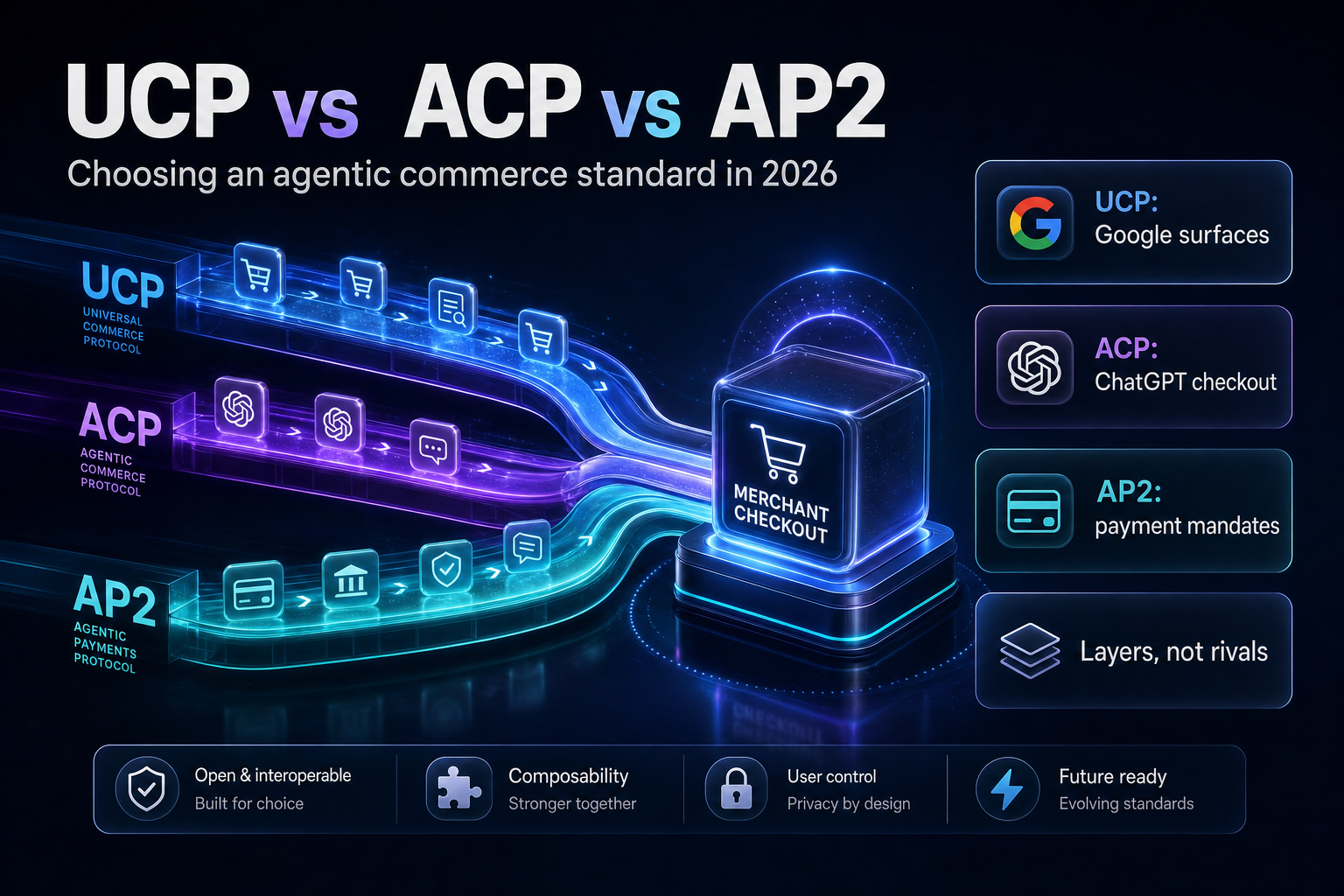
UCP vs ACP vs AP2 in 2026: which agentic commerce standard merchants should build on
OpenAI shut Instant Checkout in March 2026, six months after launch, with about a dozen merchants live. Google's UCP kept expanding. Here is how UCP, ACP and AP2 actually stack up, and what to build first.
Manu Shukla -
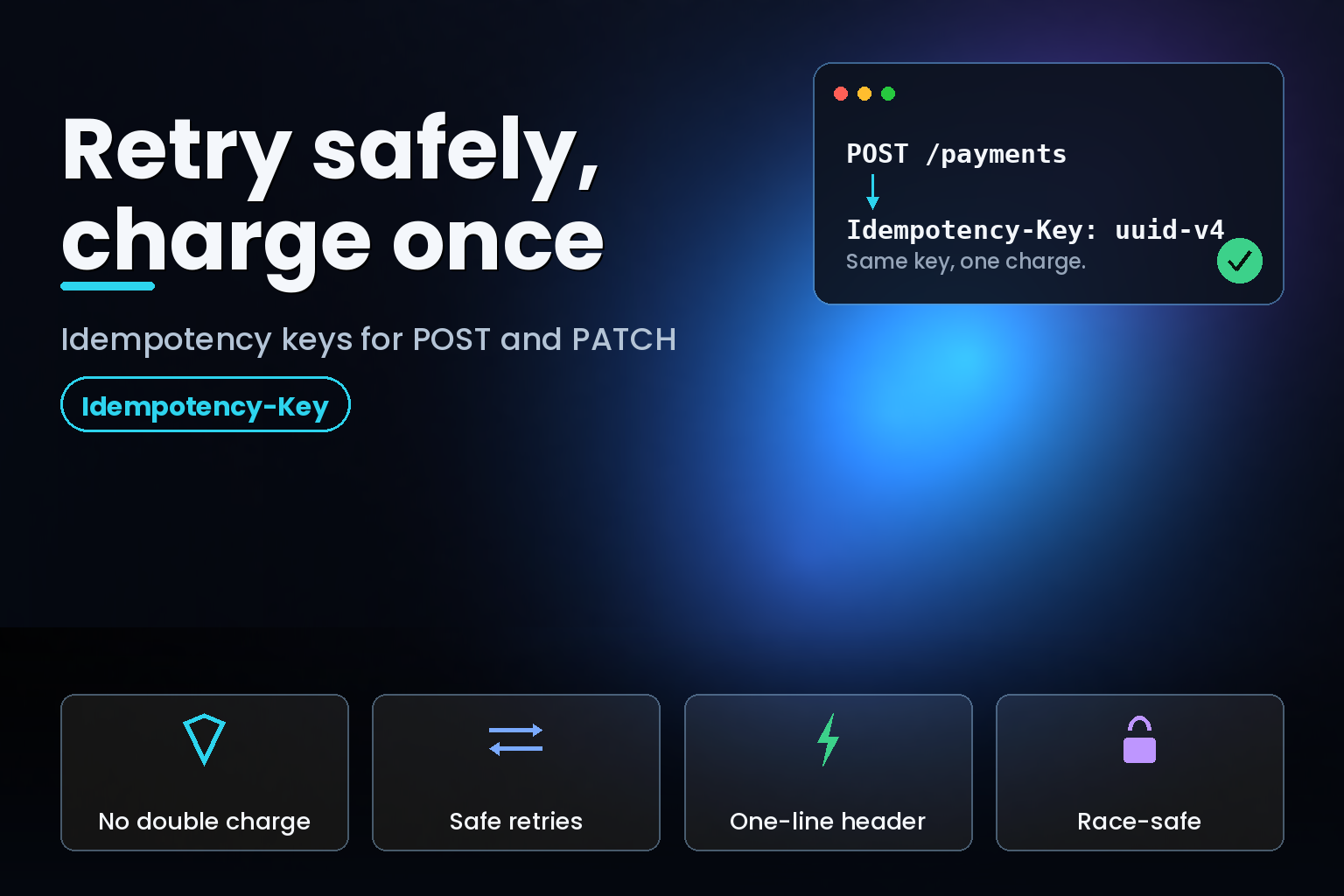
Idempotency keys in 2026: how to make REST API retries safe
A timed-out POST can charge a customer twice. Idempotency keys make retries safe. This guide covers the Idempotency-Key header, the IETF draft, server implementation, the race-condition trap, storage and TTL rules
Manu Shukla -
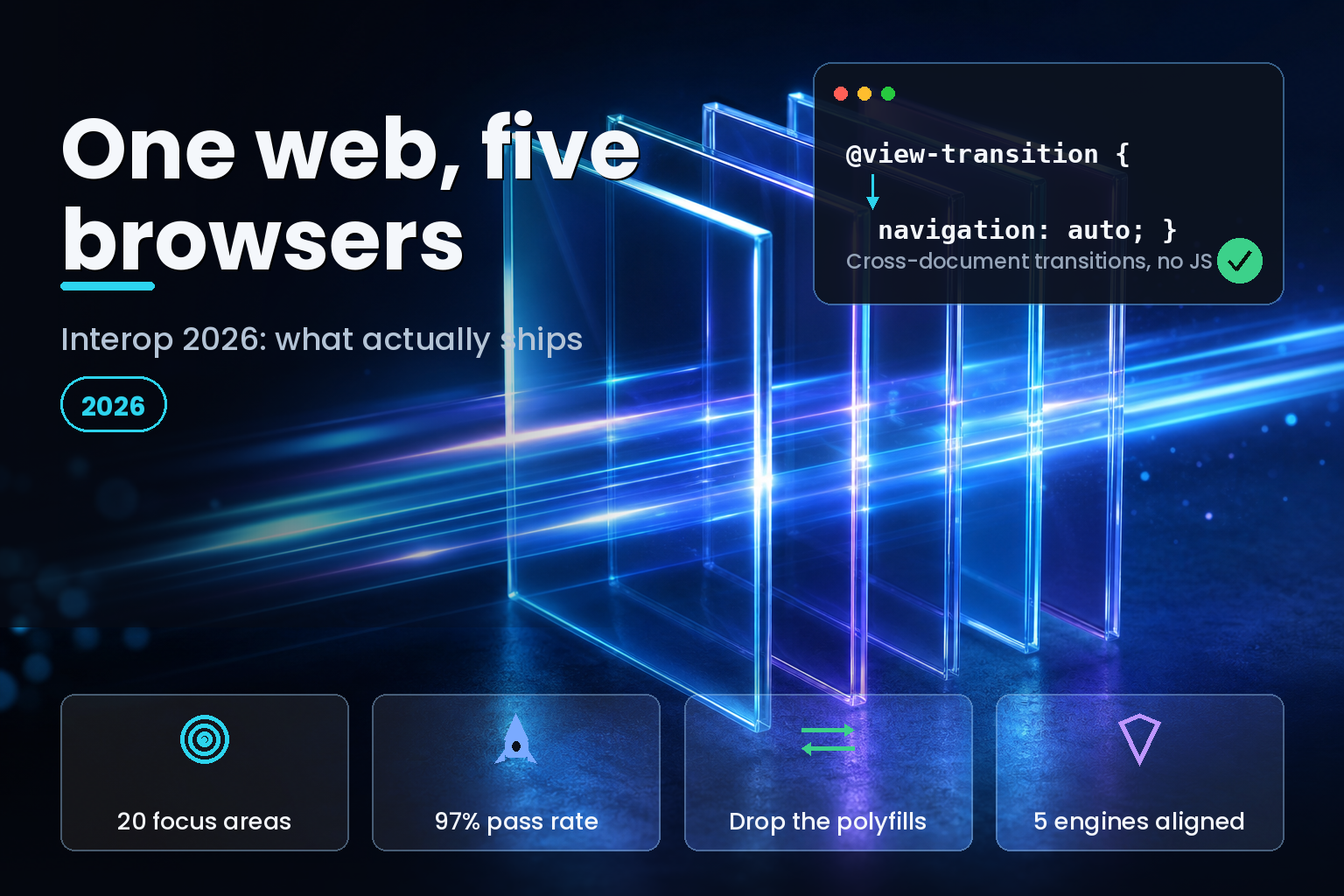
Interop 2026: the cross-browser web features developers actually get this year
Interop 2026 commits Apple, Google, Igalia, Microsoft, and Mozilla to 20 focus areas. After the 2025 cycle lifted the cross-browser pass rate from 29% to 97%, here is what front-end teams can finally rely on this year
Manu Shukla -
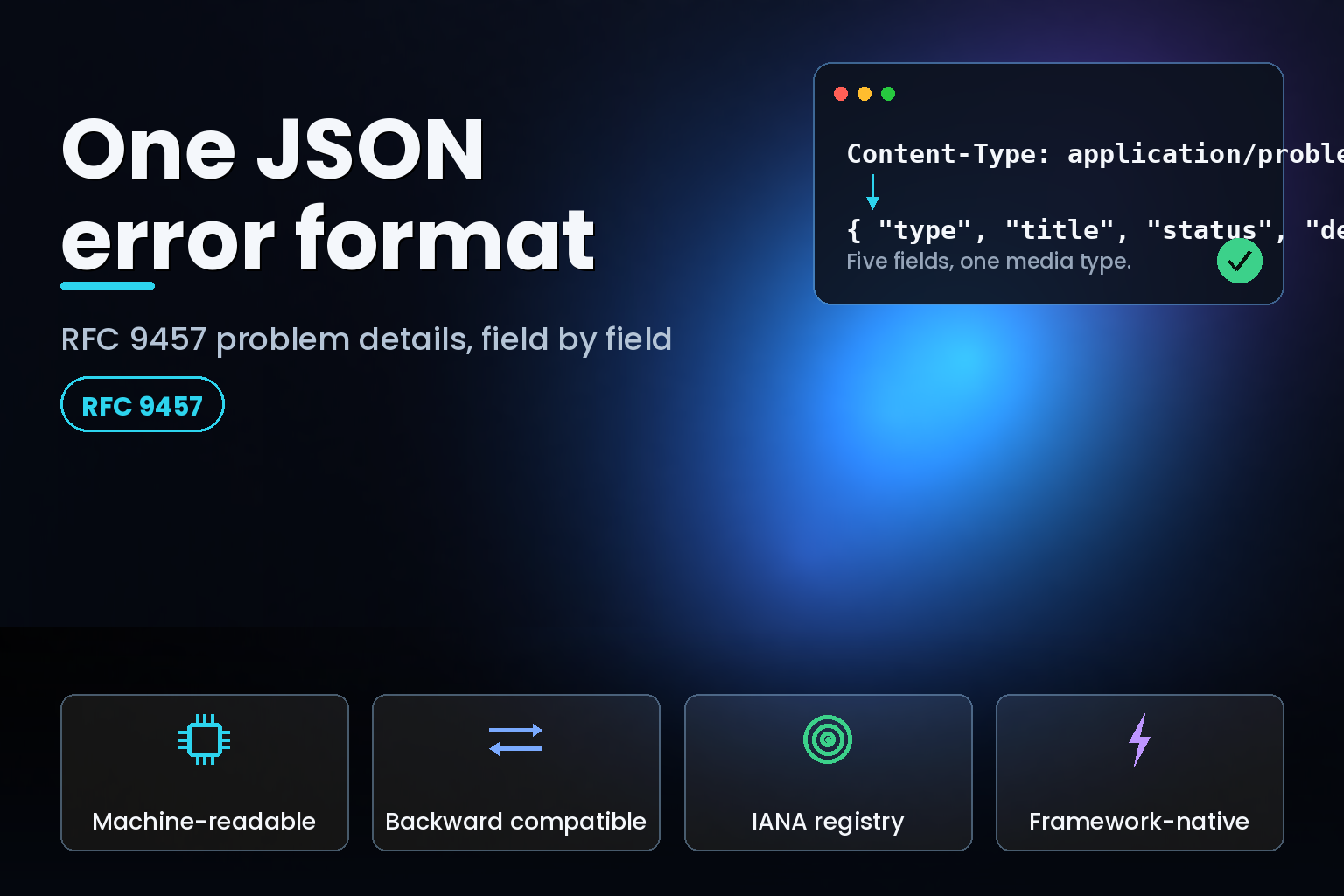
RFC 9457 problem details: the 2026 standard for HTTP API errors
RFC 9457 is the IETF standard for machine-readable HTTP API errors, and it obsoletes RFC 7807. This guide covers the five fields, the application/problem+json media type, extension members, multiple-problem handling
Manu Shukla -
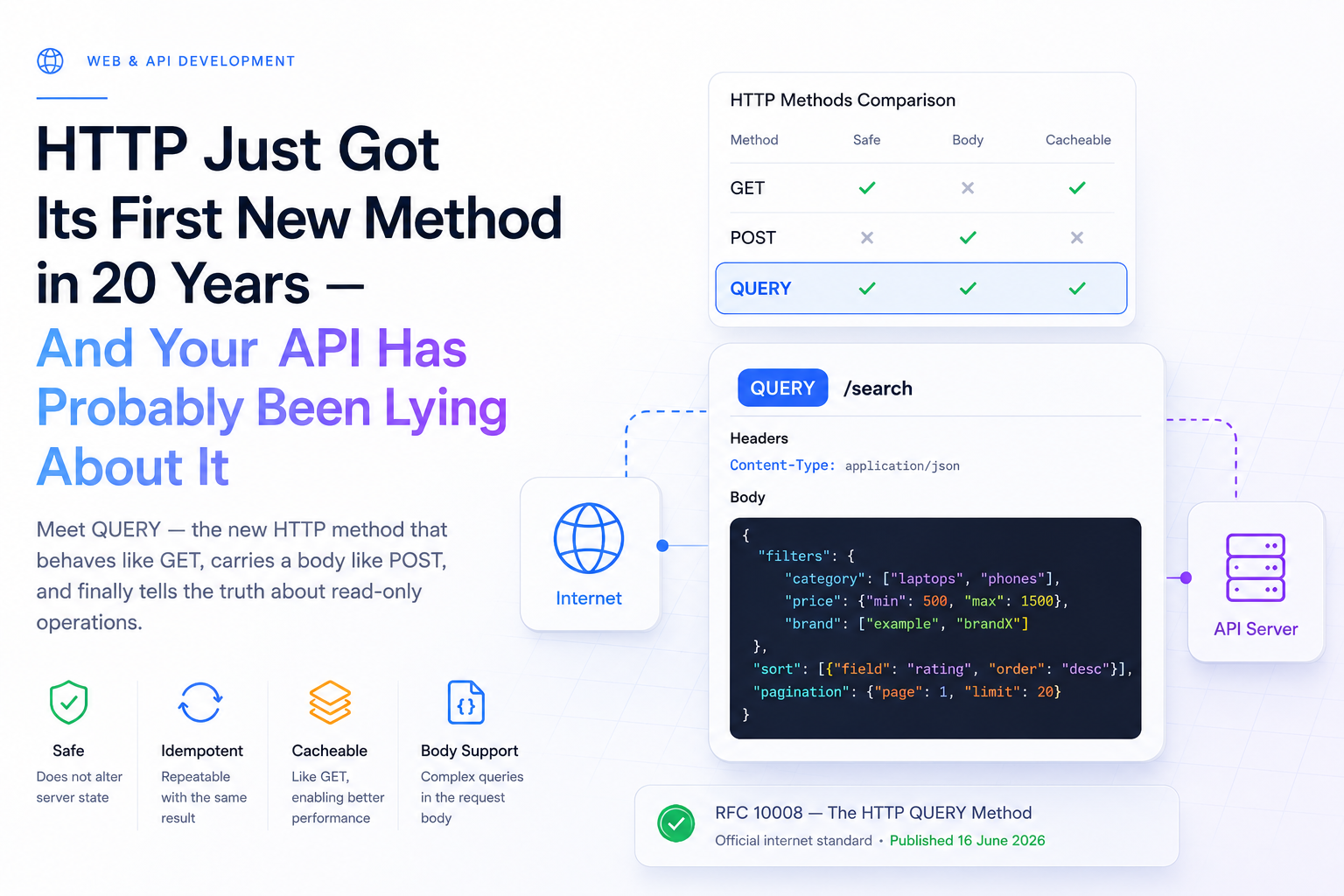
RFC 10008: HTTP QUERY Method — First New HTTP Method Since 2010
RFC 10008 published June 15, 2026 gives HTTP the QUERY method — safe like GET, body-carrying like POST. First new HTTP method since PATCH in 2010. What it means for APIs.
 Aman Mathur