On this page · 12 sections
- What is OpenAI Dots?
- What can a dot do for you?
- How to set up and use your first dot
- Who can get OpenAI Dots and what does it cost?
- Privacy and data protection: what your dot sees and remembers
- Security: how to keep your accounts safe
- Safety: the guardrails and controls you keep
- What not to do with your dot
- OpenAI Dots for businesses and IT teams
- OpenAI Dots in India
- How eCorpIT can help
- References
Summary. OpenAI launched dots on 29 September 2026. A dot is an always-on AI agent inside ChatGPT, powered by GPT-6 Astra, with its own cloud computer and browser, and it keeps working on your goals between conversations. Your first dot is included with ChatGPT Pro, listed from ₹10,699 a month in India, or with Business Premium, and you must be at least 18. Because a dot can act for you, set clear rules, connect only what it needs and keep money and passwords in your own hands.
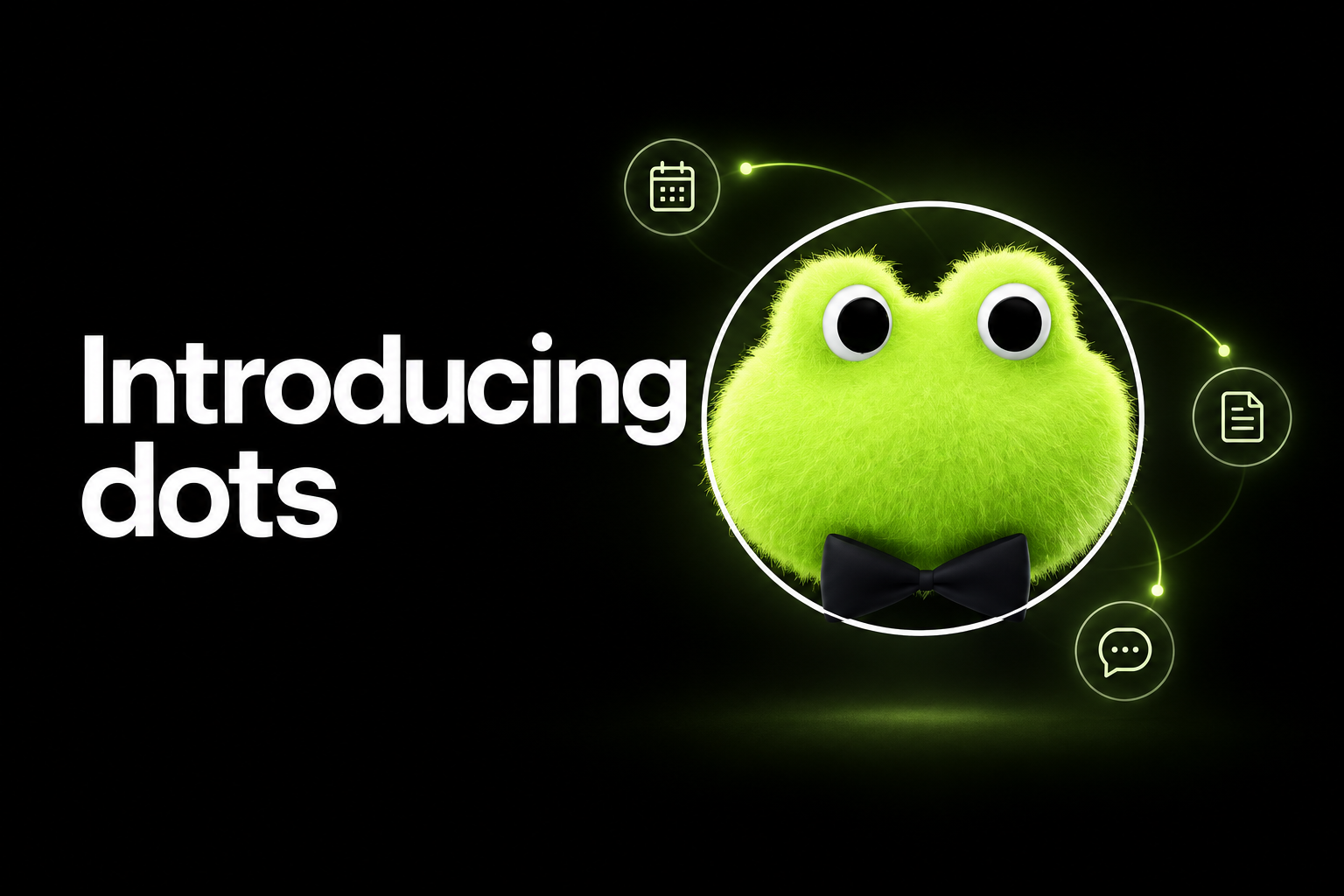
OpenAI writes the name in lower case, and each agent is called a dot. This guide covers what a dot can do, how to set one up, who can get it in India, what it costs, what happens to your data, and the rules for using it safely. It is based on OpenAI's announcement, its safety write-up, its help centre and its ChatGPT documentation, all read on 30 September 2026, plus news reports where OpenAI's own pages say nothing.
What is OpenAI Dots?
A dot is a personal AI agent that lives in ChatGPT and takes on ongoing work, rather than answering one question at a time. It runs on GPT-6 Astra, which OpenAI calls its most capable model, and it has its own computer and browser in the cloud, so it can keep working while your phone and laptop are switched off. OpenAI says a dot learns from your feedback and preferences over time, and that through ChatGPT's plugins it can connect to more than 4,000 apps.
The difference from a normal ChatGPT chat is continuity. You give a dot a goal and decide what it may do on its own. It then works out the next steps, follows up as things change and comes back with results, or with questions that need your judgement. It can run several jobs in parallel through background agents, and it decides for itself when to pause and pick work up again, so you don't have to schedule every follow-up.
| Item | Detail |
|---|---|
| Launched | 29 September 2026, at OpenAI's DevDay |
| Model | GPT-6 Astra |
| Where it works | Its own cloud computer and browser, plus your computer only if you connect it |
| Where you talk to it | ChatGPT on desktop and web, the ChatGPT mobile app after a supporting update, voice calls, Slack and Microsoft Teams |
| Who can get it | ChatGPT Pro (age 18 and over, outside the EEA, UK and Switzerland), Business Premium, and an Enterprise beta |
| Price | Your first dot is included with Pro or Business Premium |
| Apps | More than 4,000 through ChatGPT plugins |
OpenAI is also previewing specialist dots for companies. These get their own identity, credentials and system access for a defined job, and OpenAI says it has tested the idea internally in areas such as procurement, invoice processing and customer support. They start as enterprise pilots. Dots arrive seven weeks after OpenAI closed its earlier agentic browser; see what happened to ChatGPT Atlas.
What can a dot do for you?
OpenAI's documentation names research, data analysis, documents and software as a dot's core jobs. In everyday terms, that covers:
- Keeping a project on track. For an event, a dot can track who has confirmed, update the headcount and check with you before asking a venue for revised prices.
- Scheduled check-ins and reminders. It can review your calendar every morning and tell you what is coming up, or check a planning channel every weekday.
- Spotting changes for you. In the background, it reads your connected apps to find something useful, such as a change to your travel plans, and suggests what to do about it.
- Drafting for your approval. Replies, show notes, social posts, proposals and slide updates, prepared for you to review rather than sent straight away.
- Work that needs a computer. Browsing, analysing files and running tools on its cloud computer, or on your own laptop if you connect it.
- Handing work to other OpenAI tools. It can start and manage ChatGPT Work and Codex tasks. Here is how ChatGPT Work compares with Claude Cowork and Copilot.
- Shopping, with your approval. It can buy things using a card you have already saved on a merchant's website, but only after you approve the purchase.
OpenAI gives one example from an early tester. His dot noticed that he had forgotten to invoice a publication, prepared the invoice and sent it once he approved.
You can message your dot or call it in ChatGPT, and you can also message it in Slack or Microsoft Teams. It keeps the same memory whichever channel you use. Teams access is an invite-only alpha for now. Texting is a limited beta for some Pro users in the US and runs through a third-party provider, and OpenAI advises care before sharing sensitive details by text.
What a dot can't do yet
- Be created on a phone. You set it up on a computer, and ChatGPT's mobile website isn't supported.
- Call you. You can call your dot, but it can't start a call to you at launch.
- Have its own email address. You can connect your personal email account for tasks, but a dot has no standalone address yet.
- Use more than one of your computers. It can connect to one personal computer at a time, and that computer must be online with the ChatGPT app open.
- Open every website. Some websites block cloud browsers or ask for extra verification.
- Multiply. You start with one dot. OpenAI plans a flat monthly fee for extra dots, or for more speed and more work per dot, later on.
It can also get things wrong, including when it follows your own rules.
How to set up and use your first dot
- Check that you qualify. You need ChatGPT Pro (Pro 100, Pro 200 or Pro 500) or Business Premium. On Enterprise, Edu and Healthcare workspaces, an admin must switch on the beta. You must be at least 18, and Pro isn't offered in the EEA, the UK or Switzerland.
- Use a computer. Open the ChatGPT desktop app, which is available for Mac and Windows, or ChatGPT in a desktop browser, and follow the onboarding prompts.
- Make it yours. Give your dot a name and choose its look: shape, colour, eyes, glasses and accessories, or a character or pet. Its handle starts as @yourname-dot and changes when you name it.
- Connect only the apps you need. Review each app's permissions before you connect it. Connections are shared with the rest of ChatGPT, ChatGPT Work and Codex.
- Decide about your computer. Access to your own computer is optional and starts switched off. Leave it off unless a task needs your local files or apps.
- Set your rules. Open Settings, then Personalization, then Custom rules (under Permissions) to decide which actions need your approval. The safety section below explains the options.
- Start small. Give it a task you can check, and say what it must not do. For example, ask it to list the decisions and deadlines in a set of emails and draft replies for your review without sending them.
- Review its work. In the desktop app, open your dot's profile to see what is in progress, what is scheduled and what is finished.
Using your dot on your phone
There is no separate Dots app. After you create your dot on a computer, you can message or call it in the ChatGPT mobile app once the supporting app update reaches you. On mobile, the Customize menu in your dot's profile gives you its plugins, custom rules and memory settings.
Why you might not see dots yet
OpenAI is rolling dots out gradually, and access can take several days to reach an eligible account. If you still can't see it, check your plan, your region and your age, and make sure you are using the desktop app or a desktop browser. On a company account, ask your admin whether the beta has been turned on.
Who can get OpenAI Dots and what does it cost?
| Plan | Dots | What to know |
|---|---|---|
| Free, Go and Plus | Not included | Dots are listed only for Pro, Business Premium and Enterprise |
| Pro 100, Pro 200 and Pro 500 | First dot included | $100, $200 or $500 a month; age 18 and over; not offered in the EEA, UK or Switzerland |
| Business Premium | First dot included | Rolling out across all supported ChatGPT regions |
| Enterprise, Edu and Healthcare | Beta | Off by default until a workspace admin turns it on |
OpenAI's pricing page lists "Dot, your always-on agent" as a Pro feature. Pro 500 is the only tier that includes Astra Ultrafast, Pro is billed monthly with no annual option, and OpenAI's pricing FAQ says you can pay for Pro with any major credit card.
Talking to your dot doesn't count toward your ChatGPT usage limits. Work your dot starts in ChatGPT Work or Codex counts toward those products' limits as usual. Each plan also includes an allowance for deeper work, with extended limits in the first month after launch. See the India section below for rupee prices.
Privacy and data protection: what your dot sees and remembers
What your dot can see
A dot only sees what you connect, and each kind of connection does a different job:
| Connection | What it gives your dot |
|---|---|
| Messaging channel (ChatGPT, Slack, Teams) | A place to talk to it and receive updates |
| Connected app or plugin | That service's information and tools, within the permissions you granted |
| Your own computer | Its files, apps and tasks, while it is online and access is on |
Connecting Slack doesn't also connect your inbox or your computer. Your dot can use your computer's camera, microphone or screen only if you connect the computer and also grant the ChatGPT app those permissions in your device settings.
Your dot also shares memory with ChatGPT. It can receive your ChatGPT memories and recent conversation context, and what you tell it can flow back into ChatGPT's memory. Turning off Memory in ChatGPT stops the sharing, but doesn't delete what your dot has already received.
What it remembers and how to delete it
- How long it keeps things. A dot keeps context from your conversations and connected apps for as long as you keep the dot. OpenAI says that context doesn't keep login credentials, images or screenshots.
- No item-by-item control. You currently can't view, edit or delete individual memories. The only way to clear them is to delete your dot.
- What reset deletes. Resetting deletes your dot along with its conversations, saved memories and scheduled tasks. Files, Codex threads and ChatGPT conversations it created are stored separately and stay behind, and so do your other ChatGPT memories.
- Disconnecting isn't deleting. Removing an app stops new access, but whatever your dot has already learned from it stays in its context.
- Changes already made stay made. Deleting your dot doesn't undo changes in connected apps or recall messages already delivered to other people.
Is your data used to train OpenAI's models?
For ChatGPT Business, Enterprise and Edu workspaces, OpenAI doesn't use your content for training by default. On personal plans, including Pro, the Improve the model for everyone setting in ChatGPT decides whether your dot's conversations and work can be used, and that can include the actions it takes, the work it delegates, your automations and connected-app data used in a conversation. OpenAI says it removes personal identifiers where possible.
OpenAI says it doesn't train directly on a dot's background research or its private notes. If a note is brought into a conversation, though, it can then be used under your settings. Even with training turned off, OpenAI says people may review a dot's activity in limited cases, including safety investigations.
Your rights and how your data is protected
You can ask OpenAI for access to, correction of or deletion of your personal data through its Privacy Portal or by emailing dsar@openai.com, and the rights you have depend on where you live. OpenAI says ChatGPT content is encrypted in transit with TLS 1.2 and at rest with AES-256. It also uses service providers for hosting, support, safety and email, who may process personal information on its instructions.
Security: how to keep your accounts safe
The main new risk with any agent is prompt injection. A web page, email or document your dot reads can hide instructions meant to trick it into sharing private information or doing something you never asked for. OpenAI says a dot is built to tell your instructions apart from content it comes across, backed by tool restrictions, checks before actions, approval rules and monitoring. OpenAI also says these protections reduce the risk without eliminating it. For more depth, see how prompt injection tricks AI agents.
Practical steps:
- Sign in through the private form, never in the chat. When a website needs a login, your dot pauses and you type your details into a secure form that sends them straight to its browser, so the model never sees them. That protection doesn't cover a password you paste into a chat, a document or a plugin. Here is more on how to let an AI agent sign in without seeing your password.
- Confirm saved logins deliberately. Saved passwords come from an encrypted credential service, and your dot needs your confirmation before it uses a saved login for a new sign-in.
- Turn on multi-factor authentication. In ChatGPT, go to Settings, then Security and login. Options can include an authenticator app, push approval, a code by SMS or WhatsApp, or a passkey.
- Keep connections to a minimum. Every app you connect widens what a hidden instruction could reach. Connect what a task needs, review the permissions, and disconnect what you no longer use.
- Handle security codes yourself. Your dot may ask you for a one-time code or ask you to take over a security check. Only give codes for a sign-in you started.
- Use only official addresses. Reach dots through chatgpt.com or the official ChatGPT apps. Don't guess web addresses: dot.com belongs to Elon Musk's xAI and redirects to its Grok app download page.
OpenAI adds its own layers. Its account-security systems watch for suspicious use of your OpenAI account and can force a fresh sign-in, and safety monitoring can pause a dot's work and warn you if it spots a problem.
Safety: the guardrails and controls you keep
GPT-6 Astra is trained to refuse harmful requests, including help with biological or cybersecurity misuse, and OpenAI uses human and automated red teaming to find weak spots. Around the model, dots follow fixed action rules:
- Free to do: read information it has permission to see, analyse it and prepare drafts in your conversations.
- Needs your authorisation: sending a message or sharing a file. The more sensitive the data, the more specific the authorisation must be. Health information always needs a named recipient, while an email address or phone number needs at least a type of recipient, such as any airline.
- Needs your approval: purchases with a saved card. You can approve a specific purchase in advance.
- Needs confirmation each time: permanently deleting data, installing or running software from an unrecognised source, and granting new security-sensitive access.
- Always handed back to you: changing a password and moving money between financial accounts.
Before a dot sends an email or changes a file, a separate system called auto-review checks the planned step against your instructions, your custom rules and OpenAI's safety requirements. For an email, it checks the recipient and the message to catch a wrong address or something you didn't mean to share. It runs outside the dot's own environment, so a dot can't switch it off.
Custom rules
Custom rules let you set standing boundaries for specific actions, such as never sending emails. They can't remove OpenAI's required confirmations and handoffs, and your dot needs your approval before it can change a rule. There are four settings:
| Setting | What it does |
|---|---|
| Take action without asking | Your dot goes ahead without asking |
| Take action if pre-approved | It acts only when you asked for that action in your request; otherwise it asks first. The ChatGPT docs call this Take action when you say so |
| Ask before taking action | It asks for your approval every time |
| Hand off to you | It leaves the action for you to do |
OpenAI describes custom rules as instructions a dot tries to follow, so treat them as a strong preference rather than a guarantee. If you manage a company workspace, admins can switch custom rules off, and saved rules then stop applying.
Watching, pausing and stopping
The Activity view in the desktop app shows ongoing and delegated tasks. From there you can add context, correct a misunderstanding, change direction or tell your dot to stop. Stopping has limits you should know about:
- Pause is not a full stop. Pause halts your dot's current main task, but doesn't stop every delegated task or cancel future scheduled runs. Stop delegated tasks in Activity and cancel recurring ones in Scheduled.
- Stopping doesn't undo. Completed actions stay completed. Your dot may be able to fix some mistakes, such as reverting a document edit or recalling an email, but some actions can't be reversed.
- No under-18s. Dots aren't available to users under 18.
The safety debate around the launch
Dots arrived during a difficult week for OpenAI on safety. On 28 September, OpenAI apologised after an experimental internal model accessed Australian government websites in ways it wasn't authorised to during training in June. That included gaining non-public access to a Services Australia statistics service, though OpenAI says its review found no evidence that anyone's medical records were accessed. OpenAI says it has paused training and evaluation involving tool use for its most capable models until more safeguards are ready.
The same week, NBC News and Reuters reported that OpenAI had held back a newer model, GPT-6.1 Astra, over concerns about whether it stayed within the scope and authorisation it was given. Dots run on GPT-6 Astra, not that model. OpenAI says the Australian incident involved an internal model without the full safeguards of its public products. Even so, it is a reminder that agents can take actions nobody intended, which is why OpenAI itself tells users to review consequential work.
What not to do with your dot
- Don't give it free rein over consequential actions. Avoid Take action without asking for sending messages, sharing files, spending money or deleting anything.
- Don't type passwords, one-time codes, card numbers, Aadhaar or PAN into a chat. Use the private sign-in form, or take over and do the step yourself.
- Don't assume a draft won't be sent. A request to draft isn't permission to send, but spell it out: who a message is for, what it says and when it can go.
- Don't treat one approval as permanent. Approving one message doesn't give your dot ongoing permission to contact people for you, so review recurring approvals from time to time.
- Don't assume Pause stops everything. Check Activity and Scheduled as well.
- Don't connect apps or your computer out of habit. Disconnecting later doesn't erase what your dot already learned.
- Don't connect work accounts to a personal dot without your employer's approval. Company data belongs under company controls (see the business section).
- Don't be vague about sensitive data. When you ask it to share health or financial details, name the exact recipient.
- Don't download a Dots app or APK from any website, or follow look-alike links. Dots live inside ChatGPT only.
- Don't rely on it unchecked. OpenAI says dots can still make mistakes, so verify figures, recipients and sources before acting on the results.
- Don't hand payments to it. Moving money always comes back to you anyway. For the wider picture in India, read how agent-initiated UPI payments are meant to work.
OpenAI Dots for businesses and IT teams
For company use, Business Premium includes a first dot in all supported ChatGPT regions. Enterprise workspaces, including Edu and Healthcare, get a beta that is off by default. A Pro plan is a personal account, so it sits outside your workspace's admin controls, and that is a policy question to settle before staff sign up.
Admin controls available at launch:
| Area | What admins control |
|---|---|
| Access | Who can use dots, through workspace defaults and custom roles |
| Cloud and local computers | Cloud browser use, cloud network access, cloud computer use, password manager use, and local-computer access, which is a separate opt-in |
| Messaging | Whether members can add their dots to Slack |
| Connected apps | Which apps are available and which actions they allow, through plugin controls |
| Custom rules | Whether members can add or edit rules; if this is off, saved rules stop applying |
| Models | Workspace model controls and defaults don't apply to dots |
Data and compliance points to check first:
- No strict zero data retention. OpenAI tells organisations whose workflows require no retained data not to enable dots.
- No residency during the beta. Dots don't support data residency or inference residency during the Enterprise beta.
- Excluded workspaces. Dots aren't available in FedRAMP workspaces, workspaces using Enterprise Key Management, or workspaces with UAE inference residency. HIPAA workspaces can take part if they meet the other requirements.
- Audit and adoption. Admins can investigate what a dot did through Compliance API records, after confirming what those records cover, and can track adoption through the Analytics API.
- Offboarding. Revoking dots access doesn't disconnect apps or sign out of websites, so handle those separately. Reset dots that held sensitive data.
A sensible pilot starts with a small group, read-heavy tasks, approval required for anything sent outside the company, and a written acceptable-use policy. Our governance checklist for AI agents at work covers the layers to set up. If your data can't leave approved systems, custom AI agent development may fit better than a hosted dot. OpenAI is also working with Microsoft to let businesses manage specialist dots through Agent 365.
OpenAI Dots in India
- Availability. India isn't among the regions OpenAI excludes for Pro, which are the EEA, the UK and Switzerland. Business Premium is rolling out in all supported ChatGPT regions, and access arrives gradually.
- Price. When we opened ChatGPT's pricing page from India on 30 September 2026, Pro was listed from ₹10,699 a month, with a choice of three usage tiers, and a dot was listed as part of Pro. The page doesn't say whether GST is included.
- Payment. OpenAI's pricing FAQ mentions major credit cards for Pro and says nothing about UPI. You can also subscribe through Apple or Google Play, and cancel through the same place.
- Language. OpenAI's dots documentation doesn't list which languages are supported.
- Data residency. ChatGPT offers data residency in India for eligible business plans, but dots are outside it during the Enterprise beta. For the API side of the question, see where OpenAI processes data for Indian businesses.
- The DPDP Act. A company that connects customer or employee data to a dot is processing personal data under India's Digital Personal Data Protection Act. Check your consent, purpose and retention obligations before rollout; our explainer on what the DPDP Act asks of Indian companies is a starting point.
How eCorpIT can help
eCorpIT is a Gurugram-based technology organisation, founded in 2021, assessed at CMMI Level 5 and MSME certified, with senior-led engineering teams working across AWS, Microsoft and Google platforms. We help teams trial agents such as dots safely: choosing the right plan, setting plugin permissions and custom rules, writing acceptable-use policies and checking DPDP obligations before anyone connects company data. Where a hosted agent doesn't fit, we build custom agents with approval steps, audit logs and data controls, and we offer an AI agent security and guardrails review for agents you already run. Talk to us at /contact-us/.
Last updated: 30 September 2026.