
Category
AI Tools
Hands-on AI tools and utilities — token counters, cost calculators, model comparisons, and the practical tooling that makes LLM engineering measurable.
-
OpenAI Dots explained: features, price, India access and safety
OpenAI's dots are always-on AI agents inside ChatGPT. Here is what a dot can do, how to set one up, what it costs in India, and how to protect your data, money and accounts.
 Manu Shukla
 -
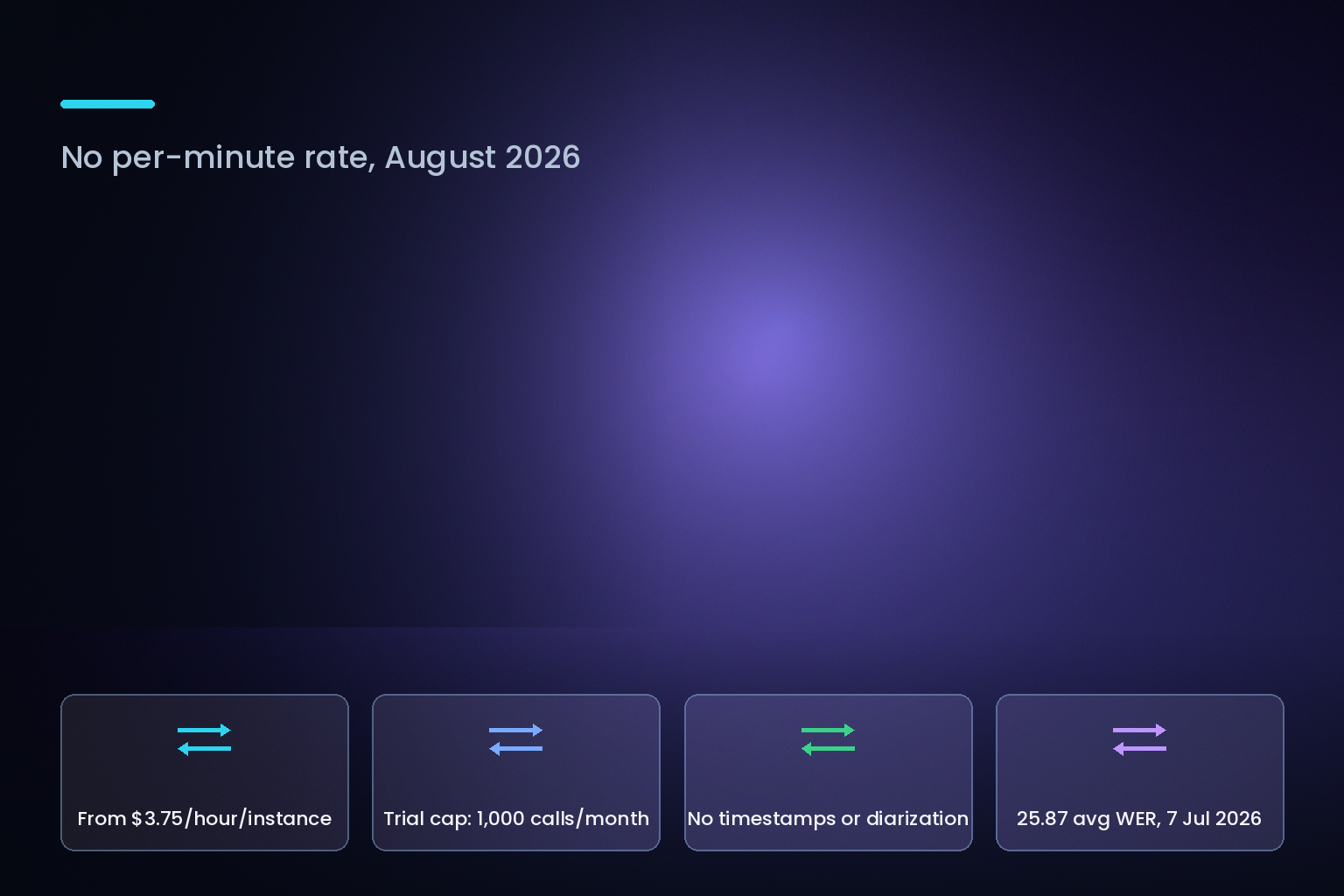
Cohere Transcribe has no per-minute price: the $3.75/hour Model Vault floor
Cohere's ASR models are Apache 2.0 and free to try, but the only published production price is $3.75 per hour per instance. Here is the break-even, and three capability gaps in the docs.
Manu Shukla -
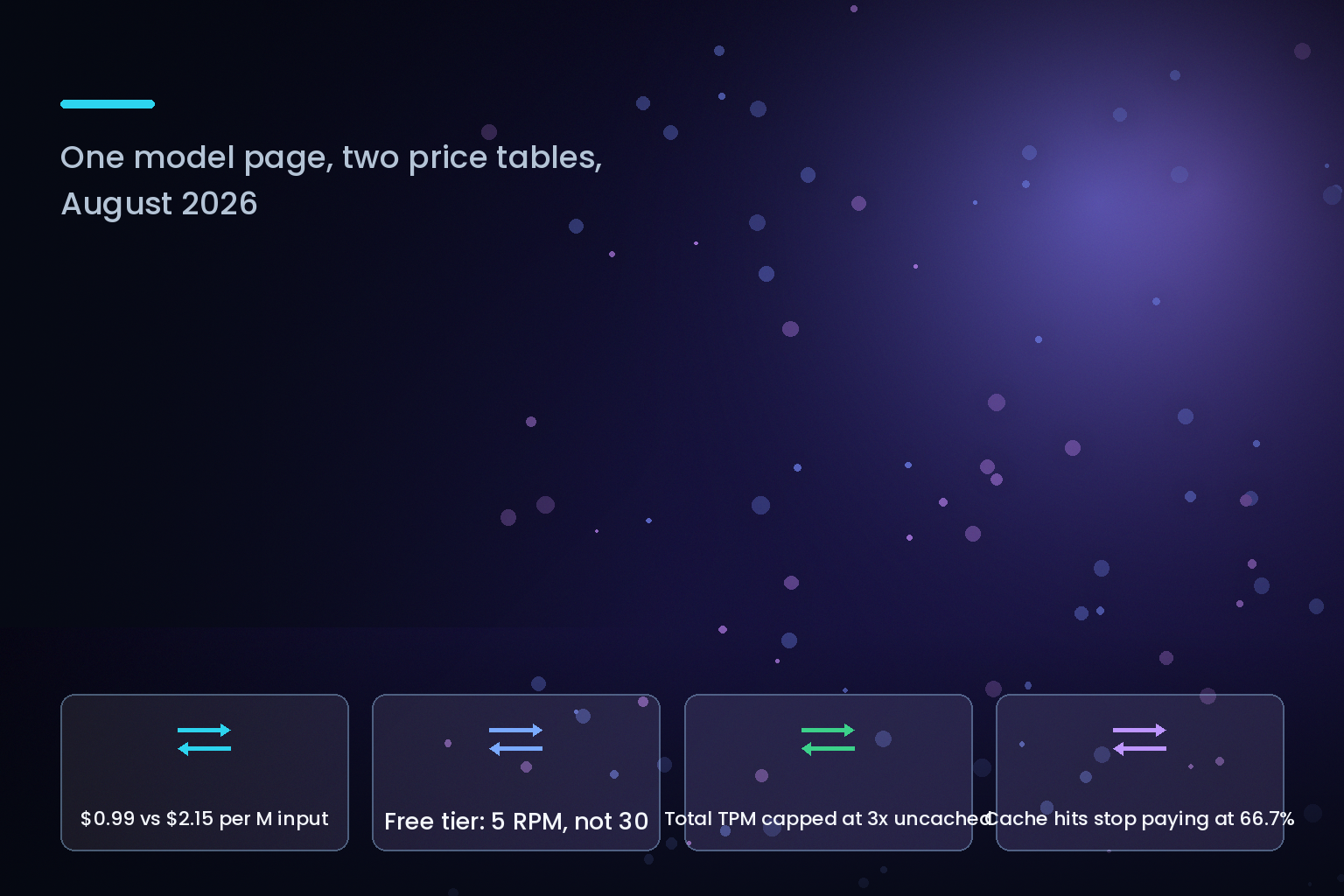
Cerebras docs quote two Gemma 4 31B prices in 2026: $0.99 and $2.15 per million input tokens
One Cerebras model page carries two different prices and two speeds for Gemma 4 31B. The GPT-OSS-120B page forks its free-tier limit 6x. Here is what each source says and which to plan against.
Manu Shukla -
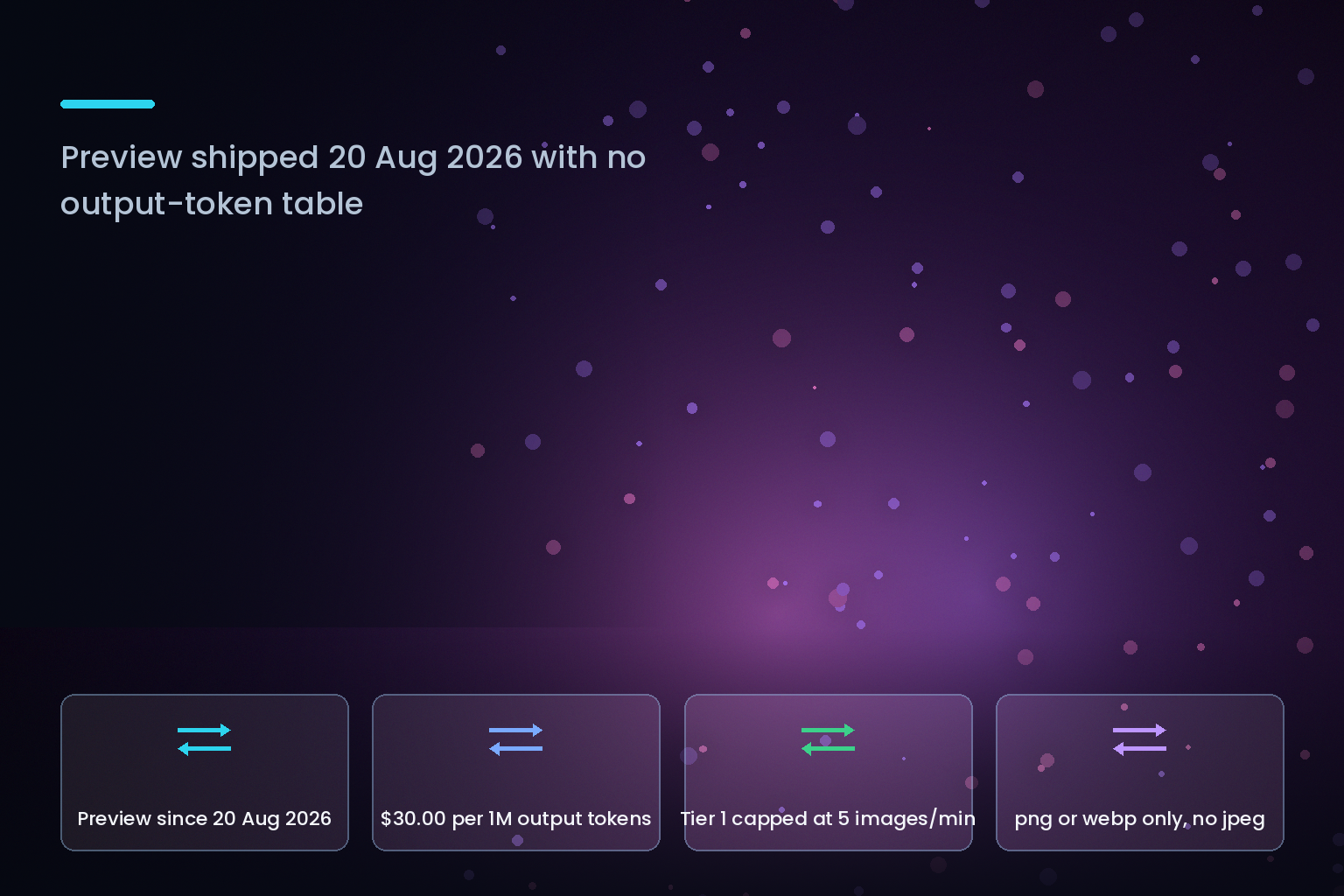
OpenAI shipped gpt-image-2 transparent backgrounds on 20 August 2026 with no token table
Transparent backgrounds reached preview on gpt-image-2 on 20 August 2026. Image output bills at $30.00 per 1M tokens, yet the only published token table covers the older models.
Manu Shukla -
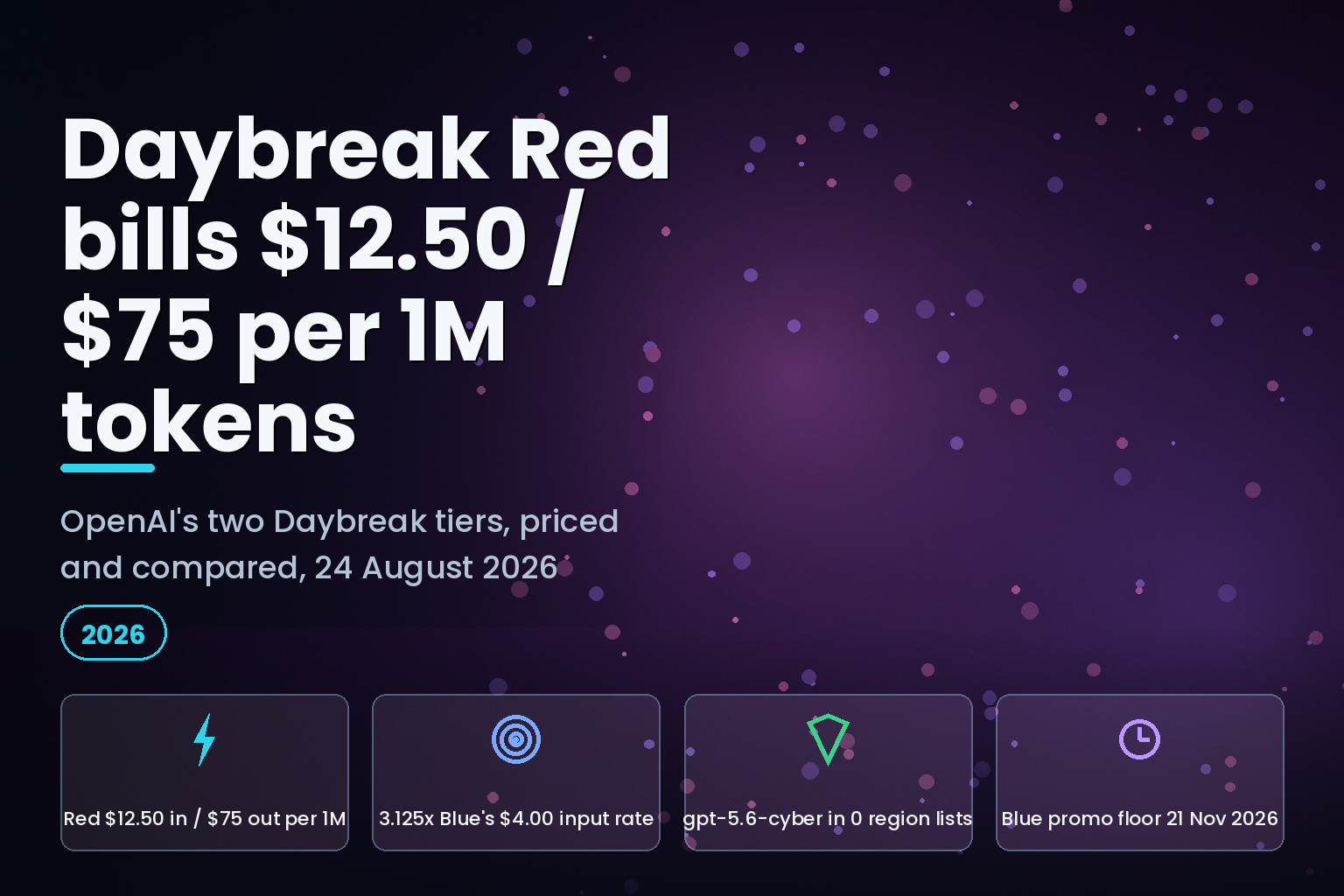
OpenAI Daybreak Red costs 3.1x Blue at $12.50/$75 per 1M tokens, August 2026
OpenAI split Daybreak into Blue and Red tiers on 7 August 2026. Red bills 3.1x Blue's input rate, carries a long-context surcharge that can never fire, and is in no regional processing list.
Manu Shukla -
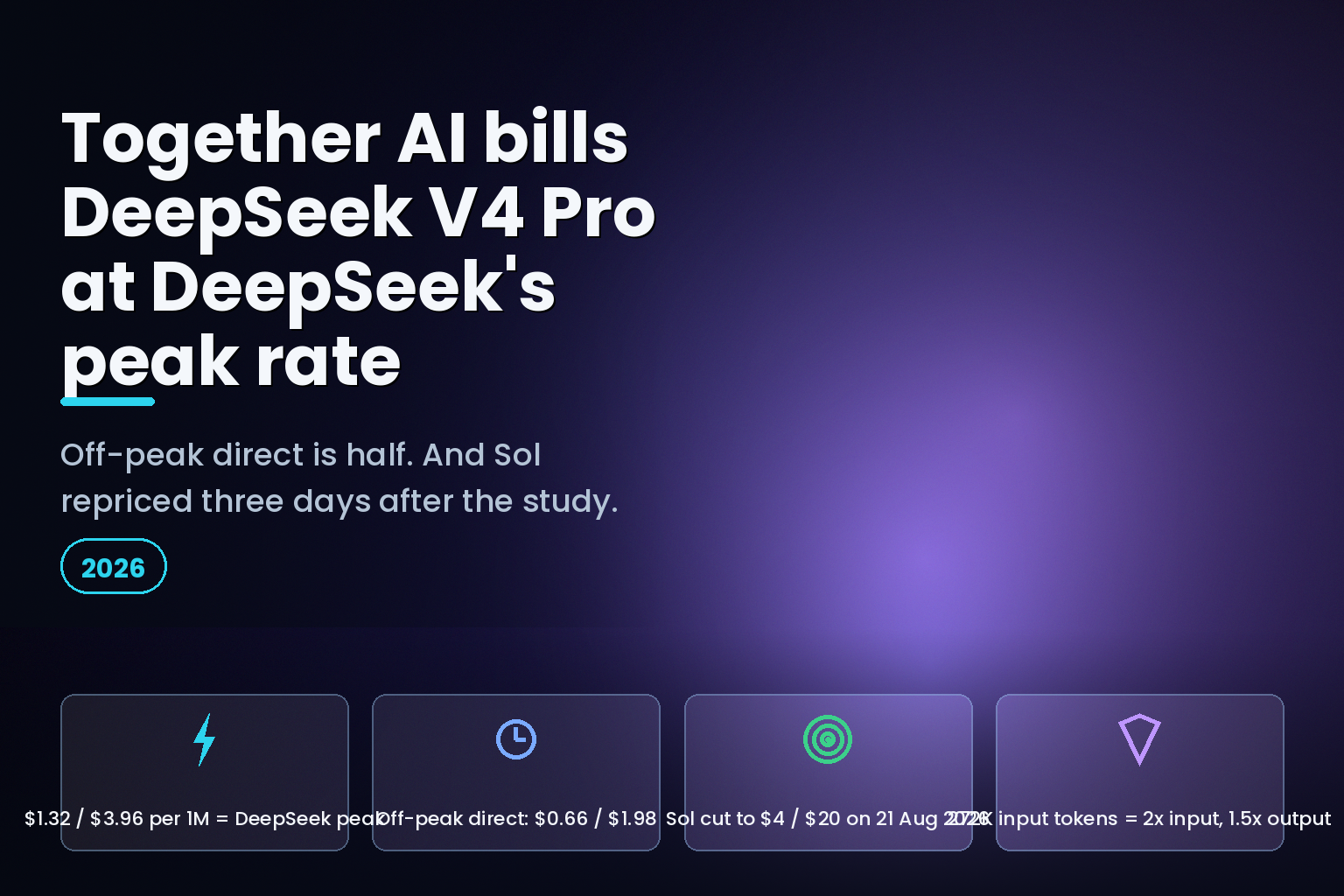
Together AI's $0.24 DeepSeek rollout is billed at DeepSeek's peak rate in 2026
Together AI's 18 August 2026 DeepSWE study priced a DeepSeek V4 Pro rollout at $0.24 and GPT-5.6 Sol at $8.37. Three days later OpenAI cut Sol to $4 and $20. The routing advice rests on both numbers.
Manu Shukla -
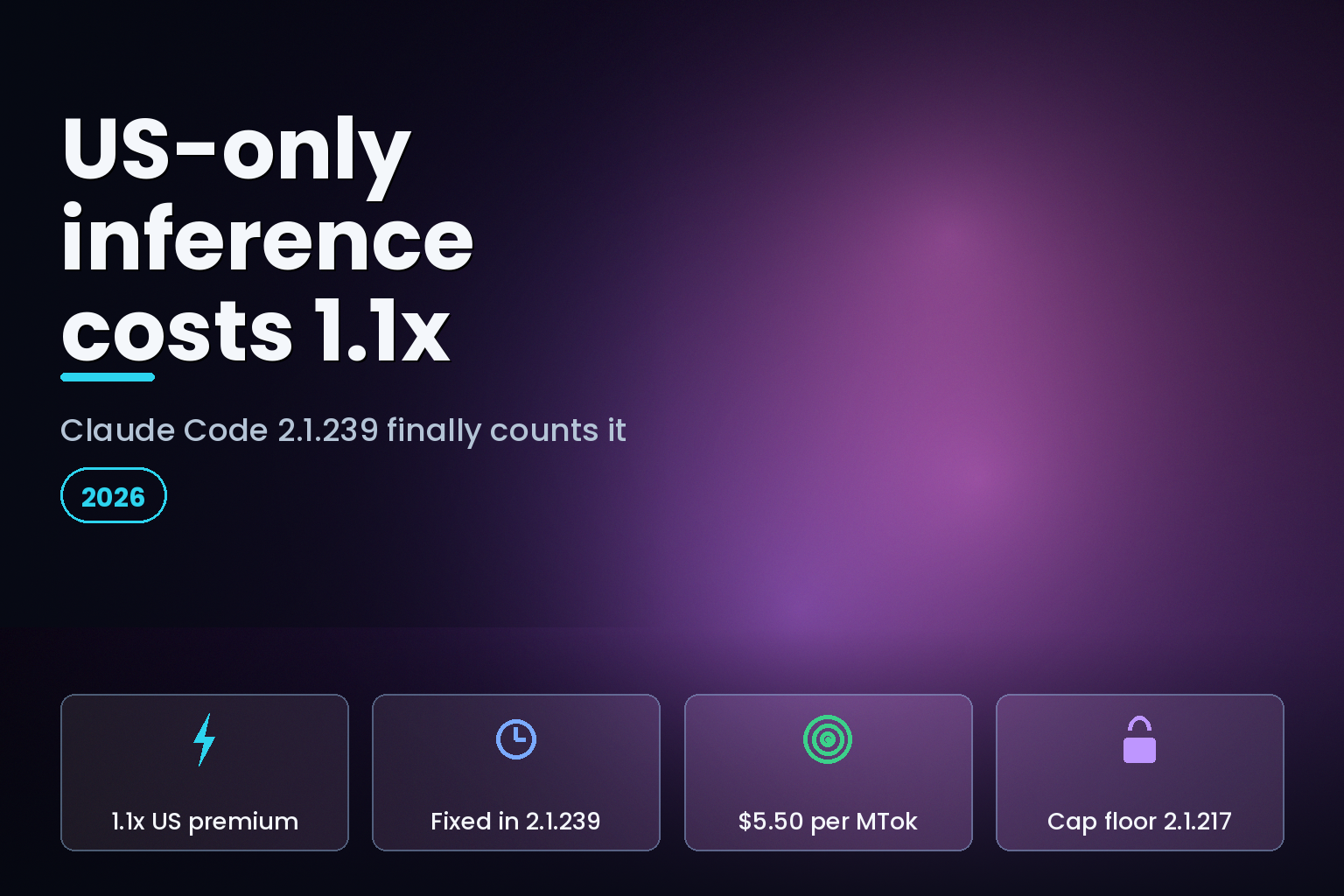
Claude Code 2.1.239 fixed a 10% under-count in US-only inference cost caps
Anthropic prices US-only inference at 1.1x on Claude 4.6 and later. Until Claude Code 2.1.239 on 21 August 2026, the CLI cost display and budget cap left that 10% out. What it costs and how to check.
Manu Shukla -
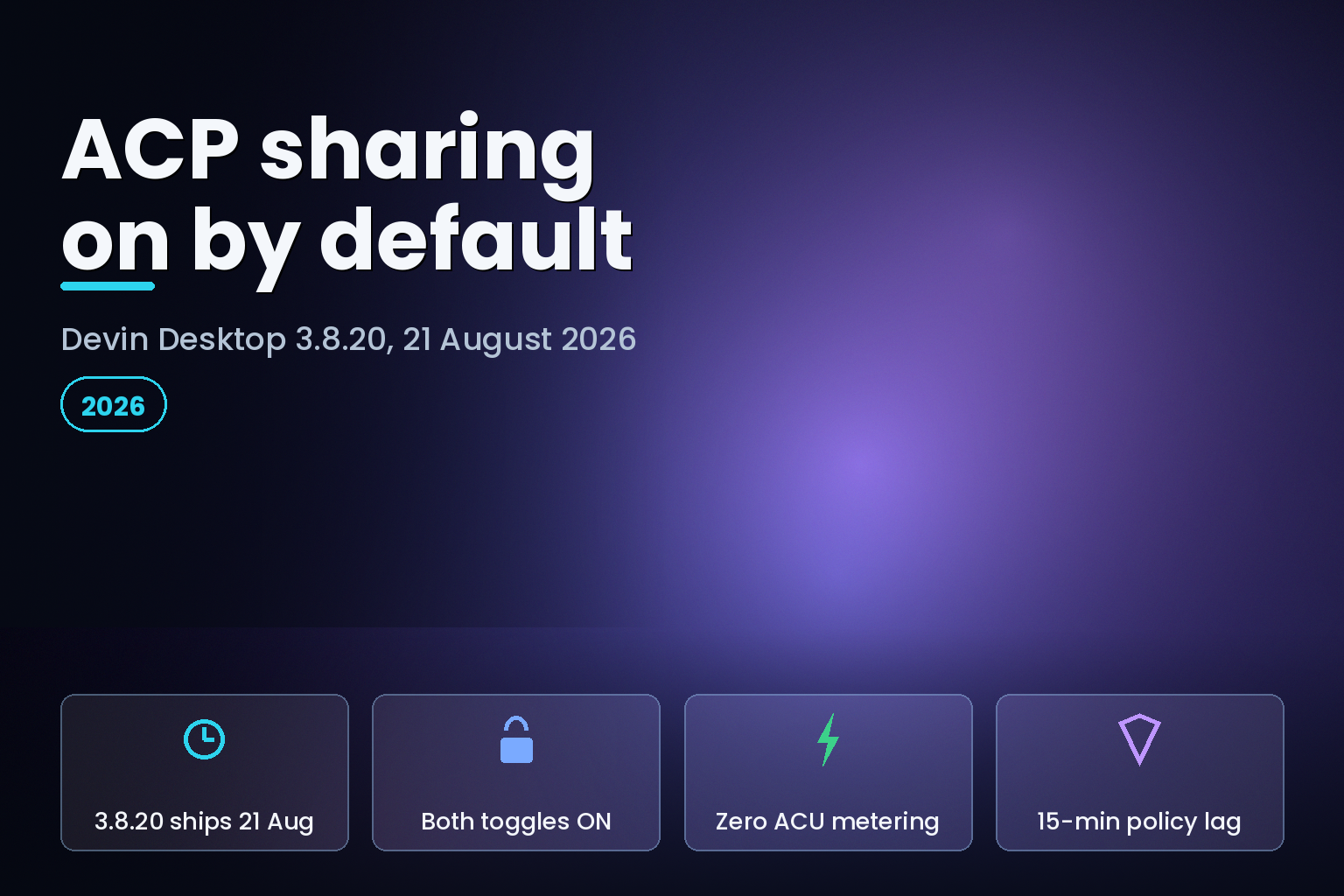
Devin Desktop 3.8.20 turned on ACP terminal sharing by default in August 2026
Cognition's 21 August 2026 release streams integrated terminal activity and local user edits to third-party ACP agents by default, with no matching control in the documented admin settings tables.
Manu Shukla -
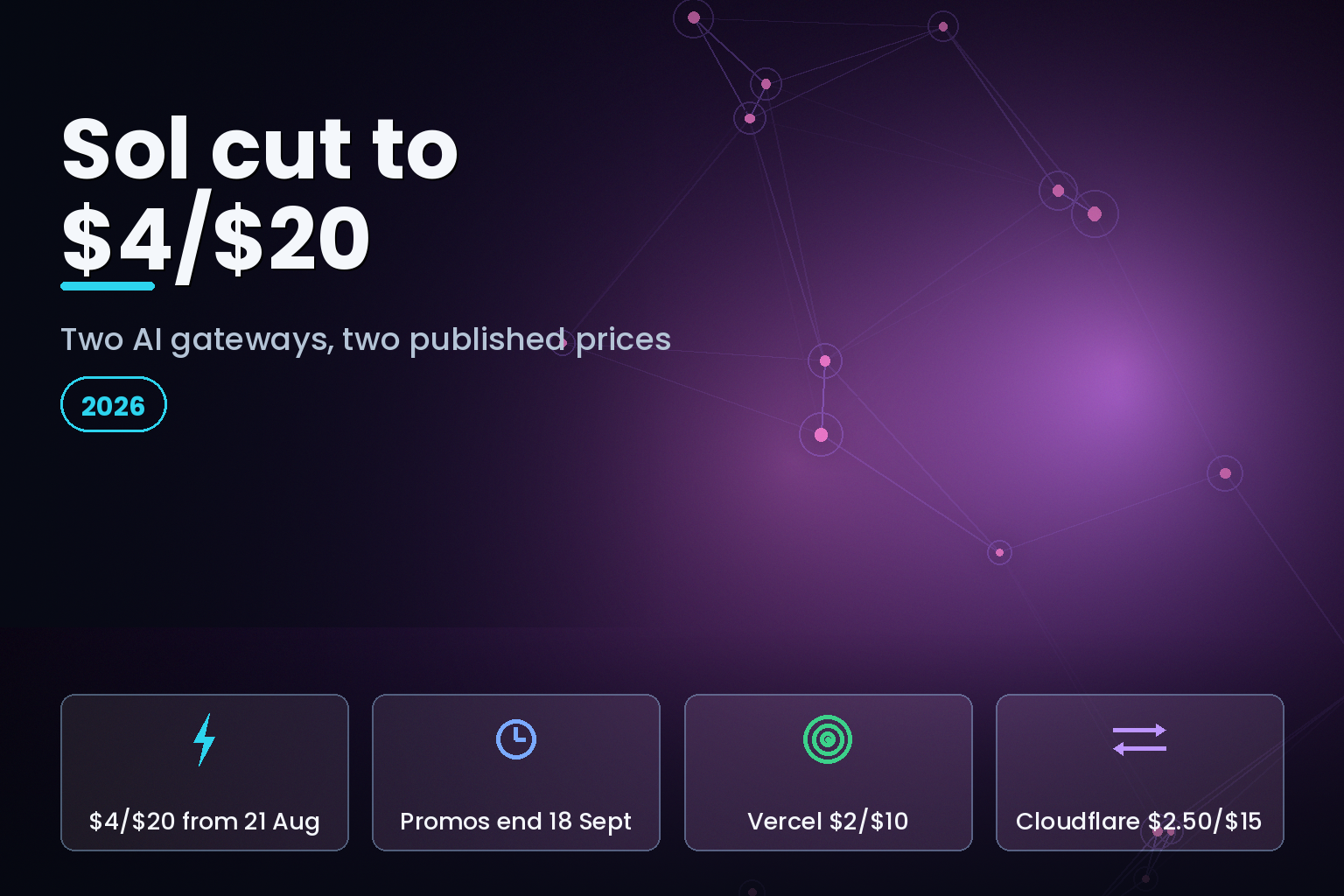
OpenAI cut GPT-5.6 Sol to $4/$20 on 21 August 2026; Cloudflare AI Gateway still lists $5/$30
OpenAI dropped GPT-5.6 Sol list pricing 20% on input and 33% on output on 21 August 2026. Vercel rebased its 50% discount to $2/$10 the same day. Cloudflare's 19 August page still shows $2.50/$15.
Manu Shukla -
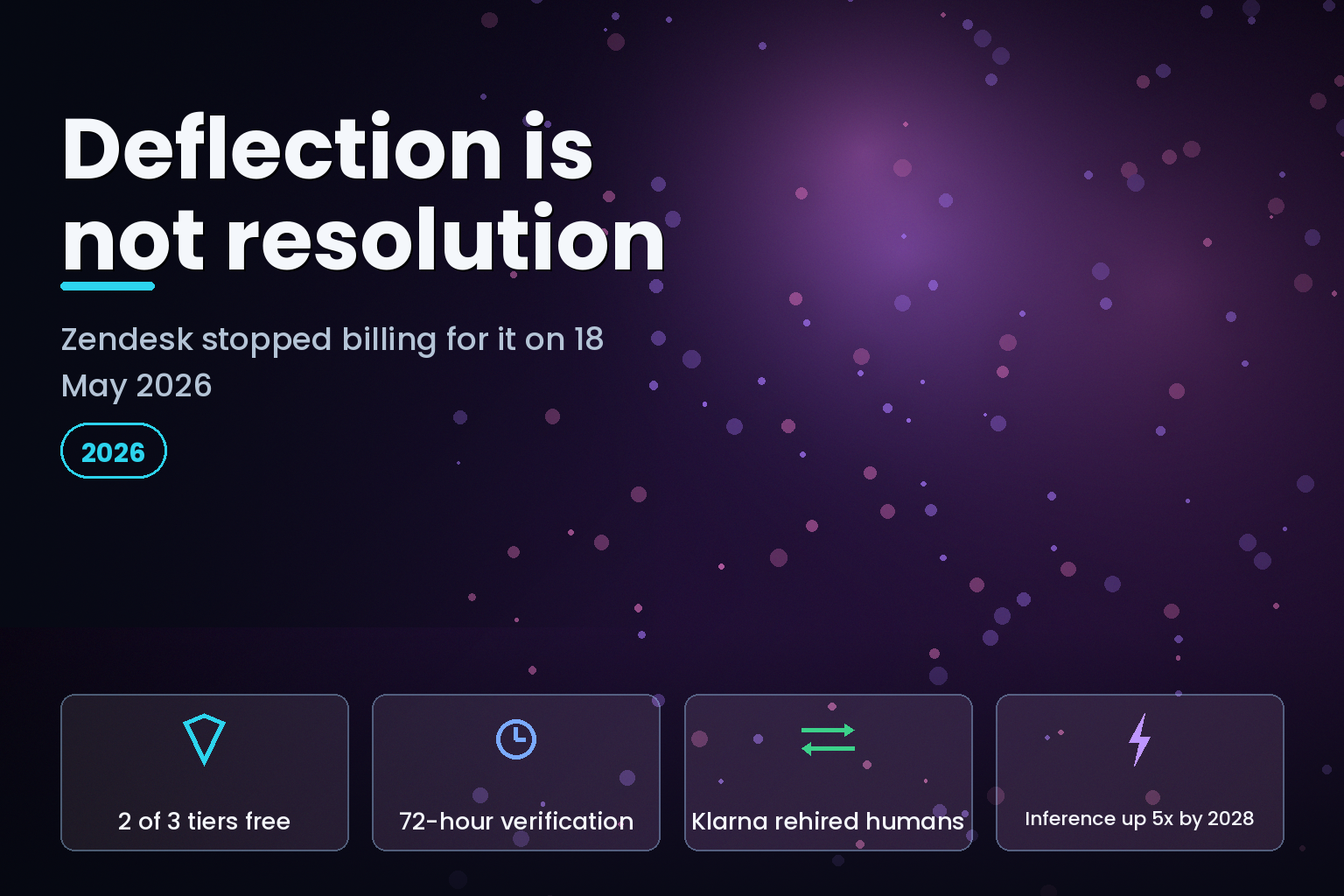
Deflection is not resolution: 5 AI support patterns that cut cost in 2026
Zendesk now writes two free tiers into its own rate card because containment is not resolution. Five conversational-AI patterns that cut support cost in 2026, and the deflection trap that erases the saving.
Manu Shukla -
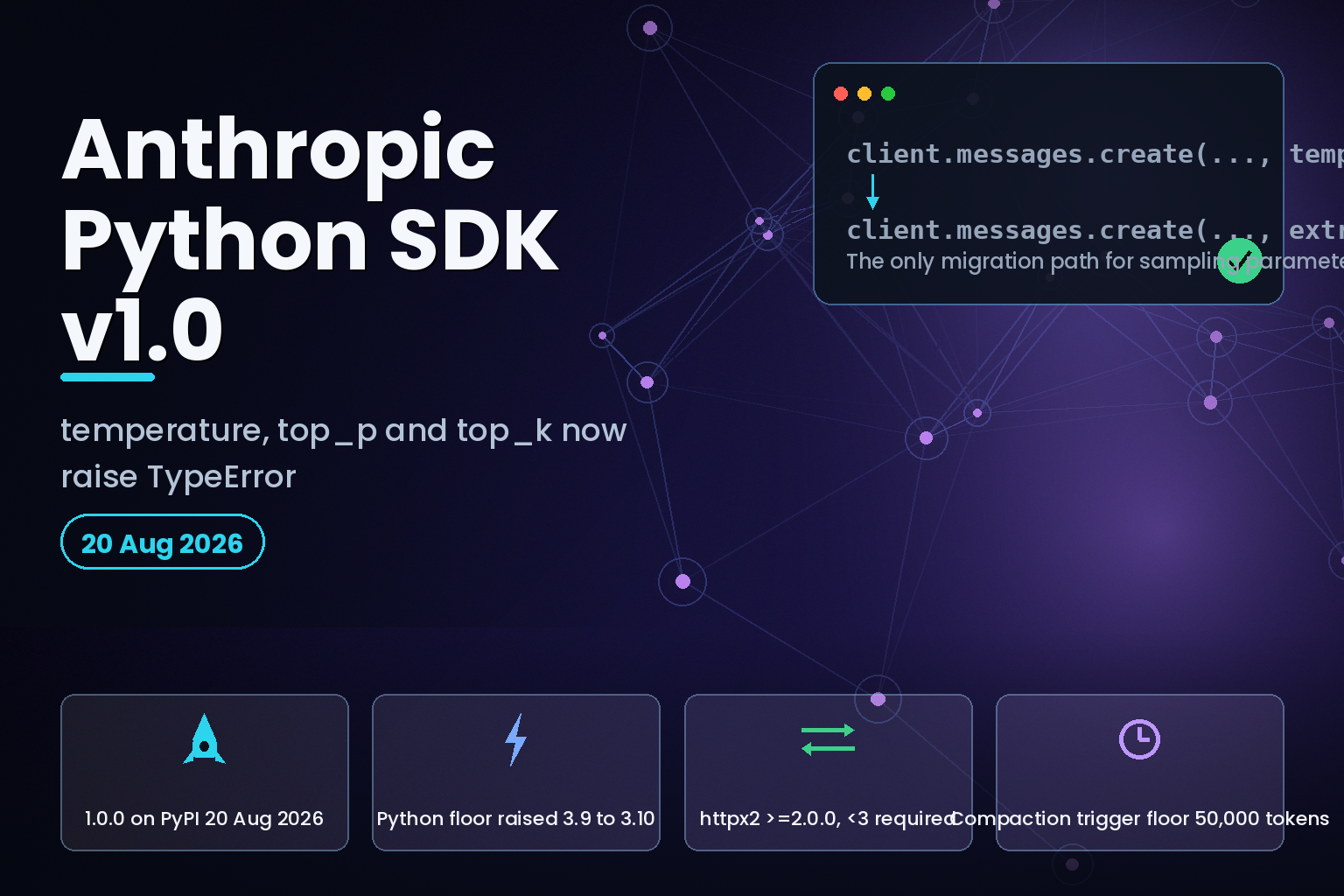
Anthropic Python SDK v1.0 drops temperature, top_p and top_k in August 2026 but the API docs still list them
Version 1.0.0 of the Anthropic Python SDK landed on PyPI on 20 August 2026. It removes temperature, top_p and top_k from every Messages method, yet the Claude Messages API reference still documents all three.
Manu Shukla -
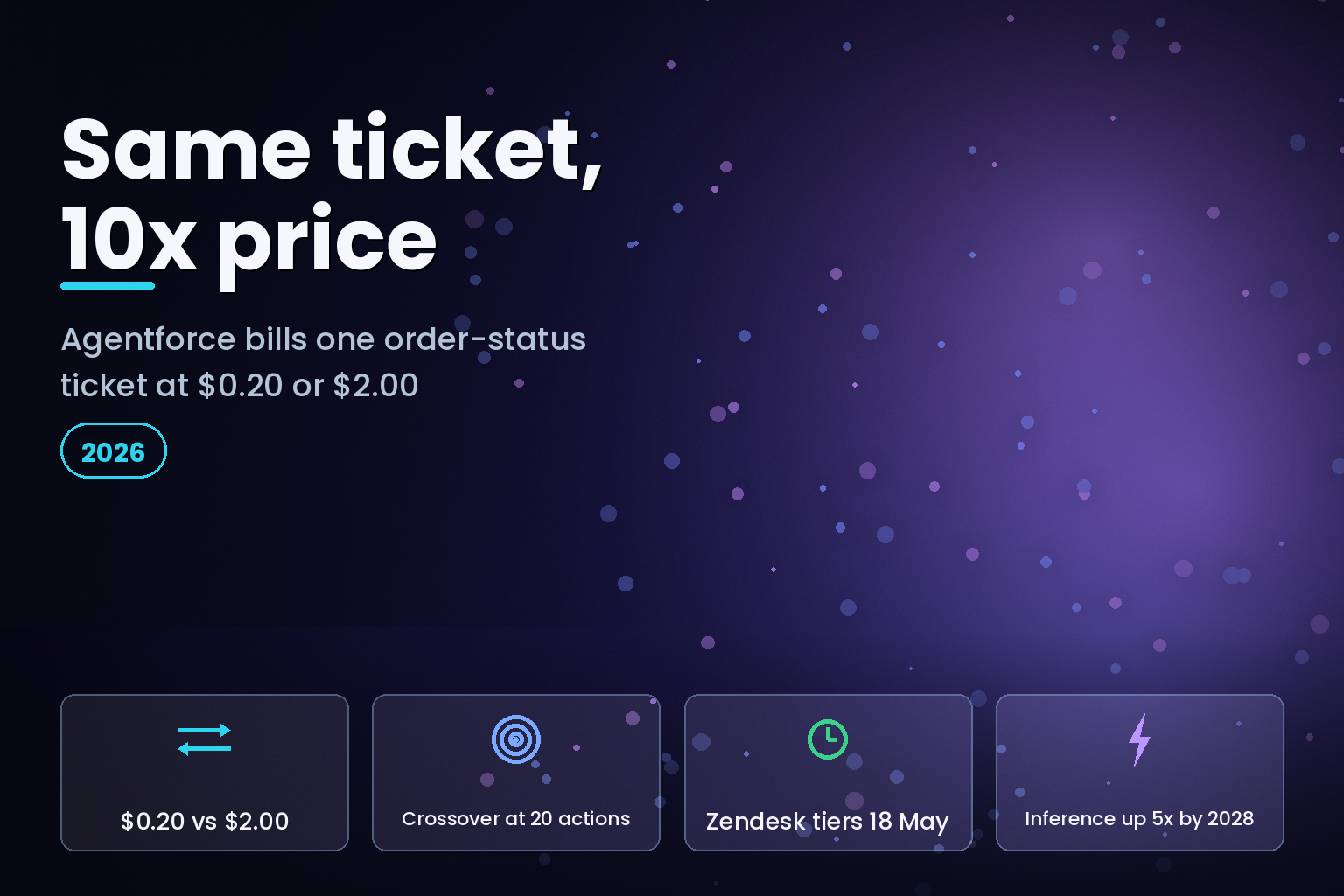
AI support agent pricing 2026: the same D2C ticket costs $0.20 or $2.00
Salesforce's own pricing page bills an order-status ticket at $0.20 under Flex Credits and $2.00 under Conversations, and one org cannot use both. A build-versus-buy guide for D2C support in 2026.
Manu Shukla -
AI customer service costs in 2026: three vendor prices you can verify, one you cannot
Intercom bills Fin at $0.99 per outcome and Salesforce bills Agentforce at $2.00 per conversation. No research house publishes a checkable human cost per ticket. Here is what survives a source check.
Manu Shukla -
Cursor put subagents on their own VMs on 19 August 2026 - the bill is still token-shaped
Cursor's 19 August 2026 release runs each cloud subagent on its own VM. No machine-hour fee exists, so a five-way swarm costs roughly five times the tokens instead, and the docs restrict CI autofix to Teams.
Manu Shukla -
Perplexity set 27 September 2026 as Sonar's retirement date, and its own docs contradict the pitch
Perplexity's 13 August 2026 post gives Sonar 45 days, ending 27 September 2026. The migration guide names no date, the changelog names none, and the docs' benchmarks show 5.46x where the blog claims 7x.
Manu Shukla -
Grok 4.6 at $2/$6 vs GPT-5.6 Sol at $5/$30: the 2026 agent cost table
Grok 4.6 matches GPT-5.6 Sol on the Artificial Analysis Intelligence Index at 60% lower headline pricing. Three billing rules decide whether that discount survives contact with a real agent workload.
Manu Shukla -
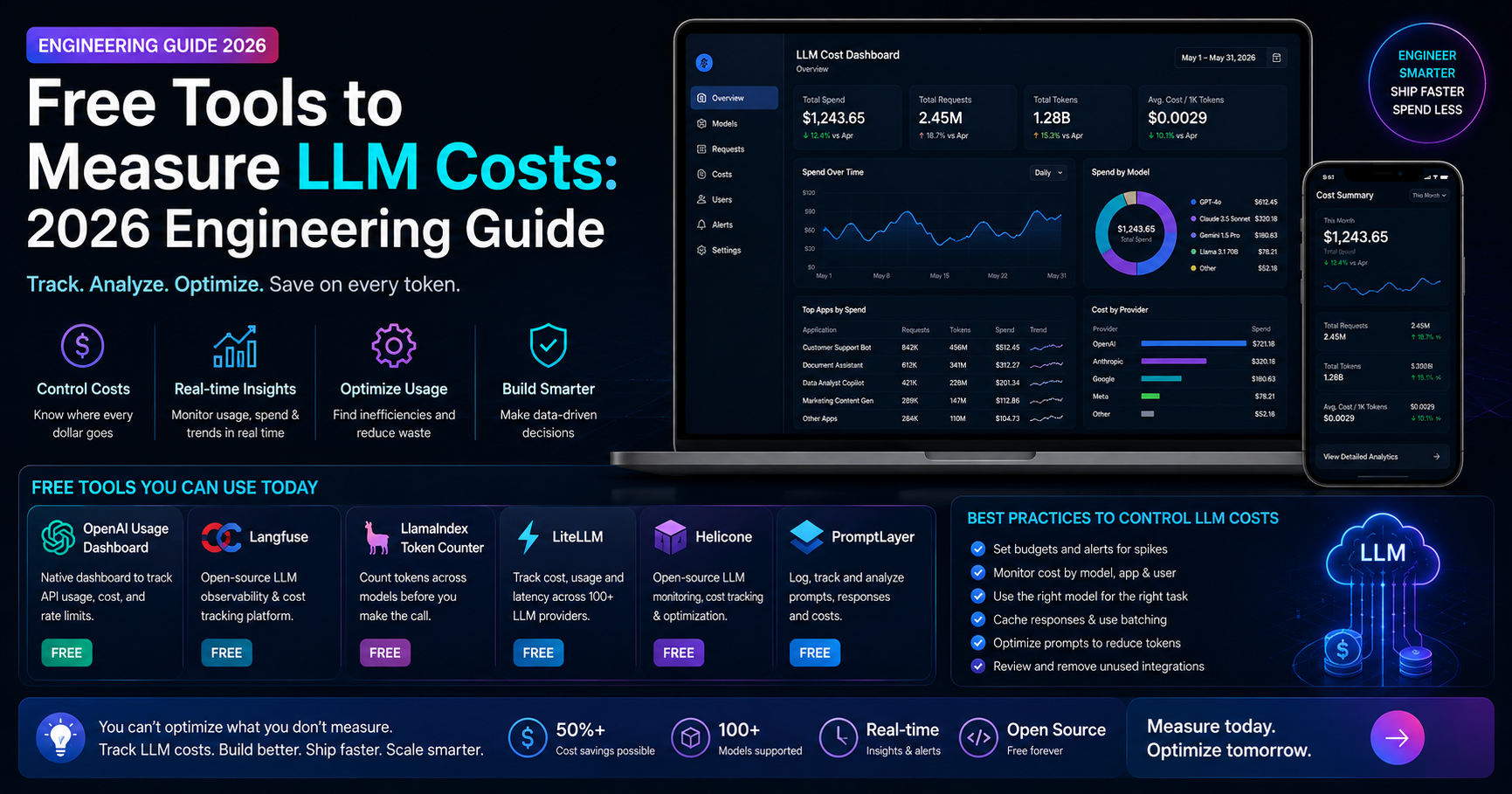
Free Tools to Measure LLM Costs: 2026 Engineering Guide
Eight free tools engineers use in 2026 to measure LLM API costs — pre-flight token counters, production observability, cross-provider calculators. GPT-5, Claude, Gemini prices verified Aug 2026.
Manu Shukla -
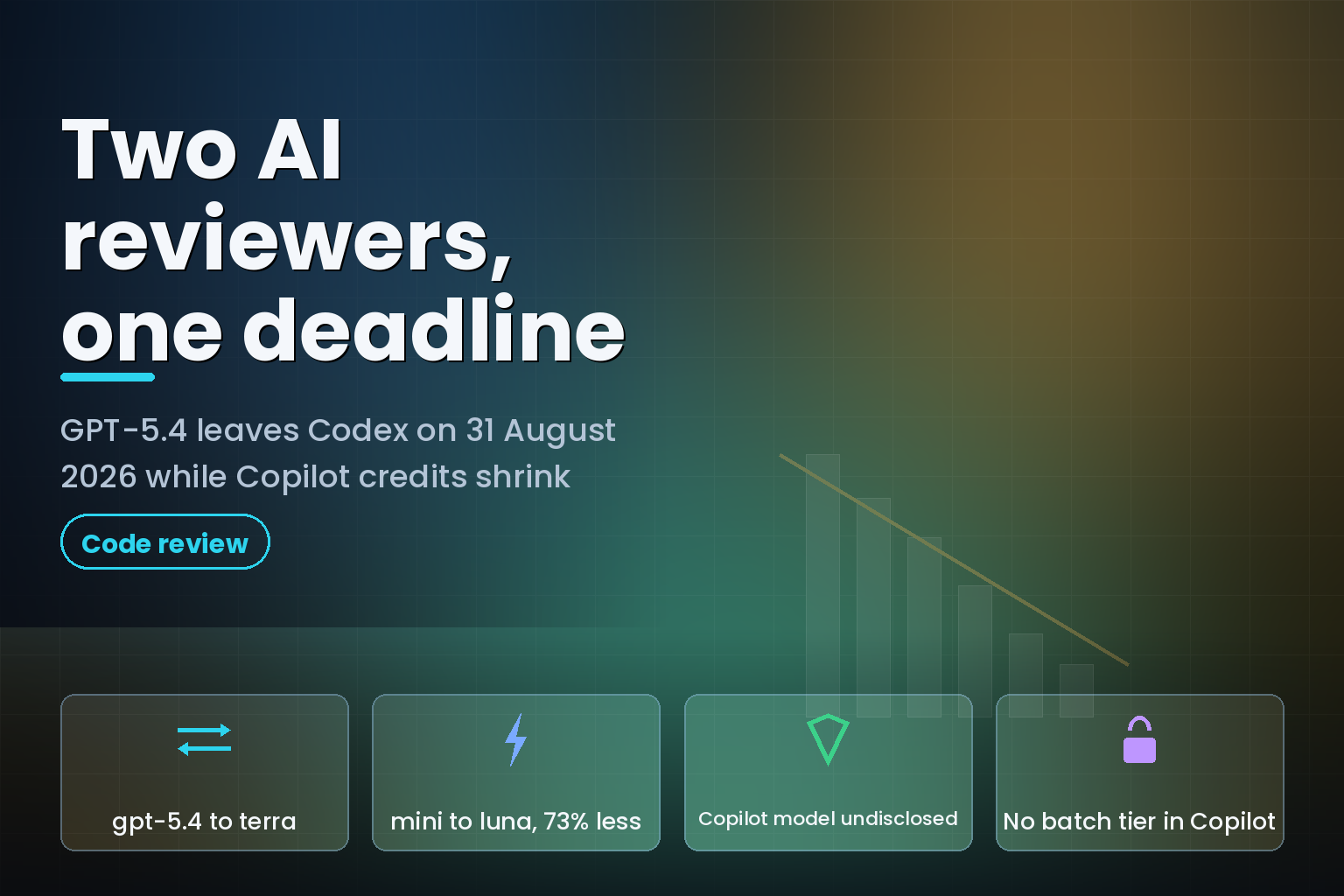
GPT-5.4 leaves Codex on 31 August 2026: Codex vs Copilot code review costs
Two AI code reviewers, two pricing models, one shared deadline. OpenAI retires GPT-5.4 from Codex on 31 August 2026 while GitHub's promotional credits end the same night, and the token economics move in opposite
Manu Shukla -
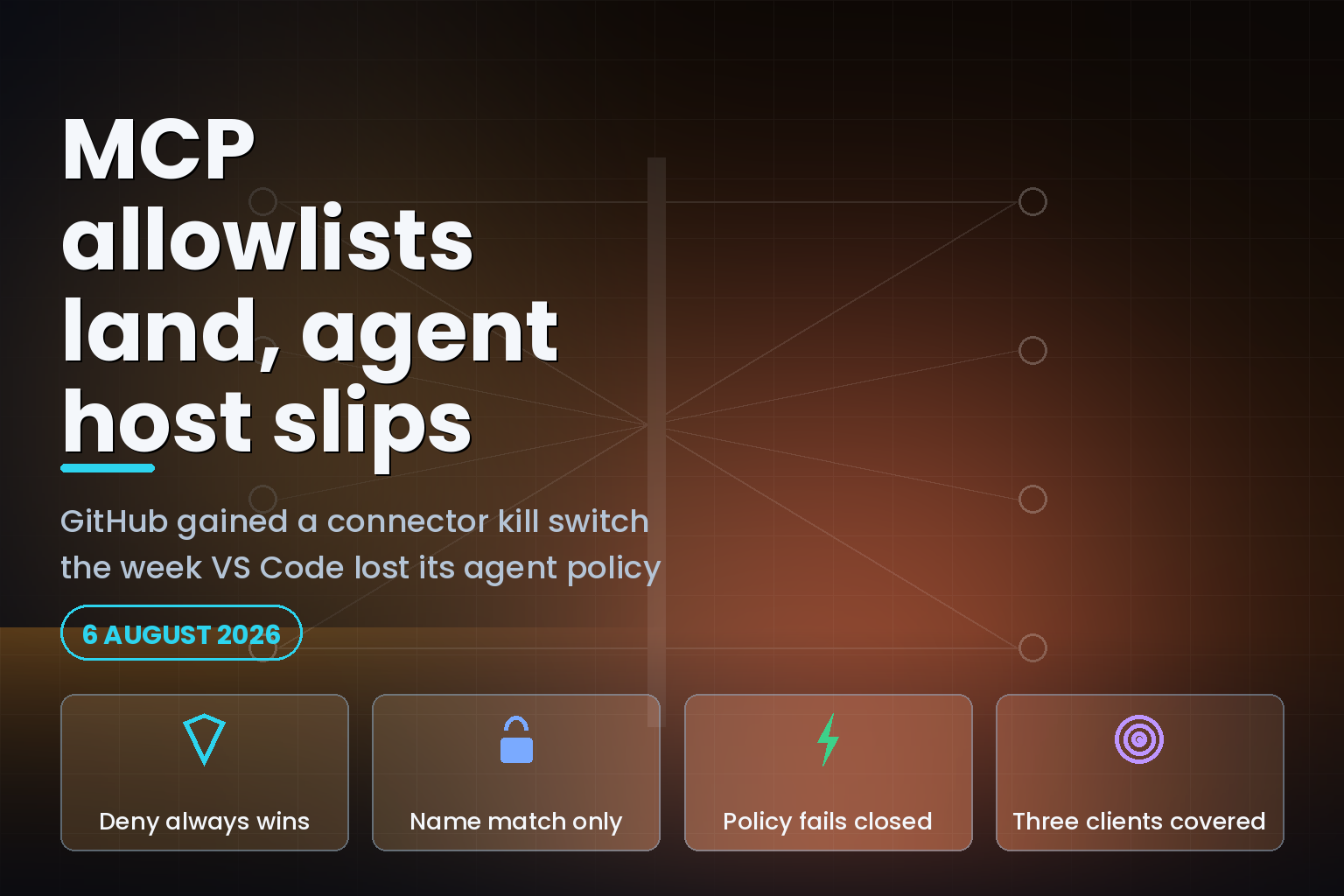
GitHub MCP allowlists, 6 August 2026: what platform teams must change now
GitHub gave enterprise owners a central MCP allowlist on 6 August 2026. VS Code removed the ChatAgentHostEnabled admin policy on 5 August. One week, one control gained and one lost - and GitHub's own docs say the new
Manu Shukla -
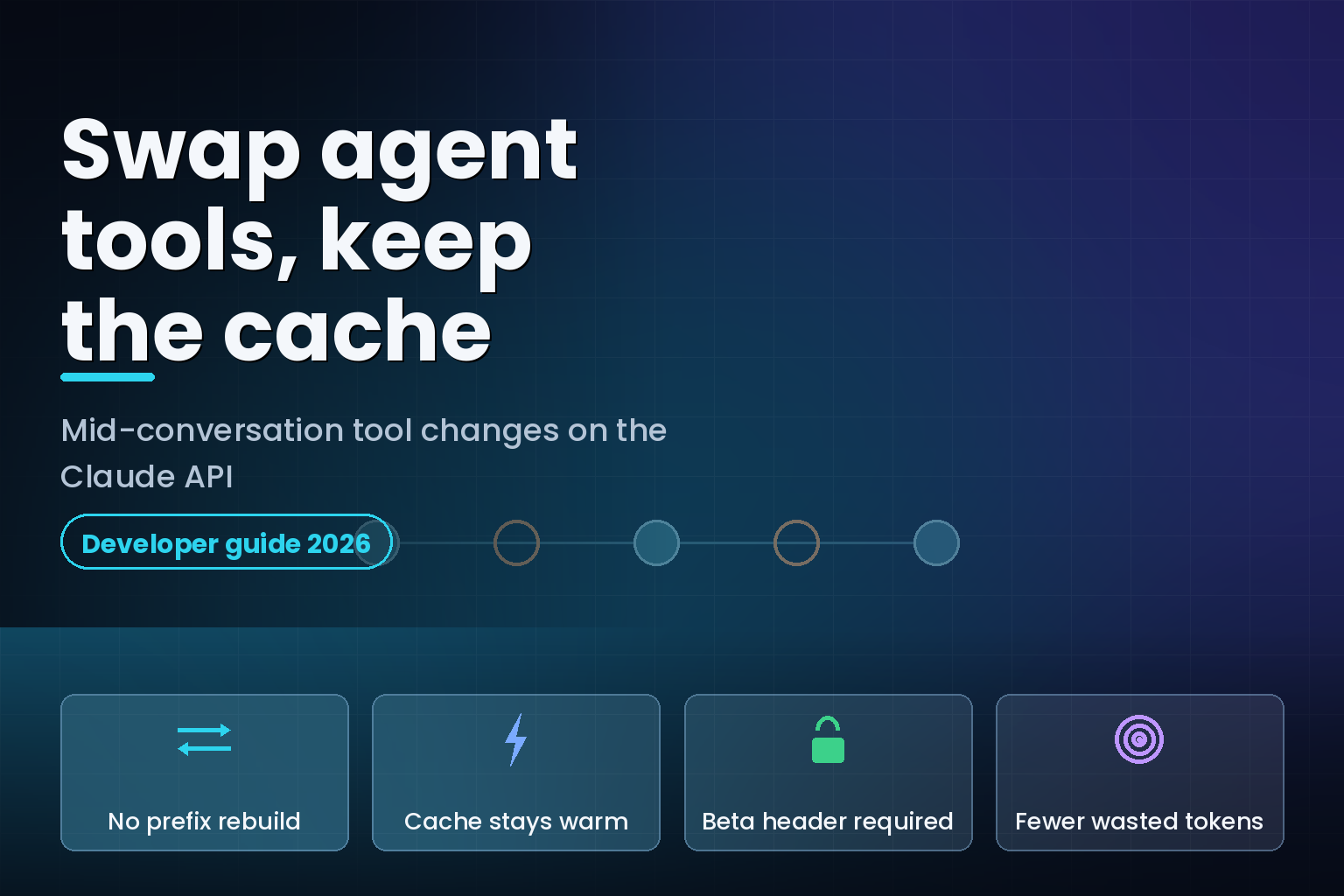
Claude mid-conversation tool changes end a 12.5x cache-rewrite penalty in 2026
Editing the tools array mid-session invalidates the entire Claude prompt cache. The mid-conversation-tool-changes-2026-07-01 beta replaces that edit with two content blocks, and the price gap between a cache read and
Manu Shukla -
Copilot cloud agent in 2026: reasoning levels, comment triggers and the AI Credit math behind them
GitHub shipped two Copilot cloud agent changes on 3 August 2026: a per-task reasoning level and automations that fire on issue or pull request comments. Both raise token spend, and GitHub's billing doc says nothing
Manu Shukla -
Muse Code's $0.10 contributor tier: what Meta's 2026 discount really costs
Muse Code's contributor tier prices Muse Spark 1.2 at $0.10 per million input tokens against $1.25 on standard. The discount is real, and so is the second price: 50x fewer requests and a licence to train on your code.
Manu Shukla -
Zendesk removes legacy AI agents on 10 December 2026: the 31 August migration decision
Zendesk removes AI agents Essential and legacy bot builder on 10 December 2026, development ends 31 August. Rebuilds are manual, agents are now single-channel, and billing moved to resolution tiers in May.
Manu Shukla -
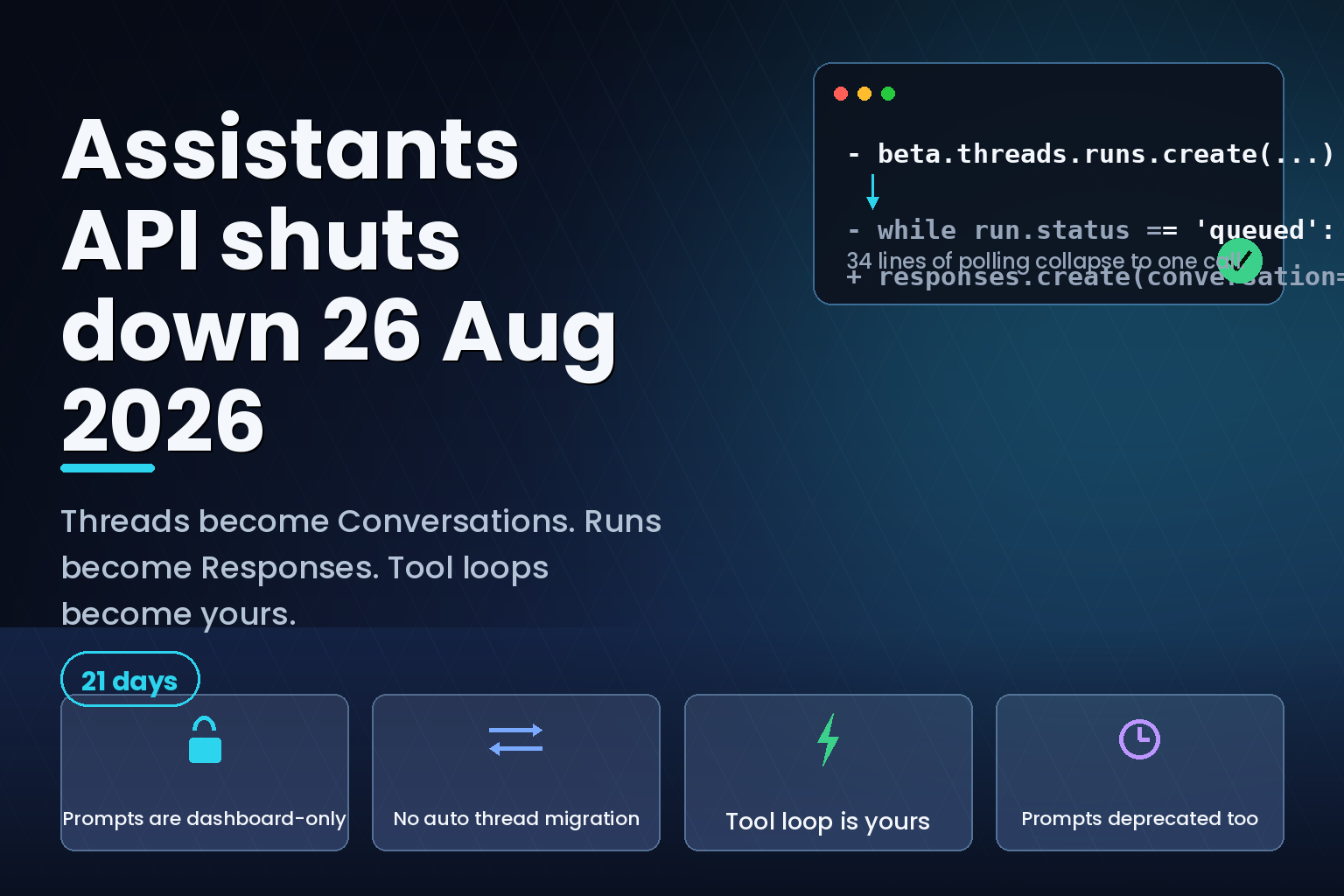
OpenAI Assistants API shuts down 26 August 2026: a 3-week migration sprint plan
OpenAI removes the Assistants API on 26 August 2026. Threads become Conversations, Runs become Responses, and the tool-call loop becomes your code. Here is the mapping, the hidden cost changes, and a three-week plan.
Manu Shukla -
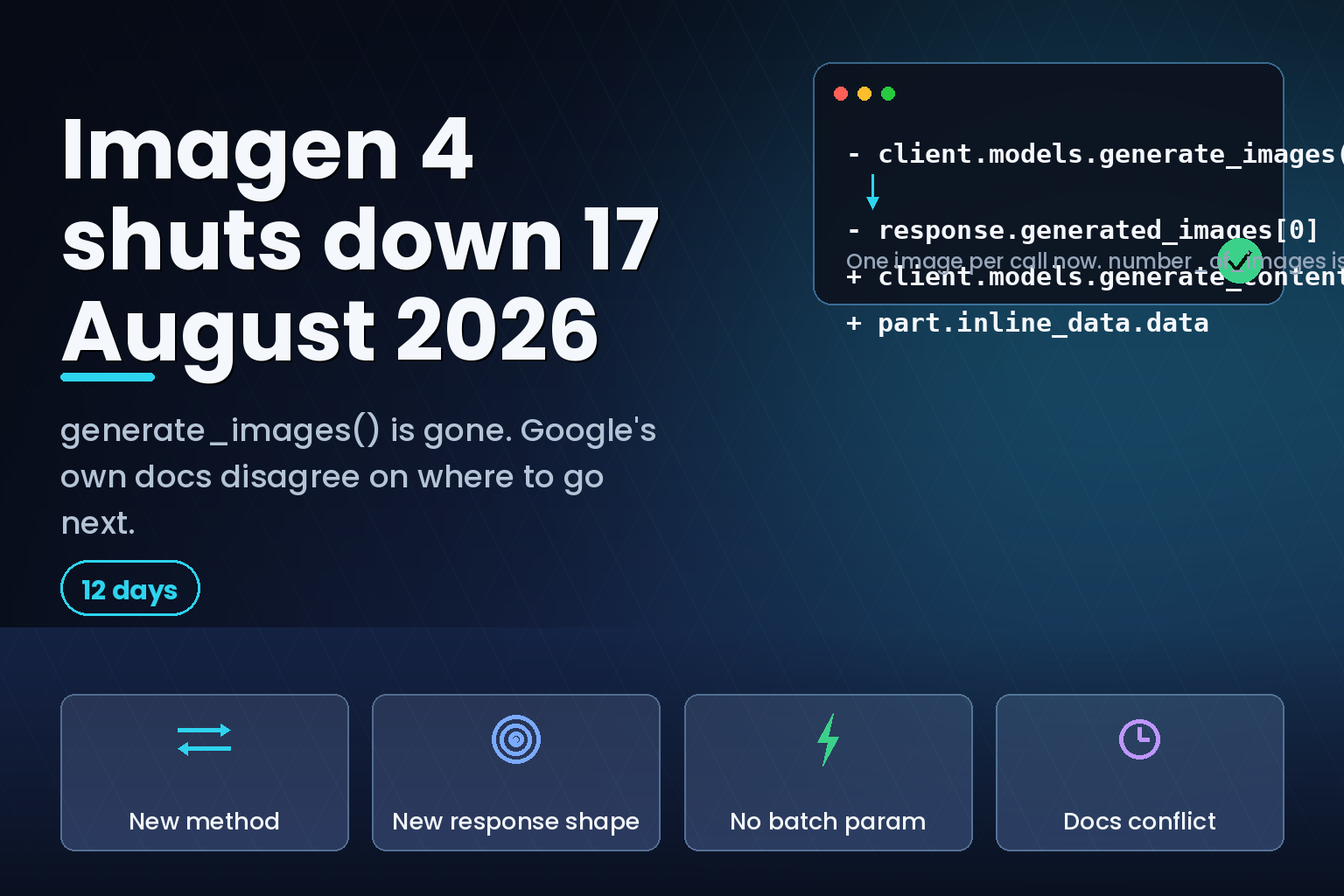
Imagen 4 shuts down 17 August 2026: the generate_content() migration, with cost math
All three Imagen 4 models shut down on 17 August 2026. generate_images() is gone, the response shape changes, and number_of_images no longer exists. Google's docs name two different replacement models, and one of them
Manu Shukla -
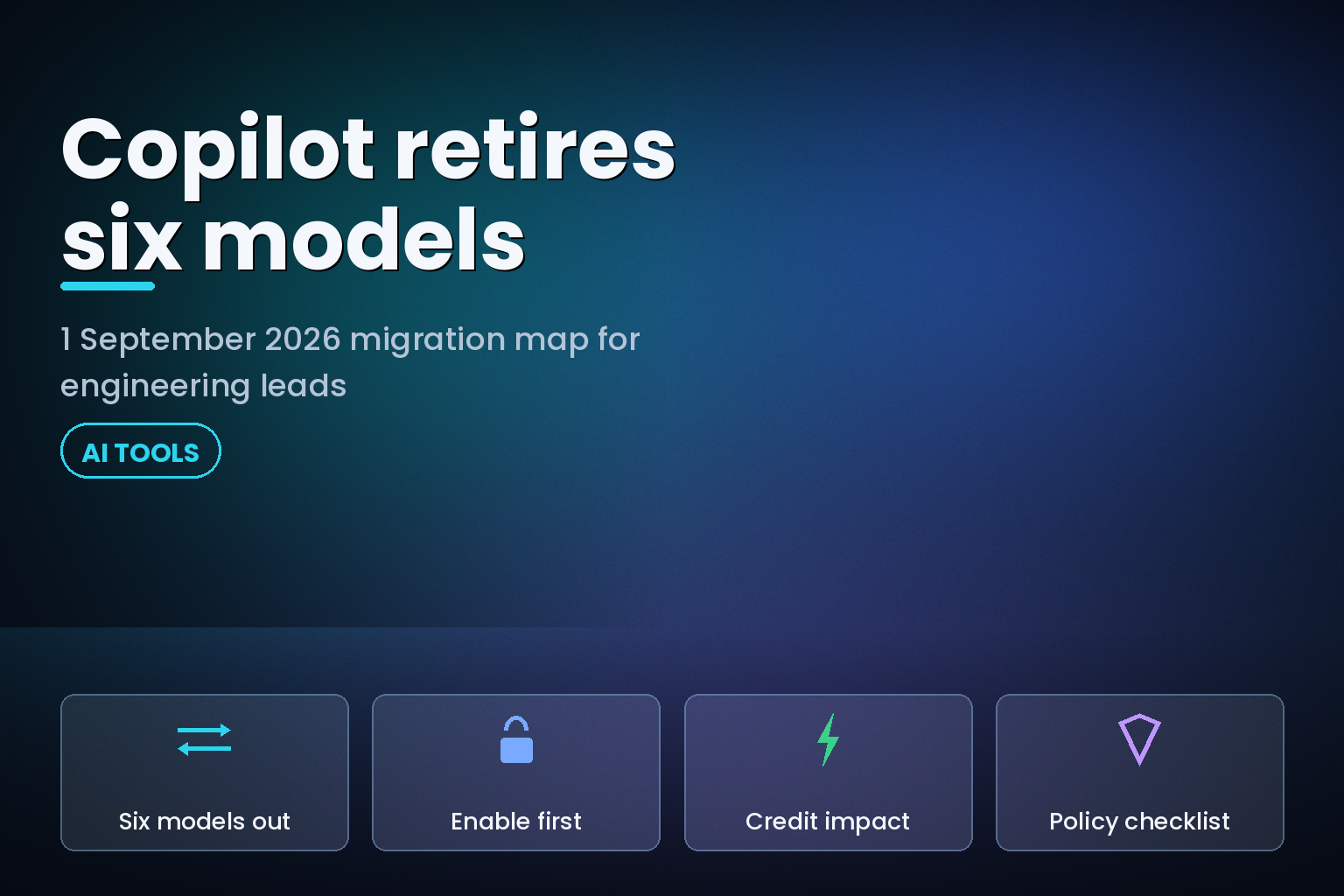
GitHub Copilot retires 6 models on 1 September 2026: the migration map admins need
GitHub will remove six models from every Copilot surface on 1 September 2026. The suggested replacements cost more per token, and Enterprise admins have to enable them first. Here is the map.
Manu Shukla -
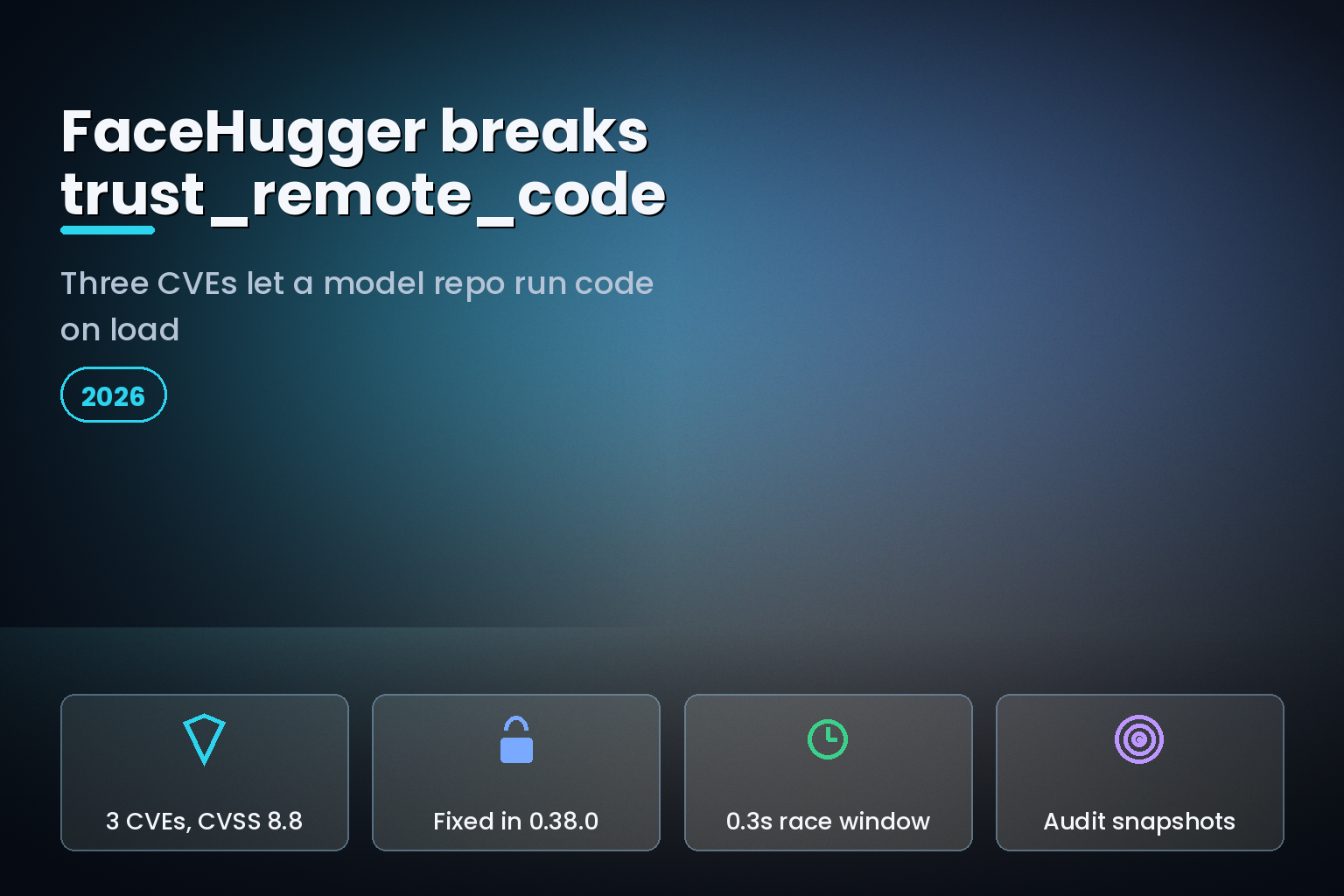
3 Diffusers CVEs let a Hugging Face model repo run code with trust_remote_code off
Zafran Security's FaceHugger research showed three ways a crafted Hugging Face repo runs Python during from_pretrained even when trust_remote_code is False. Here is the patch path and the policy.
Manu Shukla -
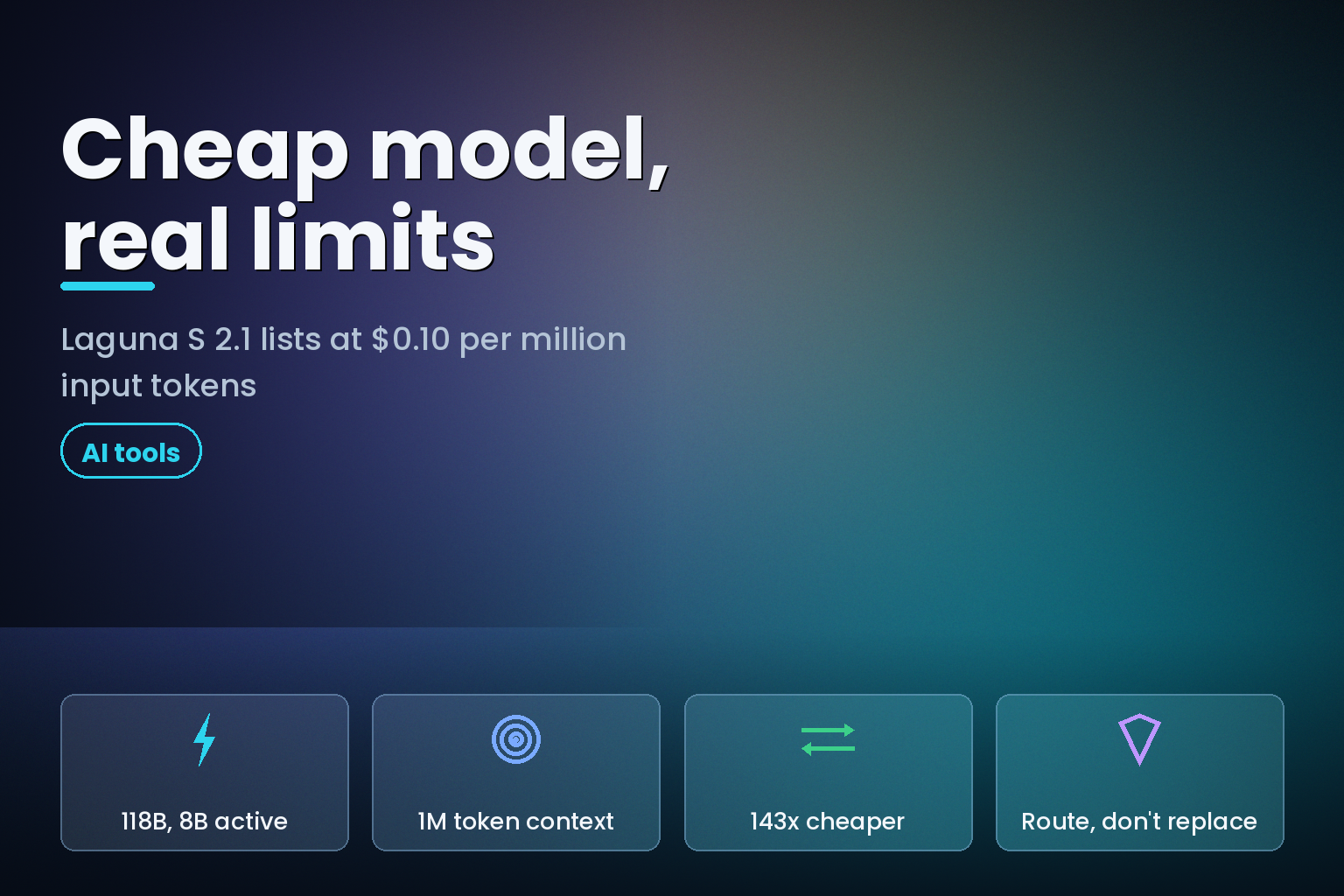
Laguna S 2.1 costs $0.10 per million tokens: where it replaces Claude and GPT
Poolside's 118B open-weight coding model is 100x cheaper on input than Claude Fable 5 and scores 70.2% to Fable's 88% on Terminal-Bench 2.1. Here is the routing decision that follows from those two numbers.
Manu Shukla -
Qwen3.8-Max went GA on 3 August 2026 at $2 and $6 per million tokens, and it is more expensive than Qwen3.7-Max is today
Qwen3.8-Max shipped on 3 August 2026 at $2 input and $6 output per million tokens, with a 1M context and 15,000 requests per minute. But Qwen3.7-Max is on a 50% discount at $1.25 and $3.75, so the newer flagship costs
Manu Shukla -
Sora 2 and the Videos API shut down on 24 September 2026: the migration and the real cost per second
OpenAI's deprecations page lists six Sora 2 entries with a 24 September 2026 shutdown and an empty replacement column. Veo 3.1 Lite runs $0.05 per second, Runway Gen-4.5 $0.12, Sora 2 Pro at 1080p was $0.70. Here is
Manu Shukla -
Agent web search APIs in 2026: $5 to $35 per 1,000 queries compared
Amazon charges $7 per 1,000 web search queries, Microsoft $14 per 1,000 transactions and Google up to $35 per 1,000 grounded prompts. The same 200,000-query month costs $1,000 to $5,425.
Manu Shukla -
Antigravity vs Cursor 2026: 5 gaps that decide the enterprise rollout
Antigravity is free for individuals and consumption-billed through Google Cloud, with no organisational tier by contract. Cursor sells seats from $32 to $120. Five gaps decide which one survives a rollout.
Manu Shukla -
ChatGPT Atlas shuts down on 9 August 2026: four migration paths for browser agents
OpenAI is deprecating Atlas and moving browser agents into ChatGPT and Codex. Atlas stops working on 9 August 2026, bookmarks and cookies do not transfer, and the browser stops receiving security updates.
Manu Shukla -
Microsoft 365 Copilot passed 30 million paid seats in July 2026: run this renewal math before you sign
Microsoft reported over 30 million paid Copilot seats for FY26 Q4. The $30 add-on price did not move, but the base licence did, the free tier improved, and billing is shifting to seat plus consumption. Here is
Manu Shukla -
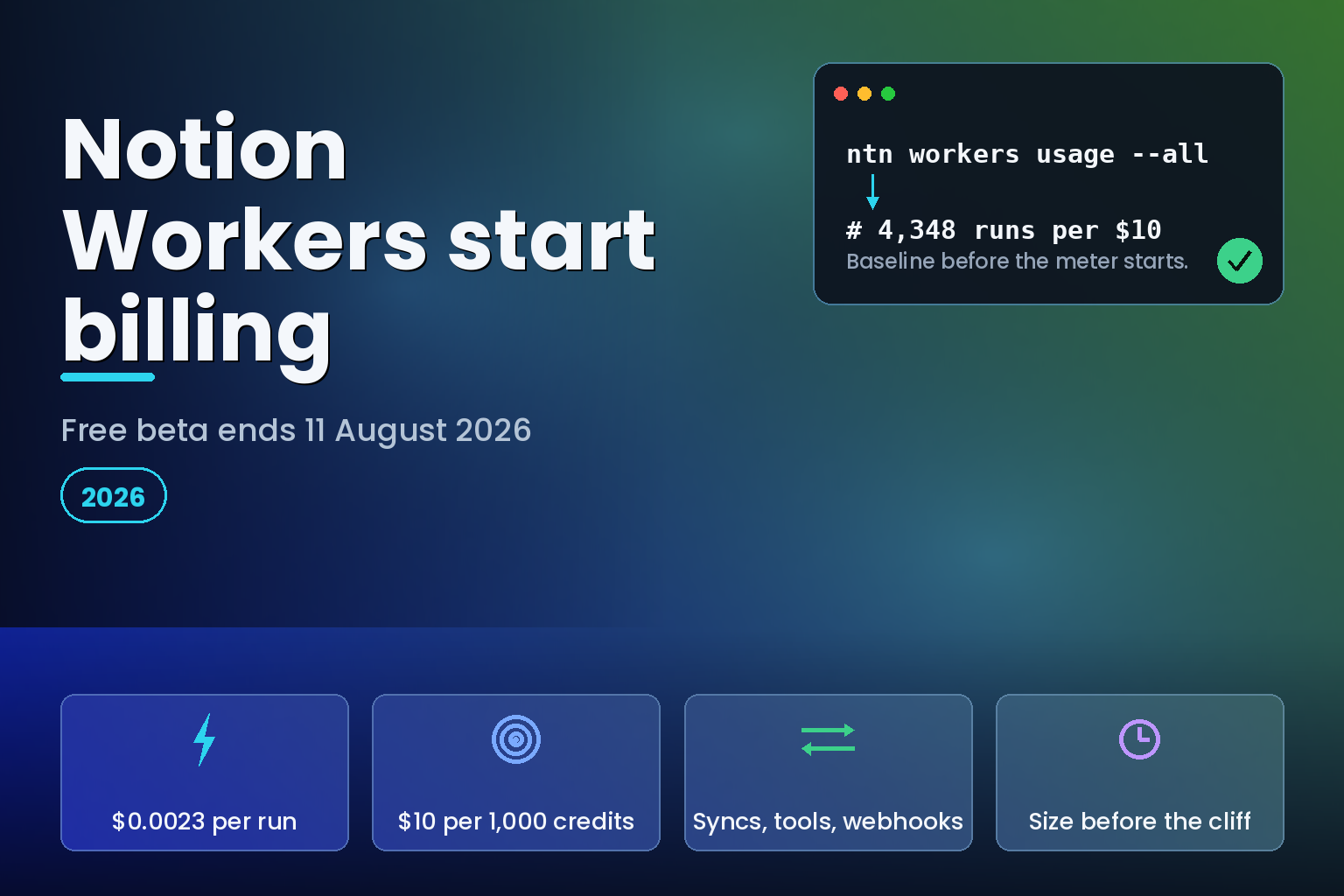
Notion Workers billing starts 11 August 2026: what your automations will actually cost
Notion's hosted runtime leaves free beta on 11 August 2026 and starts drawing Notion credits at about $0.0023 per run. Here is the arithmetic, the volume at which the bill overtakes a $5 Cloudflare Workers subscription
Manu Shukla -
vLLM Speculative Decoding in 2026: P-EAGLE vs DFlash vs DSpark for Faster, Cheaper LLM Serving
P-EAGLE, DFlash, and DSpark bring parallel drafting to vLLM in 2026, generating a whole block of draft tokens in one pass for up to 1.69x higher throughput than EAGLE-3. How they work and how to serve them.
Manu Shukla -
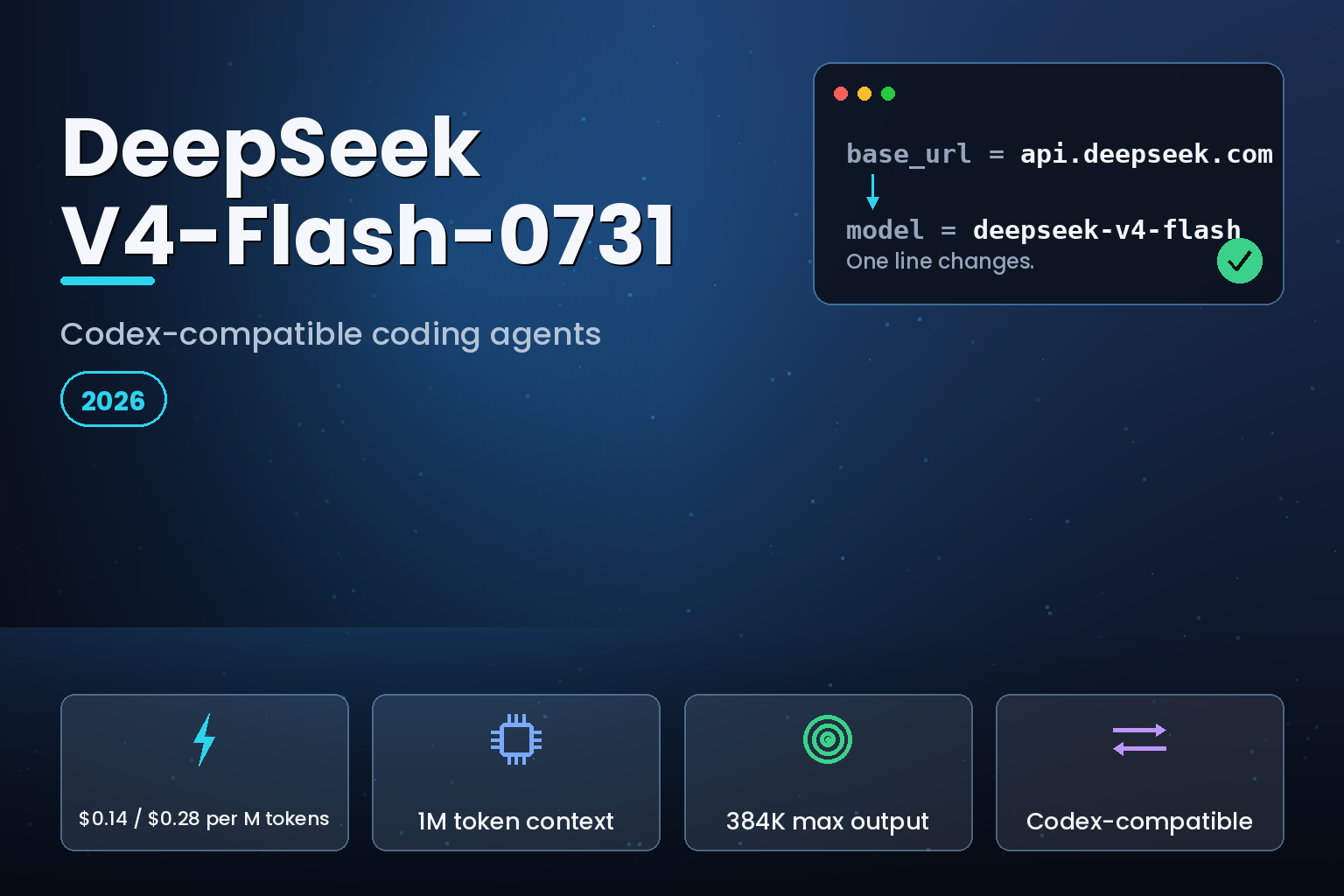
DeepSeek V4-Flash-0731: Codex-compatible coding agents at $0.28 per million tokens (2026)
DeepSeek's V4-Flash-0731 (July 31, 2026) adds native Responses API and an official OpenAI Codex path at $0.14/$0.28 per million tokens. How to wire a coding agent to it, its agent-benchmark scores, and the cost math.
Manu Shukla -
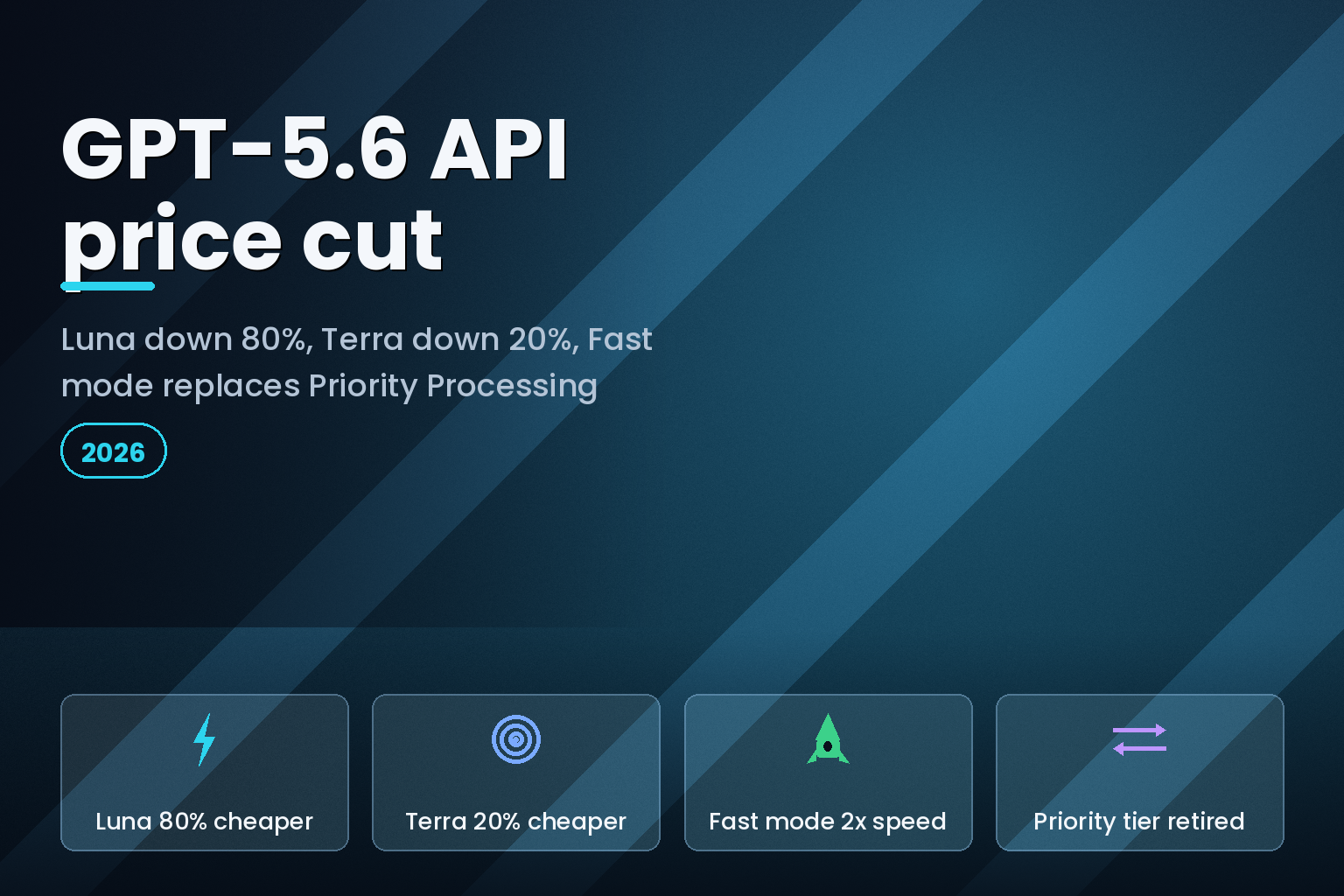
OpenAI cut GPT-5.6 API prices up to 80% in July 2026 and replaced Priority Processing with Fast mode
OpenAI's July 30, 2026 update drops GPT-5.6 Luna to $0.20/$1.20 and Terra to $2/$12 per million tokens and folds Priority Processing into a new Fast mode. What changes for your LLM spend, and how to migrate.
Manu Shukla -
AI agent memory in 2026: Mem0 vs Zep vs Letta vs Cloudflare compared on price, benchmarks and fit
Agent memory moved to production in 2026. Mem0 is a vector-first layer, Zep a temporal graph, Letta a stateful runtime, Cloudflare an edge service in beta. A pricing, benchmark and architecture comparison.
Manu Shukla -
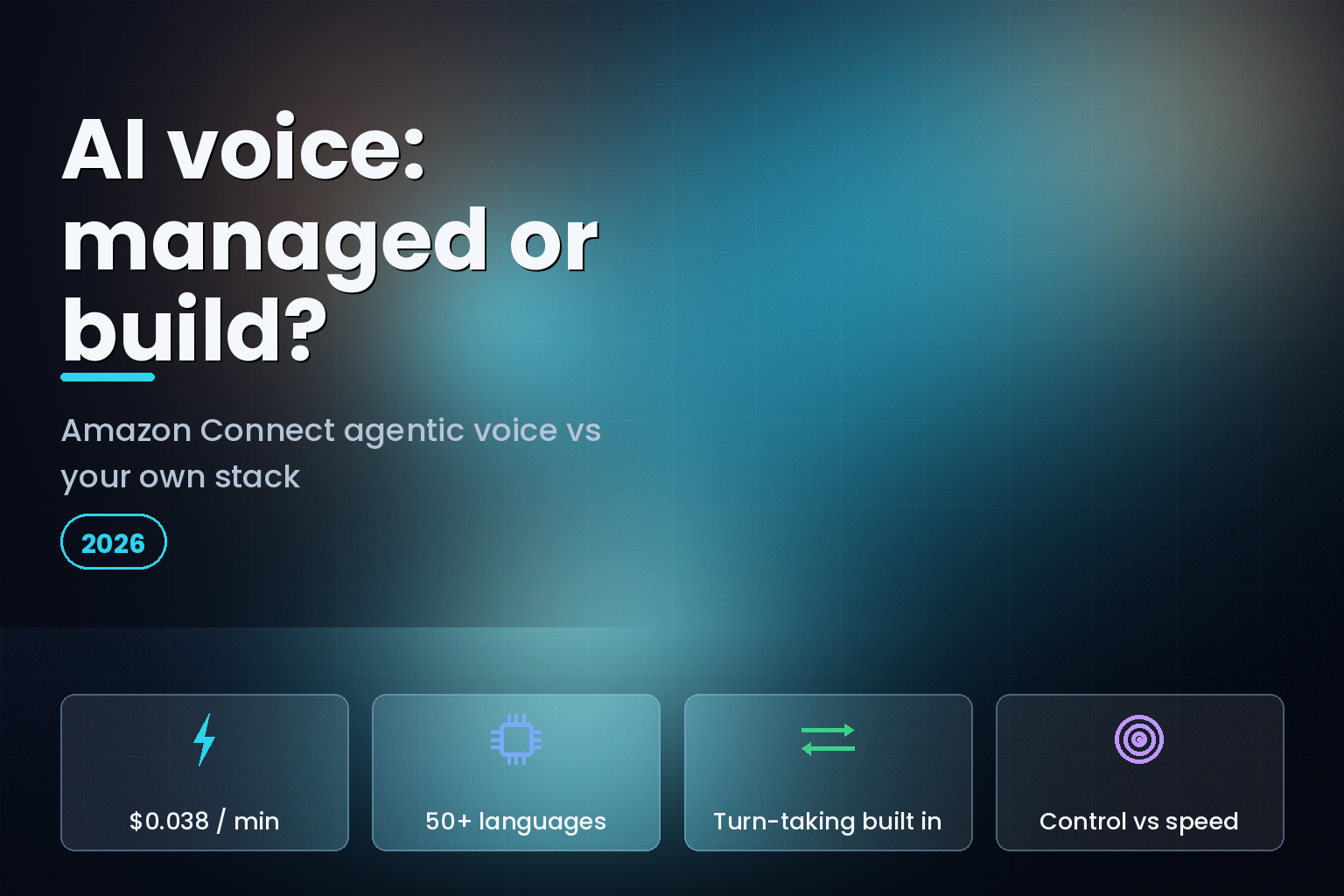
Amazon Connect agentic voice vs build-your-own: cost, latency and control (2026)
On 20 July 2026 Amazon Connect expanded agentic voice to 50+ languages at $0.038 per minute. See when the managed option beats building your own voice stack on cost, latency, and turn-taking.
Manu Shukla -
LLM tool-use reliability in 2026: how to evaluate models for AI agents
State-of-the-art function-calling agents still solve under 50% of real tasks and stumble on retries. A 2026 guide to evaluating LLM tool-use reliability with pass^k, tau-bench, BFCL, and your own eval harness.
Manu Shukla -
Qwen3.7 Flash vs Gemini 3.5 Flash-Lite: the 2026 cost math for 1M-context vision agents
Alibaba's Qwen3.7 Flash is the cheapest way into a 1M-token vision model, until you fill the window. Here is the tier-by-tier cost math against Gemini 3.5 Flash-Lite and GPT-5.6 Luna for high-volume agents.
Manu Shukla -
Agentforce vs Copilot Studio: 2026 pricing math for enterprise AI agents
Agentforce and Copilot Studio price AI agents in different units. We break down the conversation, Flex Credits and per-credit models, the break-even points, and the 2026 prerequisites that move the real bill.
Manu Shukla -
One AI coding-agent harness for Claude Code, Codex and Copilot CLI: a 2026 decision guide
Teams want AI coding agents without betting on one vendor. This 2026 guide shows the harness pattern across Claude Code, Codex CLI, Gemini CLI and Copilot: what to standardize, the portability seams, and where costs
Manu Shukla -
AI gateway comparison 2026: LiteLLM vs Cloudflare vs Kong vs Bifrost vs OpenRouter for LLM cost control
Five AI gateways, three real cost levers, and one decision. This 2026 comparison of LiteLLM, Cloudflare AI Gateway, Kong, Bifrost and OpenRouter covers routing, semantic caching, budgets, and where each one should run
Manu Shukla -
2026 comparison: Claude Opus 5 vs GPT-5.6 Sol for coding agents
Anthropic shipped Claude Opus 5 on 24 July 2026 and OpenAI shipped GPT-5.6 (Sol, Terra, Luna) on 9 July. For coding agents the two flagships cost almost the same on input and diverge on output, benchmarks and token
Manu Shukla -
Diffusion LLMs in 2026: when NVIDIA Nemotron tri-mode serving beats autoregressive
A decision guide to NVIDIA Nemotron-Labs Diffusion: one checkpoint, three serving modes, the real B200 and DGX Spark throughput numbers, and when tri-mode serving pays off versus autoregressive.
Manu Shukla -
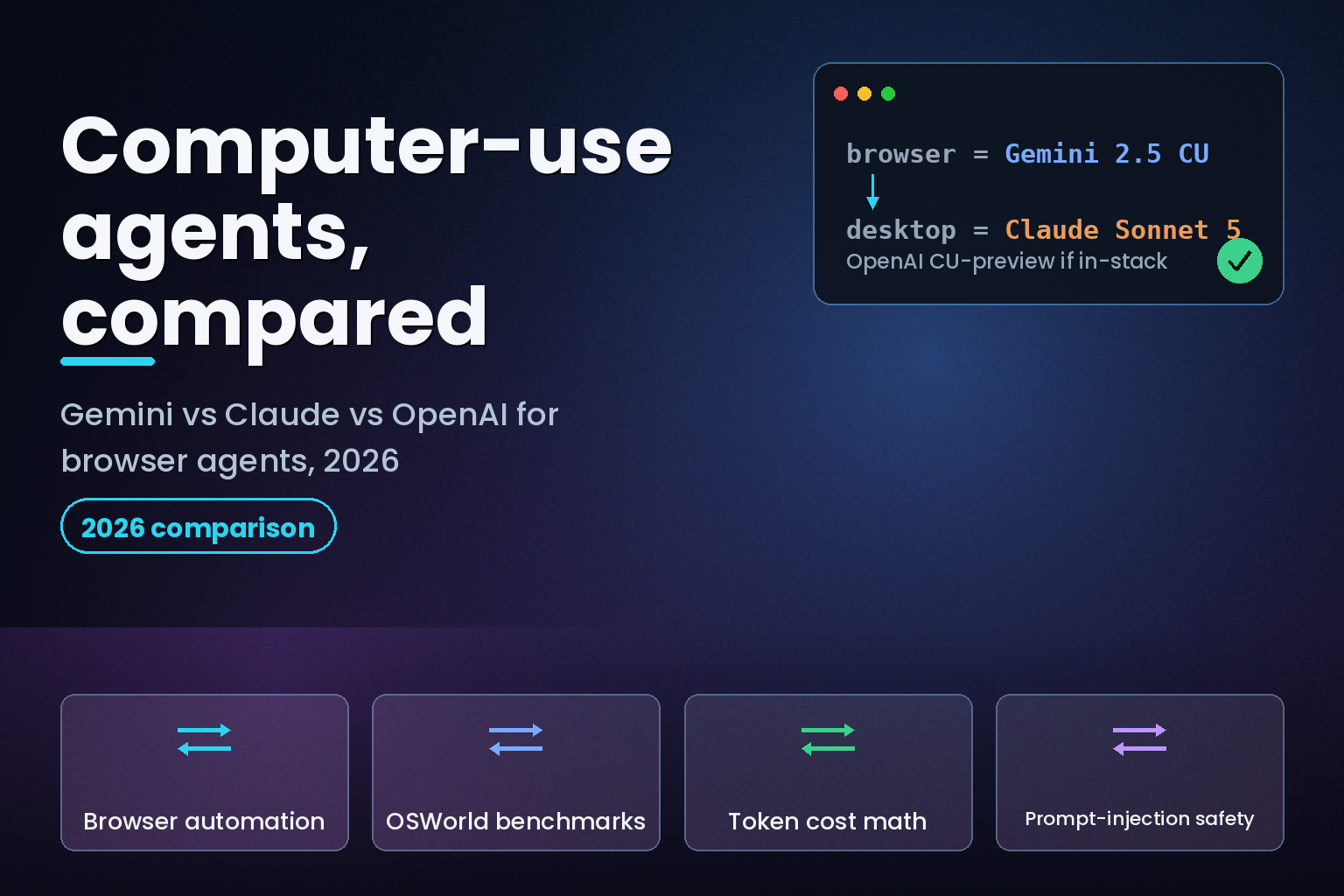
3 computer-use models compared: Gemini vs Claude vs OpenAI for browser agents (2026)
Google Gemini 2.5 Computer Use, Anthropic's Claude computer-use tool and OpenAI computer-use-preview all drive real browser UIs in 2026. Compare price, OSWorld benchmarks, safety and environment support before you build.
Manu Shukla -
OpenAI cut GPT-5.6 Luna 80% and Terra 20% on 30 July 2026: the LLM price war is here
The price war we flagged in June arrived. On 30 July 2026 OpenAI cut GPT-5.6 Luna by 80% and Terra by 20%, and gave Sol a faster mode. Here are the new numbers, the competitive backdrop with Anthropic, and how the cut
Manu Shukla -
Cohere Command A vs Command R+ in 2026: should you migrate? (256K context, throughput, cost)
Cohere Command A is a 111B open-weights model with a 256K context, 150% higher throughput than Command R+, and the same $2.50/$10 rate card. A 2026 migration guide, plus where Cohere fits against GPT-5.6 and Claude.
Manu Shukla -
GPT Transcribe vs GPT Live Transcribe: cost, accuracy and when to use each (2026)
OpenAI launched GPT Transcribe and GPT Live Transcribe on 28 July 2026. One handles recorded files at $0.0045/min, the other streams live audio at $0.017/min. Here is how they compare on price, accuracy and latency
Manu Shukla -
Claude Sonnet 5 migration: the September 1, 2026 price cliff and the 30% tokenizer jump to plan for
Claude Sonnet 5 launched on June 30, 2026 at introductory $2/$10 pricing through August 31. On September 1 it moves to $3/$15, and a new tokenizer already counts about 30% more tokens for the same text. Here is the cost
Manu Shukla -
Databricks Genie vs Snowflake Cortex Analyst: which text-to-SQL is cheaper to forecast in 2026
Databricks Genie meters text-to-SQL in DBUs from July 6, 2026; Snowflake Cortex Analyst bills per message at a flat AI Credit price. A 2026 comparison of which is cheaper to run and easier to forecast.
Manu Shukla -
GPT-Live's full-duplex voice: 4 things it changes for AI voice agents (2026)
GPT-Live listens and speaks at once, but the developer API is not live yet. A senior engineer's read on full-duplex voice, Realtime API pricing at $32/$64 per million tokens, and what to build now.
Manu Shukla -
Kimi K3 vs DeepSeek V4 vs GLM-5.2: which open-weight model to self-host in 2026
Kimi K3 (2.8T), DeepSeek V4 (1.6T) and GLM-5.2 (753B) are all open-weight and frontier-class. This decision matrix compares GPU footprint, API list price, and the monthly output-token volume where self-hosting each one
Manu Shukla -

Cheapest LLMs in 2026: Gemini 3.5 Flash-Lite at $0.30/1M vs GPT-5.6 Luna and Claude Sonnet 5
Three budget-tier models now sit far below the flagships: Gemini 3.5 Flash-Lite at $0.30/$2.50, GPT-5.6 Luna at $1/$6, and Claude Sonnet 5 at $2/$10 per million tokens. A worked cost comparison for high-volume
Manu Shukla -
BYOK vs subscription for AI coding tools in 2026: the cost math that decides it
GitHub Copilot moved to usage-based AI Credits on June 1, 2026 and Cursor split its seats into usage pools. That reshapes the BYOK-versus-subscription math for every dev team. A worked cost model and a decision guide.
Manu Shukla -
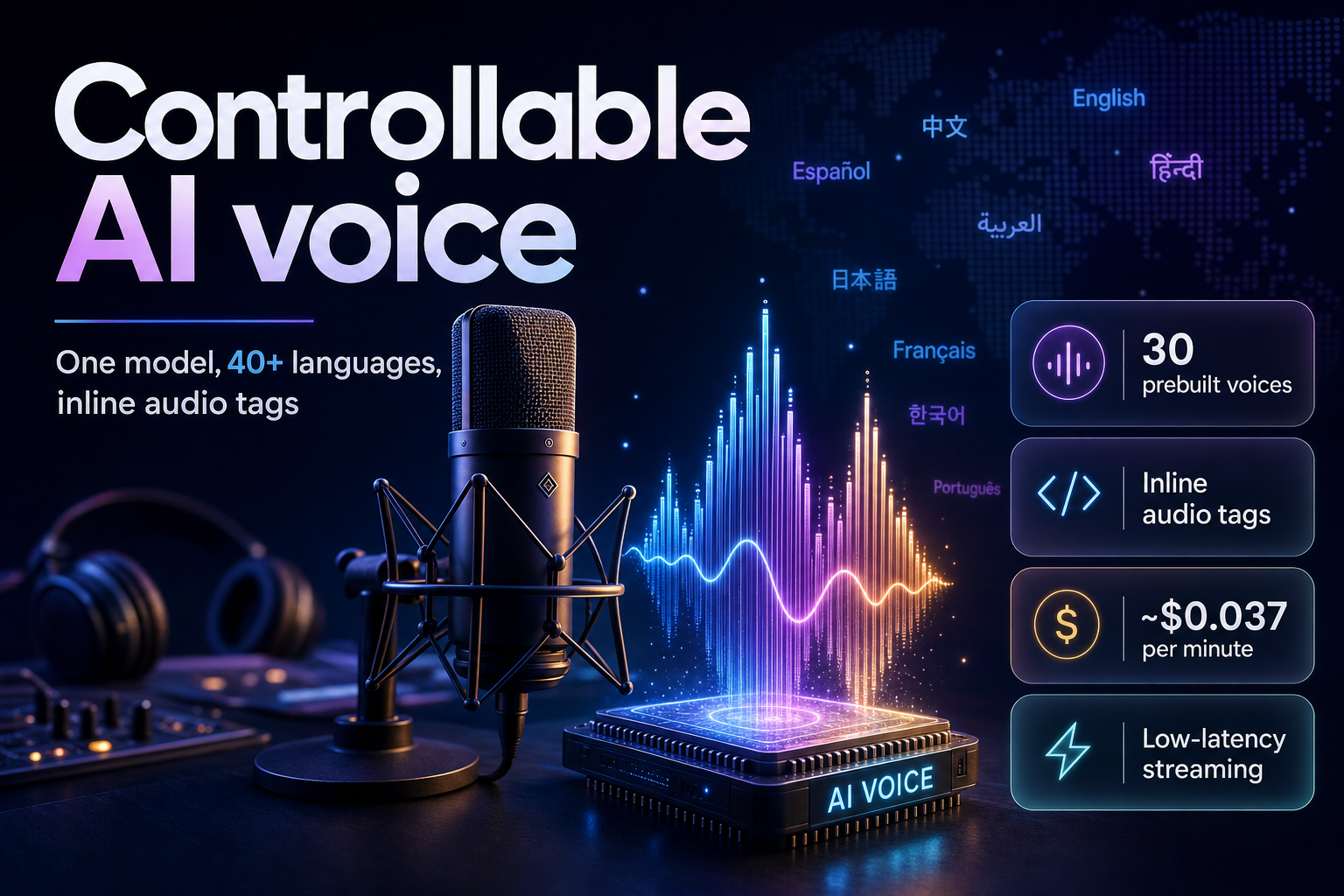
Gemini 3.1 Flash TTS build guide: 30 voices, audio tags and real 2026 pricing
Gemini 3.1 Flash TTS turns text into controllable speech with inline audio tags, 30 voices and 70+ languages. A 2026 developer guide to the API, streaming, pricing and the OpenAI and ElevenLabs comparison.
Manu Shukla -
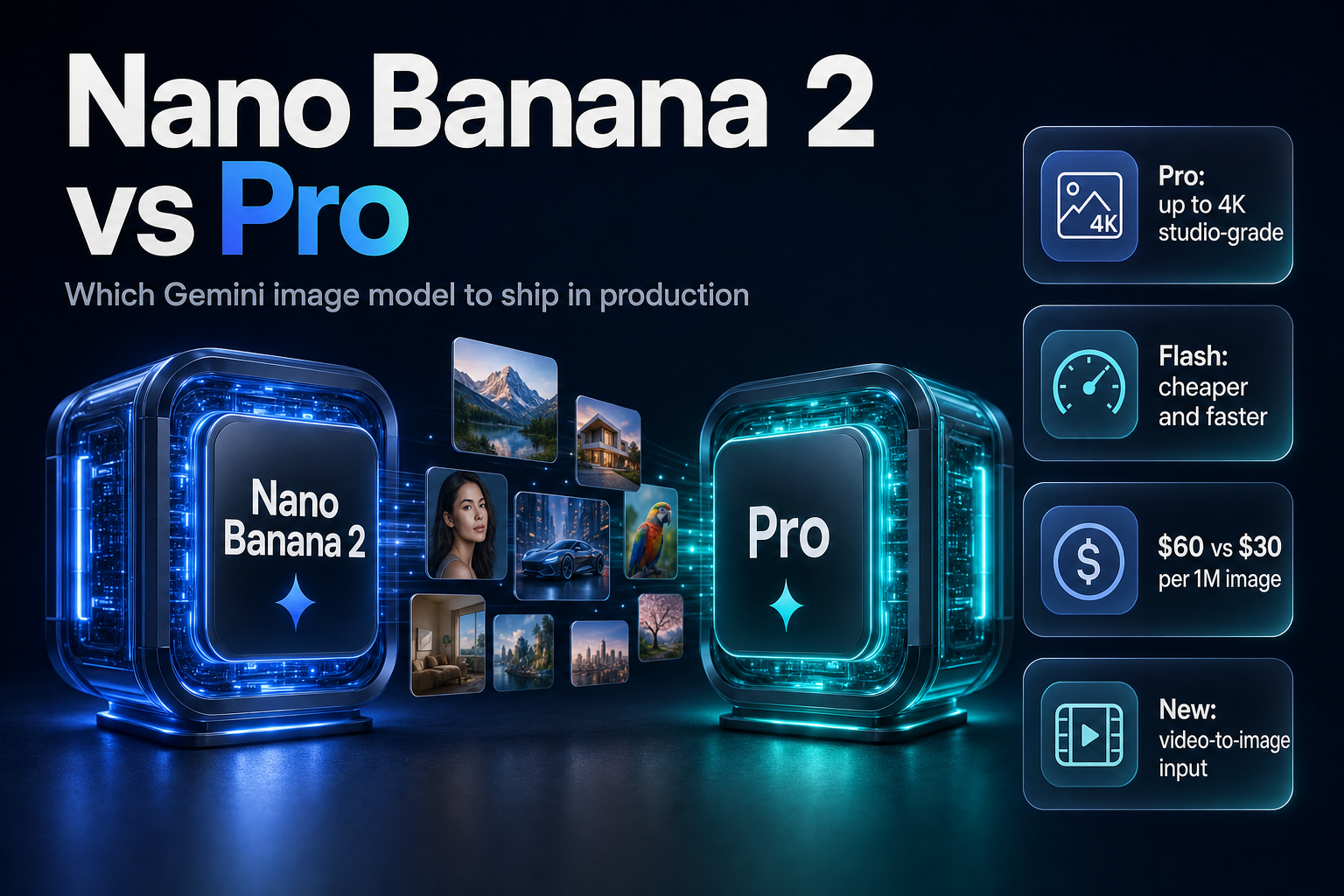
Nano Banana 2 vs Nano Banana Pro: which Gemini image model to ship in production in 2026
Nano Banana Pro (Gemini 3 Pro Image) and Nano Banana 2 (Gemini 3.1 Flash Image) are both generally available in 2026. A production comparison of cost per image, 4K quality, text rendering, latency and the new video
Manu Shukla -
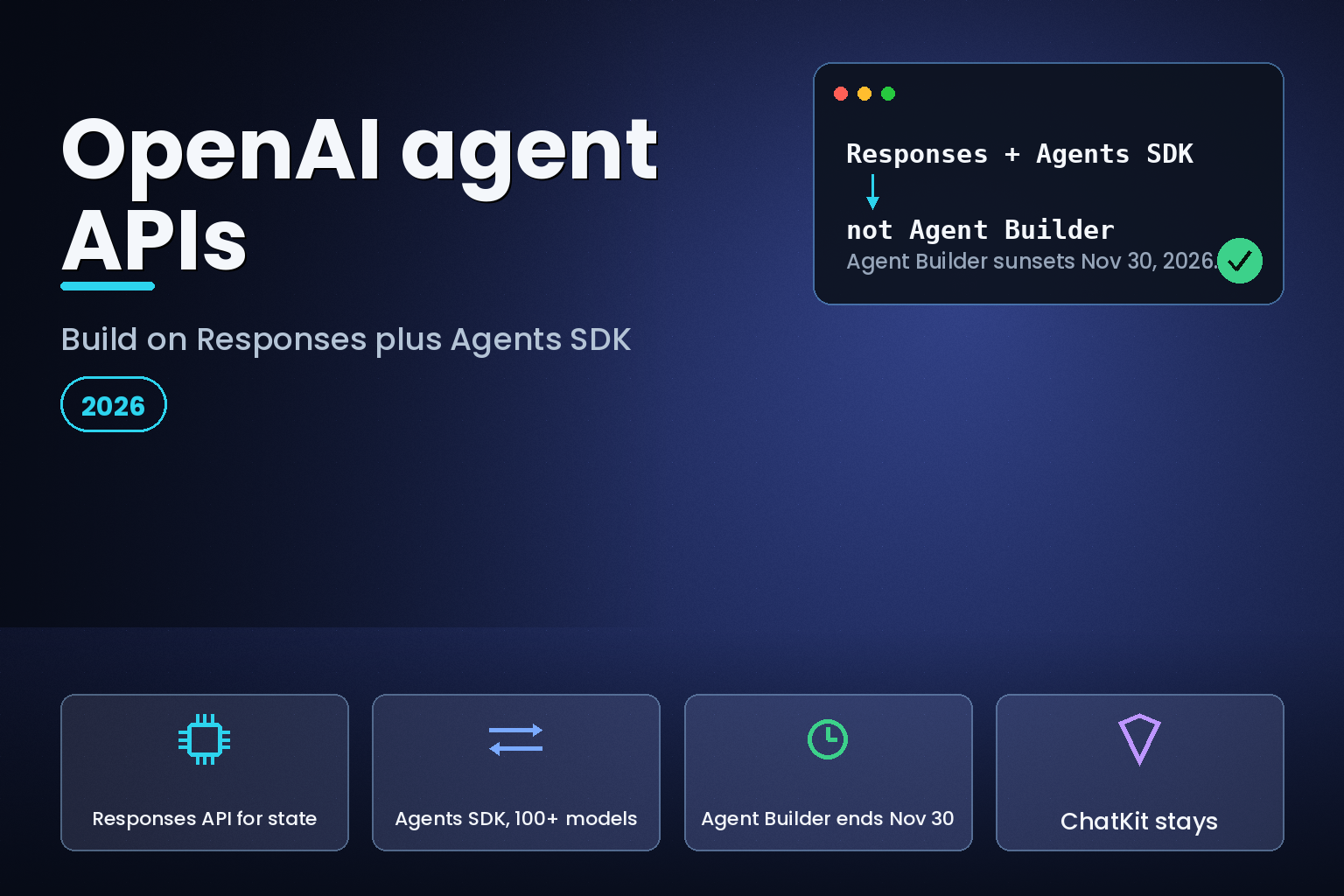
4 OpenAI agent APIs in 2026: Responses, Chat Completions, Agents SDK, AgentKit
Agent Builder and the Evals platform leave OpenAI on November 30, 2026, and the Assistants API sunsets August 26. How to choose among the Responses API, Chat Completions, the Agents SDK and AgentKit for new agents
Manu Shukla -
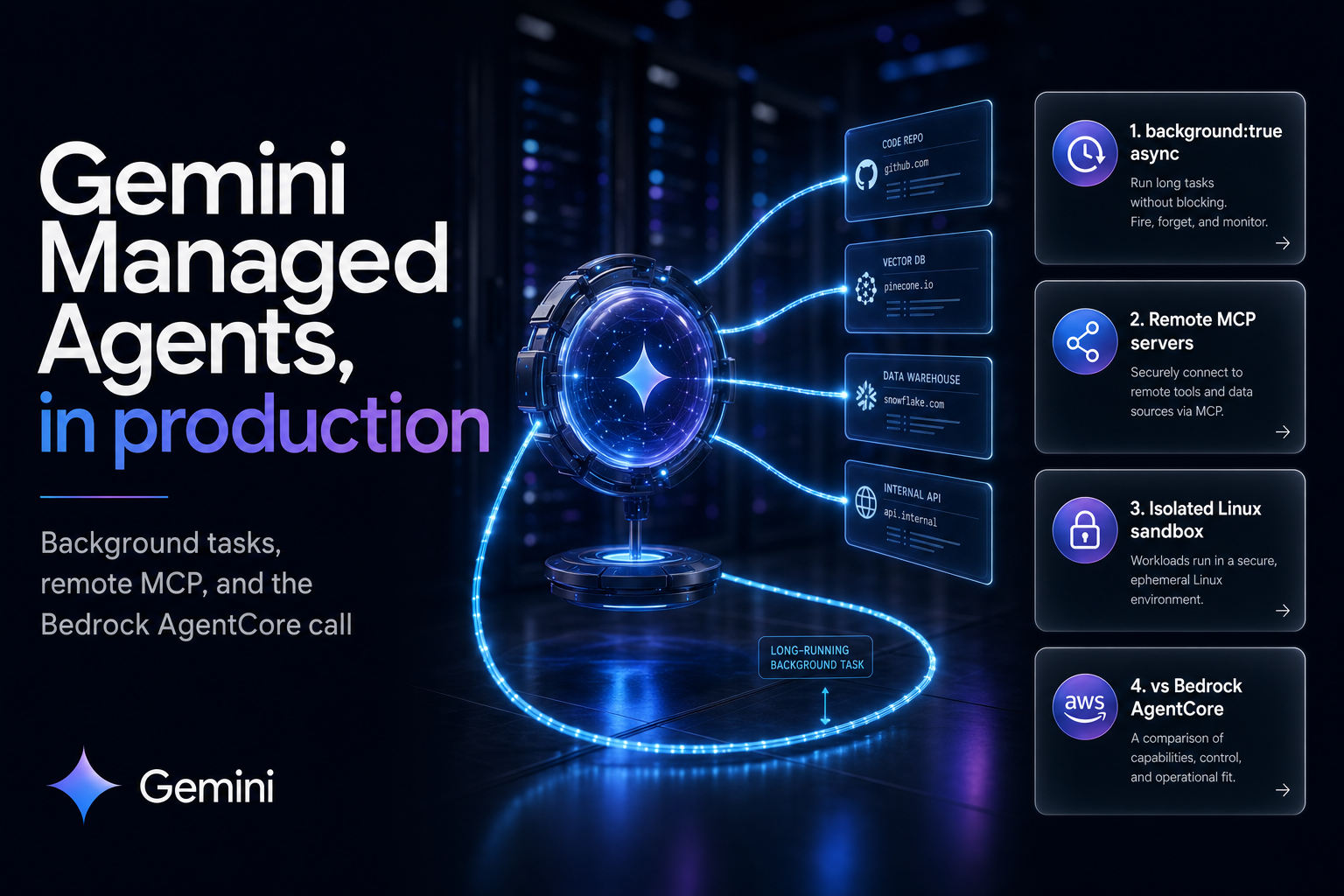
Gemini API Managed Agents: 4 production features and how they compare to Bedrock AgentCore (2026)
On 7 July 2026 Google expanded Managed Agents in the Gemini API with background execution, remote MCP servers, custom functions and credential refresh. Here is what each feature does at the API level, working code
Manu Shukla -
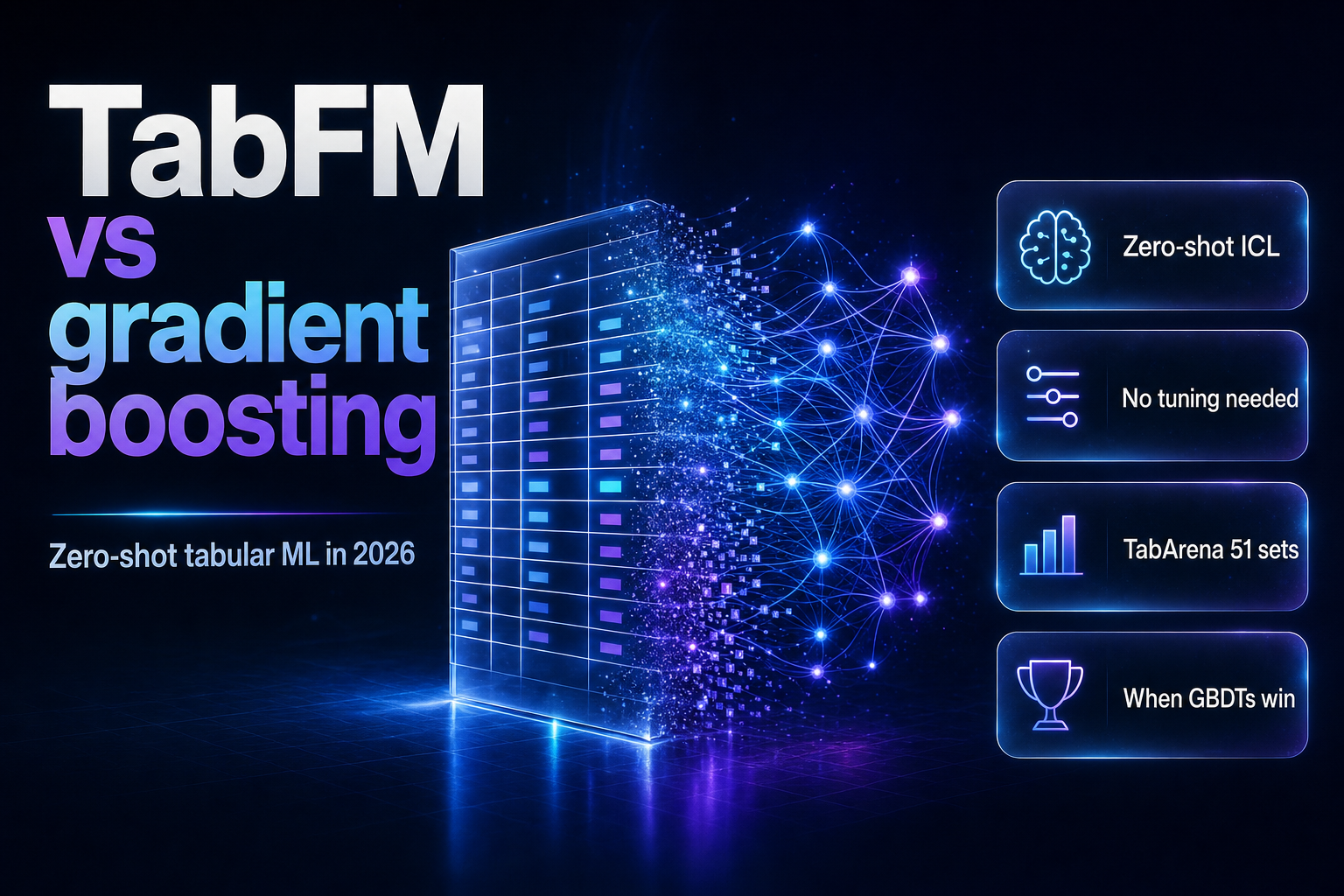
Google TabFM vs XGBoost and LightGBM: should you drop gradient boosting for tabular ML in 2026?
A practitioner's comparison of Google TabFM against XGBoost and LightGBM: how the zero-shot tabular model works, what TabArena shows, cost and deployment trade-offs, and a 2026 decision guide.
Manu Shukla -
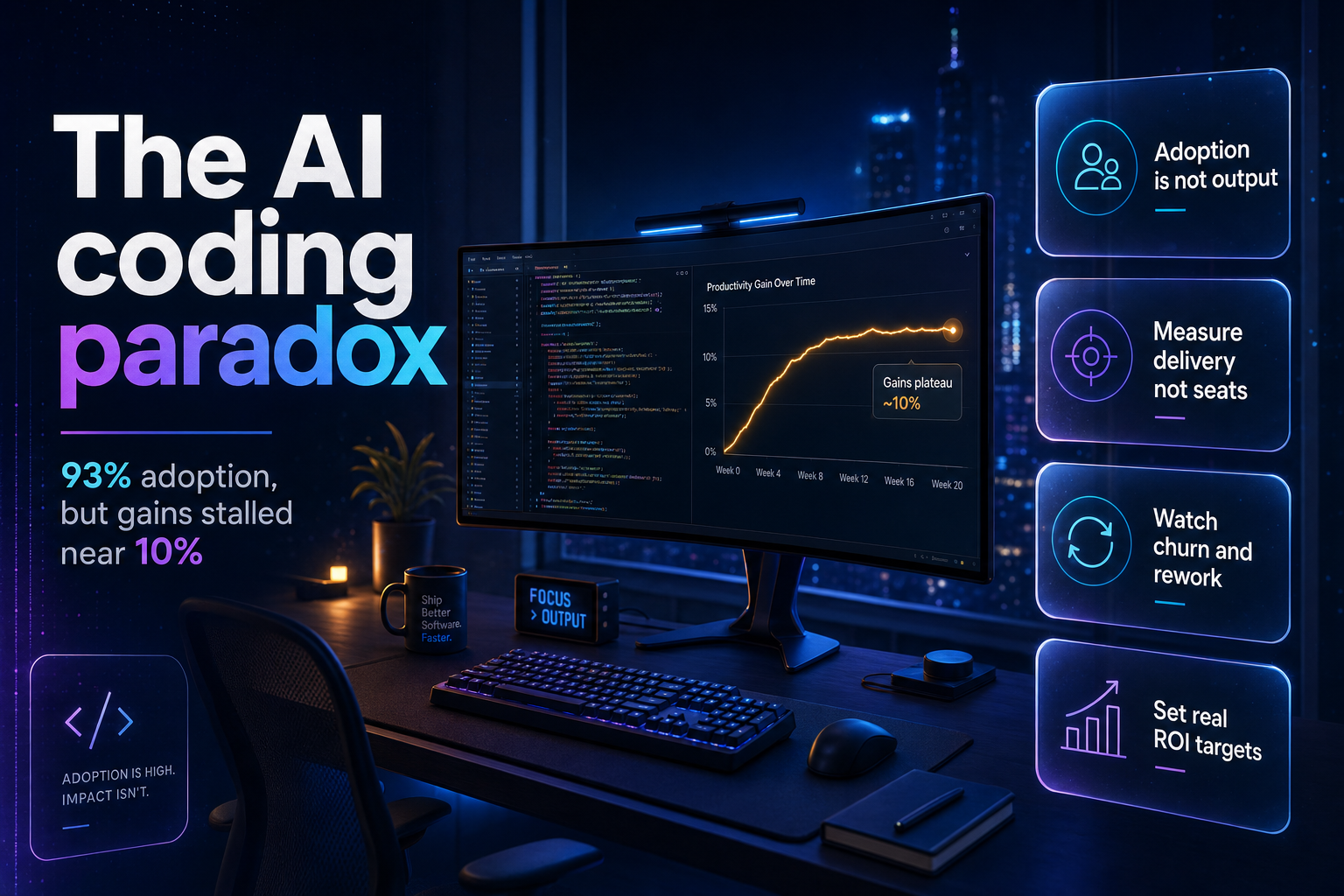
The 2026 AI coding productivity paradox: 93% adoption, 10% gains, and what engineering leaders should do
Almost every developer now uses AI, yet measured productivity gains have stalled near 10%, and one study found experienced developers were slower. A data-led read for engineering leaders on the real ROI and what
Manu Shukla -
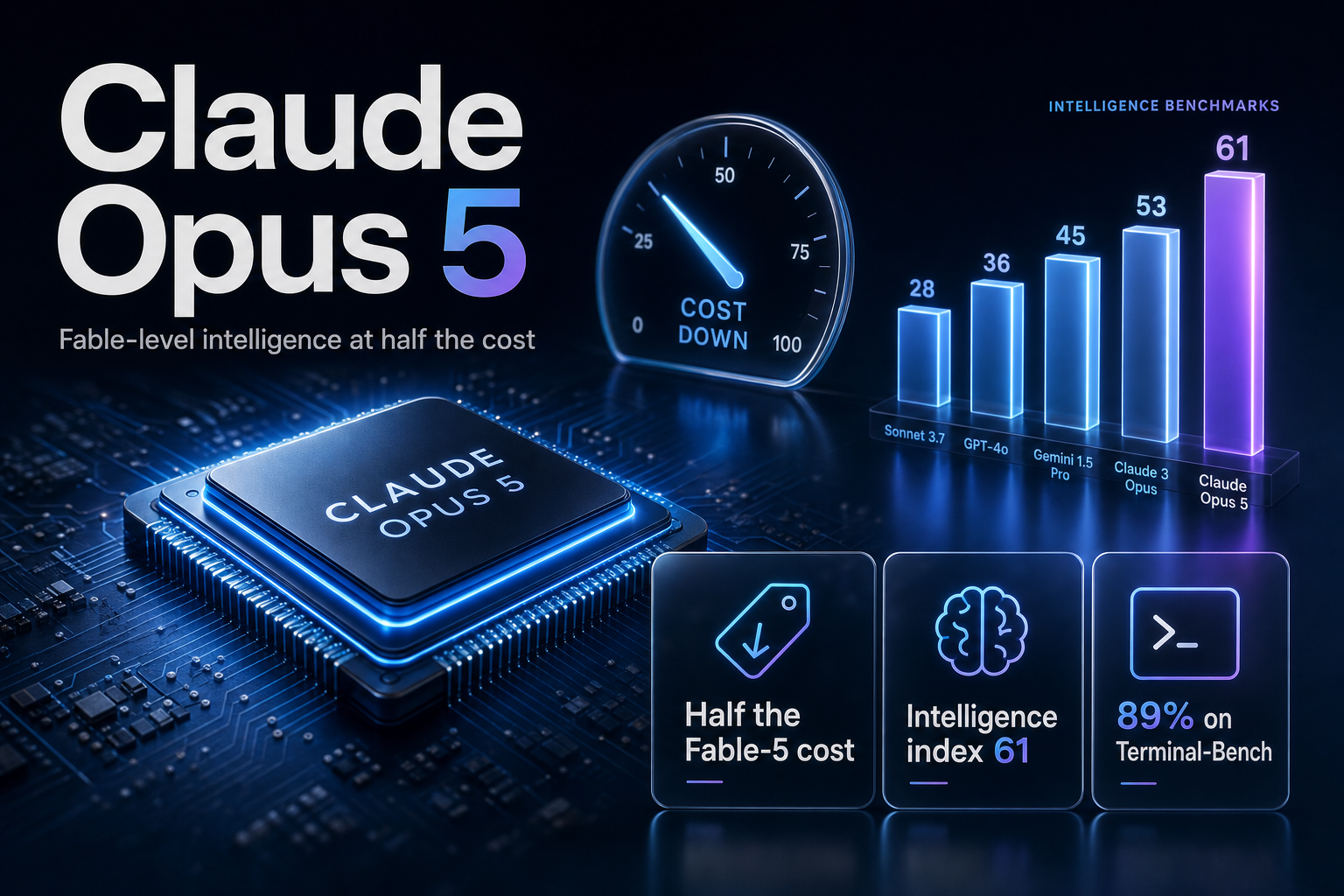
Claude Opus 5 for coding agents: index 61 at half Fable 5's cost (2026)
Anthropic's Claude Opus 5 matches near-Fable-5 intelligence at 26% lower cost per task. A guide to the coding-agent benchmarks, the token economics, and when Opus 5 should be your default.
Manu Shukla -
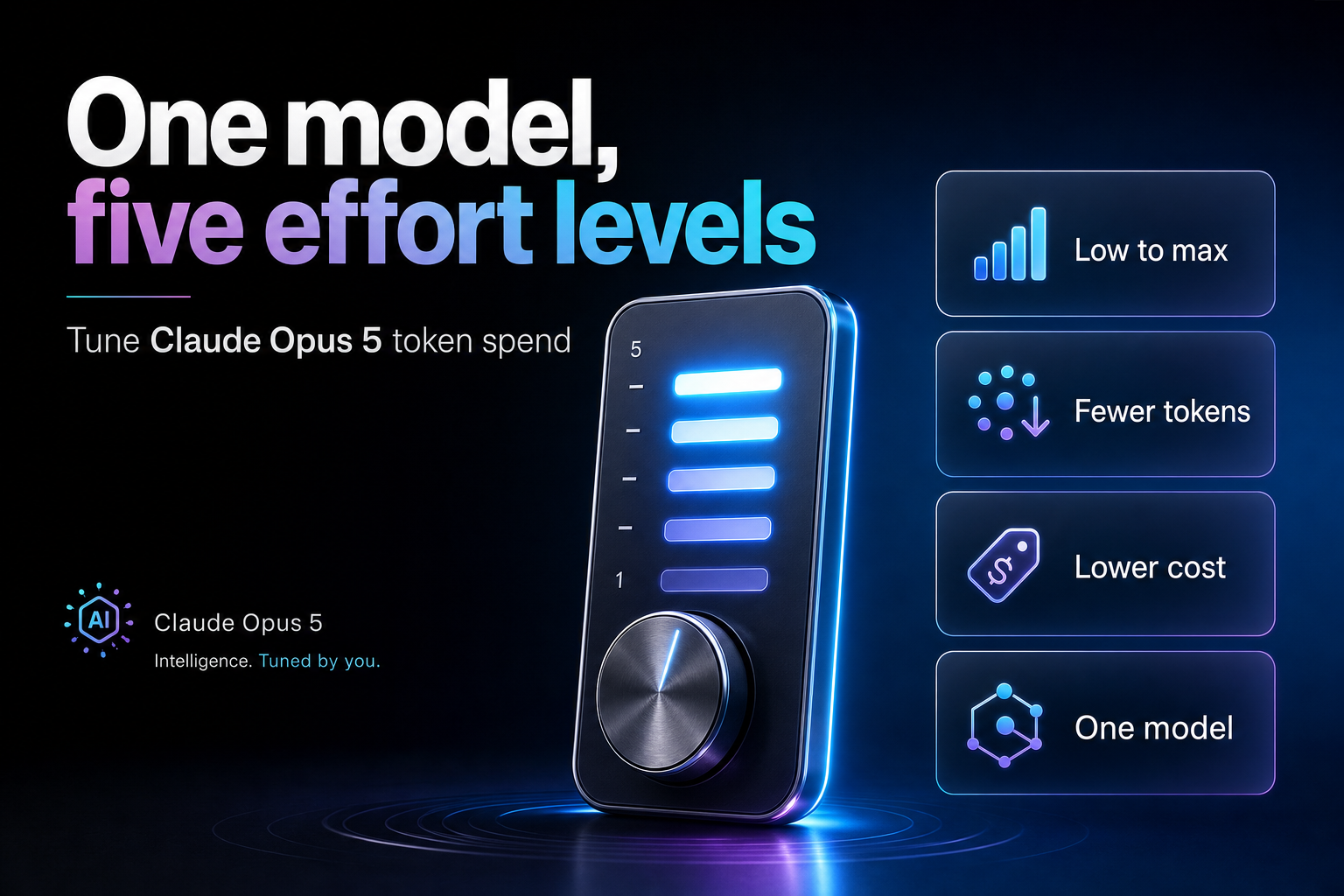
Claude Opus 5 effort levels: cut token costs with 5 reasoning dials (2026)
Claude Opus 5 launched 24 July 2026 at unchanged $5/$25 per-million pricing, with a five-level effort parameter (low, medium, high, xhigh, max) that governs token spend across text, tool calls and thinking. Here is how
Manu Shukla -
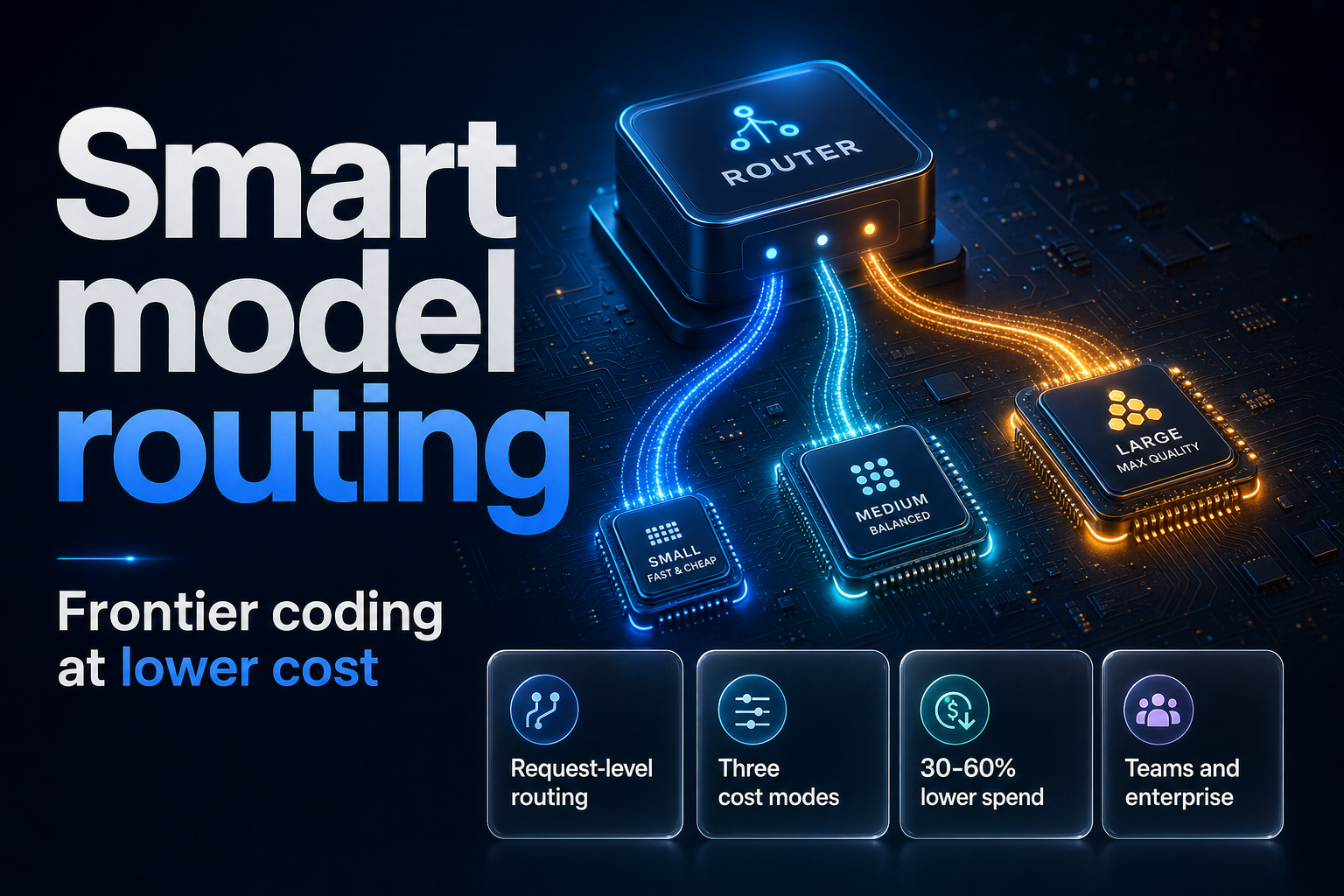
Cursor Router cuts AI coding costs 30-60%: what the July 2026 launch means for teams
On July 22, 2026 Cursor launched Router, a request-level classifier that sends each coding request to the best model. In Cursor's own tests it cut costs 30-60% versus Opus 4.8. Here are the numbers and the trade-offs.
Manu Shukla -
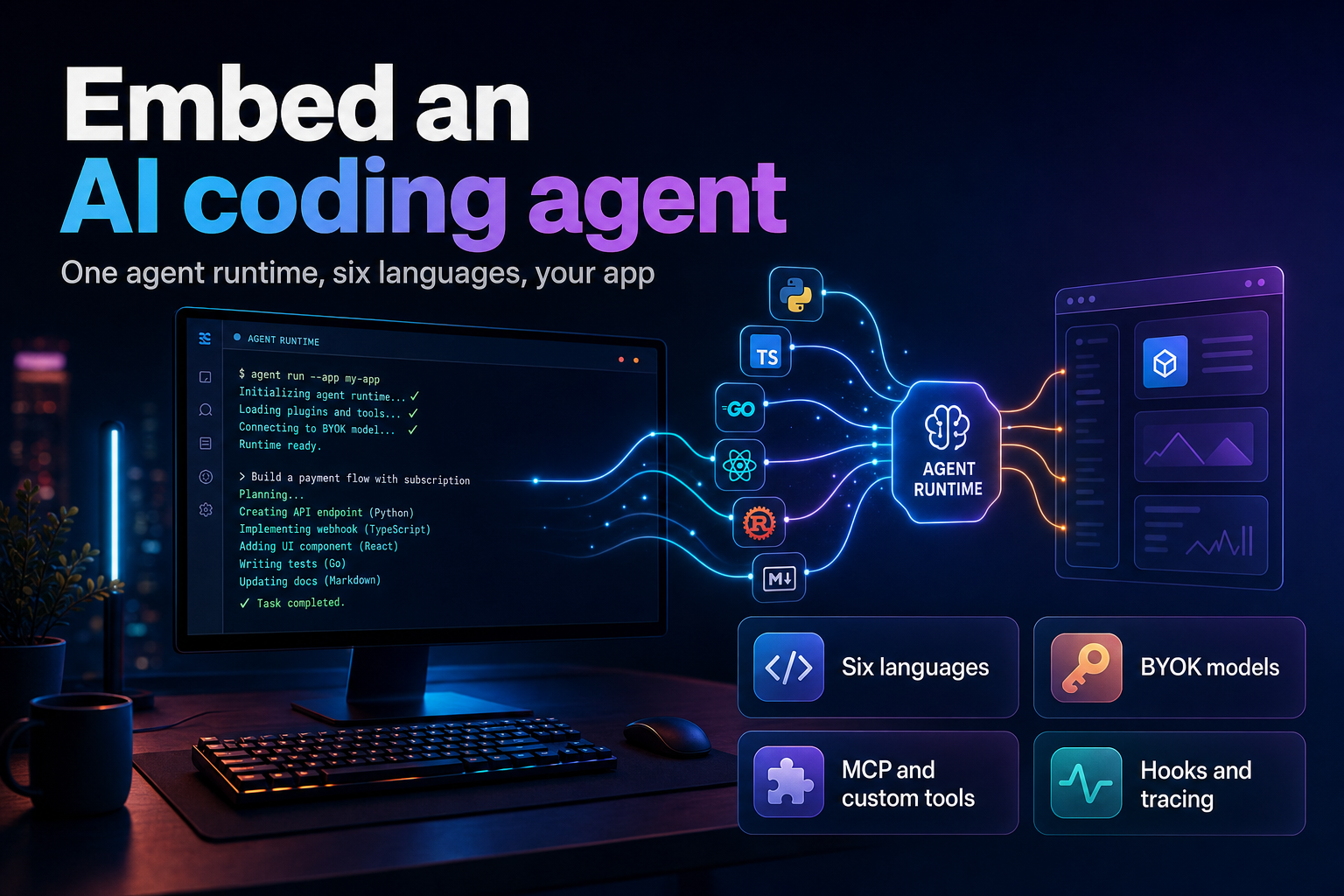
GitHub Copilot SDK (GA 2026): build a custom AI agent in six languages
GitHub made the Copilot SDK generally available on June 2, 2026, across six languages. This guide covers what it does, how to call it, how it compares to building your own agent loop, and what it costs to run.
Manu Shukla -
MTurk is closing to new customers: 6 human-data alternatives compared for 2026
MTurk stops taking new customers on 30 July 2026, after a study found up to 46% of its text workers used LLMs. Six alternatives for human data and labeling, compared on price, quality and fit.
Manu Shukla -
18 OpenAI models shut down on 23 July 2026: the migration map, and 3 the docs page leaves out
OpenAI's 22 April 2026 deprecation email listed 18 model snapshots shutting down on 23 July 2026. The public deprecations page lists 15 of them. Here is the full map, what each one migrates to, the four shutdown dates
Manu Shukla -
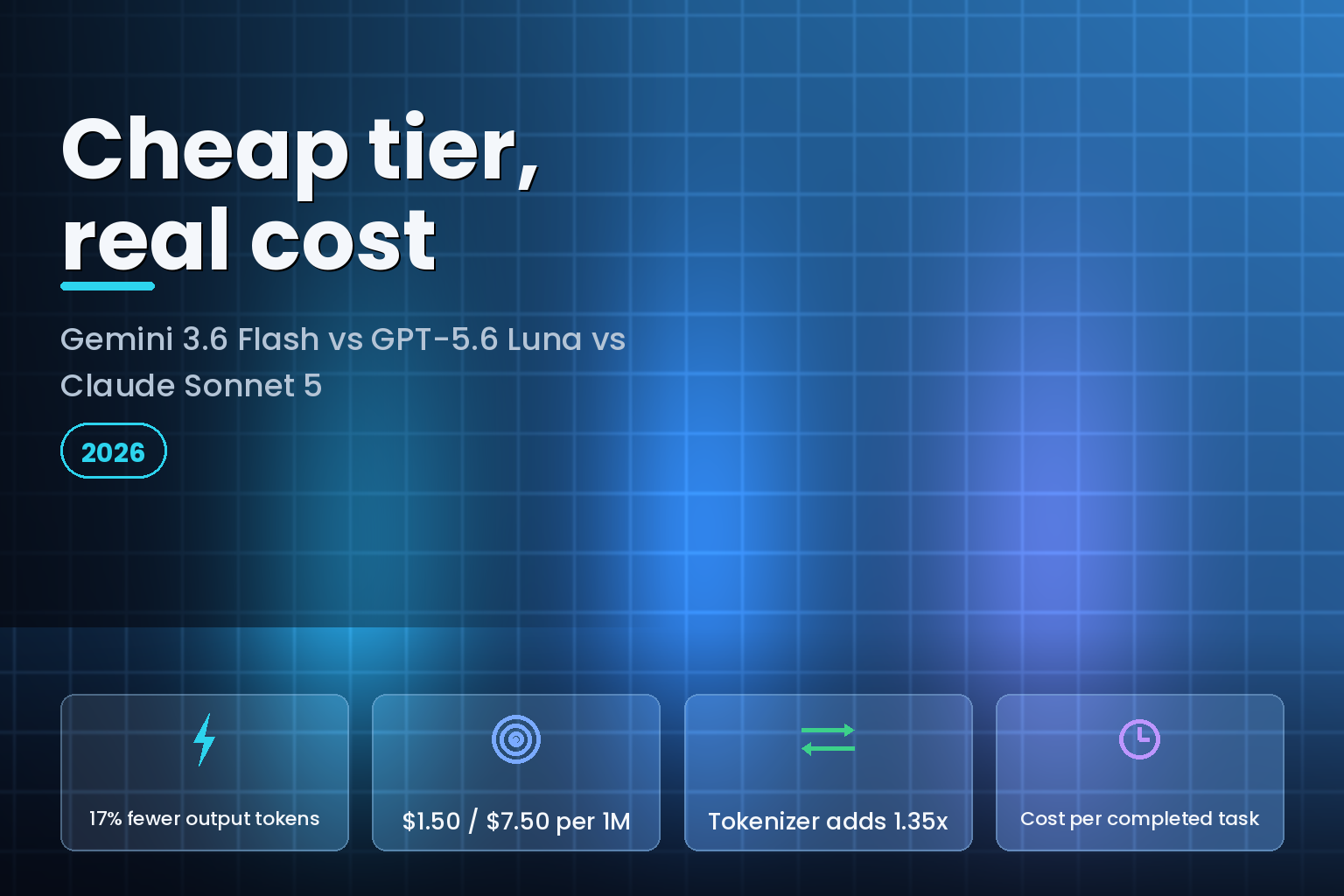
Gemini 3.6 Flash cuts output tokens 17%: the real agent cost vs GPT-5.6 Luna and Claude Sonnet 5
Google cut the Gemini Flash output rate from $9.00 to $7.50 per million tokens and made the model emit 17% fewer of them. Stack that against GPT-5.6 Luna at $1/$6 and Claude Sonnet 5's tokenizer change, and
Manu Shukla -
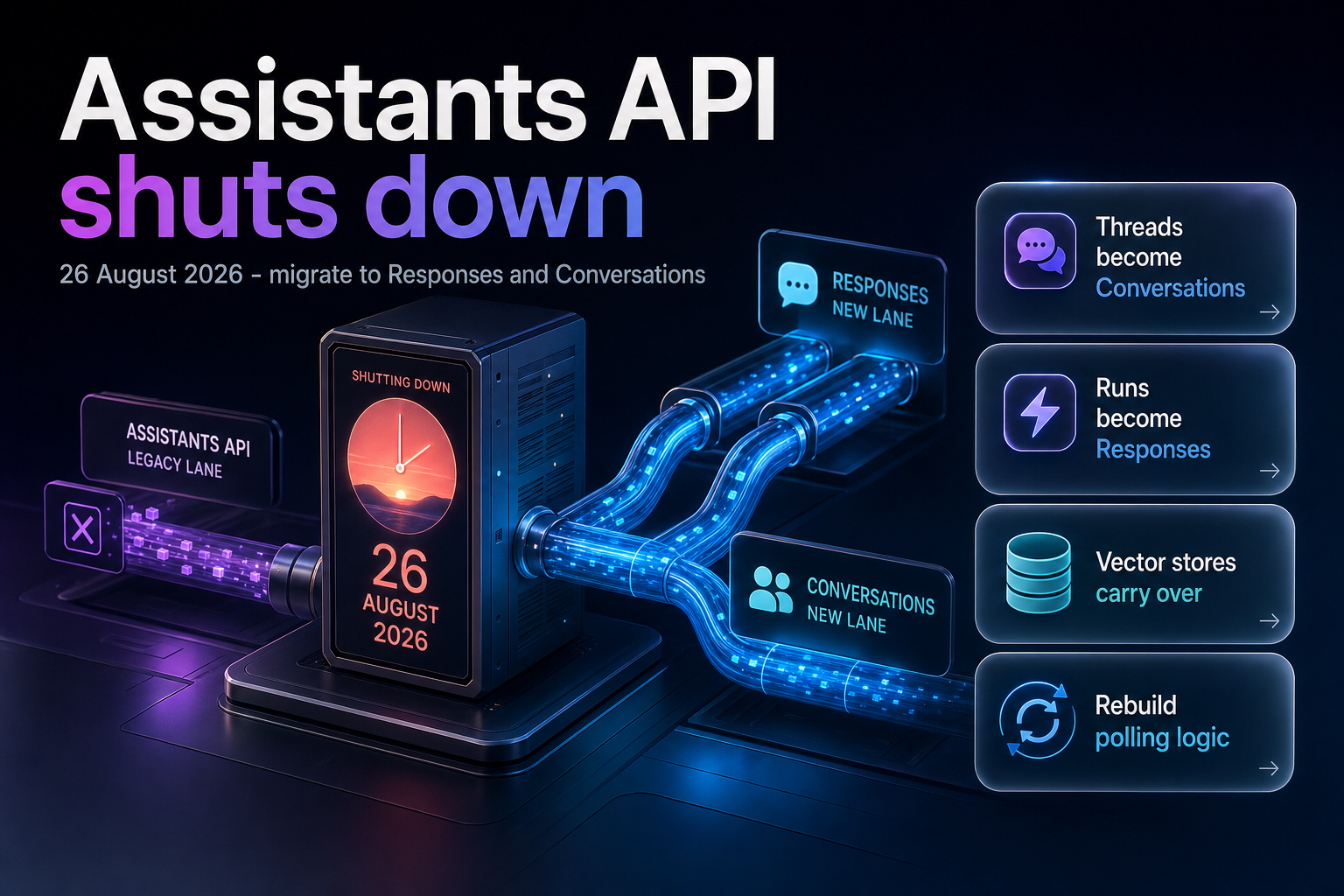
Assistants API shuts down 26 August 2026: what OpenAI's migration guide leaves out
OpenAI's Assistants API sunsets on 26 August 2026, 36 days from now. The replacement objects do not map one to one, prompts are dashboard-only, and OpenAI will not ship a thread migration tool.
Manu Shukla -
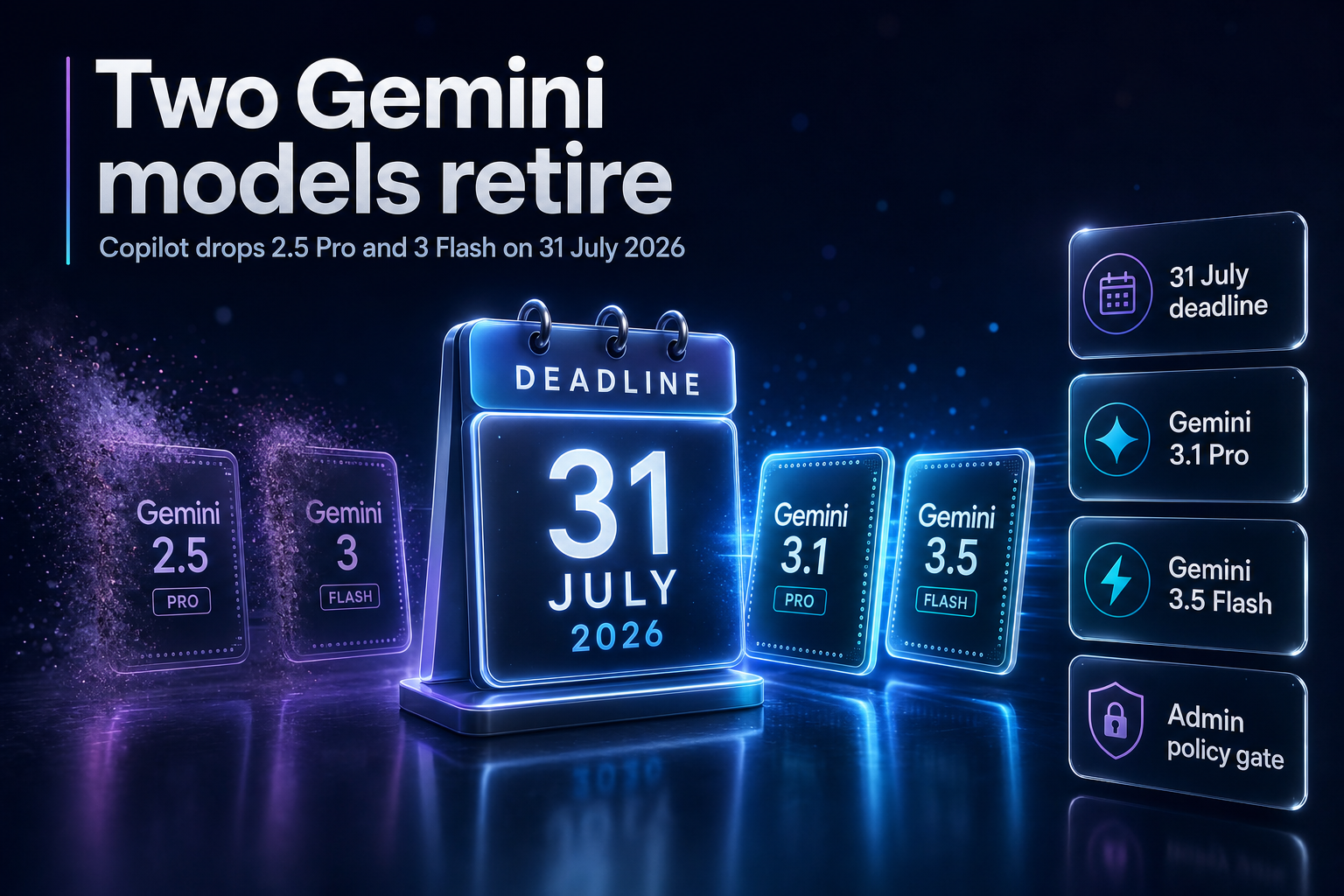
Copilot retires 2 Gemini models on 31 July 2026: the admin migration checklist
GitHub retires Gemini 2.5 Pro and Gemini 3 Flash across every Copilot surface on 31 July 2026, naming Gemini 3.1 Pro and Gemini 3.5 Flash as replacements. Here is the admin checklist.
Manu Shukla -
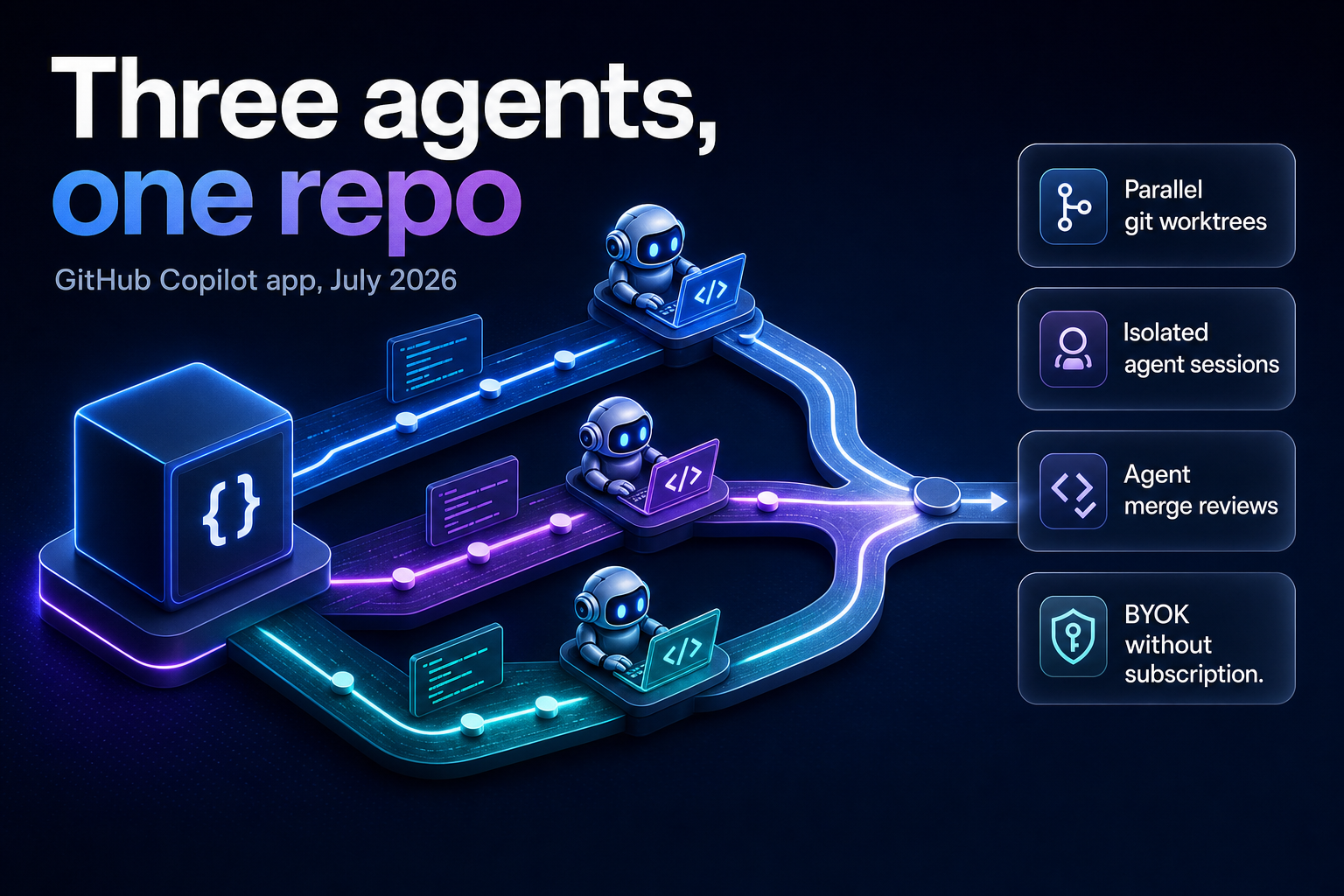
GitHub Copilot app in 2026: 3 parallel agents, 1 repo, zero merge chaos
The GitHub Copilot app went from technical preview to every Copilot plan on 7 July 2026, including Free and Education. The mechanism that makes parallel agents work is the git worktree.
Manu Shukla -
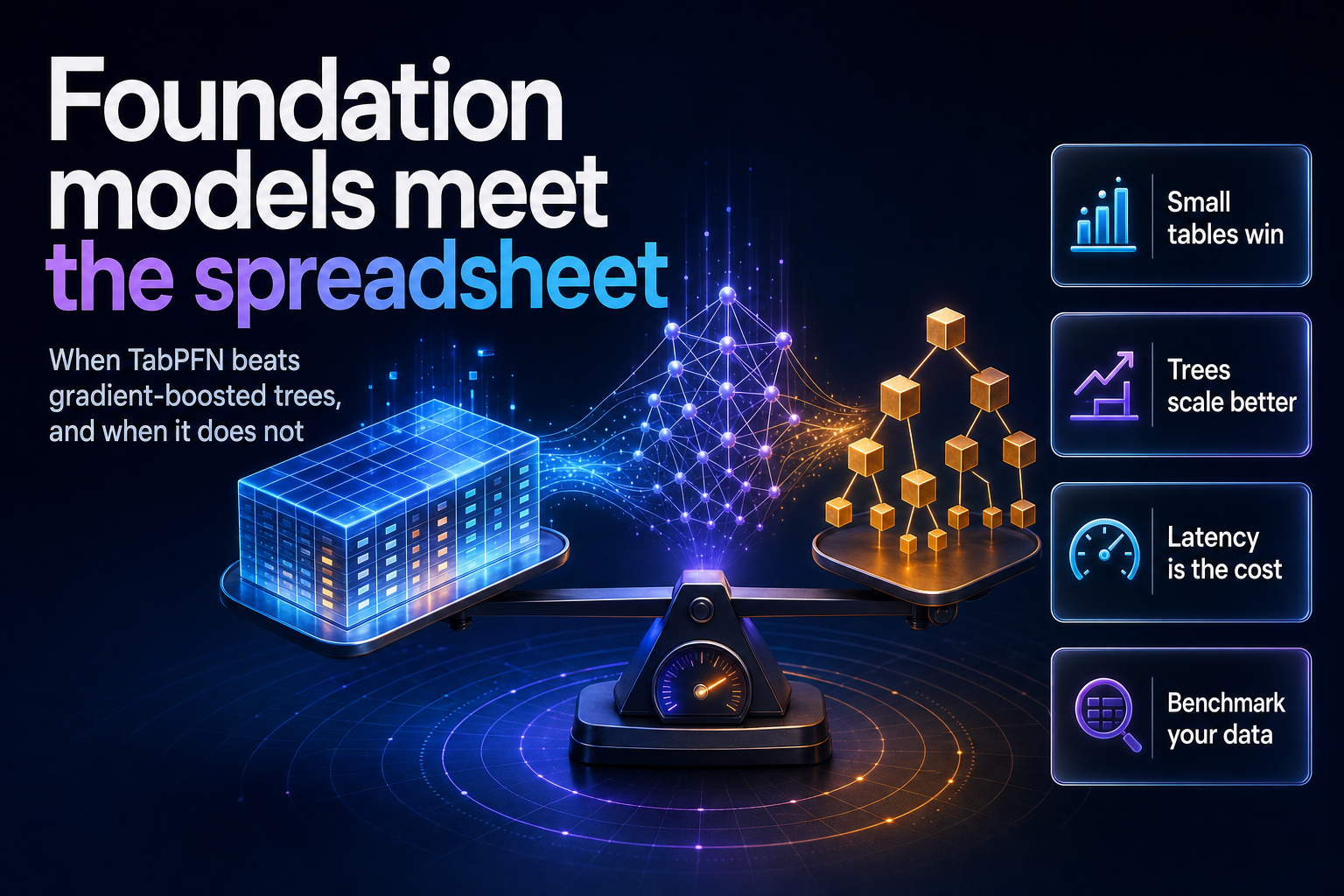
TabPFN vs XGBoost in 2026: 1673 against 1375 Elo, and where trees still win
Gradient-boosted trees stopped setting the accuracy frontier on tabular data in 2026. But the benchmark that shows it also shows why XGBoost and LightGBM still belong in production, and the answer is not the one most
Manu Shukla -
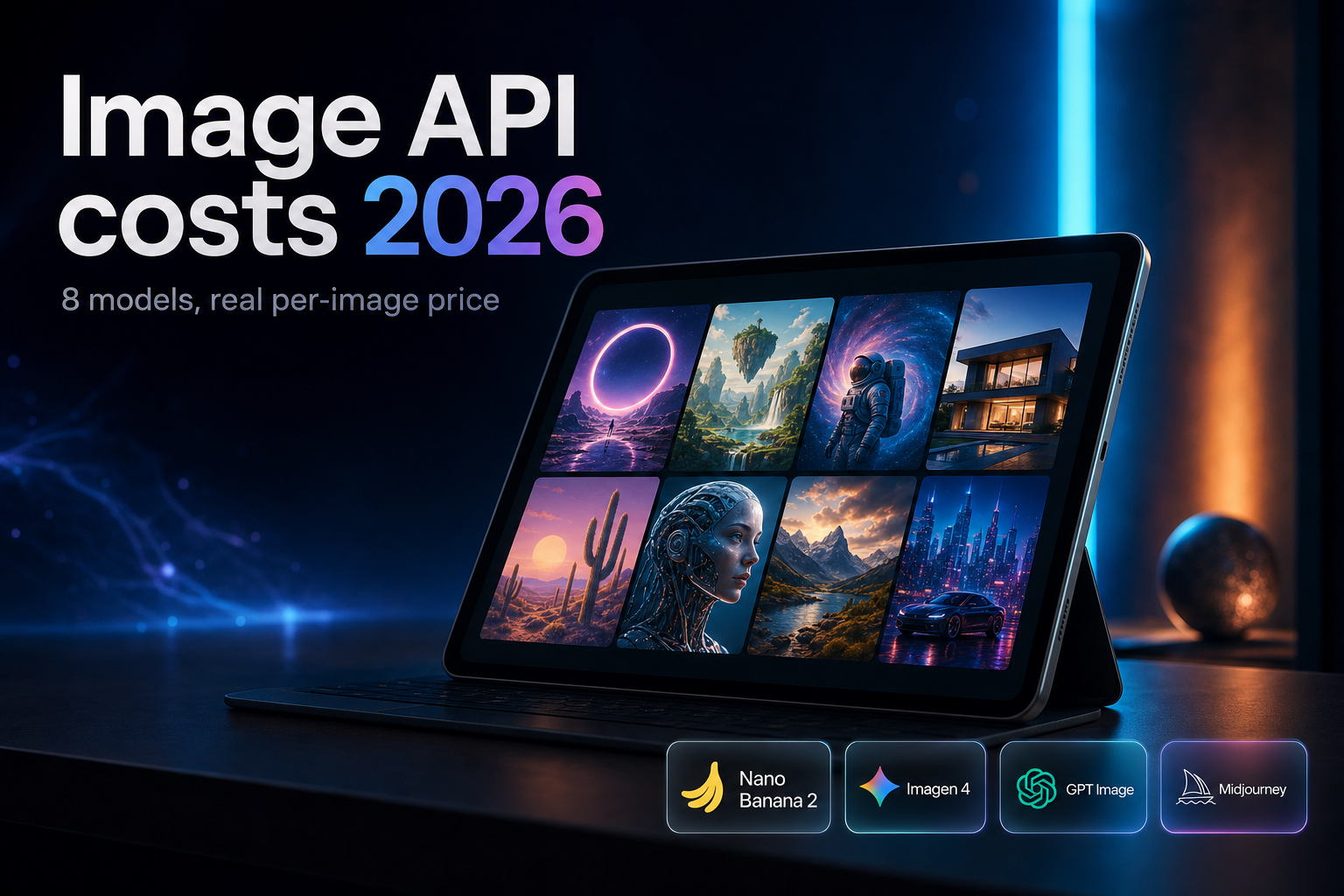
8 AI image generation APIs compared: real per-image cost in 2026
A per-image cost comparison of 8 production image-generation APIs in July 2026, with the token math behind the headline prices, a 1,000-image monthly budget, and a decision guide for teams building image features.
Manu Shukla -
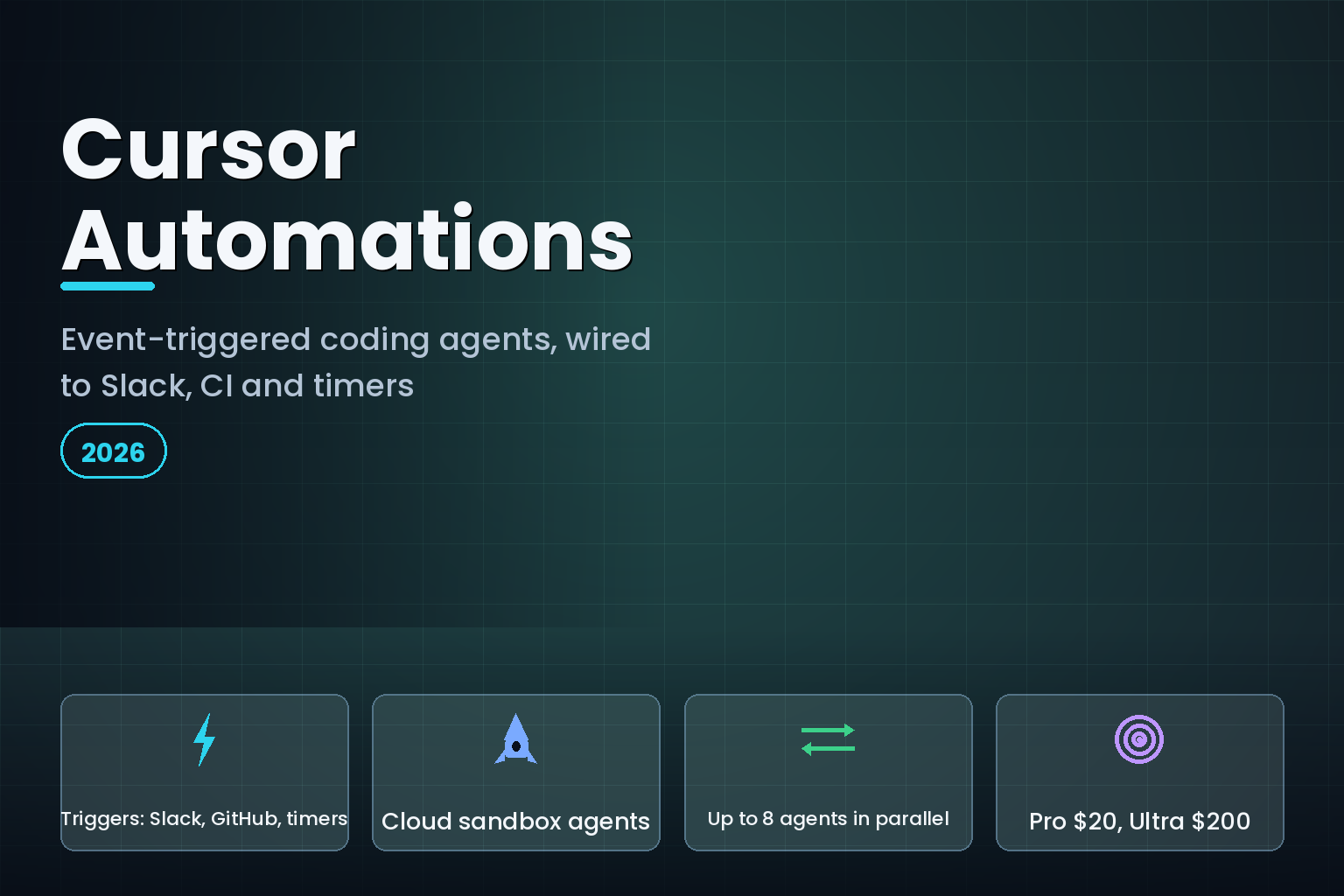
Cursor Automations in 2026: wire event-triggered coding agents to Slack, CI, and timers
Cursor Automations, live since March 2026, run cloud agents on a timer or on events from Slack, GitHub, Linear and PagerDuty. This guide covers setup, six useful workflows, costs on Pro and Ultra, and guardrails.
Manu Shukla -
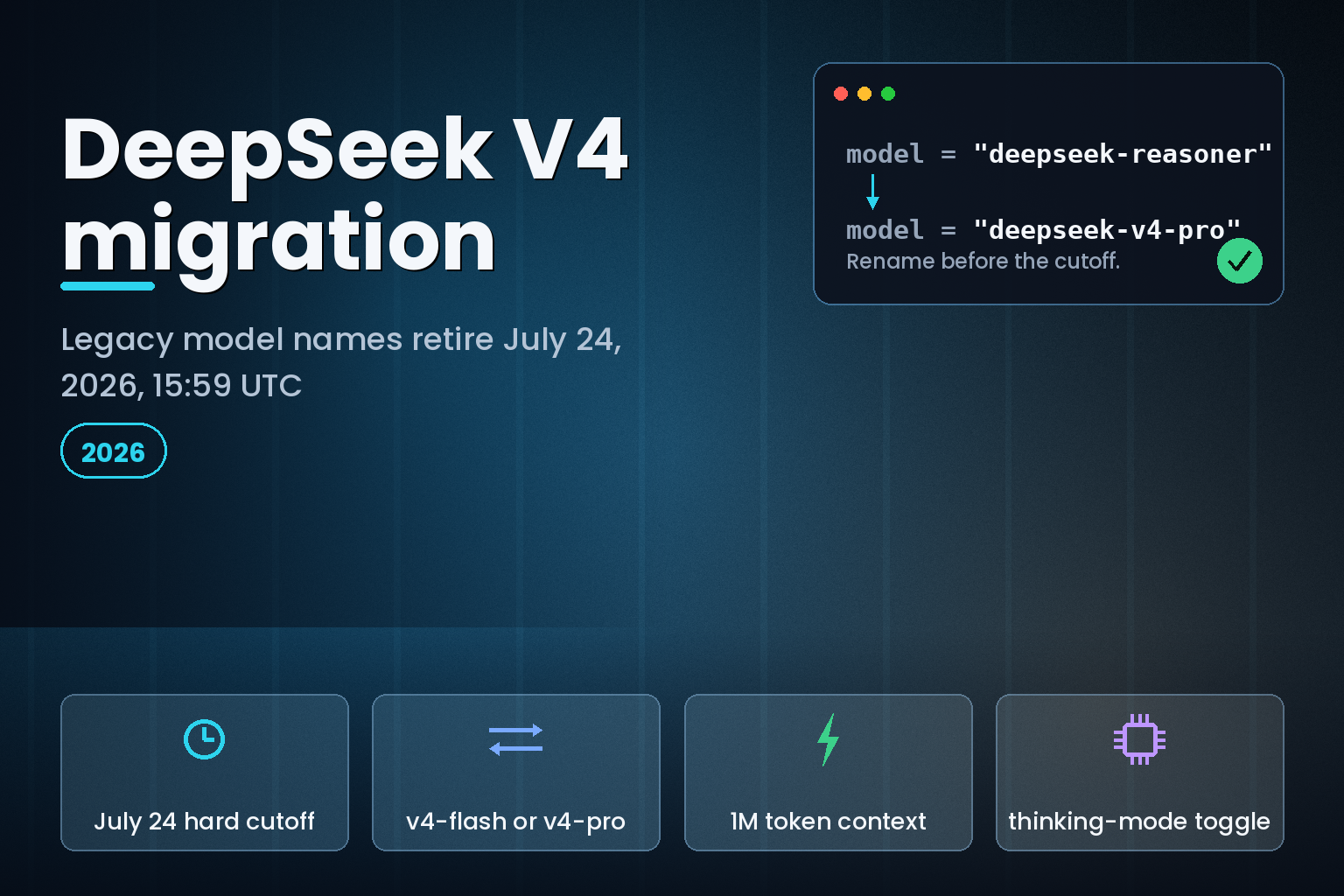
DeepSeek retires deepseek-chat and deepseek-reasoner on July 24, 2026: your V4 migration checklist
On July 24, 2026 at 15:59 UTC, DeepSeek retires deepseek-chat and deepseek-reasoner, and calls using them then fail. Here is the exact migration to deepseek-v4-flash and deepseek-v4-pro.
Manu Shukla -
Intelligent document processing in 2026: KYC and claims automation for Indian BFSI
Banking, insurance and lending drown in documents. Here is how intelligent document processing automates KYC and claims for Indian BFSI in 2026, what accuracy to expect, how AWS, Google and Azure compare, and how
Manu Shukla -
$0.04 a minute: gpt-realtime-2.1 voice agents with reasoning and tool use (2026 build guide)
OpenAI's gpt-realtime-2.1 and its mini added reasoning and tool use to speech-to-speech voice agents on July 6, 2026. Here is the real per-minute cost math and how to architect a production build.
Manu Shukla -
Inkling, Thinking Machines' 975B open-weights model: adopt it or wait in 2026?
Thinking Machines shipped Inkling, a 975B open-weights model with 41B active, 1M context and native audio and vision. Here are the benchmarks against Kimi, DeepSeek and the closed frontier, the real cost, and who should
Manu Shukla -
Custom MCP servers in 2026: connect your enterprise data to any AI agent
MCP connects AI agents to your internal systems, and 78% of enterprise teams already run it. But 43% of public servers had command-injection flaws. What a production-grade custom MCP server needs in 2026, and how
Manu Shukla -
Gemini 3.5 Pro vs GPT-5.6 vs Claude Fable 5: which wins in 2026 (real benchmarks)
Everyone compares Gemini 3.5 Pro with GPT-5.6 and Claude Fable 5 off leaked specs. Here is the honest 2026 picture: official prices and benchmarks for what ships today, and why Gemini 3.5 Pro is not really out.
Manu Shukla -
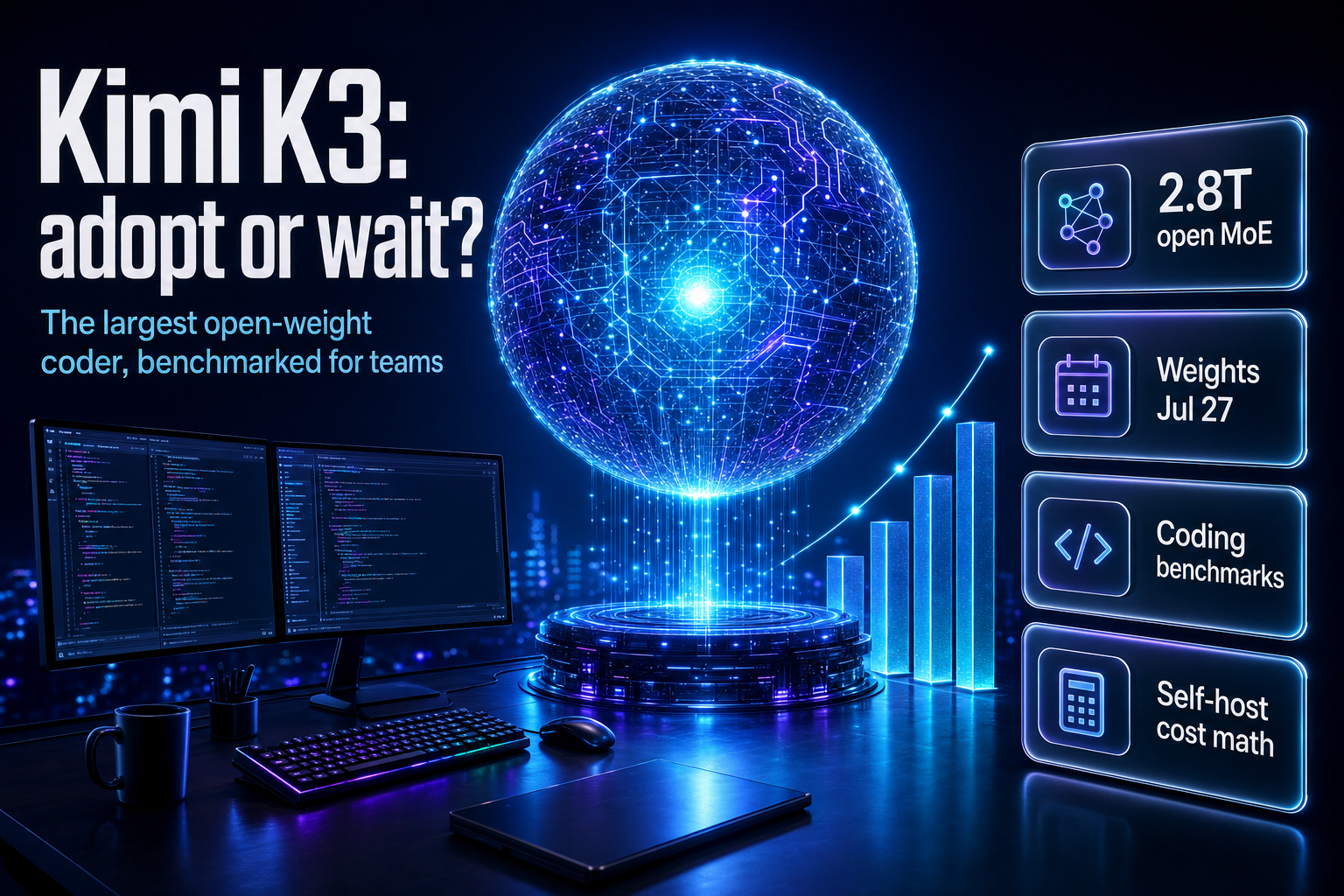
Kimi K3 for coding teams in 2026: benchmarks, real cost and adopt-vs-wait
Kimi K3 leads the Frontend Code arena and ships open weights by July 27, 2026. A senior engineer's read on its coding benchmarks, $3/$15 API pricing, self-host reality and the adopt-vs-wait decision.
Manu Shukla -
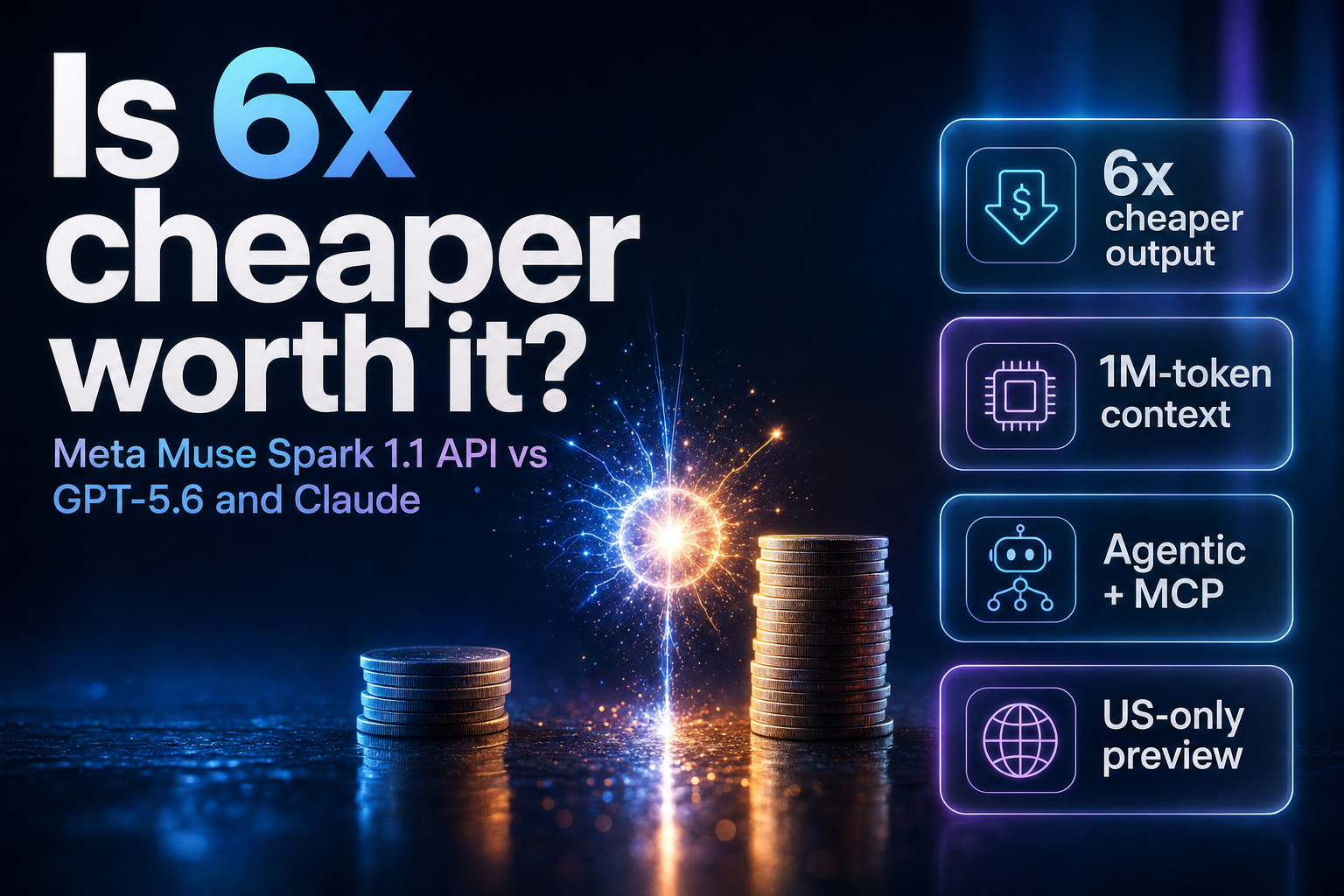
Muse Spark 1.1 API is 6x cheaper than GPT-5.6: should you switch your AI agents?
Meta's Muse Spark 1.1 API launched at $1.25/$4.25 per million tokens, about a quarter of OpenAI and Anthropic rates. The real monthly cost math against GPT-5.6 and Claude, plus when switching your agents makes sense.
Manu Shukla -
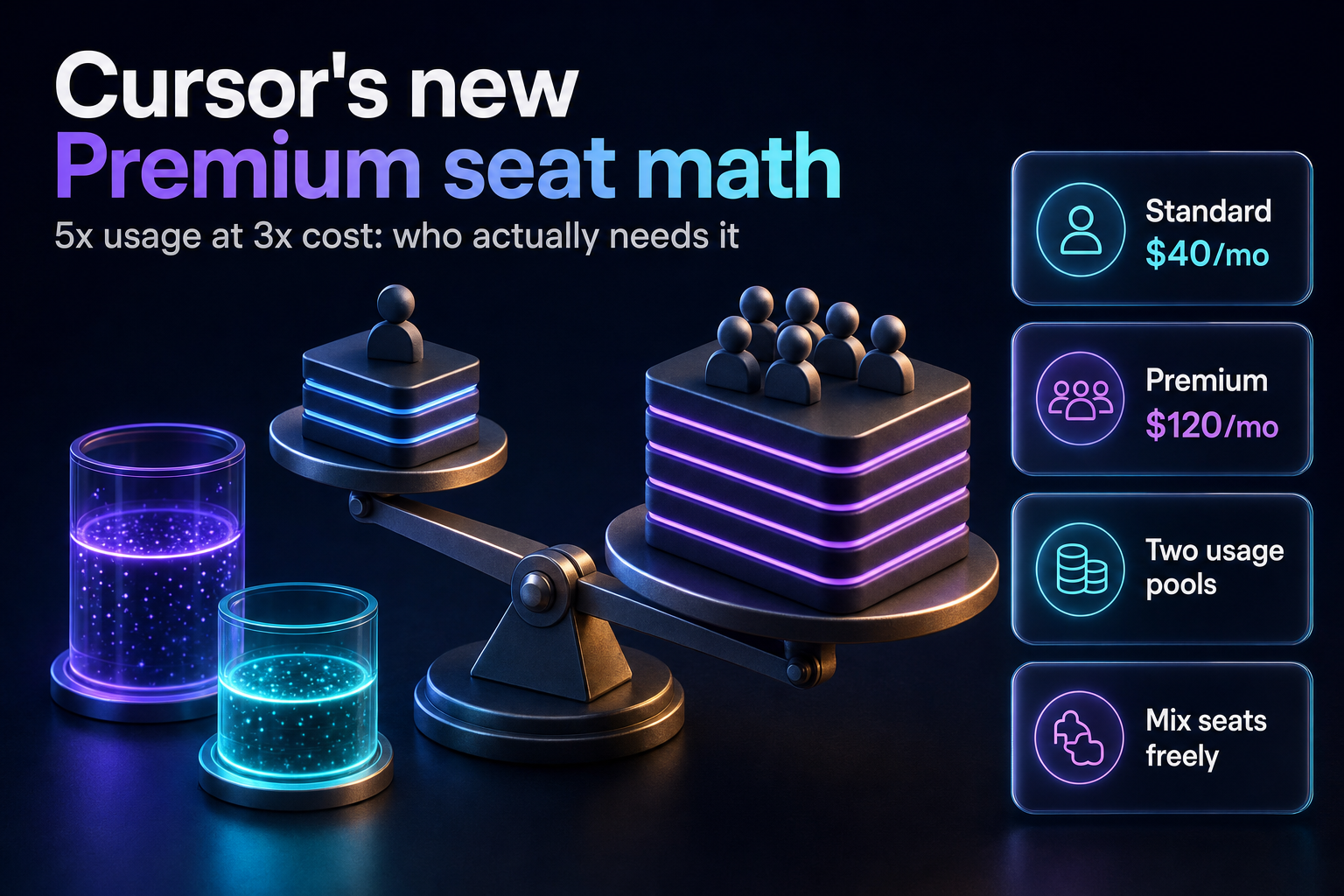
Cursor's Premium seat at $120: the 2026 seat-mix math that decides your AI coding bill
Cursor split Teams usage into two pools and added a $120 Premium seat for renewals from 1 July 2026. Premium buys 5x the included usage at 3x the cost, which makes its included usage 40% cheaper per unit. Here is
Manu Shukla -
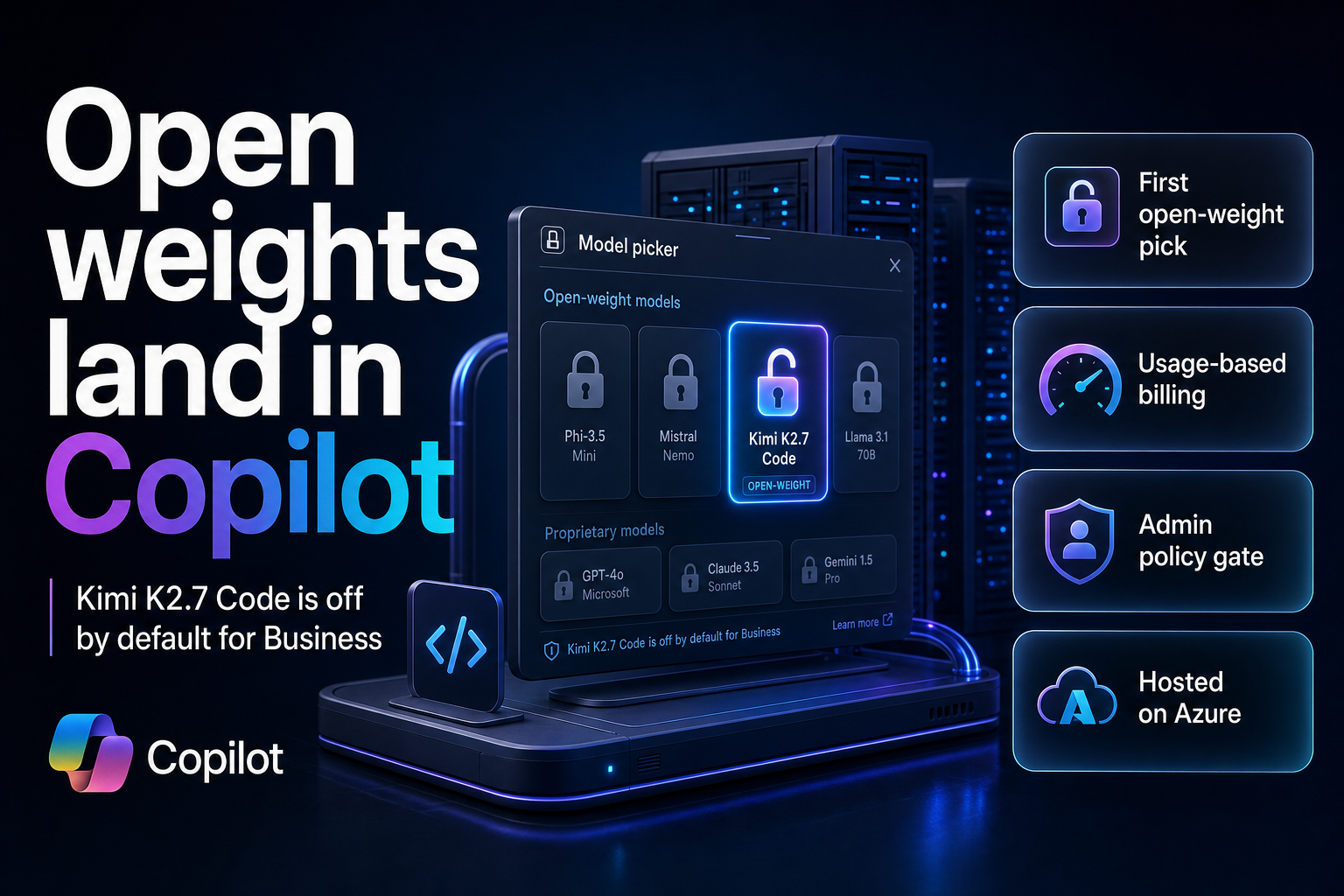
Kimi K2.7 Code costs $0.95/M in GitHub Copilot and loses 6 of 6 benchmarks to GPT-5.5
GitHub made Kimi K2.7 Code generally available in Copilot on 1 July 2026, the first open-weight model in the picker. It is the cheapest Versatile model on the price list, and Moonshot's own benchmark table puts it
Manu Shukla -
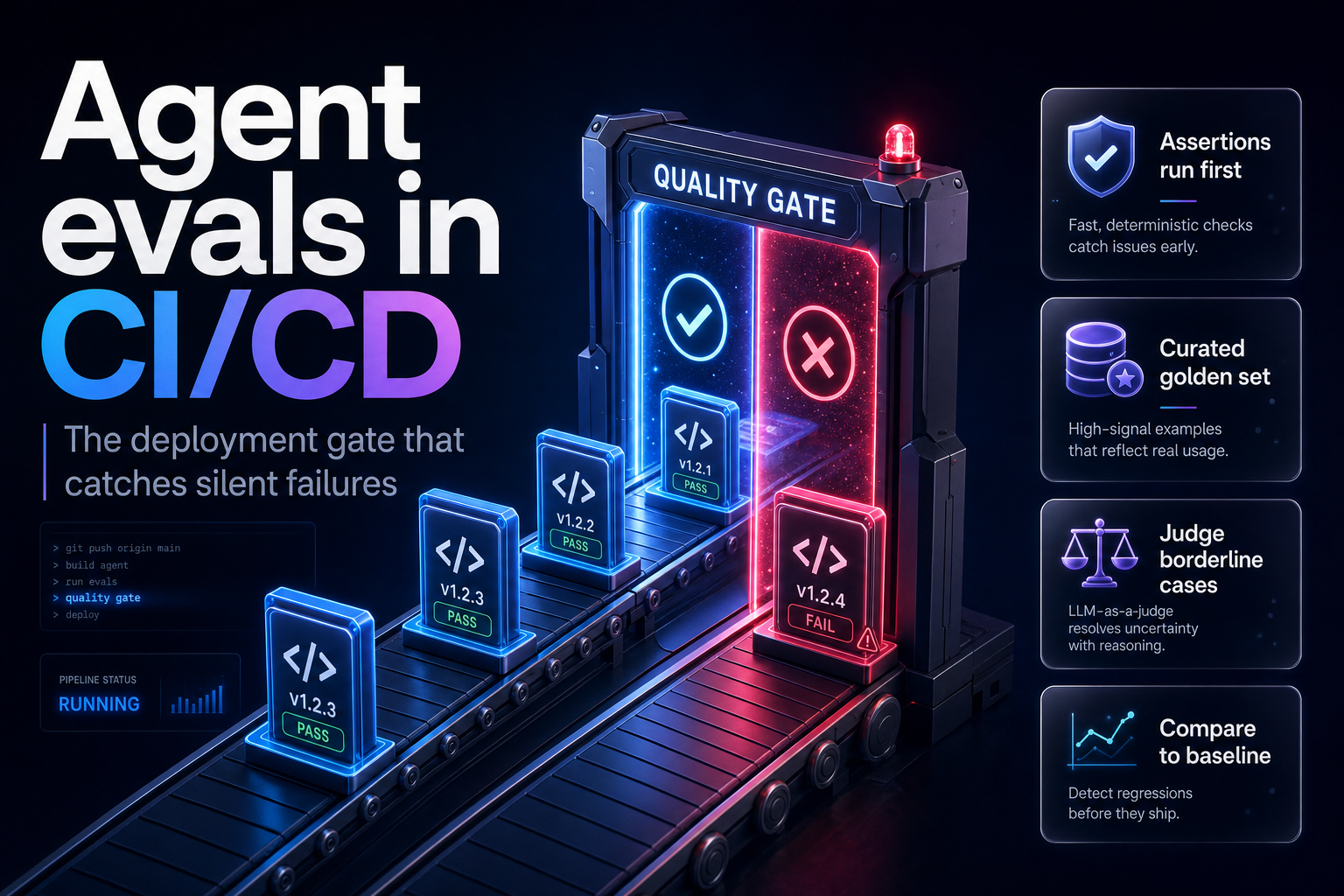
Agent evals in CI/CD: 4 gates that catch silent failures before customers do (2026)
LangChain's June 2026 survey of 1,340 practitioners found 89% run observability but only 52.4% run offline evals. Here is the four-gate CI setup that closes the gap.
Manu Shukla -
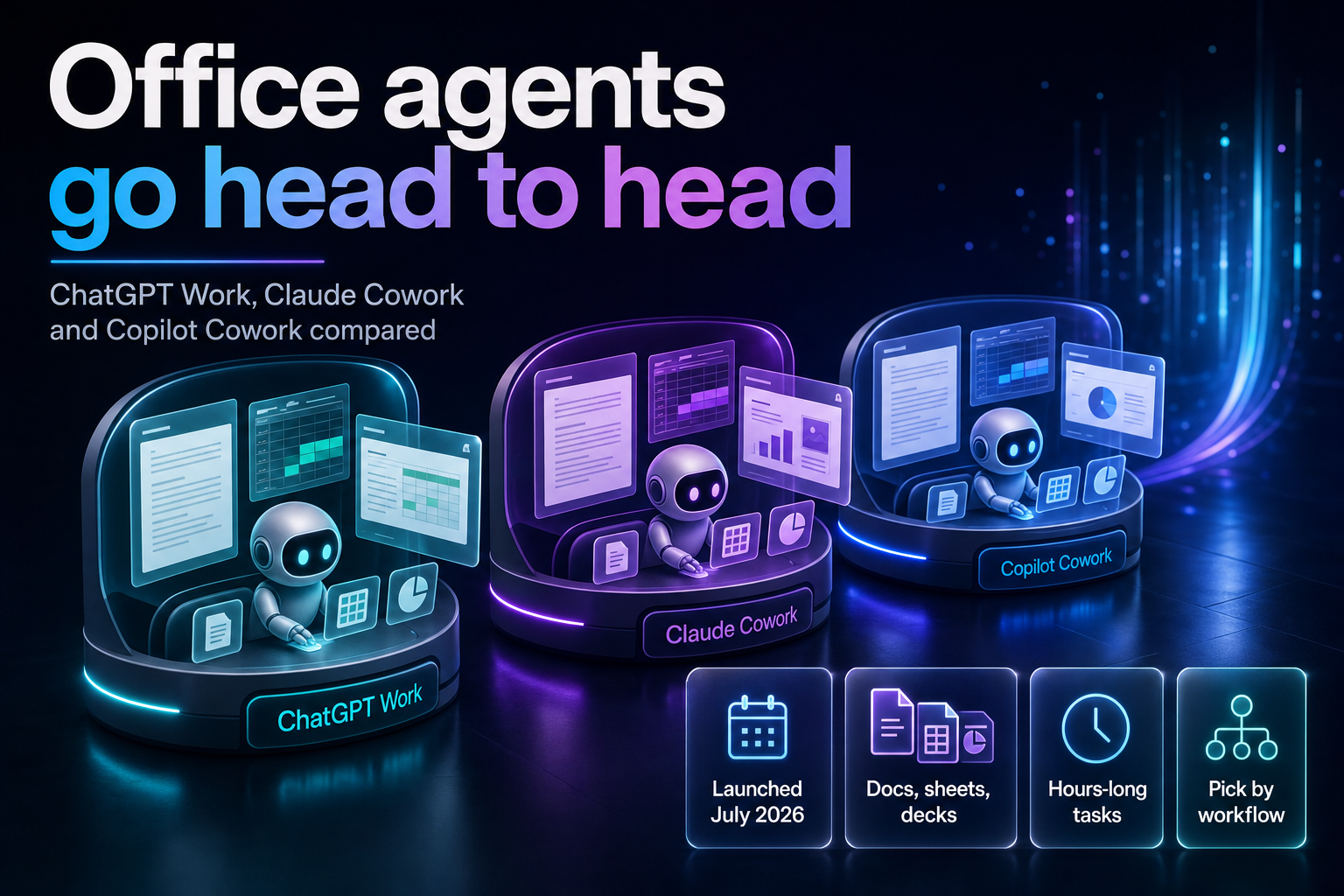
ChatGPT Work vs Claude Cowork vs Copilot Cowork: which 2026 office agent ships finished work
Three vendors now sell an agent that takes a task and returns a finished document. They bill in three incompatible ways, and independent research says reliability still trails capability.
Manu Shukla -

Claude India pricing 2026: the ₹2,000 Pro plan is 24% over US list, 5% after GST
Anthropic began showing rupee prices in India on July 13, 2026. Claude Pro lists at ₹2,000/month against $17 in the US. Most of that 24% gap is GST, not an India surcharge - and the plan-versus-API decision matters far
Manu Shukla -
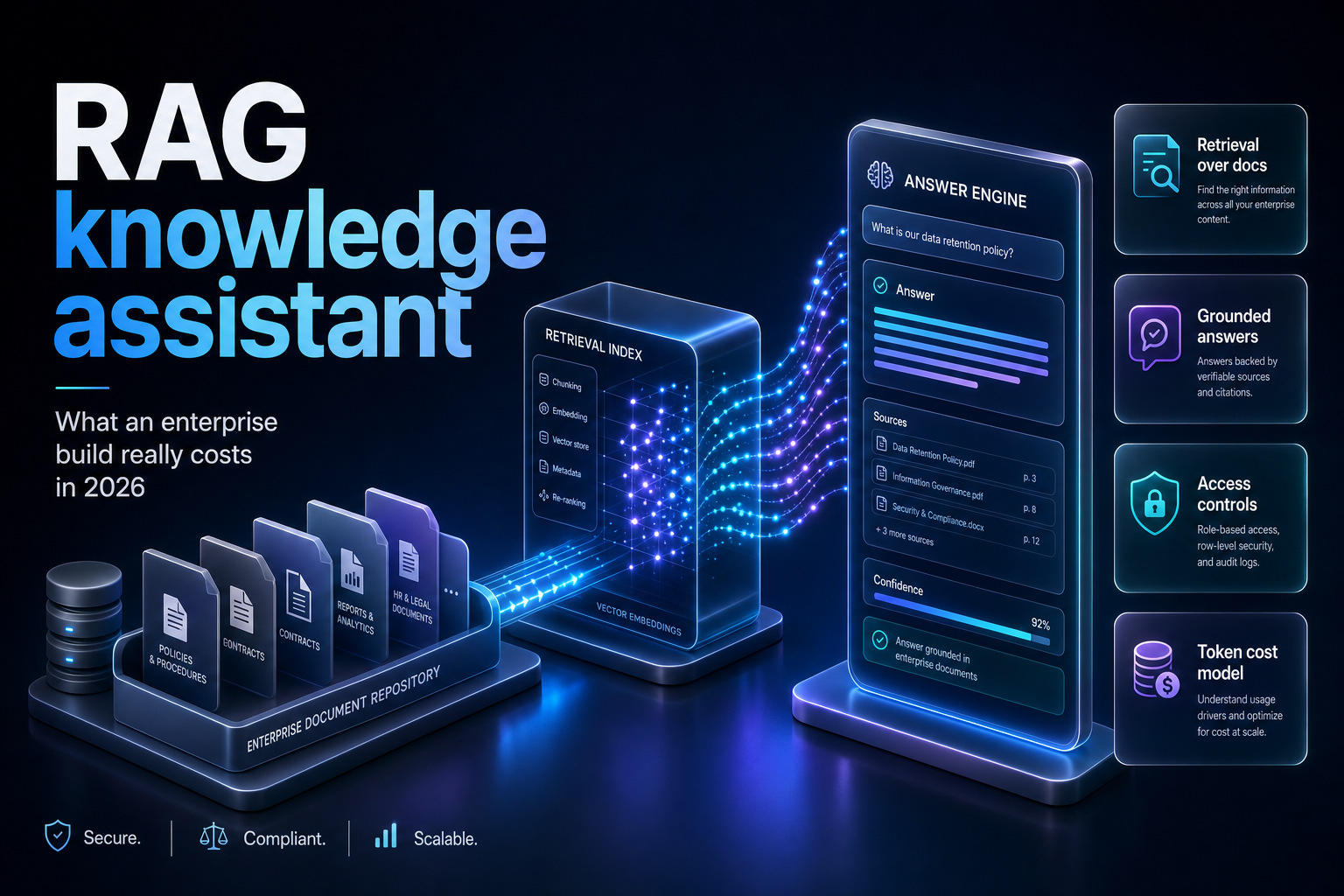
RAG knowledge assistant build in 2026: real costs, benchmarks and a 12-week rollout
Stanford found RAG-backed legal tools still hallucinate 17-34% of the time. Here is what an enterprise RAG knowledge assistant costs in 2026, which retrieval setup actually works, and how eCorpIT builds one.
Manu Shukla -
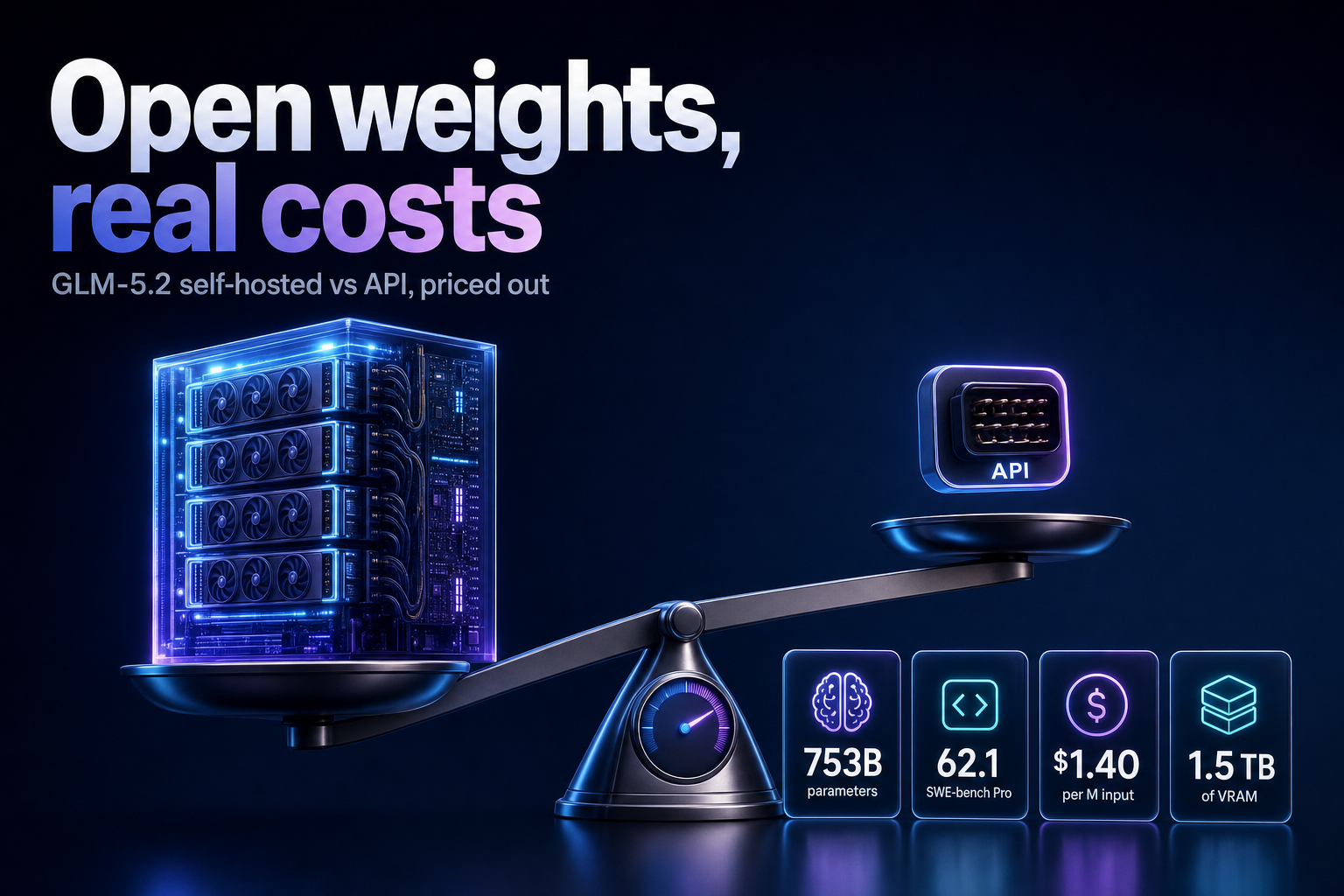
GLM-5.2 self-hosted vs API in 2026: what an open-weight coding agent really costs
Z.ai's GLM-5.2 is the strongest open-weight coding model of 2026 and a third of Claude Opus 4.8's input price. Self-hosting it is another bill: 753B parameters, 1.5 TB of weights, a GPU node rented by the hour.
Manu Shukla -
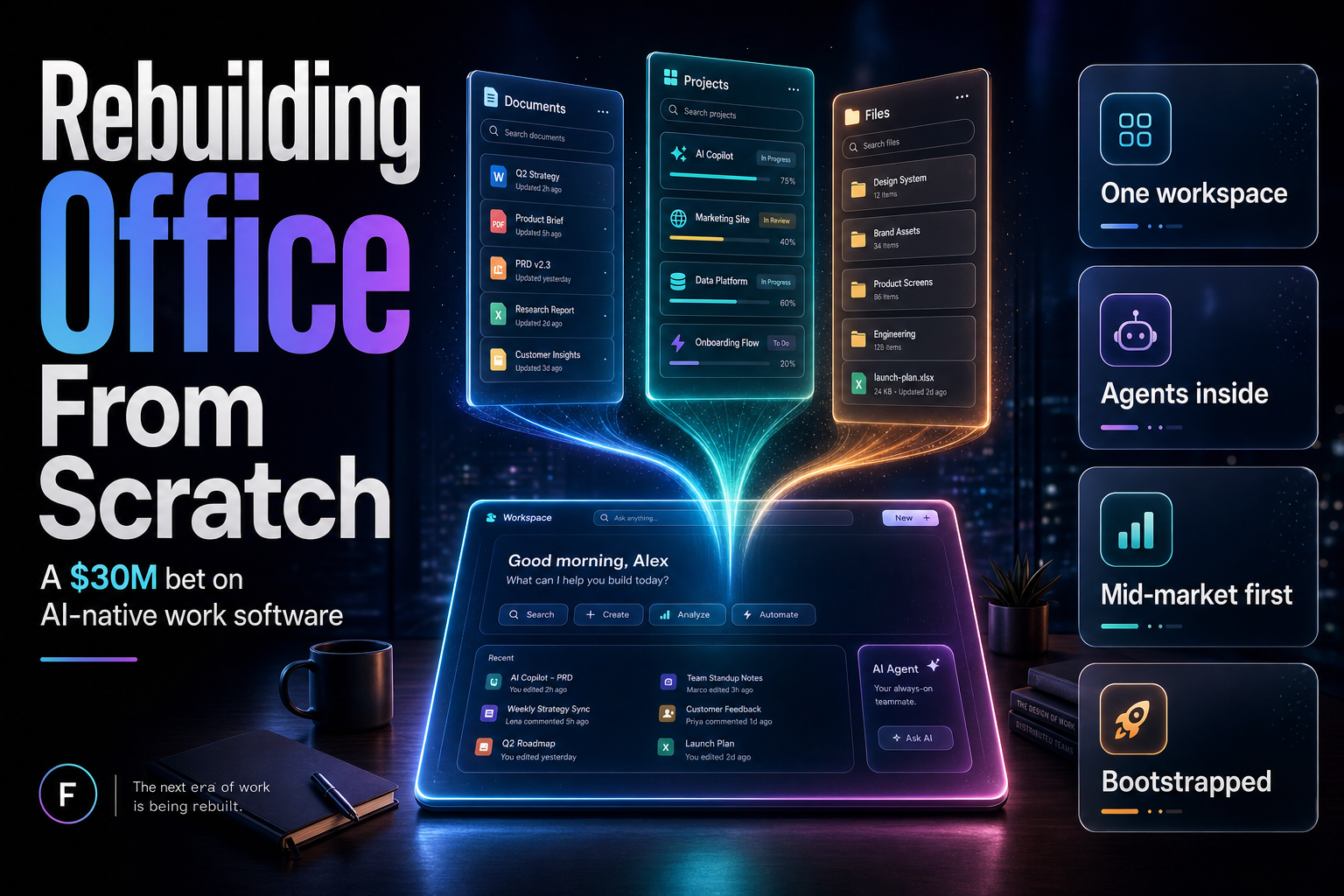
Neo's $30M bet against Microsoft Office: what AI-native work software means for your stack
Bhavin Turakhia launched Neo on July 2, 2026, backing it with $30 million of his own capital and a 45-person team in Bengaluru. The pitch: workplace software built before AI cannot be fixed with a chatbot bolted on
Manu Shukla -
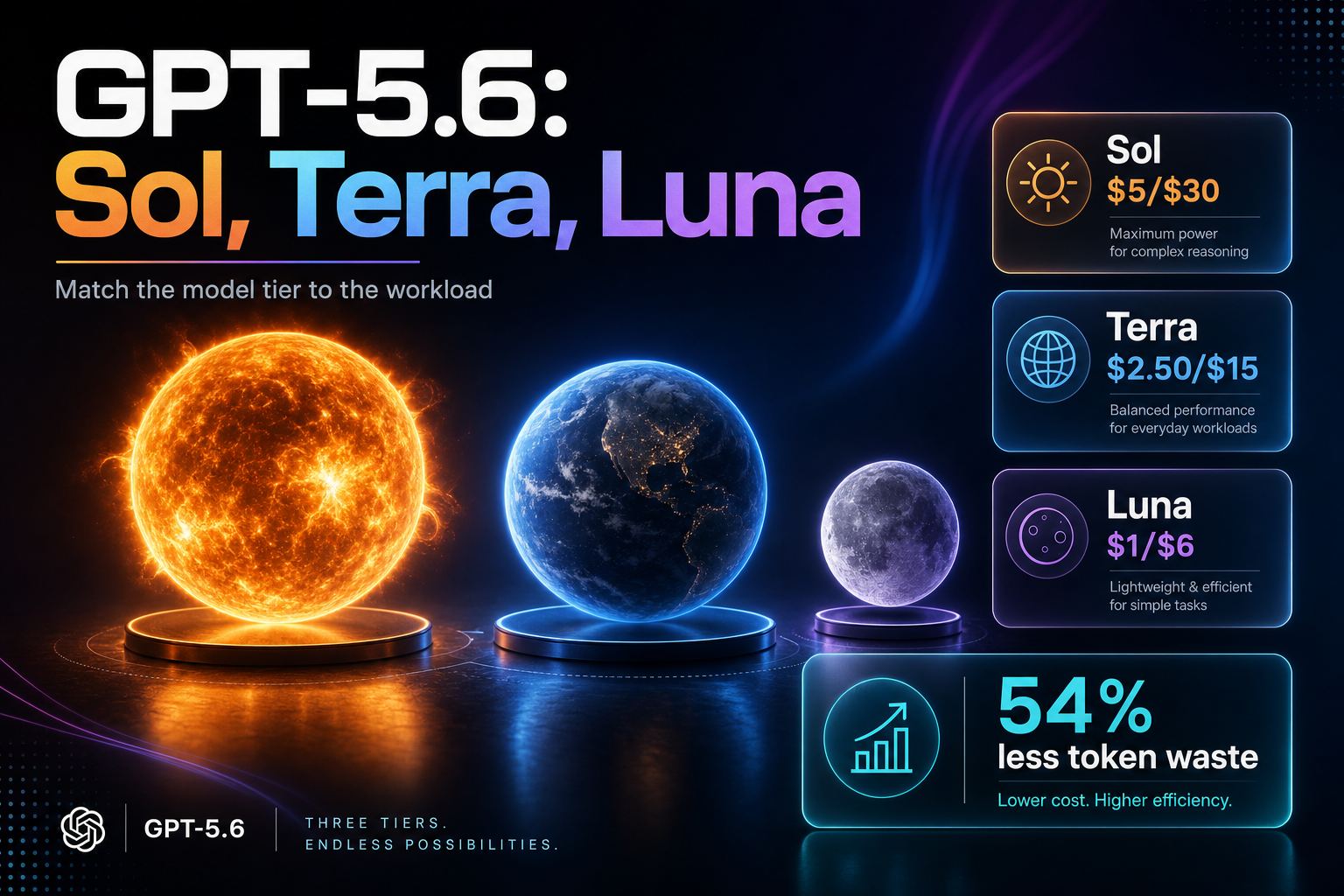
GPT-5.6 pricing in 2026: choosing Sol, Terra or Luna by workload
OpenAI's GPT-5.6 shipped on July 9, 2026 in three tiers, Sol, Terra, and Luna, priced from $1 to $30 per million tokens. How to match each tier to coding, agent, and high-volume workloads by cost.
Manu Shukla -
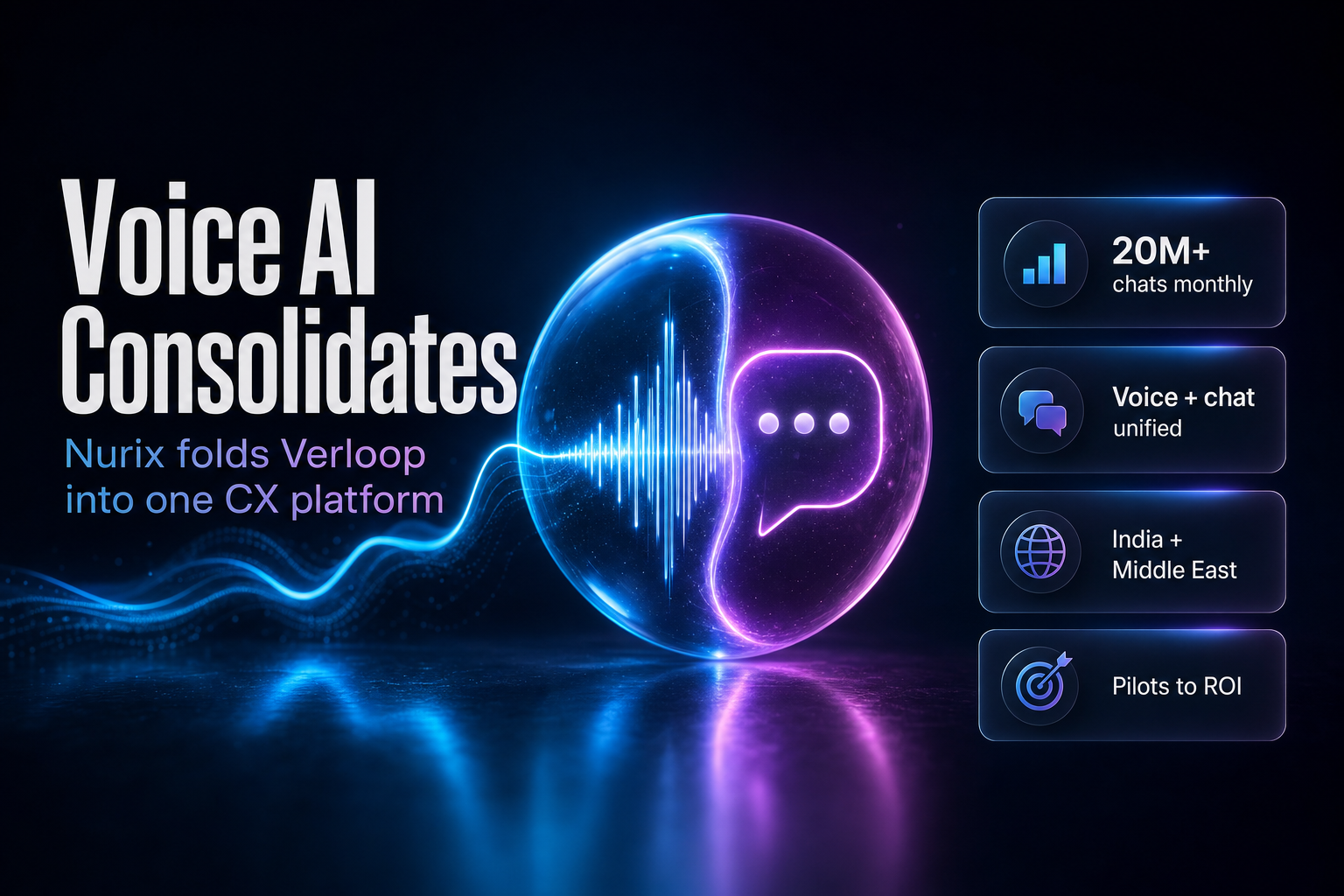
Nurix bought Verloop.io in 2026: what voice-AI consolidation means for CX
Nurix AI acquired Verloop.io in July 2026, folding chat that powers 20M+ monthly interactions into its NuPlay voice AI. Inside the voice-AI consolidation reshaping enterprise CX in India.
Manu Shukla -
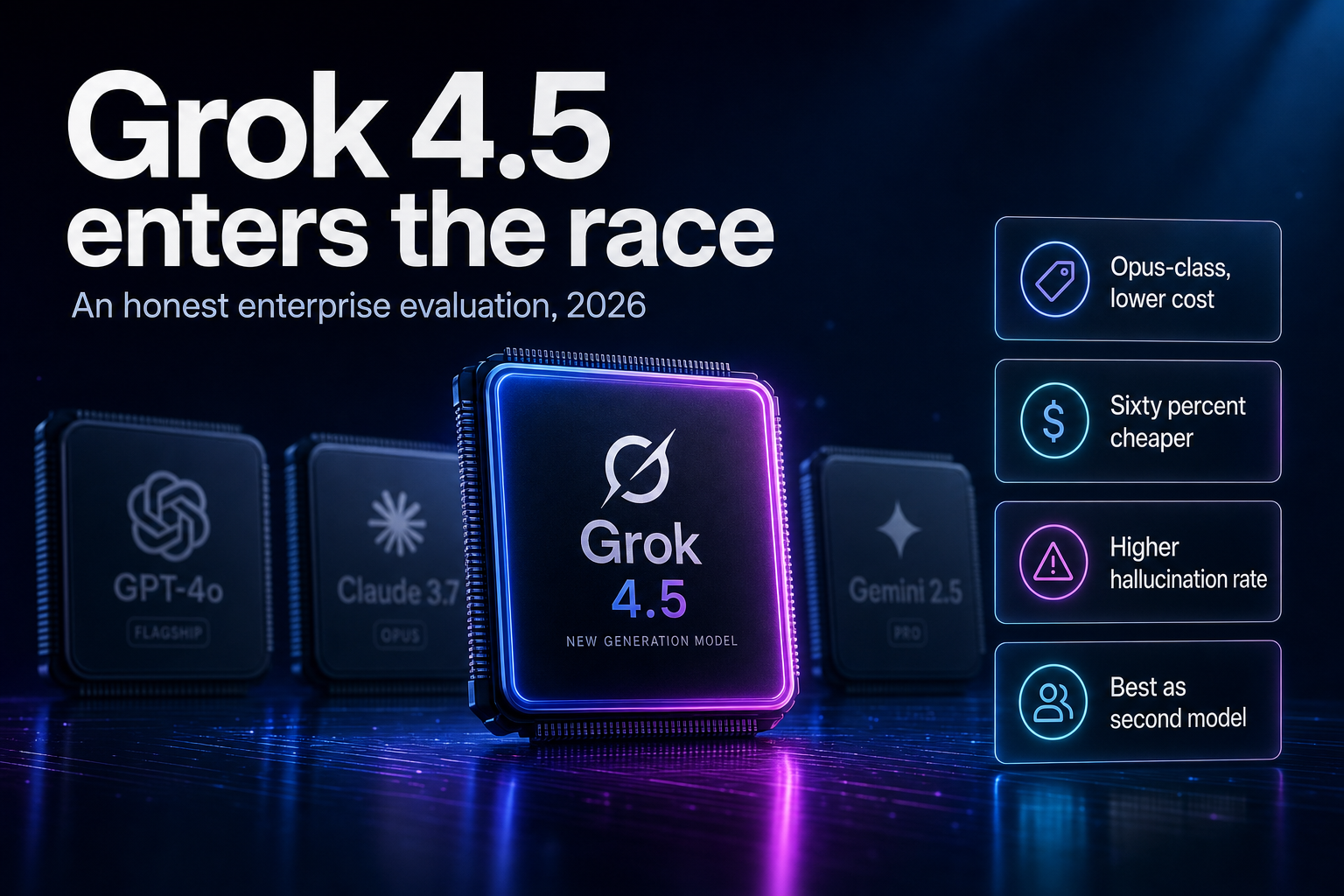
Grok 4.5 costs 60% less than Claude Opus: an honest 2026 evaluation
Grok 4.5, from the newly renamed SpaceXAI, is priced at $2/$6 per million tokens and pitched as Opus-class at lower cost. Here is where it fits for enterprise coding and agents, and where it does not, in 2026.
Manu Shukla -
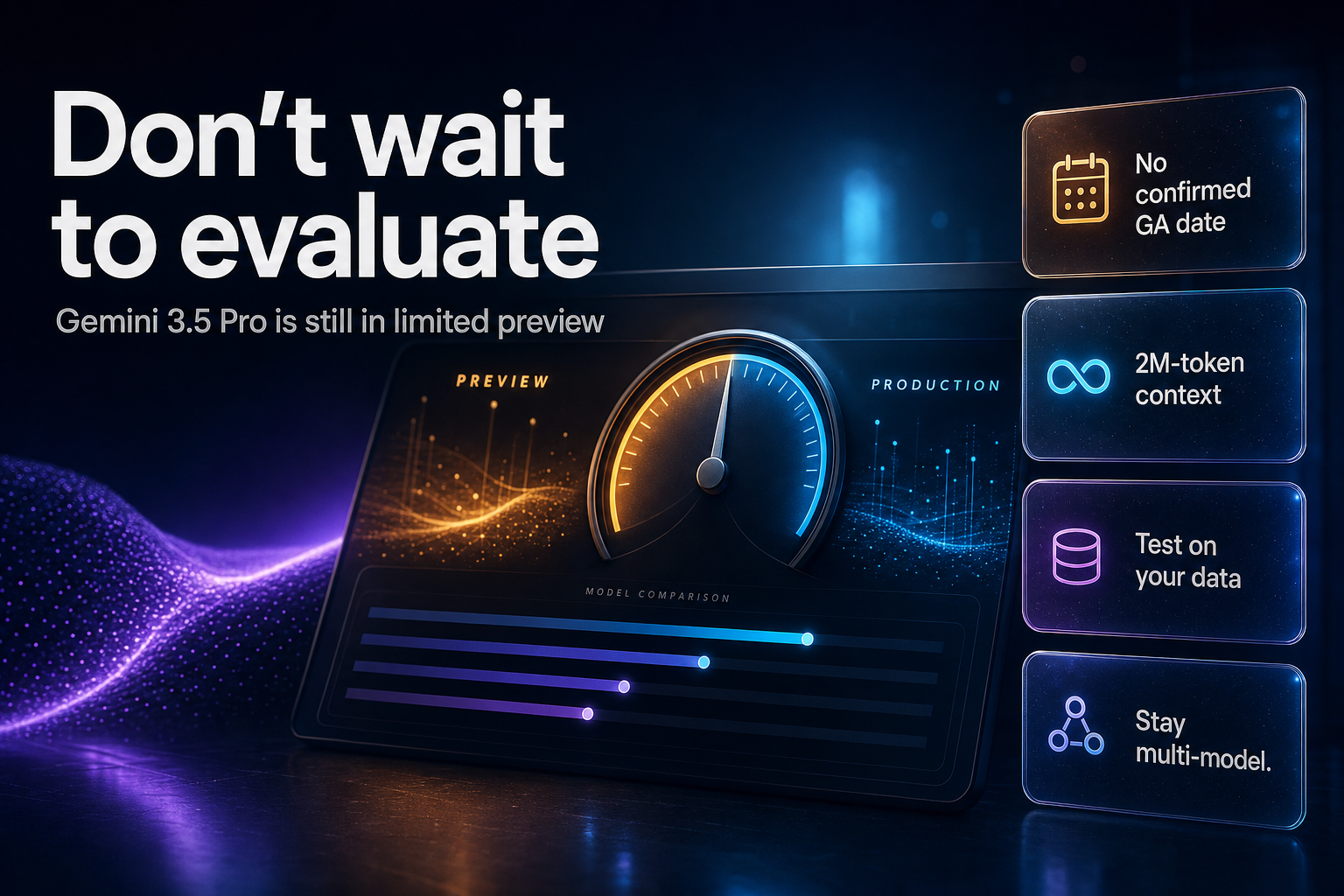
Gemini 3.5 Pro is still in preview in July: what enterprise teams evaluating it should do now
Gemini 3.5 Pro entered July 2026 still in limited preview, with no confirmed GA date, benchmarks or final pricing, after slipping from a June target. What enterprise teams evaluating it should do now.
Manu Shukla -
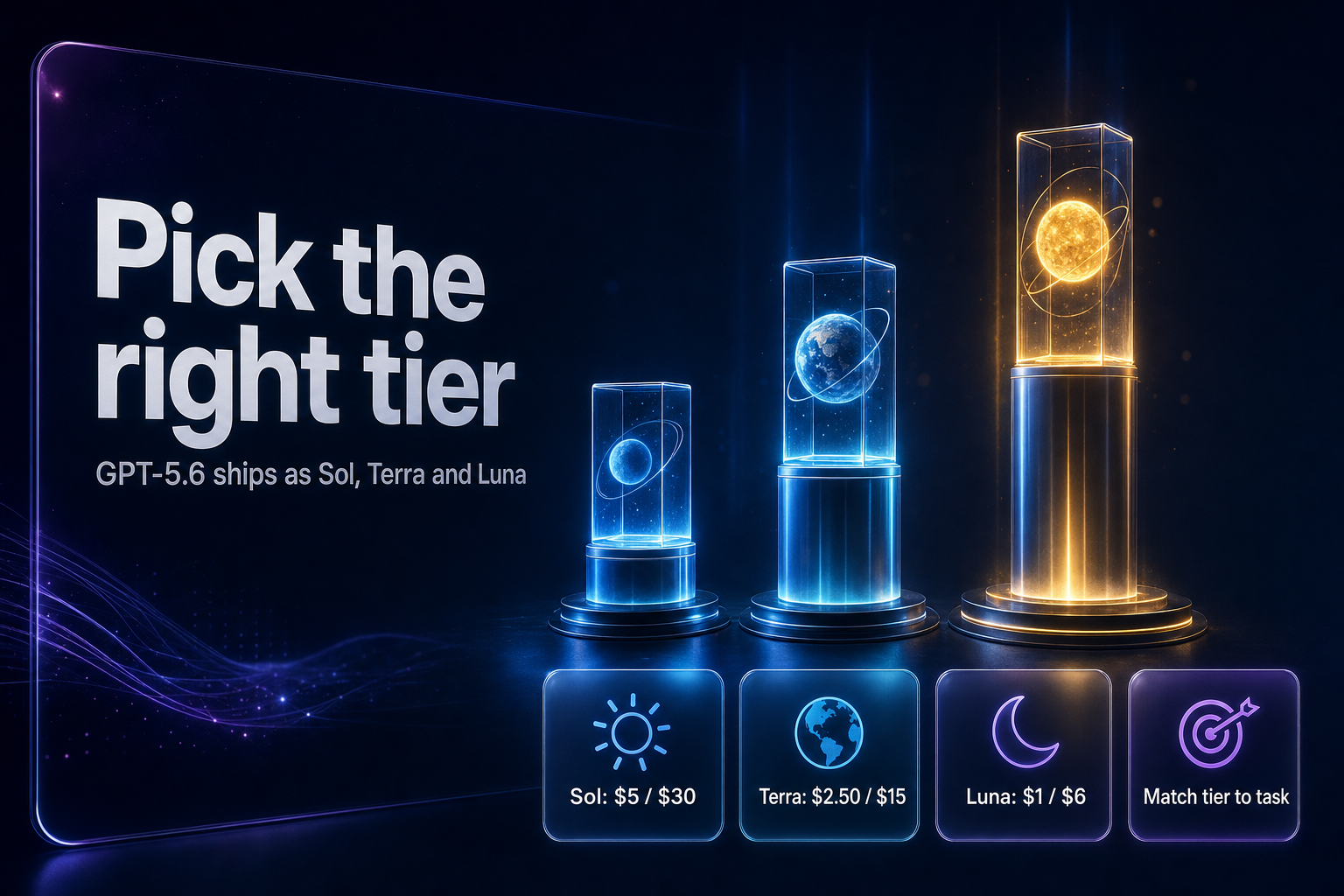
GPT-5.6 goes GA as Sol, Terra and Luna: how to pick the right tier for enterprise workloads
GPT-5.6 reached general availability on July 9, 2026 as three models: Sol at $5, Terra at $2.50 and Luna at $1 per million input tokens. How to pick the right tier for coding, agents and high-volume work.
Manu Shukla -
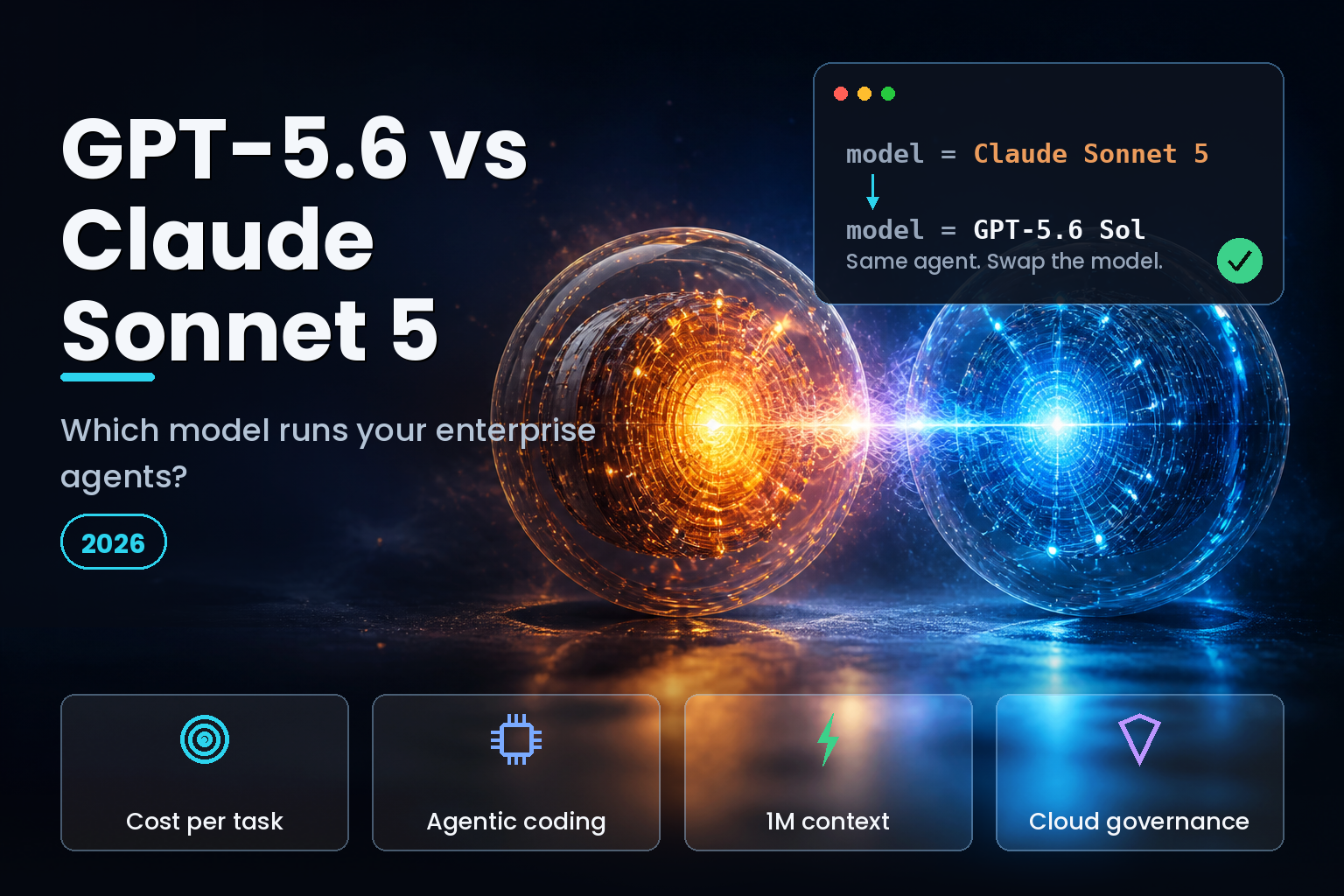
GPT-5.6 vs Claude Sonnet 5: which model should run your enterprise agents in 2026?
Anthropic shipped Claude Sonnet 5 on 30 June 2026; OpenAI made GPT-5.6 generally available on 9 July 2026. Here is how they compare on price, agentic benchmarks, availability and governance.
Manu Shukla -

Microsoft's Copilot Sales and Service Agents hit GA: agentic AI moves into the enterprise stack
Microsoft's Service Agent reached general availability on 30 June 2026, with Sales Agent alongside. Here is what the Dynamics 365 and Copilot agents do, what they cost, and when to build instead.
Manu Shukla -
5 photorealistic Image Playground use cases for marketing teams in iOS 27
Image Playground in iOS 27 generates photorealistic images natively for the first time, built on Private Cloud Compute and watermarked with SynthID. Here are five use cases for marketing teams and the disclosure
Manu Shukla -
7 free AI tools that make LLM costs measurable in 2026
LLM API prices run from $0.14 to $30 per million tokens in June 2026, and agentic workloads multiply the bill. Seven free, open-source tools that make engineering teams' LLM spend measurable and attributable.
Manu Shukla -
6 free AI cost tools every LLM engineering team needs in 2026
With 98% of FinOps teams now managing AI spend, LLM cost control is a 2026 priority. Here are 6 free, mostly open-source tools, from LiteLLM and Langfuse to tokencost and OpenCost, to measure LLM spend.
Manu Shukla -
7 AI cost tools every engineering team should use to cut LLM spend in 2026
Strategic optimisation can cut LLM costs by 60 to 80 percent. Seven AI cost tools, from observability with Langfuse to prompt compression with LLMLingua, that engineering teams use to cut token spend in 2026.
Manu Shukla -
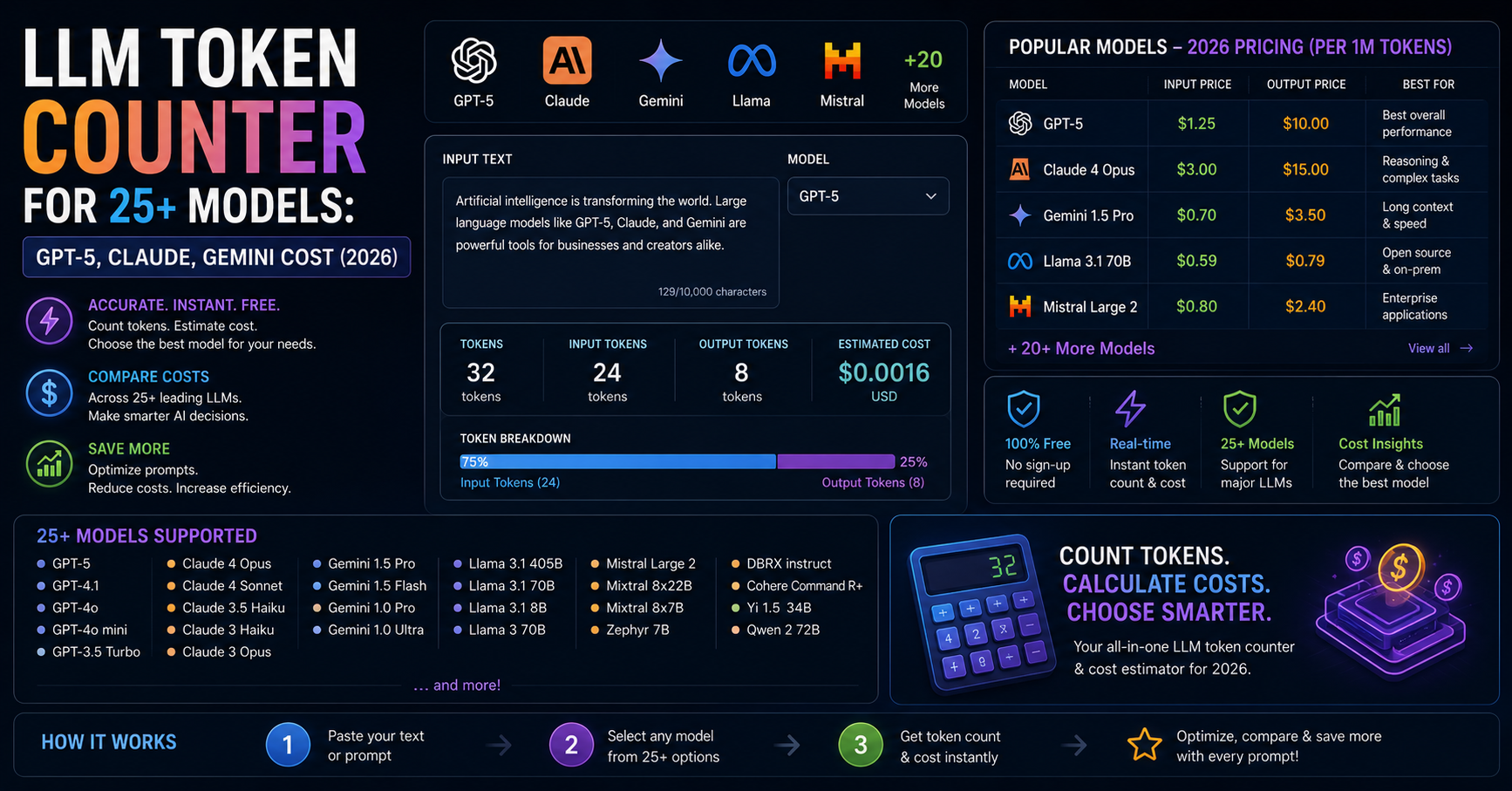
LLM Token Counter for 25+ Models: GPT-5, Claude, Gemini Cost (2026)
Free LLM token counter for 25+ models — GPT-5, Claude Opus, Sonnet, Gemini, Llama, DeepSeek. Side-by-side cost calculator, 100% client-side, no signup.
Manu Shukla