
Category
AI & Cloud Infrastructure
AI hardware, data-centre infrastructure, GPUs, HBM memory supply, and the cloud + on-prem architecture that powers enterprise AI at scale.
-
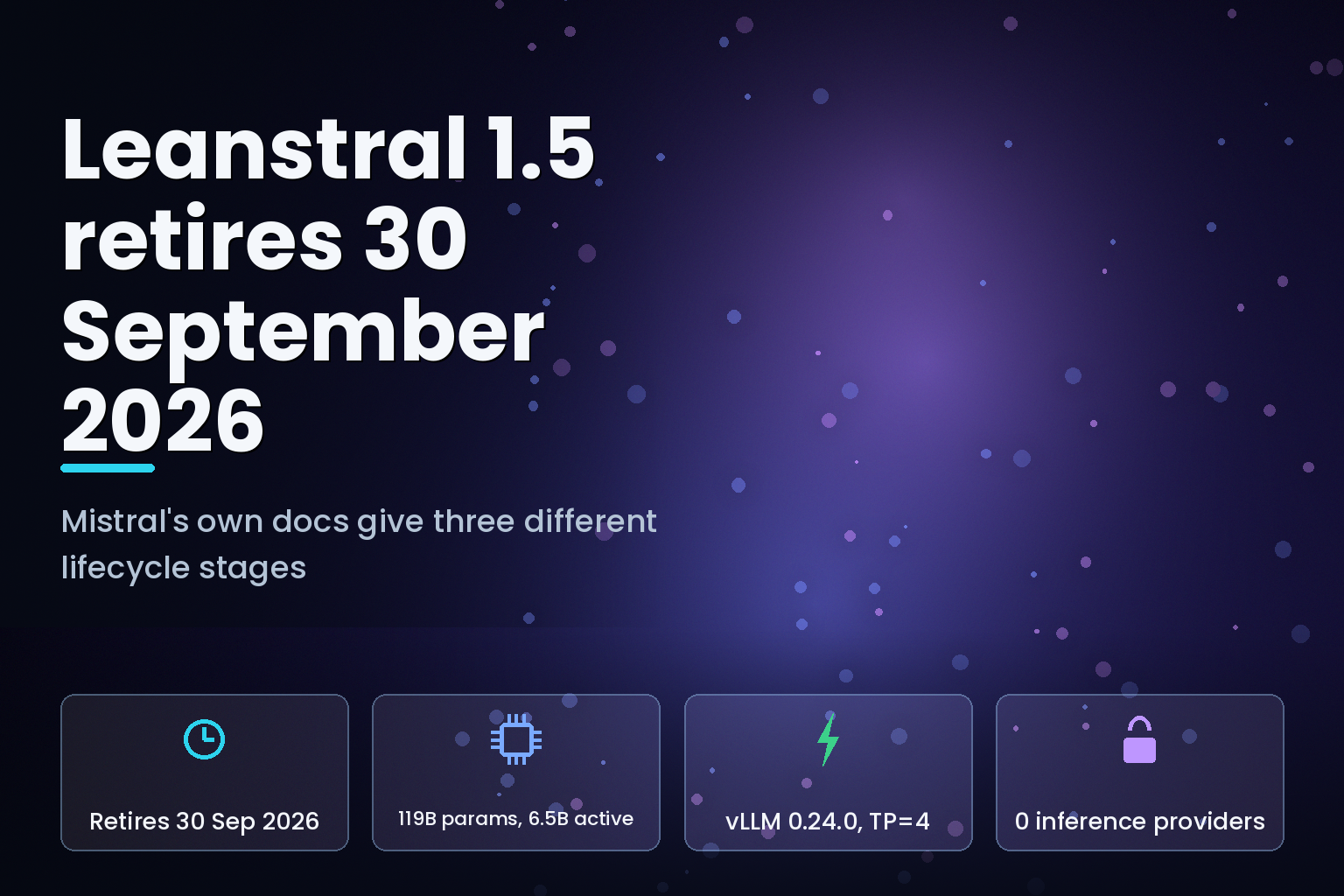
Mistral's Leanstral 1.5 retires 30 September and its own docs disagree on the stage
Mistral announced Leanstral 1.5's retirement in the same changelog entry that announced its release. Eighteen days out, the model card still badges it Public Preview and pricing files it under Labs.
 Manu Shukla
 -
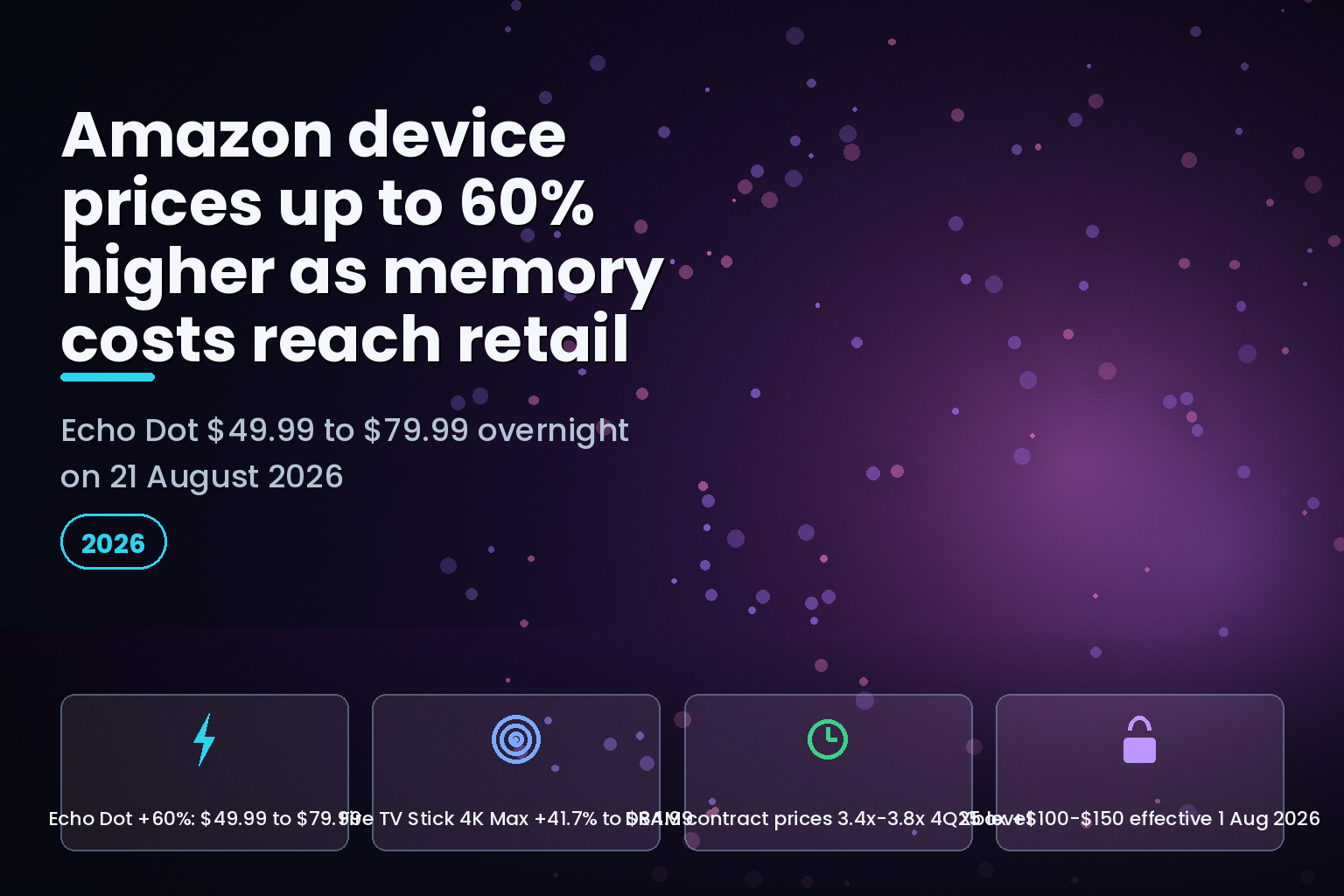
Amazon raised device prices up to 60% on 21 August 2026 as memory costs reached retail
The Echo Dot went from $49.99 to $79.99 overnight. Behind it: conventional DRAM contract prices roughly 3.4x to 3.8x their 4Q25 level, and two credible forecasts pointing opposite ways.
Manu Shukla -
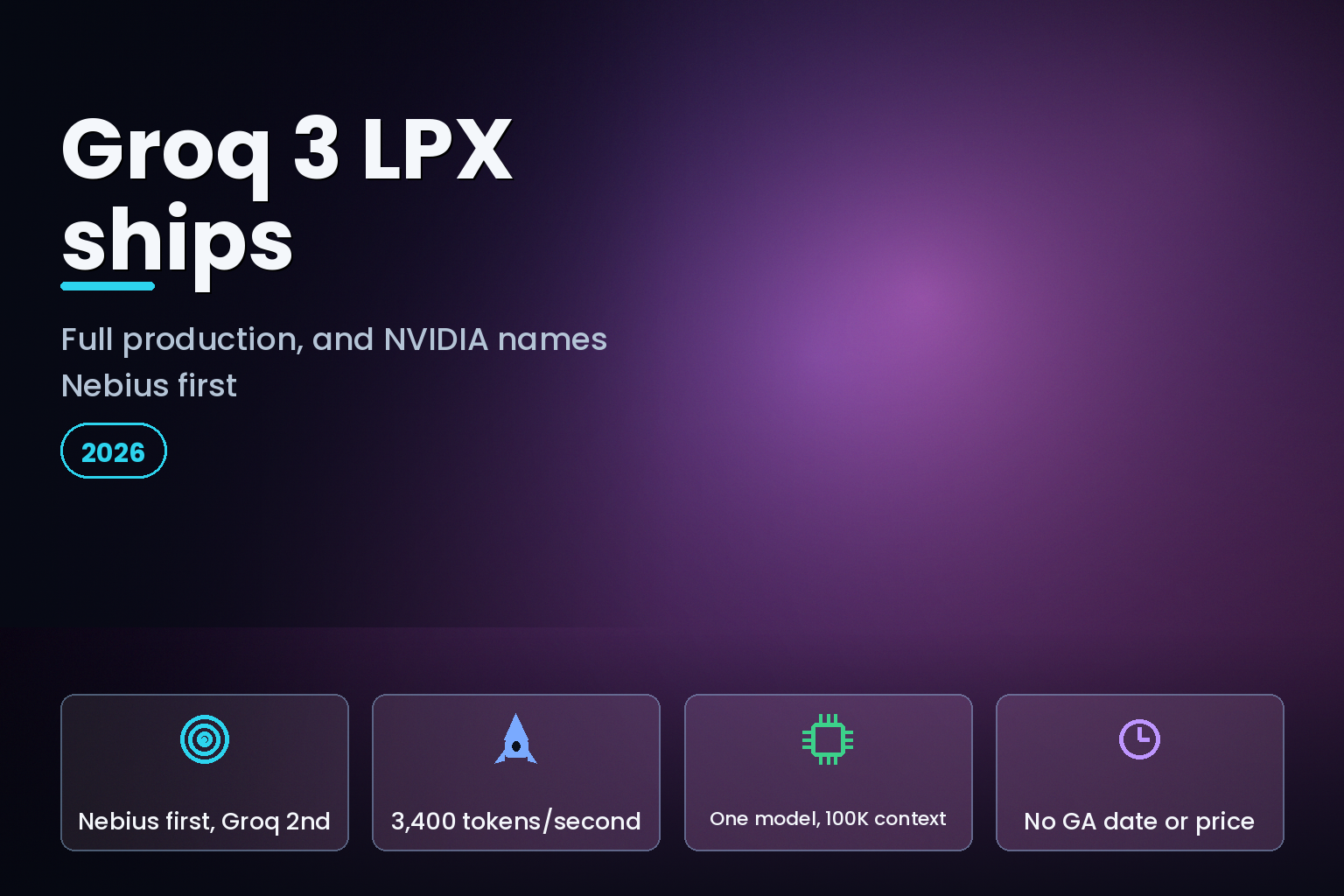
Groq 3 LPX hit full production on 24 August 2026: NVIDIA names Nebius first, Groq second
NVIDIA announced Groq 3 LPX in full production on 24 August 2026 and named Nebius the first cloud to adopt it. Groq's post the same day claims it is among the first. Neither published a date or a price.
Manu Shukla -
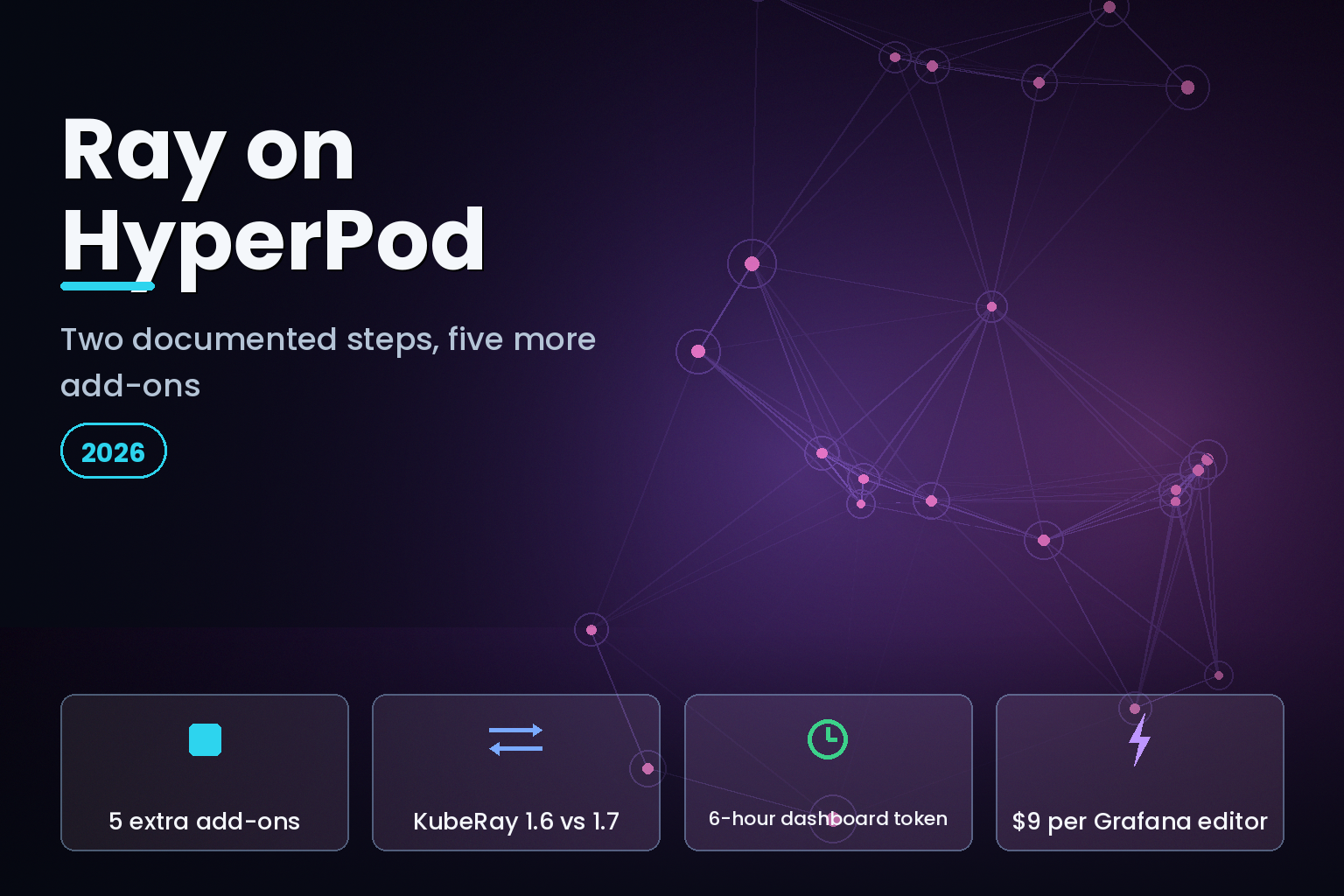
AWS shipped Ray on SageMaker HyperPod on 24 August 2026: 2 setup steps, 5 more add-ons
The 24 August 2026 launch says Ray on SageMaker HyperPod needs a cluster and the KubeRay operator. The dashboards, IDE attach, Grafana panels and KV cache each need a separate add-on.
Manu Shukla -
SageMaker MLflow got customer managed keys on 24 August 2026, in 16 Regions and on apps only
Customer managed keys for SageMaker MLflow arrived on 24 August 2026. They cover MLflow Apps in 16 AWS Regions and no MLflow Tracking Server, which is where most teams still are.
Manu Shukla -
Direct Connect prefix limit rose to 1,000 on 20 August 2026 - your VIFs still default to 100
On 20 August 2026 AWS lifted Direct Connect inbound prefixes from 100 to 1,000 per virtual interface. Azure ExpressRoute answers the same scale problem the opposite way, and the two ceilings do not line up.
Manu Shukla -
DynamoDB vector search vs pgvector vs OpenSearch: the 2026 cost call
Vector search in DynamoDB went generally available on 5 August 2026. Three billing meters, a 1 KB minimum, on-demand only, and a zero idle floor that reframes the pgvector and OpenSearch comparison.
Manu Shukla -
Bedrock vs OpenAI direct for GPT-5.6: $0.20 Luna erased the premium in August 2026
OpenAI cut GPT-5.6 Luna by 80% and Terra by 20% on 30 July 2026, and Amazon Bedrock passed both through automatically. Luna now costs $0.20 per million input tokens on both paths, which removes the pricing argument
Manu Shukla -
AzureRM 5.0 shipped 28 July 2026: why classic Azure landing zones cannot follow
The classic Azure landing zones Terraform module is pinned to AzureRM 3.x and was scheduled for archive on 1 August 2026. Getting to AzureRM 5.0 is a module migration, not a version bump.
Manu Shukla -
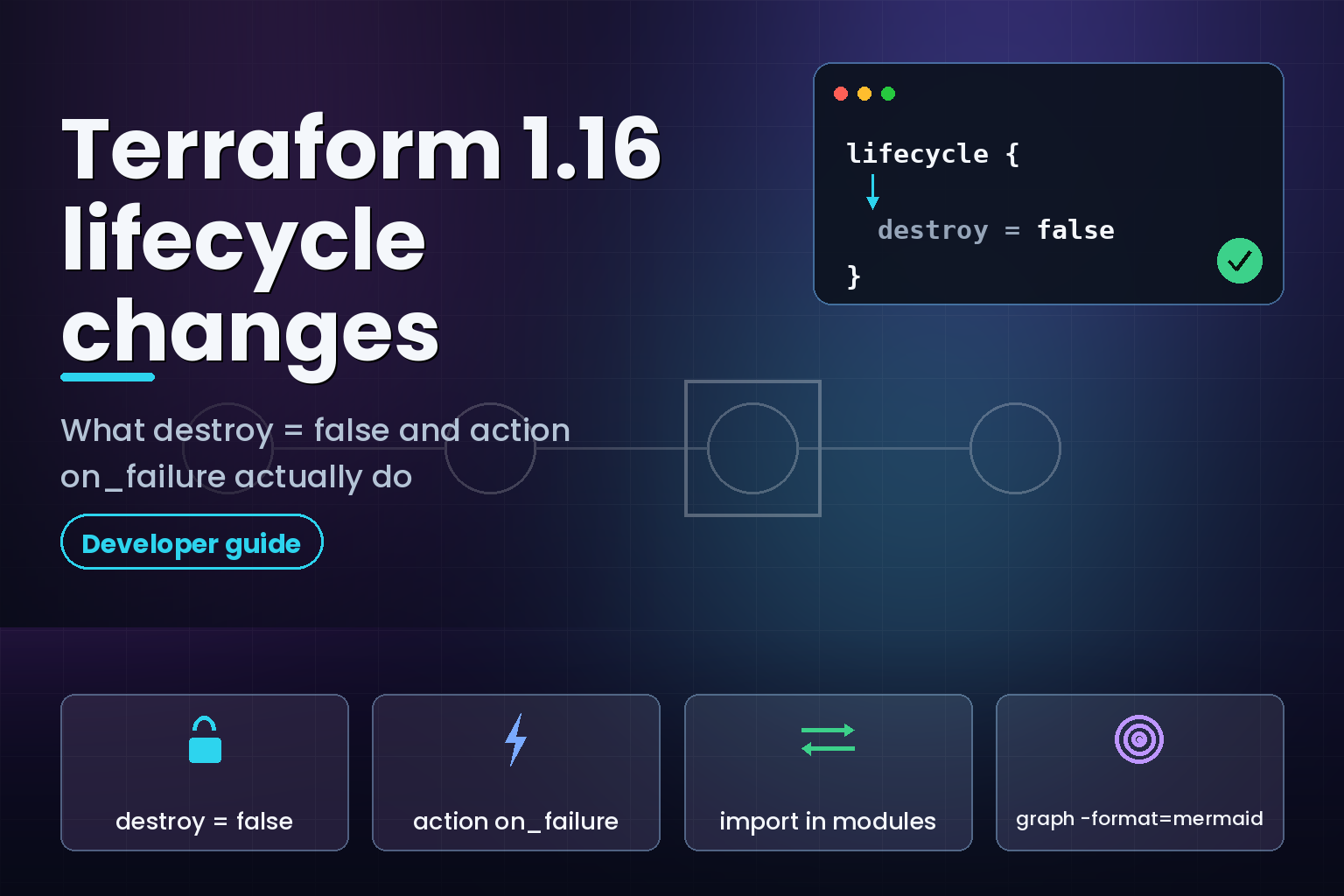
Terraform 1.16 beta: what destroy = false, action on_failure and module import blocks actually change
Terraform 1.16.0-beta1 (23 July 2026) adds destroy = false to resource lifecycle blocks, on_failure modes for action triggers, import blocks inside modules and Mermaid graph output. A working guide to each, with
Manu Shukla -
AzureRM 5.0: 5 breaking changes that stop your terraform plan in 2026
Terraform AzureRM provider 5.0 landed on 27 July 2026. It registers no Azure Resource Providers by default, turns enhanced validation off, and deletes the legacy App Service resources. Here is the HCL that keeps your
Manu Shukla -
Kubernetes 1.36 upgrade: 4 real breaking changes and 1 myth to ignore
Kubernetes v1.36 landed on 22 April 2026 with 70 enhancements. Three changes will actually break production clusters, one widely repeated claim about IPVS is wrong, and EKS extended support costs 6x standard. Here is
Manu Shukla -
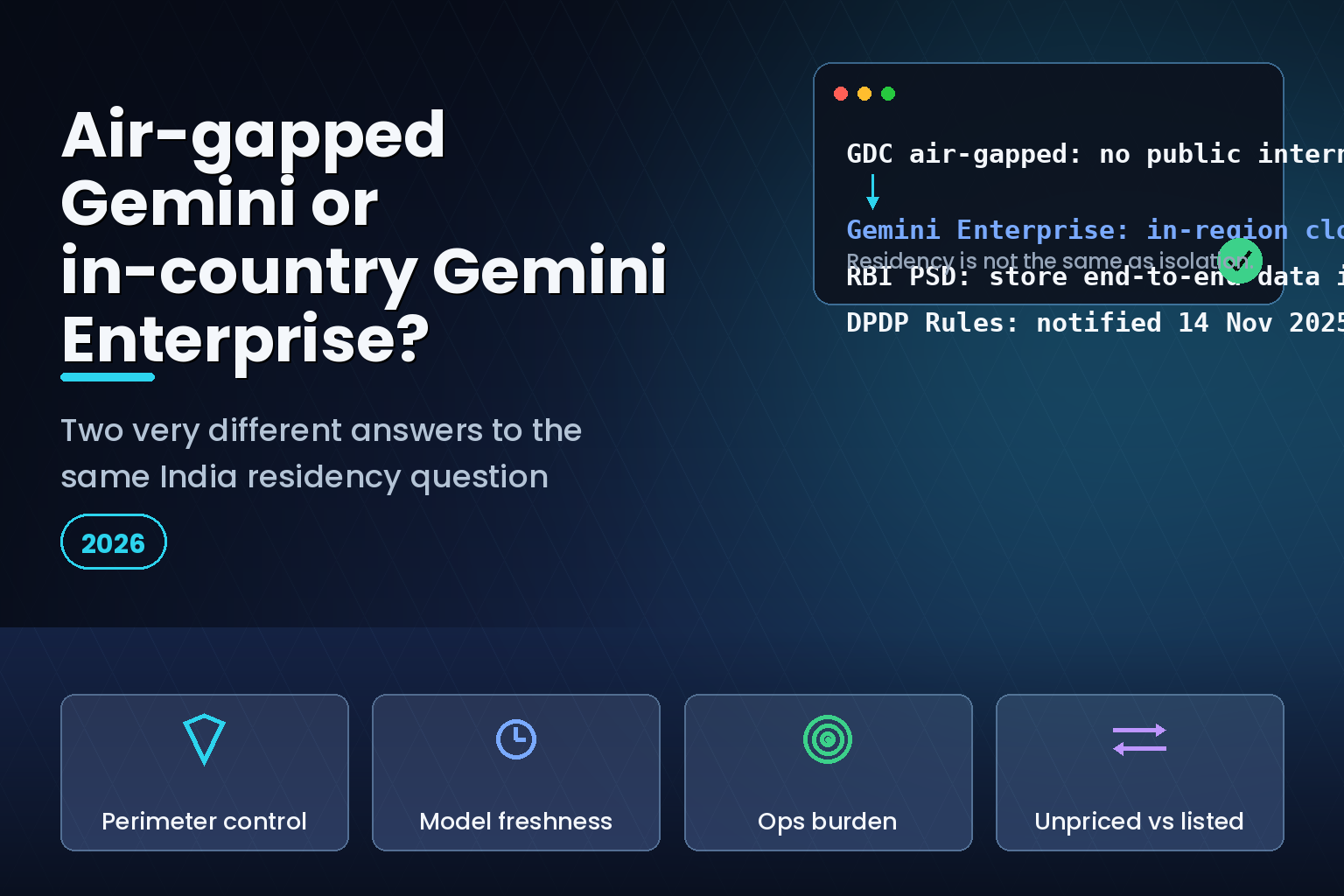
Air-gapped Gemini vs in-country Gemini Enterprise: what DPDP and RBI actually require in 2026
Google now offers Gemini inside Indian data centres two different ways: air-gapped on Google Distributed Cloud, and in-region through Gemini Enterprise. RBI's payment-data directive asks for storage in India, not
Manu Shukla -
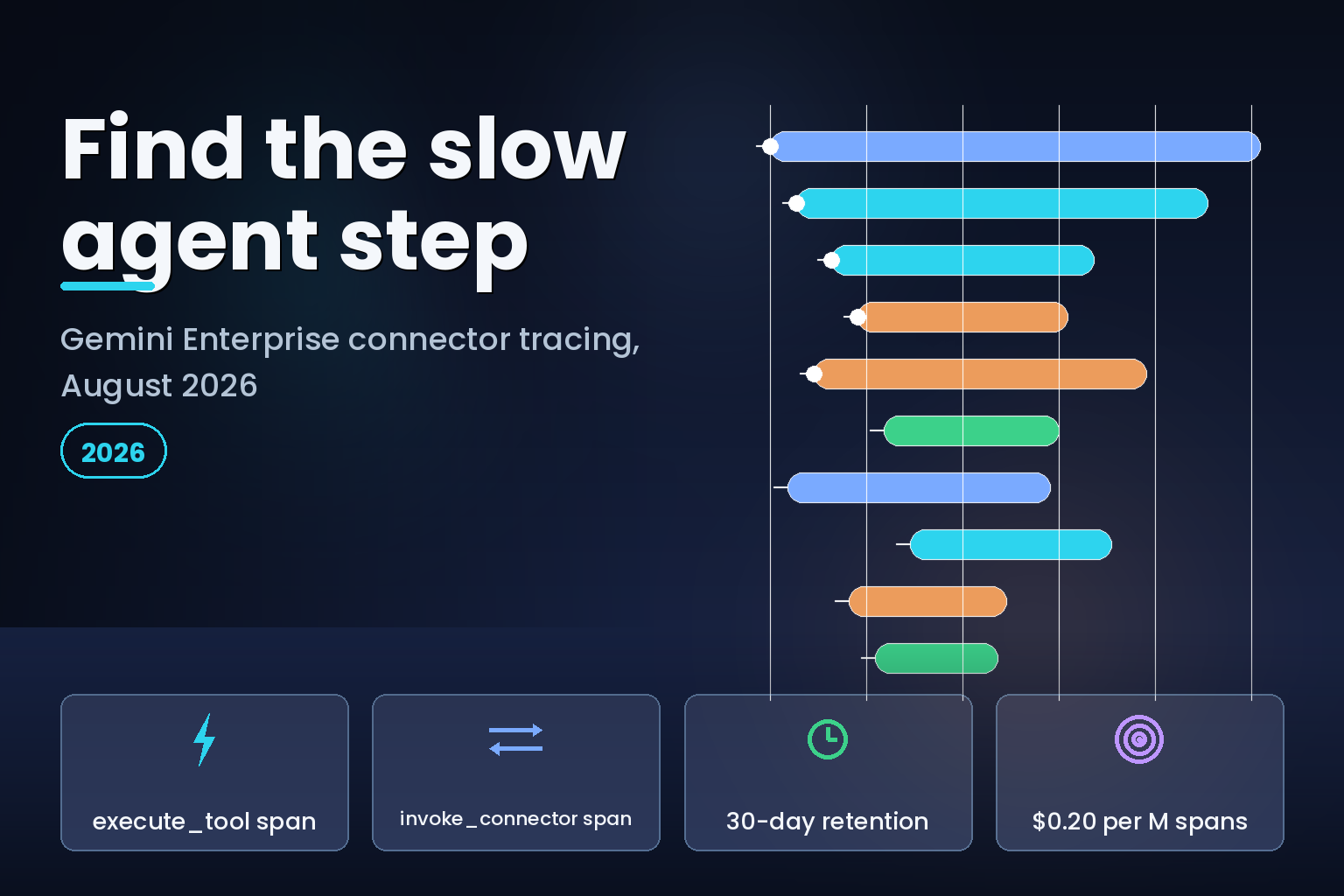
2 new Gemini Enterprise trace spans that pinpoint a slow agent call (2026)
Gemini Enterprise now traces an agent call end to end, from the assistant prompt through the orchestration layer to the third-party API. Two new spans, a 30-day retention window and a $0.20 per million span meter decide
Manu Shukla -
GPU Rowhammer 2026: 3 attacks reached root shell on NVIDIA GDDR6
Three IEEE S&P 2026 papers turned GPU Rowhammer into a privilege-escalation problem. GPUBreach reached a root shell with the IOMMU on. Which cards flip, what ECC costs, what to change now.
Manu Shukla -
Apple Silicon vs cloud APIs in 2026: the local LLM break-even, with real benchmarks
Published benchmark data, Apple's own specifications and one hosted price list are enough to work out when buying a Mac beats renting tokens. The answer depends on prefill, not generation, and most of the M5 numbers
Manu Shukla -
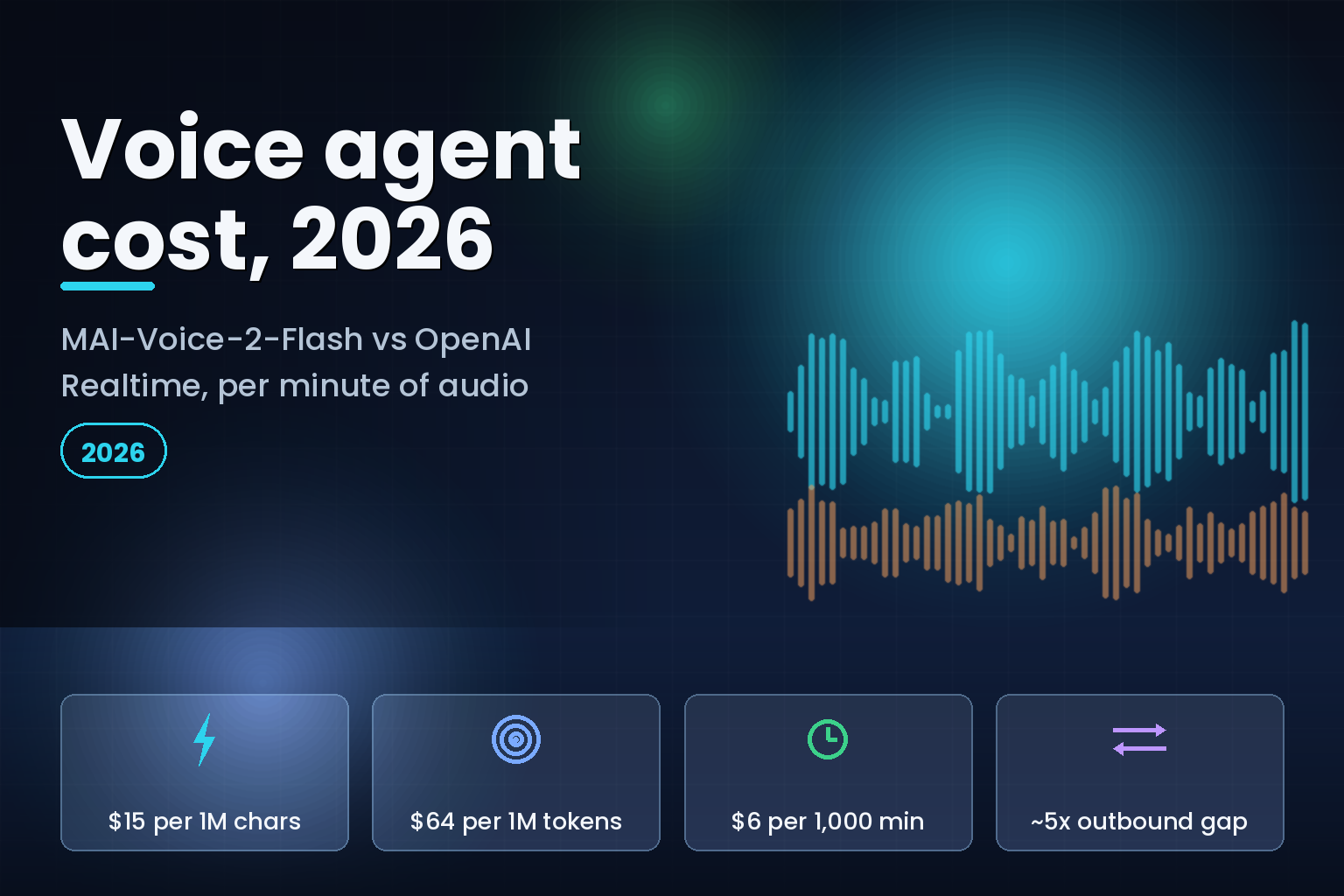
Voice agent costs in 2026: MAI-Voice-2-Flash at $15 per 1M characters vs OpenAI Realtime at $64
Microsoft prices MAI-Voice-2-Flash at $15 per 1M characters and MAI-Transcribe-1.5 at $6 per 1,000 minutes. OpenAI's gpt-realtime-2.1 bills $32 in and $64 out per 1M audio tokens. Different units, very different bills
Manu Shukla -
Azure Anomaly Detector and Personalizer retire October 1, 2026: a migration playbook
Two Azure AI services shut down on October 1, 2026, and a third has already gone. This playbook gives the exact dates and the Microsoft-recommended replacement paths for Anomaly Detector, Personalizer and Metrics
Manu Shukla -
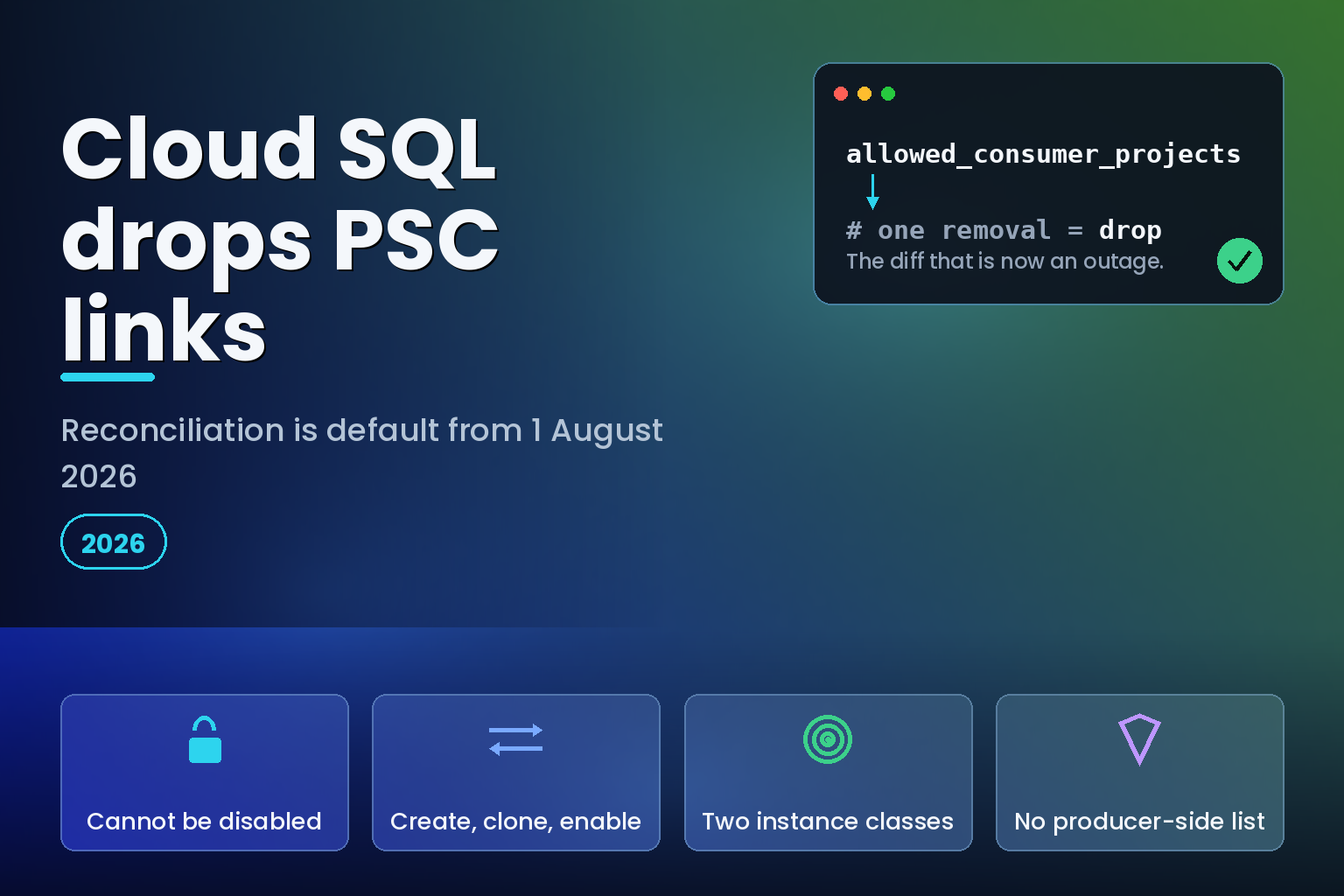
Cloud SQL PSC reconciliation is default from 1 August 2026: what quietly breaks
Google announced the change on 31 July 2026 and switched it on the next day. Editing the allowed-projects list on a Cloud SQL instance now drops live database connections, there is no way to turn it off, and your estate
Manu Shukla -
$1 per million events: what event-driven architecture really costs in 2026
The bus is rarely what makes event-driven architecture expensive. Here is the published AWS rate card, the ordering and delivery guarantees you actually get, and the signals that say a system is ready to move.
Manu Shukla -
Rapid Bucket at $0.11/GiB-month vs Rapid Cache: 2026 AI checkpoint cost maths
Rapid Bucket is 5.5x the per-GiB price of standard Cloud Storage and bills for reads a same-region bucket serves free. On 50 TiB of checkpoints that is about $5,243 a month extra. Here is the arithmetic.
Manu Shukla -
Agentic SOC in 2026: should you buy autonomous patching or build it?
Microsoft's Project Perception brings red, blue, and green team agents and the MAI-Cyber-1-Flash model to public preview on August 3, 2026. A build-versus-buy guide to agentic SOCs, with benchmarks, SCU costs
Manu Shukla -
Azure OpenAI Assistants API retires August 26, 2026: the Foundry Agent Service migration guide
The Azure OpenAI Assistants API stops working on August 26, 2026. Here is the migration to Microsoft Foundry Agent Service: the SDK change, threads to conversations, runs to responses, and which tools carry over.
Manu Shukla -
Cloudflare AI agents in 2026: Durable Objects, Facets and Dynamic Workflows for production
Cloudflare's Agents SDK, Durable Object Facets and Dynamic Workflows make per-agent isolation and near-zero idle cost practical in 2026. A build guide with a decision table versus AWS Bedrock AgentCore and Vercel.
Manu Shukla -
5 steps to migrate Entra ID risk policies to Conditional Access before the October 1, 2026 retirement
Microsoft retires Entra ID Protection's legacy user-risk and sign-in-risk policies on October 1, 2026, after which they stop enforcing. Migrate them to Conditional Access in report-only mode first, without locking users
Manu Shukla -
October 2026 Microsoft end-of-life wave: migrate, buy ESU, or modernize? (Windows Server, SQL Server, SharePoint)
October 13, 2026 is the final cutoff for Windows Server 2012 R2 Extended Security Updates. SharePoint Server 2016 and 2019 already lost support on July 14, with no ESU. Compare migrate, ESU, and modernize with real
Manu Shukla -
4 Postgres vector search options compared: pgvector, pgvectorscale, ParadeDB, Lantern (2026)
Four Postgres-native vector search options, one decision: compare pgvector, pgvectorscale, ParadeDB and Lantern on recall, latency, hybrid search and cost, plus the scale ceiling where a dedicated engine wins.
Manu Shukla -
The 2026 RAM shortage: why server costs jumped, and how CTOs should buy, rent, or wait
In 2026 an AI-driven memory shortage pushed DDR5 and server DRAM to record prices and stretched lead times. Here is what changed, why, and a sourced framework for CTOs choosing to buy hardware now, shift to cloud
Manu Shukla -
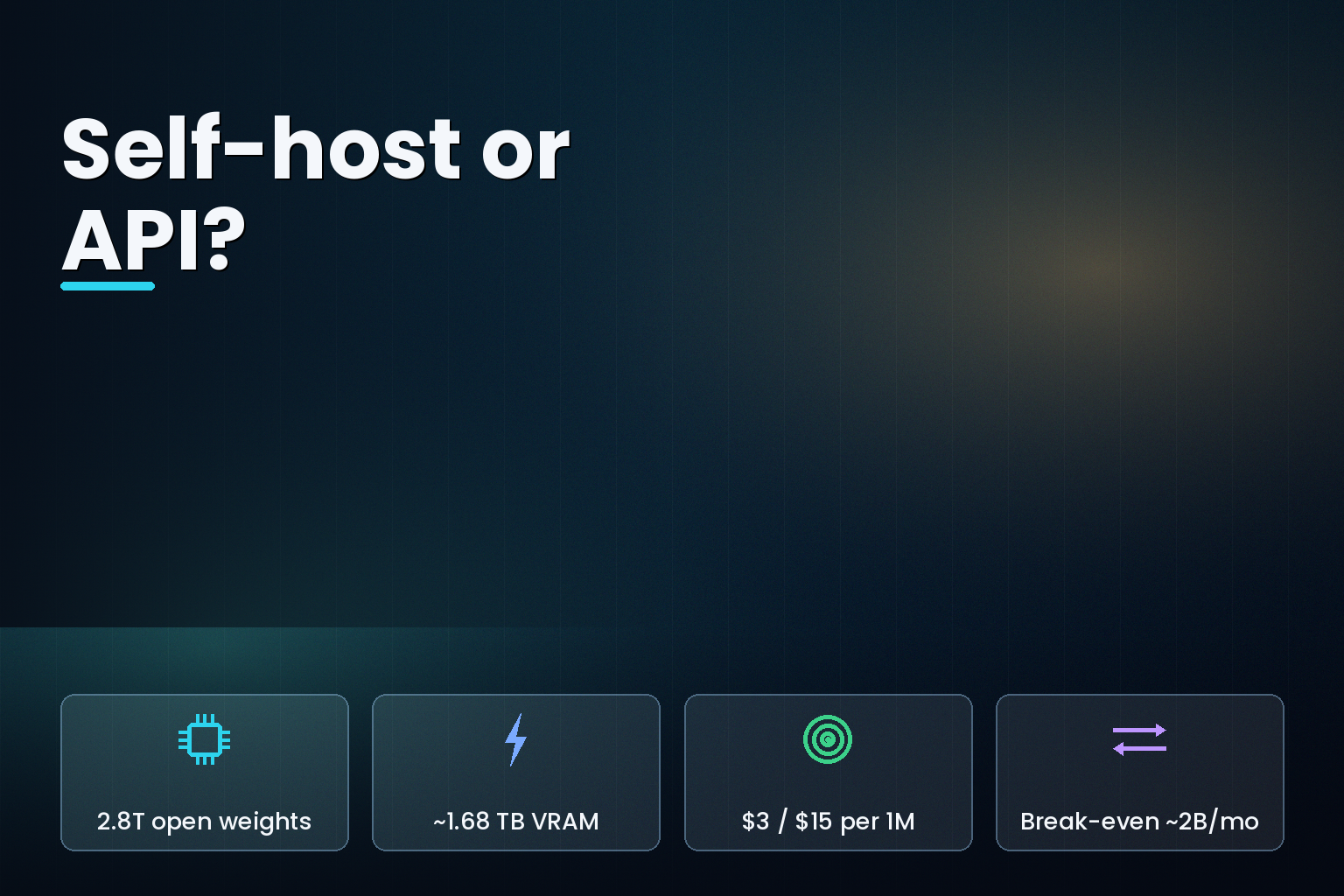
Kimi K3 self-hosting vs API in 2026: 1.68 TB of VRAM and the break-even math
Kimi K3's open weights are 594 GB in BF16 and need about 1.68 TB of VRAM to serve; the API lists at $3/$15 per 1M tokens. Here is the 2026 self-host vs API break-even math with real GPU rates.
Manu Shukla -
BigQuery Data Engineering Agent vs dbt and Dataform in 2026: should you let AI write your pipelines?
Google's first-party Data Engineering Agent reached general availability on 22 April 2026. This decision guide compares it with dbt and Dataform on capability, cost, lock-in, and the real limits that decide whether you
Manu Shukla -
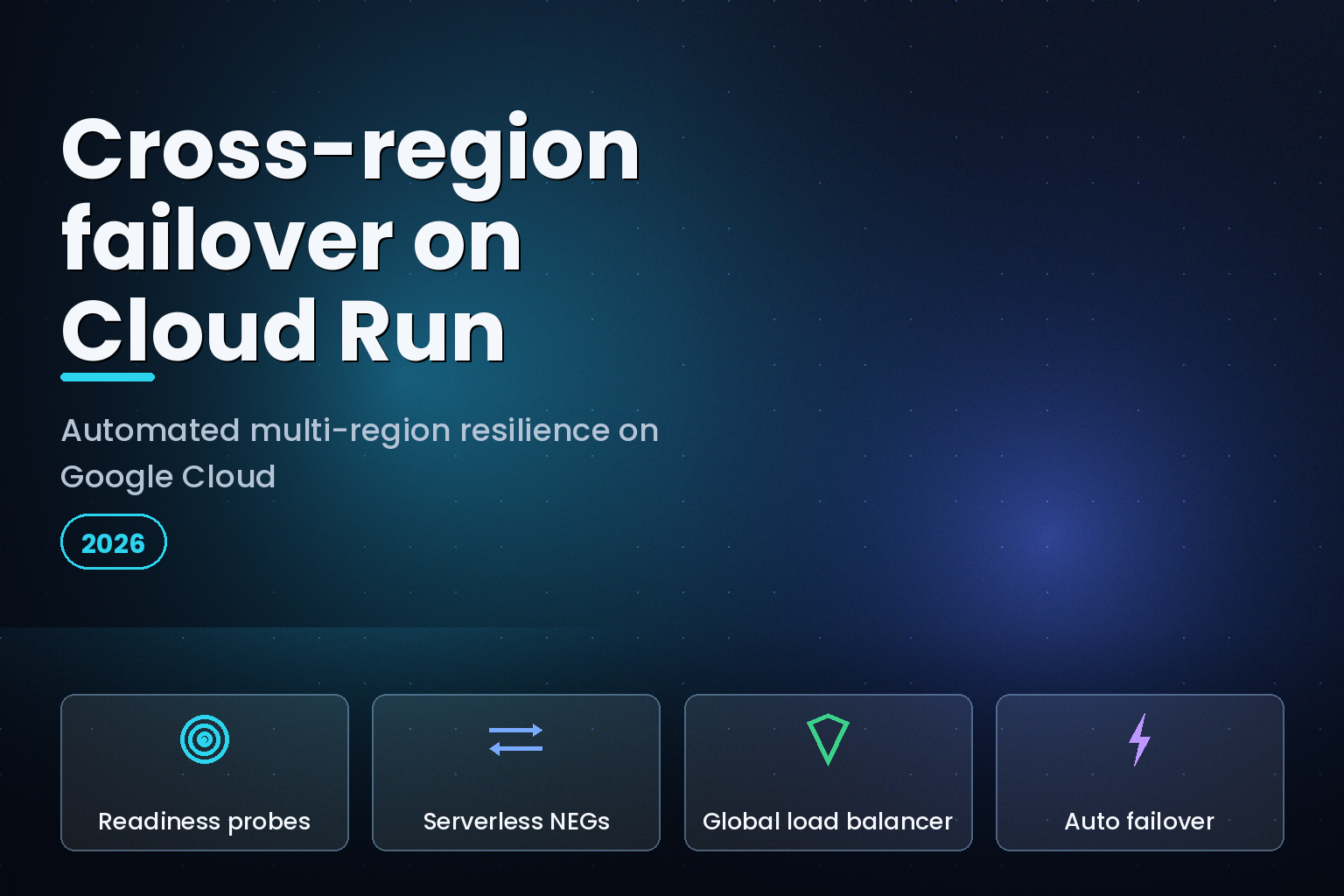
Cloud Run cross-region failover in 2026: survive a full Google Cloud region outage
Google Cloud made Cloud Run cross-region failover GA in July 2026, days after a 15-hour Netherlands outage. Here is a production multi-region setup, the gcloud commands, the real cost, and the data-tier caveat most
Manu Shukla -
2026-2027 post-quantum cryptography readiness: the enterprise crypto-agility roadmap
The post-quantum standards are final, browsers already negotiate ML-KEM by default, and FIPS 140-2 validations expire on 21 September 2026. Here is a practical crypto-agility roadmap for enterprises, from cryptographic
Manu Shukla -
3 enterprise AI agent platforms compared: AgentCore, Gemini Enterprise, Presence (2026)
AWS Bedrock AgentCore, Google Gemini Enterprise and OpenAI Presence define three ways to run enterprise AI agents. We compare pricing, governance and lock-in as of July 2026 to help CTOs choose.
Manu Shukla -
Meta shut down its Llama API in 2026: migrate your app and compare host costs
Meta's hosted Llama API shut down on 6 July 2026. A migration guide to Groq, Together AI, AWS Bedrock and self-hosting, with verified per-token prices and the OpenAI-compatible code change most apps need.
Manu Shukla -
Mistral on Azure in 2026: 3 deployment modes for regulated enterprises that need AI control
Microsoft put Mistral's open-weight Medium 3.5 into Foundry and Azure Local on July 21, 2026, from cloud to fully disconnected. How regulated enterprises should choose a deployment mode, and what control really buys.
Manu Shukla -
Kubernetes autoscaling for AI inference in 2026: HPA vs KEDA vs external metrics
CPU-based autoscaling scales GPU inference too late. A 2026 config guide to HPA, KEDA, external metrics and Karpenter, with YAML for queue-depth and scale-to-zero scaling of LLM inference on Kubernetes.
Manu Shukla -
Always-on memory agent vs RAG: when to drop your vector database (2026)
Shubham Saboo's Always-On Memory Agent stores memory in SQLite and consolidates it every 30 minutes with no embeddings. We compare it to RAG on cost, latency and scale, and when to drop the vector database.
Manu Shukla -
AMD MI455X vs MI430X: which data-center GPU for your 2026 AI workload
AMD's Instinct MI400 series splits in two: the MI455X for frontier AI and inference, the MI430X for sovereign AI and FP64 HPC. A decision guide to the specs, the cost claims and 2026-2027 availability.
Manu Shukla -
ROCm vs CUDA in 2026: can enterprises actually escape CUDA lock-in?
AMD's ROCm 7, plus SCALE and HIPIFY, make some CUDA workloads portable to AMD GPUs. But custom kernels, TensorRT-LLM and NCCL still bind enterprises to NVIDIA. What actually moves off CUDA in 2026.
Manu Shukla -
AWS Security Hub now scans Azure: a 2026 multicloud CSPM setup and buy-vs-build guide
On July 14, 2026 AWS made Security Hub scan Microsoft Azure resources next to AWS, at the same per-resource price. Here is what it covers, what it costs, how it compares to Microsoft Defender for Cloud and Wiz, and when
Manu Shukla -
Managed multicloud CSPM for AWS and Azure: run Security Hub without hiring a security team (2026)
On July 14, 2026 AWS Security Hub started scanning Microsoft Azure next to AWS at the same per-resource price. The tool is cheap; acting on the findings is the hard part. eCorpIT runs multicloud posture management
Manu Shukla -
Monitor LLM agents in production with Grafana Cloud Agent Observability (2026)
Grafana Cloud added Agent Observability for LLM agents, built on OpenTelemetry. This guide covers instrumentation with OpenLIT, what the traces show, and the trace-volume cost math versus Datadog, Langfuse and Arize
Manu Shukla -
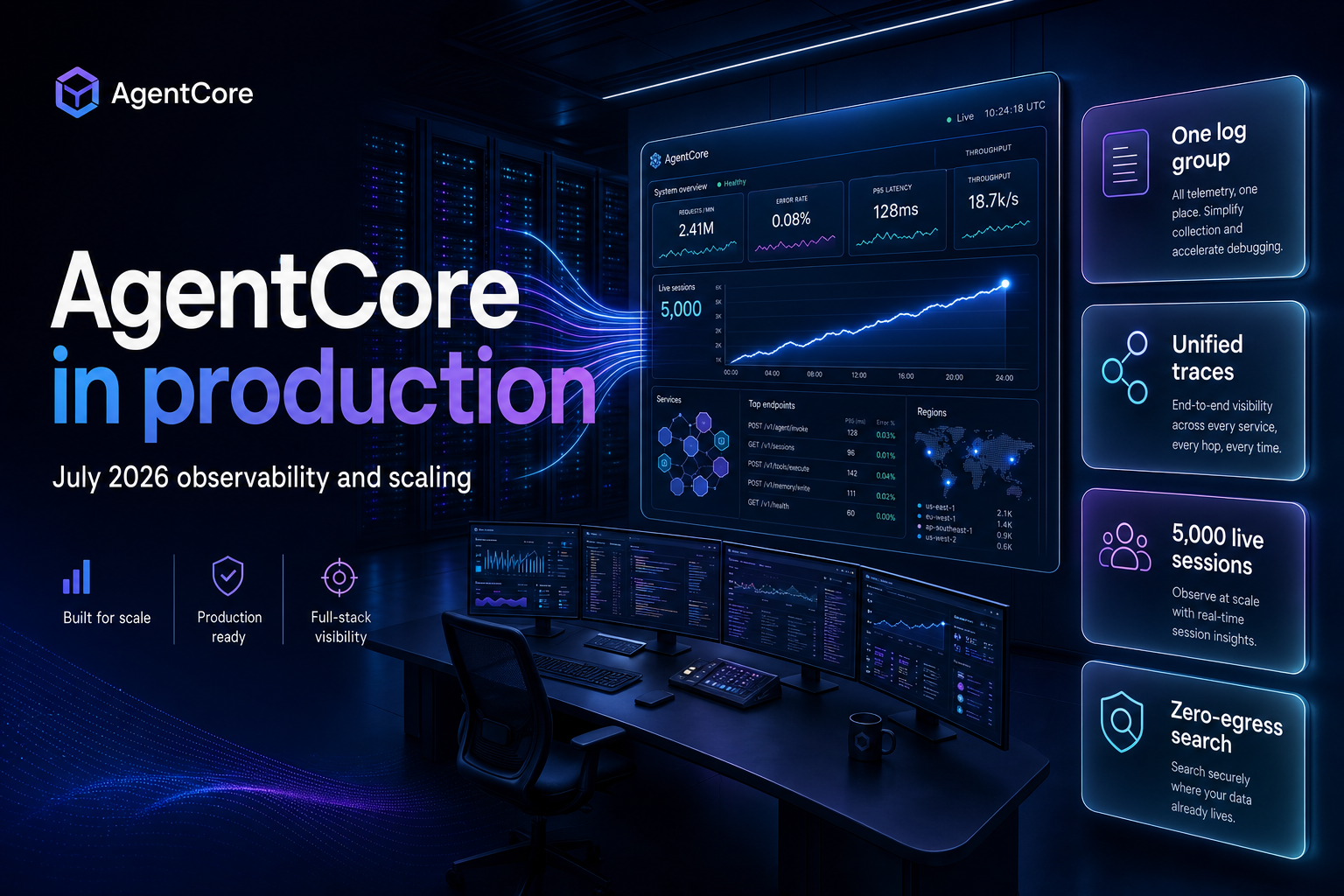
Amazon Bedrock AgentCore in July 2026: unified observability and 5,000-session scaling for production agents
Amazon Bedrock AgentCore moved every agent trace, prompt and log into a single per-agent CloudWatch log group and lifted default limits to 5,000 concurrent sessions. A config-level guide to the July 2026 observability
Manu Shukla -
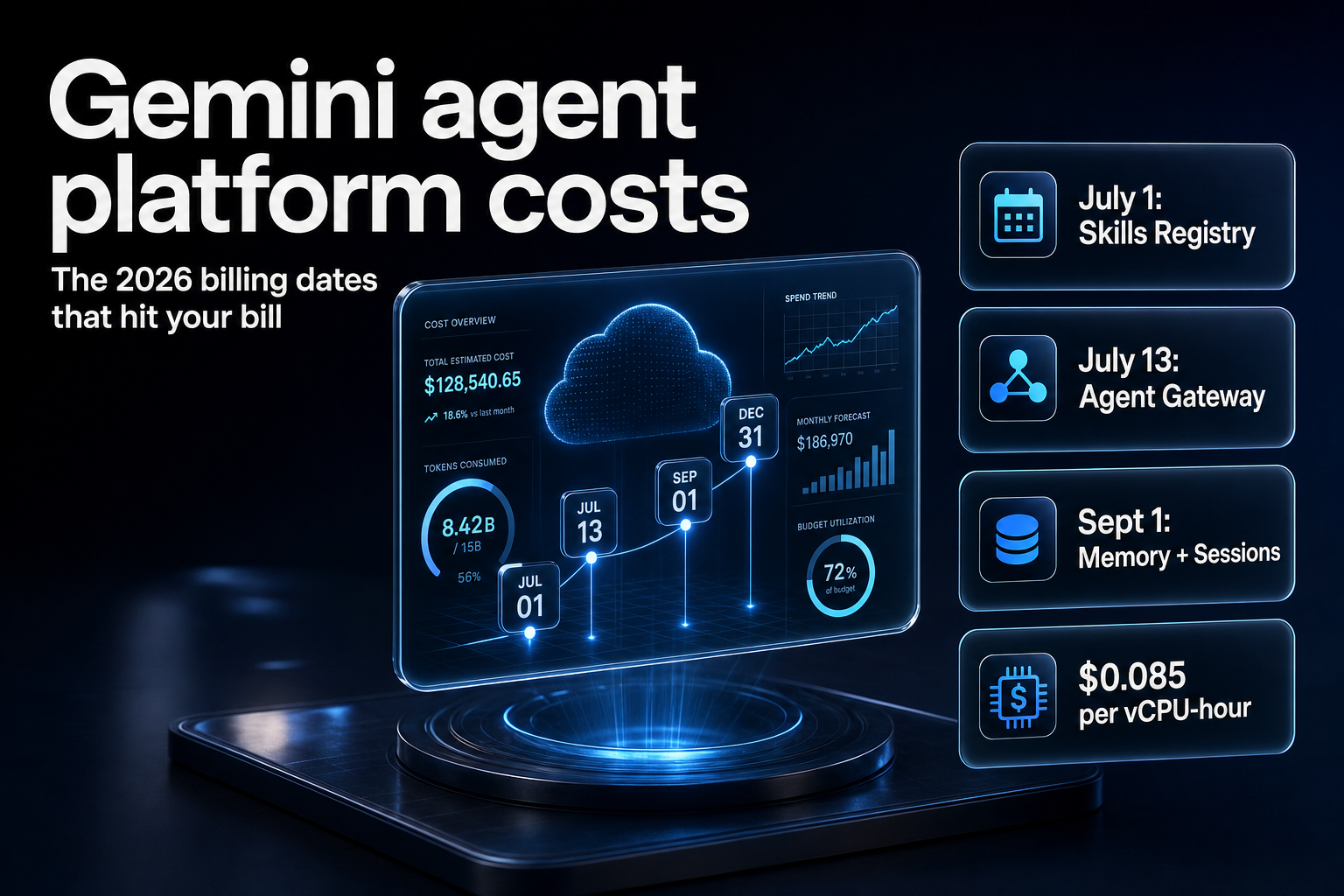
Gemini Enterprise Agent Platform pricing in 2026: the July-September billing dates that raise your bill
A cost breakdown of the Gemini Enterprise Agent Platform in 2026: the seat editions, the per-million token rates, and the July-to-September billing dates for Skills Registry, Agent Gateway, Memory Bank and Sessions that
Manu Shukla -
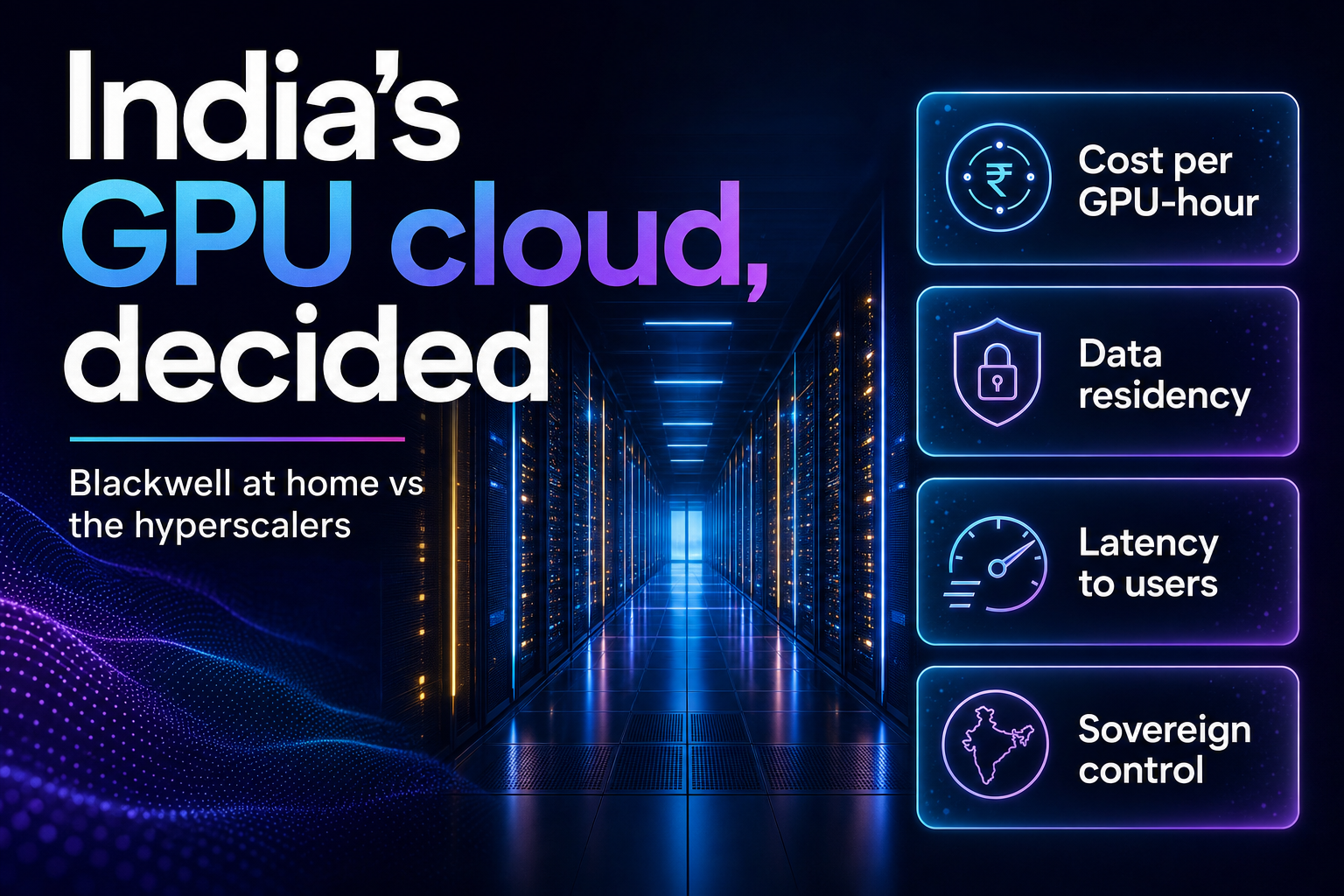
India's Blackwell GPU cloud in 2026: rent domestic, tap IndiaAI, or go hyperscaler?
Yotta's 85,000-GPU buildout and IndiaAI's Rs 65 per hour compute make domestic Blackwell cloud real in 2026. A decision framework weighing price, data residency, latency and availability against the hyperscalers.
Manu Shukla -
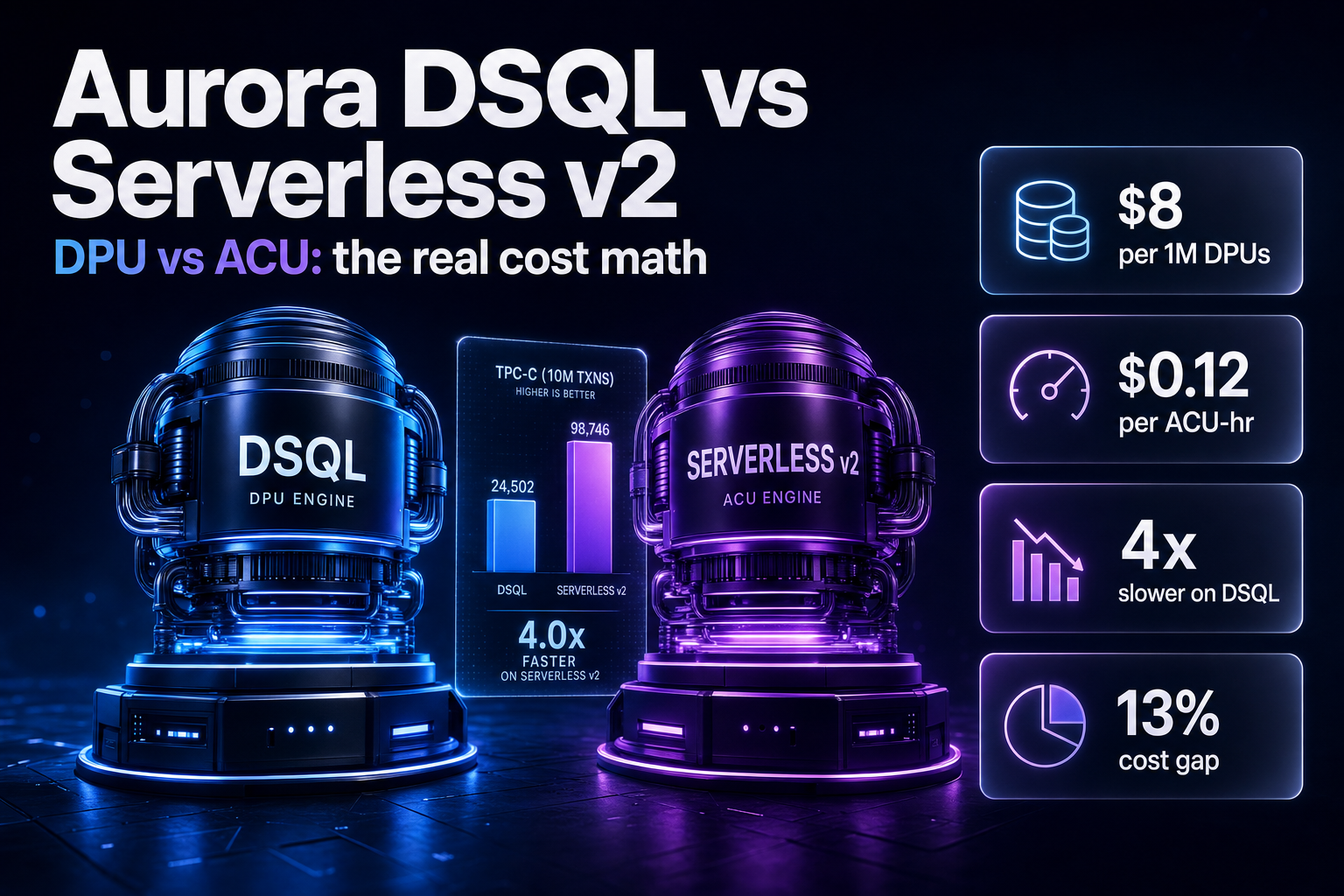
Aurora DSQL vs Aurora Serverless v2 in 2026: The 13% Cost Gap, Benchmarked
Aurora DSQL went GA in May 2025 with DPU-based pricing; Aurora Serverless v2 bills per ACU. We ran the same pgbench workload on both: DSQL was 4x slower and 13% dearer. Which wins for a new build in 2026?
Manu Shukla -
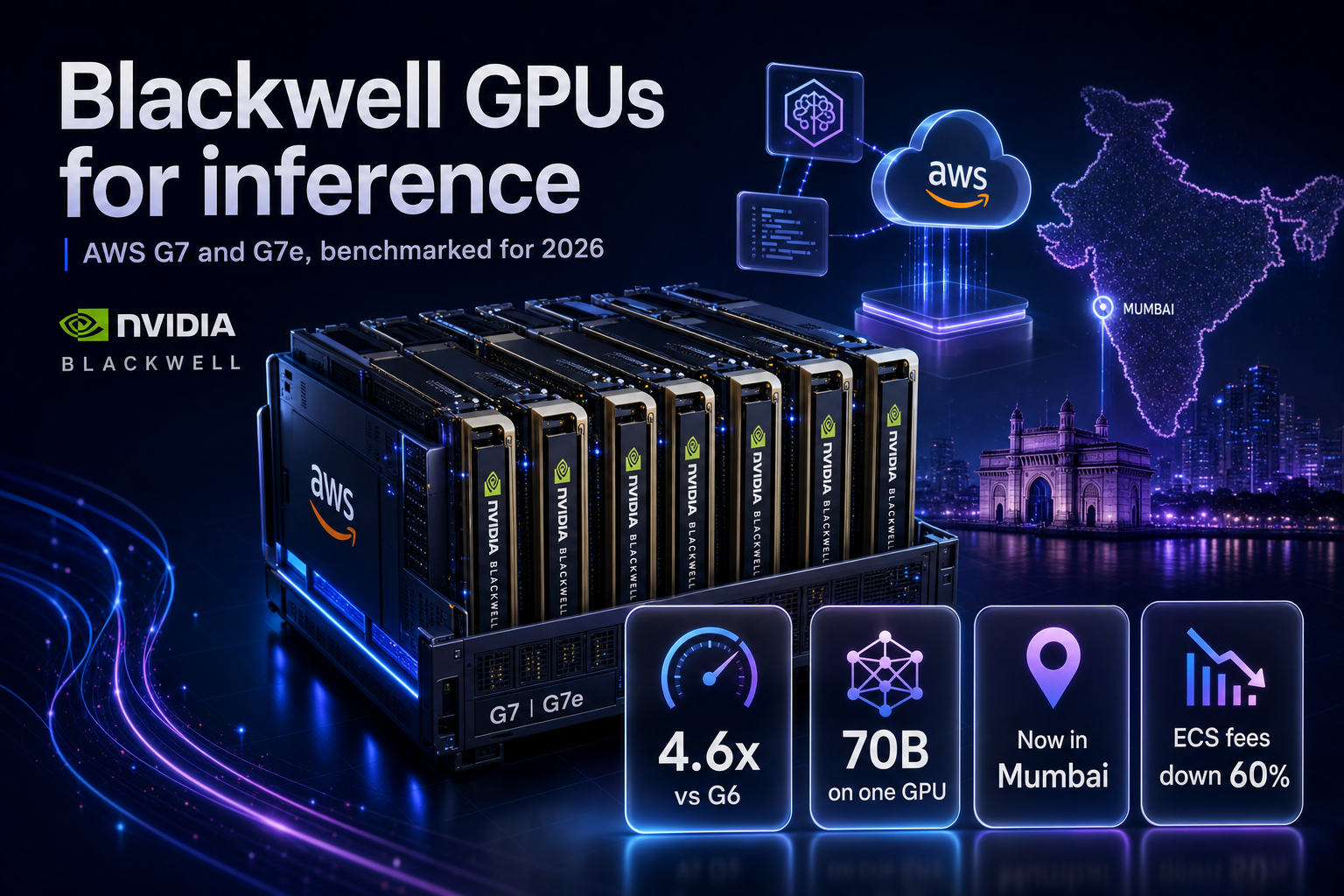
AWS G7 vs G7e Blackwell GPUs: 4.6x inference, real costs, and the Mumbai question (2026)
AWS shipped two NVIDIA Blackwell inference families in 2026: G7 with up to 4.6x the inference of G6, and G7e that runs a 70B model on a single 96 GB GPU and is now live in Mumbai. Here is the spec, cost and decision
Manu Shukla -
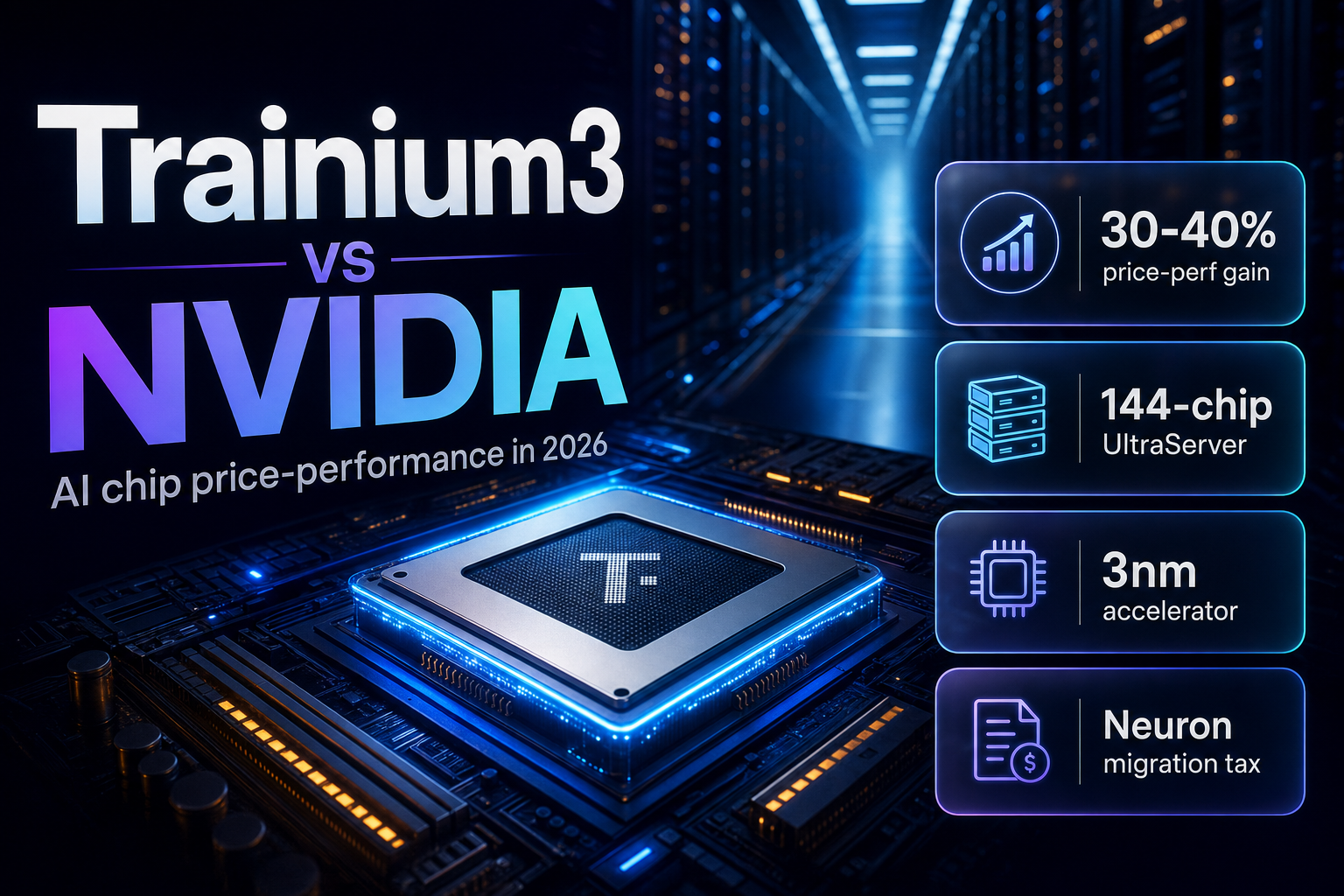
AWS Trainium3 vs NVIDIA H200 and B200 in 2026: real price-performance, cost per token, and the Neuron migration tax
AWS Trainium3 is generally available in 2026 with 30-40% better price-performance than Trainium2. Here is how it compares with NVIDIA H200 and B200 on real cost per token and what Neuron migration costs.
Manu Shukla -
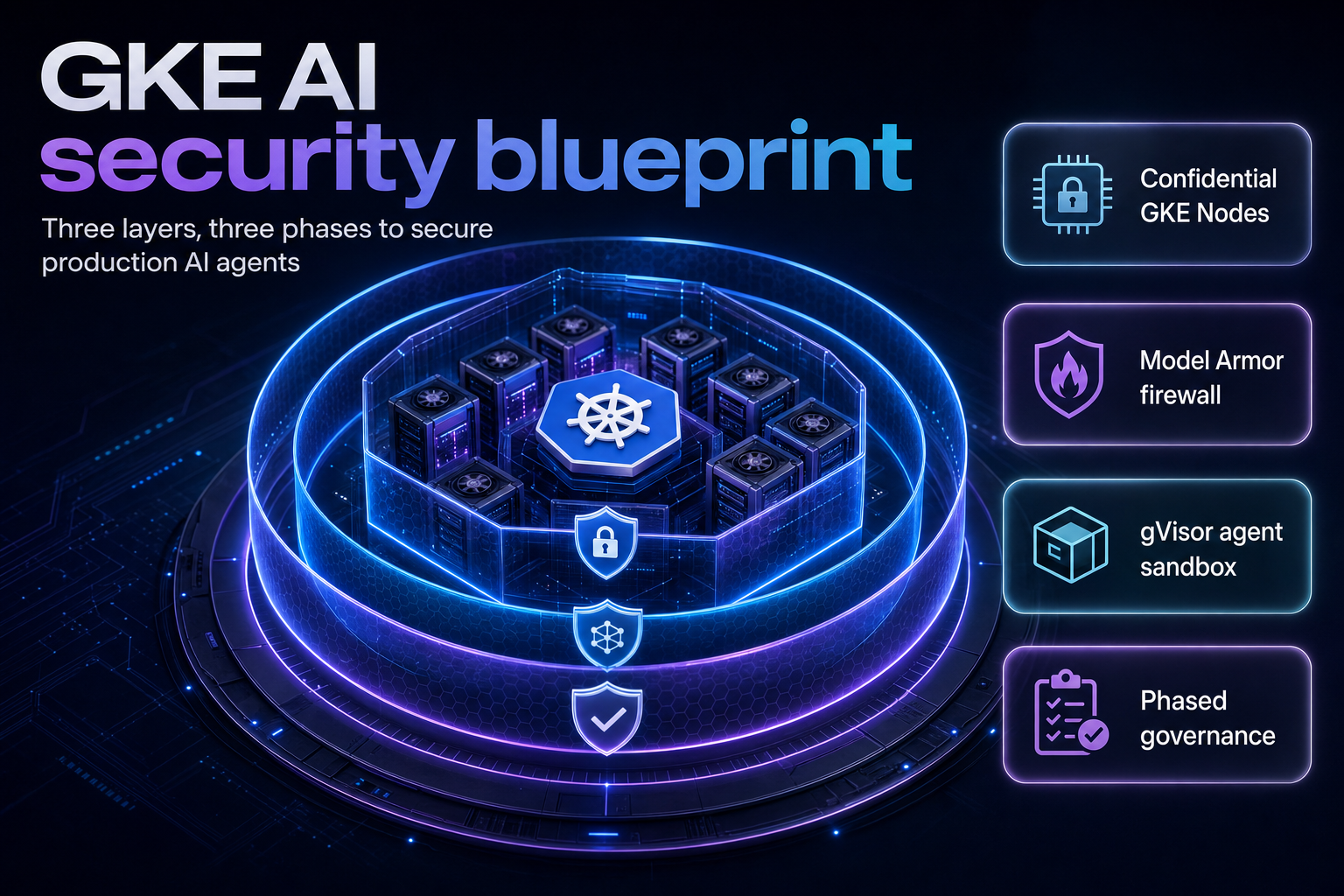
3 layers, 3 phases: Google's GKE AI security blueprint for production AI agents (2026)
Google Cloud's GKE AI security blueprint (16 July 2026) sets a 3-layer, 3-phase model for securing AI and agent workloads on Kubernetes: Confidential Nodes, Model Armor, gVisor sandboxing and org-level policy.
Manu Shukla -
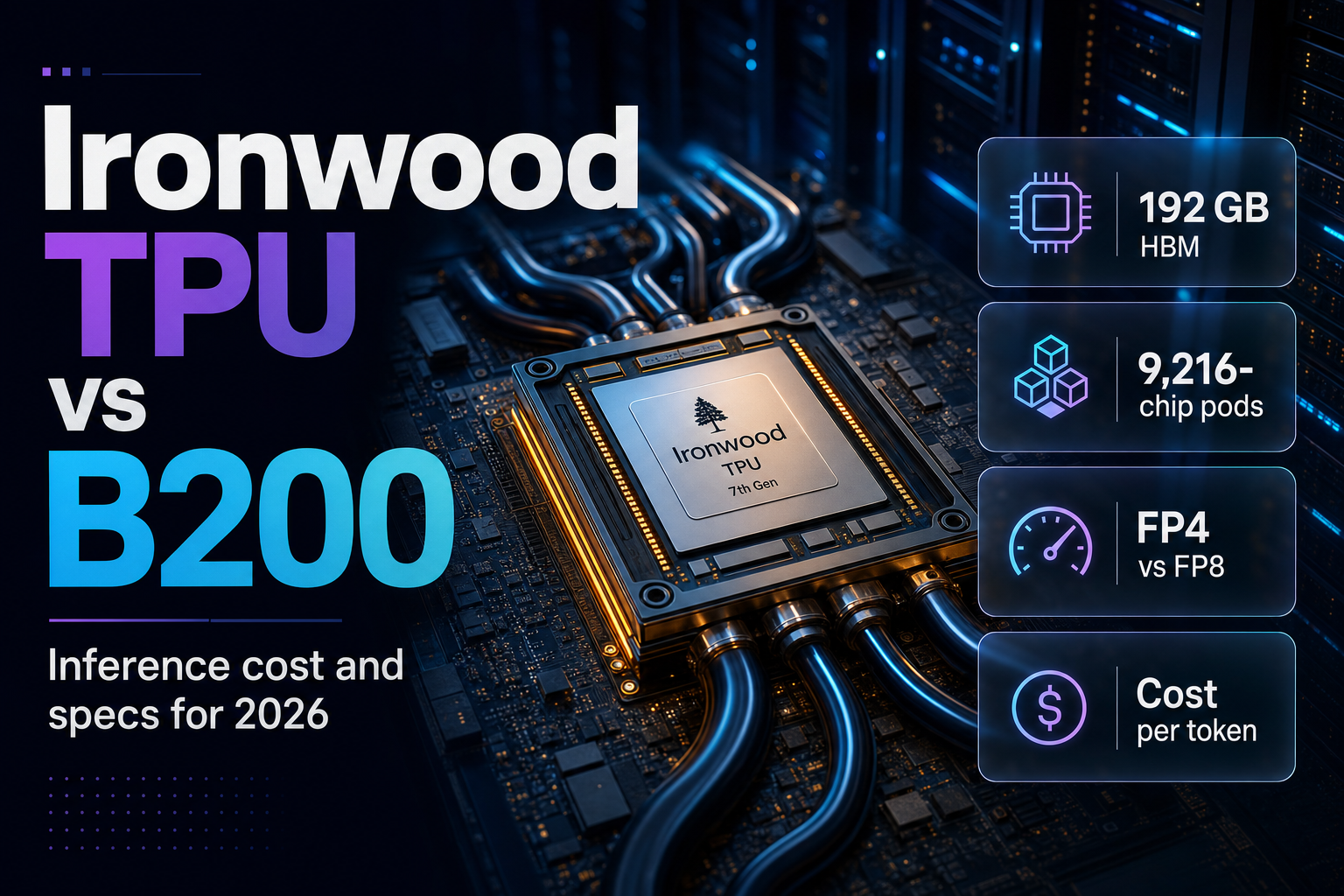
Google Ironwood TPU (TPU7x) vs NVIDIA B200: the 2026 inference-cost decision
A specs-and-cost comparison of Google Ironwood (TPU7x) and NVIDIA B200 for AI inference in 2026: memory, bandwidth, scale, software lock-in, consumption models, and a decision matrix for when to pick each.
Manu Shukla -
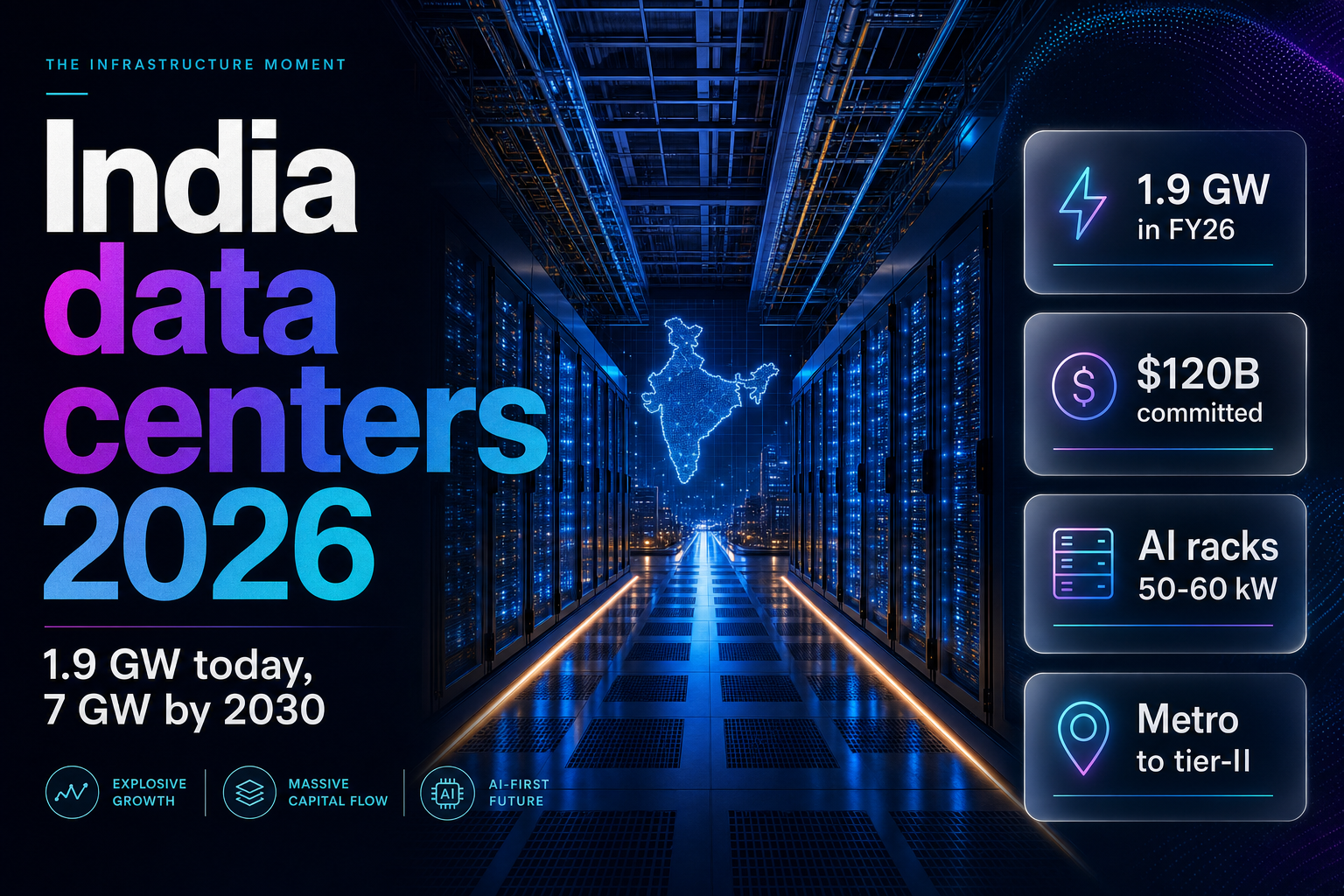
India's 1.9 GW data centre reality in 2026: reconciling the capacity and dollar numbers before you host AI workloads
India's data centre numbers get quoted interchangeably, but 1.9 GW of capacity, $120 billion in commitments, and a $1.7 billion market are three different things. Here is how to read them before you decide where to host
Manu Shukla -
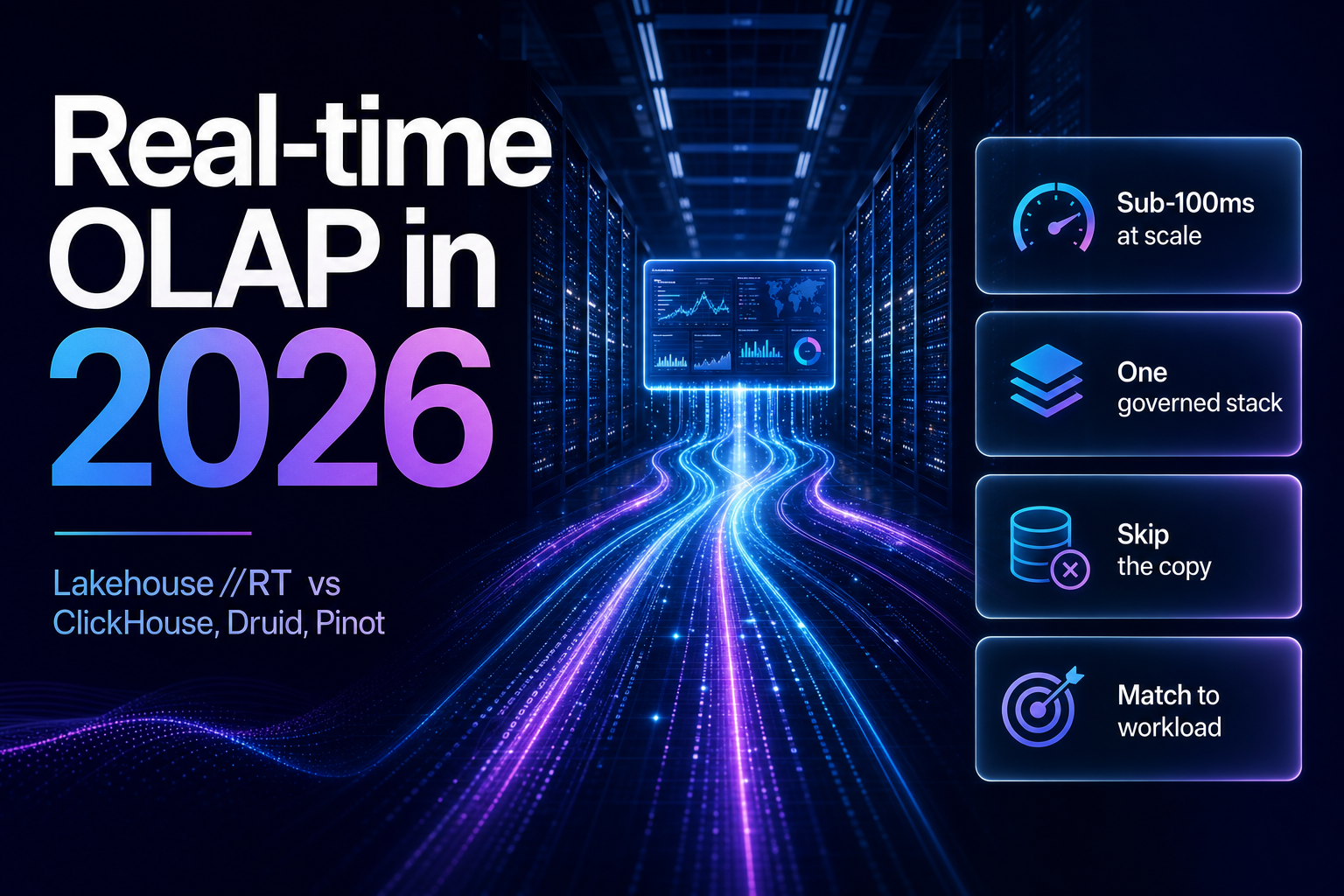
Real-time analytics in 2026: Lakehouse//RT vs ClickHouse, Druid and Pinot
Databricks Lakehouse//RT runs real-time queries directly on Delta and Iceberg at sub-100ms and 12,000 QPS. We compare it with ClickHouse, Apache Druid and Apache Pinot on latency, concurrency, cost and ops burden.
Manu Shukla -
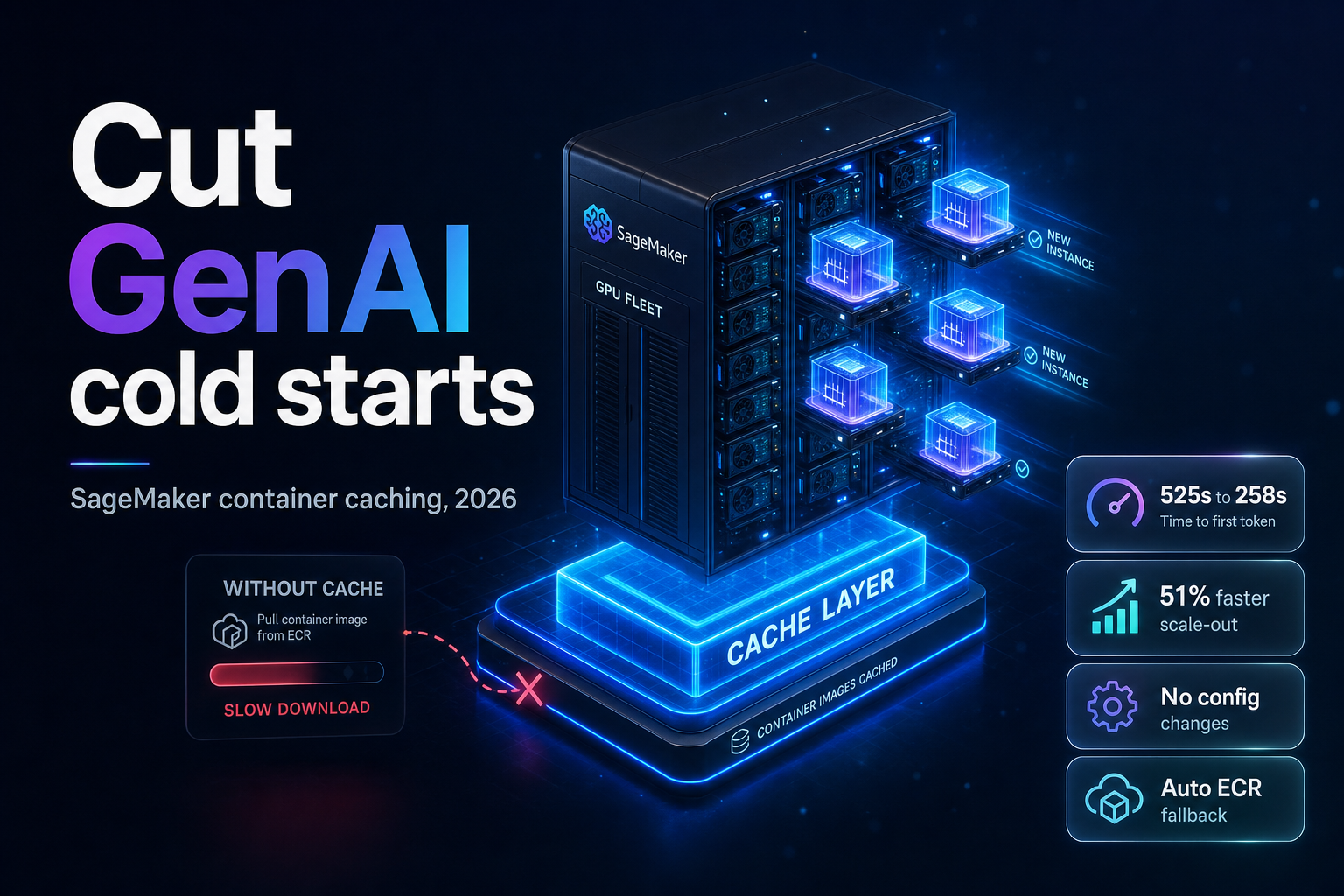
SageMaker container caching cut GenAI scale-out latency 51% (2026 guide)
AWS's June 2026 container caching removes the ECR image pull from SageMaker scale-out. In AWS's own test a GenAI endpoint's cold start fell from 525 to 258 seconds. The benchmarks and when to use it.
Manu Shukla -
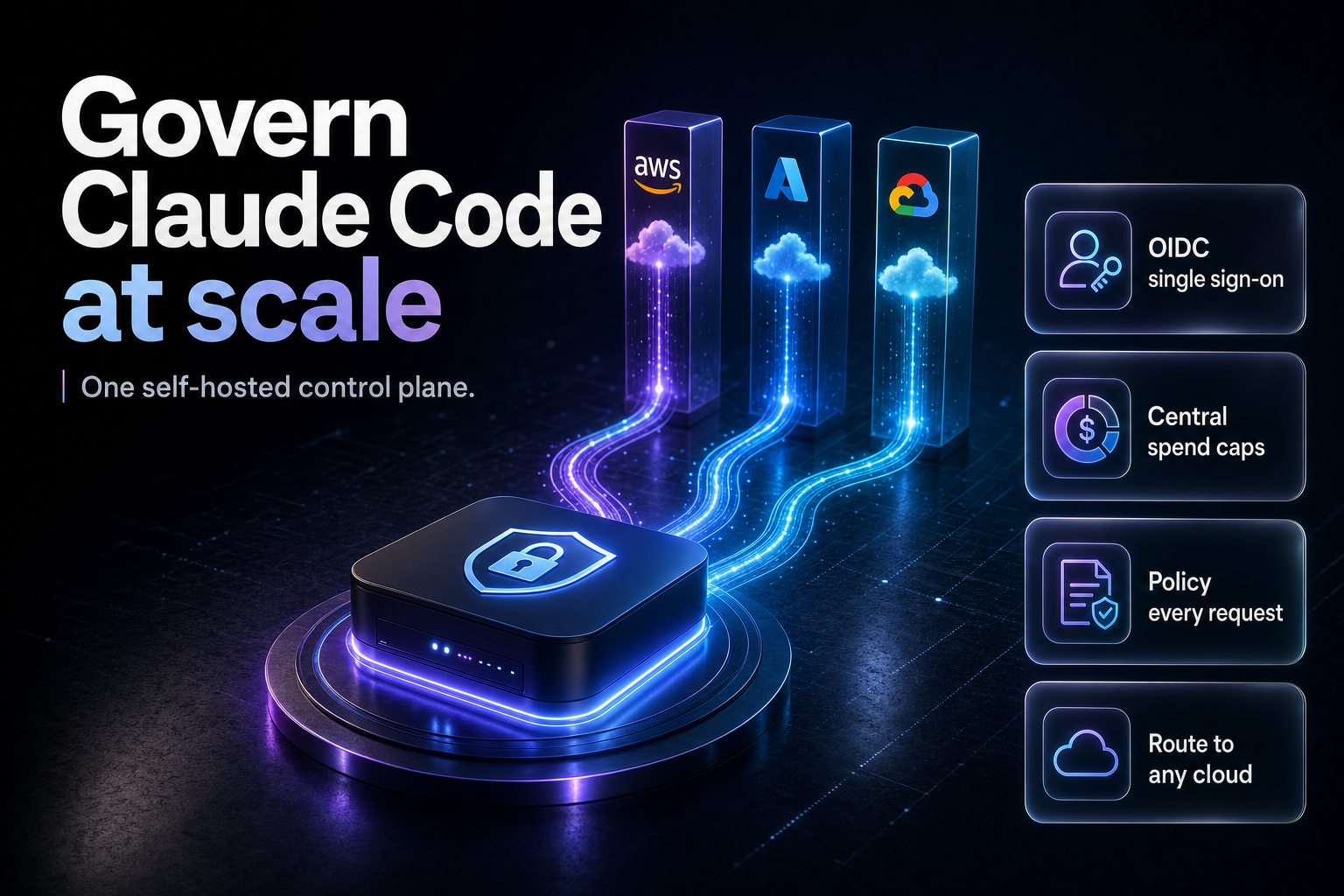
Claude apps gateway in 2026: govern Claude Code across Bedrock, Vertex and Foundry
A self-hosted control plane, shipped inside the Claude Code binary, that gives platform teams one place to manage access, policy, routing and spend for Claude Code across AWS and Google Cloud.
Manu Shukla -
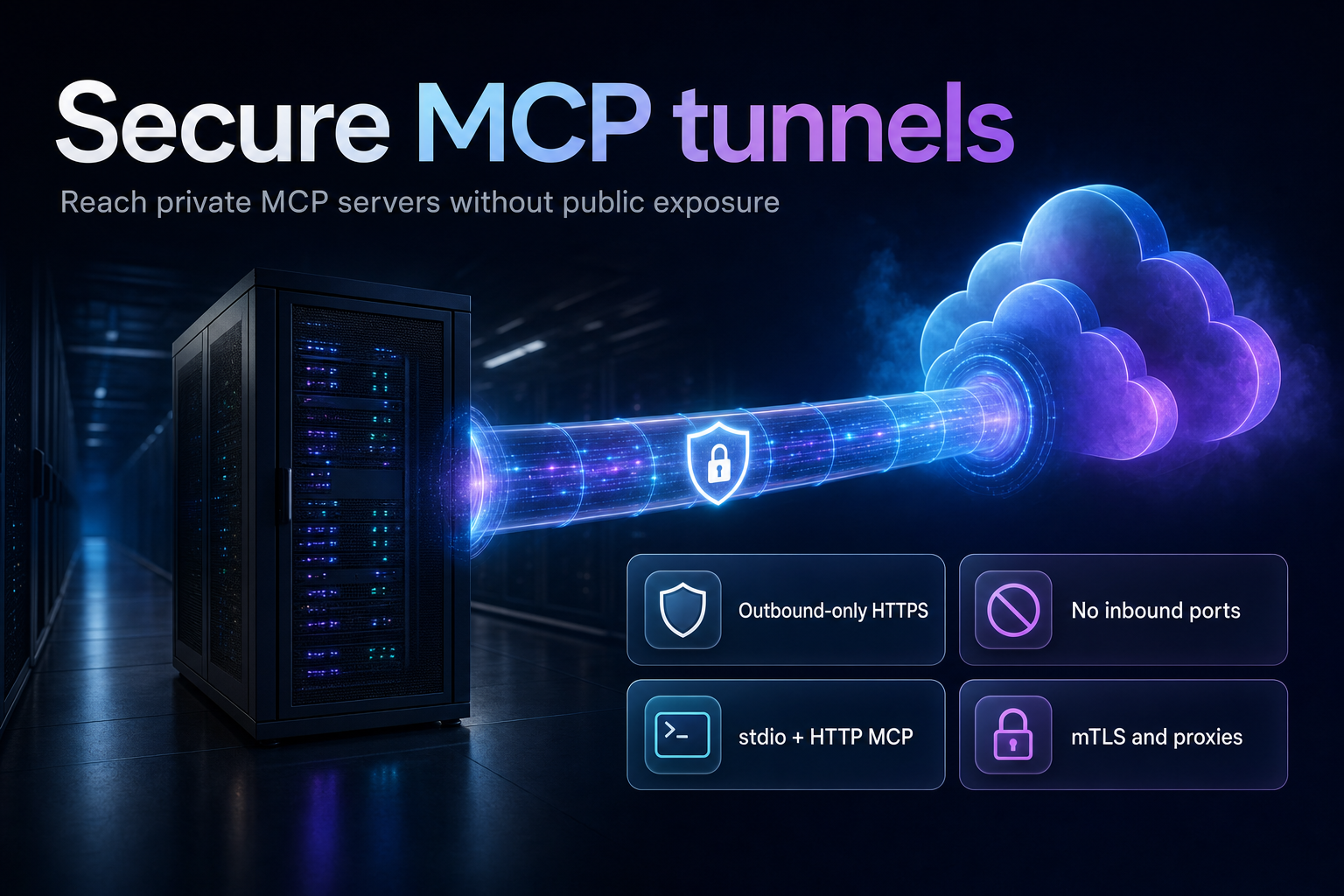
Connect private MCP servers to OpenAI: a 2026 Secure MCP Tunnel setup guide
OpenAI's Secure MCP Tunnel lets ChatGPT, Codex and the Responses API reach a private or on-prem MCP server over an outbound-only HTTPS path, with no inbound ports. How it works, how to set it up, and how to harden it.
Manu Shukla -
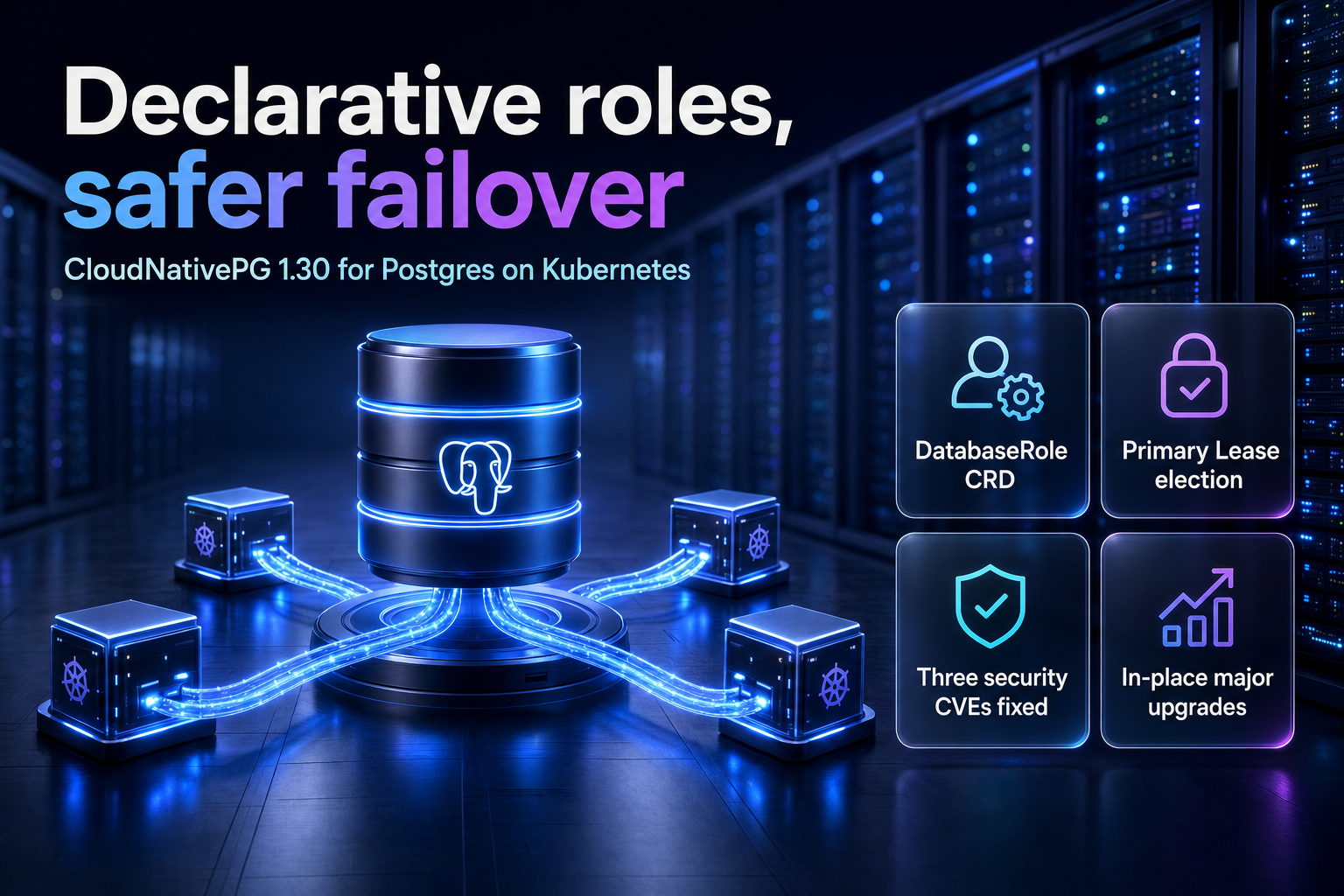
CloudNativePG 1.30: declarative Postgres roles and safer failover on Kubernetes
CloudNativePG 1.30, released July 6, 2026, adds a DatabaseRole CRD for GitOps-friendly roles, a Lease-based primary election for safer failover, and three security fixes. Here is what changed, the config that matters
Manu Shukla -
AMD EPYC Venice: 256 cores, 3.30x rack throughput and the 2027 refresh call
AMD put EPYC Venice into production on TSMC 2nm in May 2026, then spent July announcing where it lands first: two new Azure VM series and Anthropic's 2 gigawatt Helios deployment. Here is how to read the numbers before
Manu Shukla -
GPU cloud pricing in India 2026: H100, H200 and B200 rates compared
Renting an H100 in India starts near ₹217/hour in 2026; IndiaAI subsidises compute to about ₹67-92/GPU-hour. Compare Indian providers, neoclouds and hyperscalers on H100, H200 and B200, with the buy-versus-rent maths.
Manu Shukla -
Stateful AI agents on Kubernetes: the 2026 Agent Sandbox and GPU scheduling playbook
AI agents are long-running, stateful and GPU-hungry, and standard Deployments fight them. Here is how Agent Sandbox, warm pools and Kubernetes DRA change the design in 2026, with configs and comparison tables.
Manu Shukla -
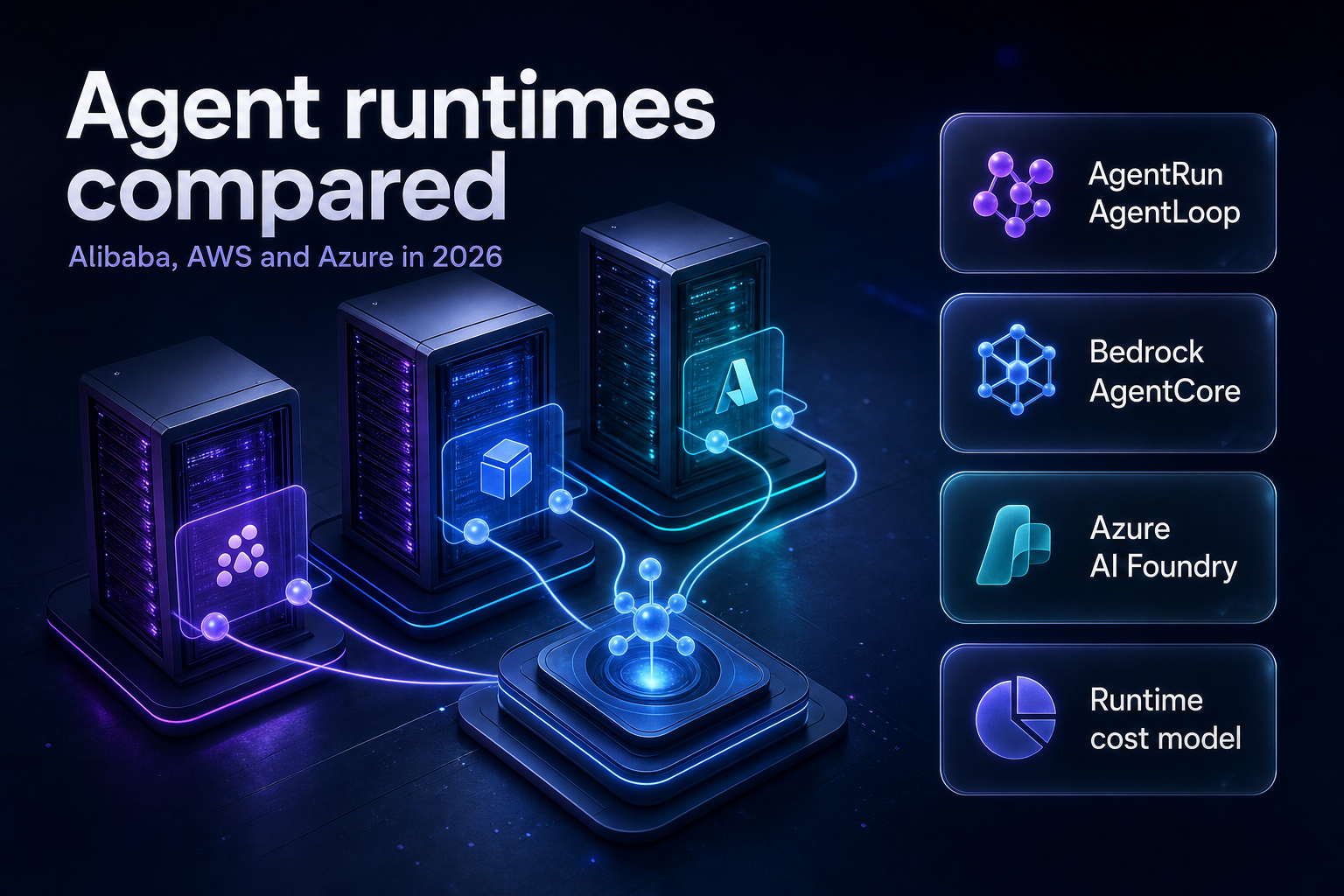
3 enterprise agent runtimes compared in 2026: Alibaba Agent Native Cloud, AWS AgentCore, Azure Foundry
Alibaba Cloud unveiled Agent Native Cloud at WAIC on 18 July 2026, adding AgentLoop and AgentTeams to AgentRun. Here is how the three big agent runtimes compare on billing, isolation, observability and lock-in.
Manu Shukla -
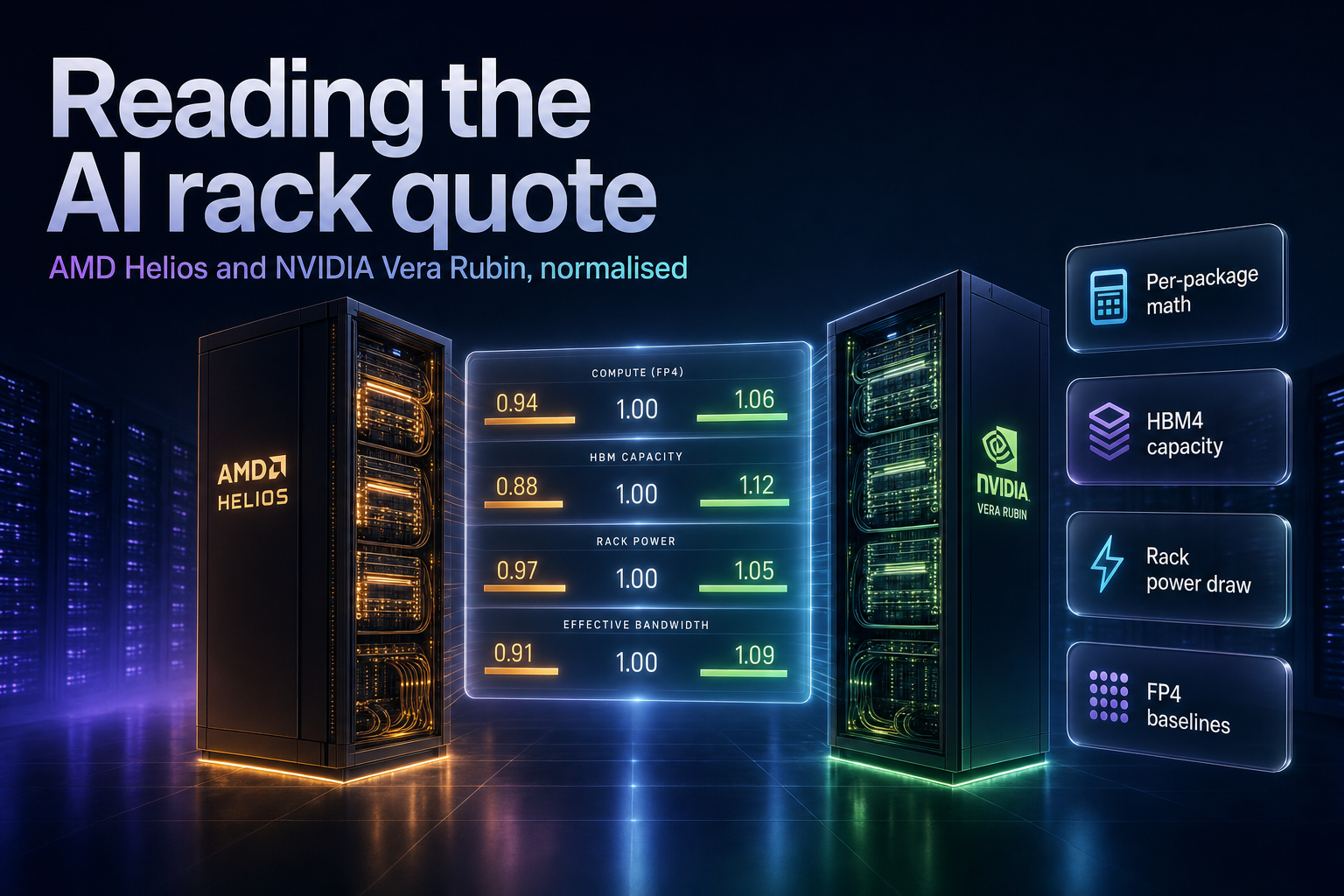
AMD Helios vs NVIDIA Vera Rubin: 7 spec traps in 2027 AI rack quotes
AMD and NVIDIA both ship 72-accelerator AI racks in 2026, and almost none of their headline numbers are measured the same way. A line-by-line normalisation of the two vendor-published spec sheets, and the seven
Manu Shukla -
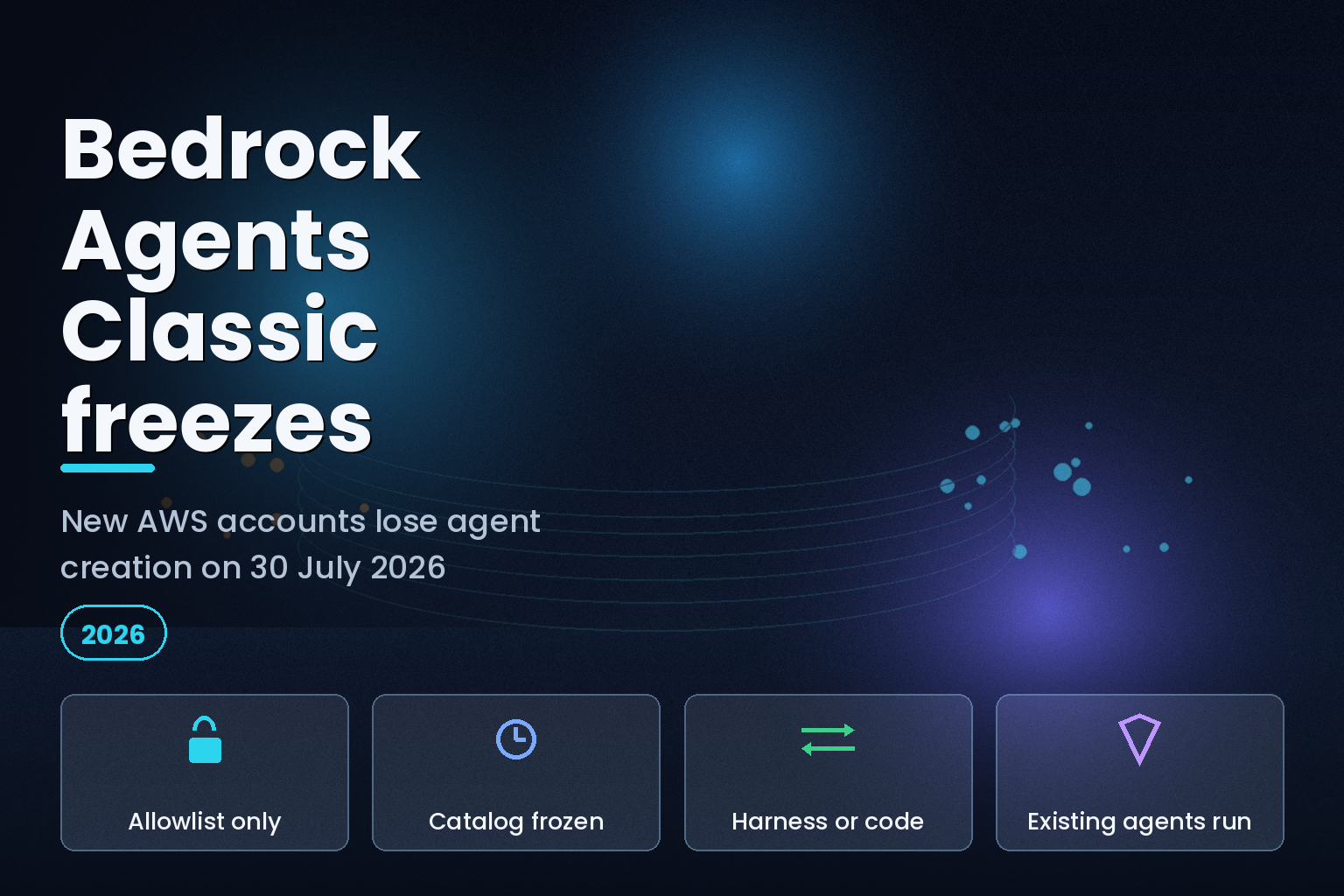
Bedrock Agents Classic locks out new accounts on 30 July 2026: the AgentCore migration map
AWS put Bedrock Agents Classic into maintenance mode on 30 July 2026. Existing agents keep running, but new accounts get a 403 and the model catalog freezes. Here is the capability-by-capability migration map
Manu Shukla -
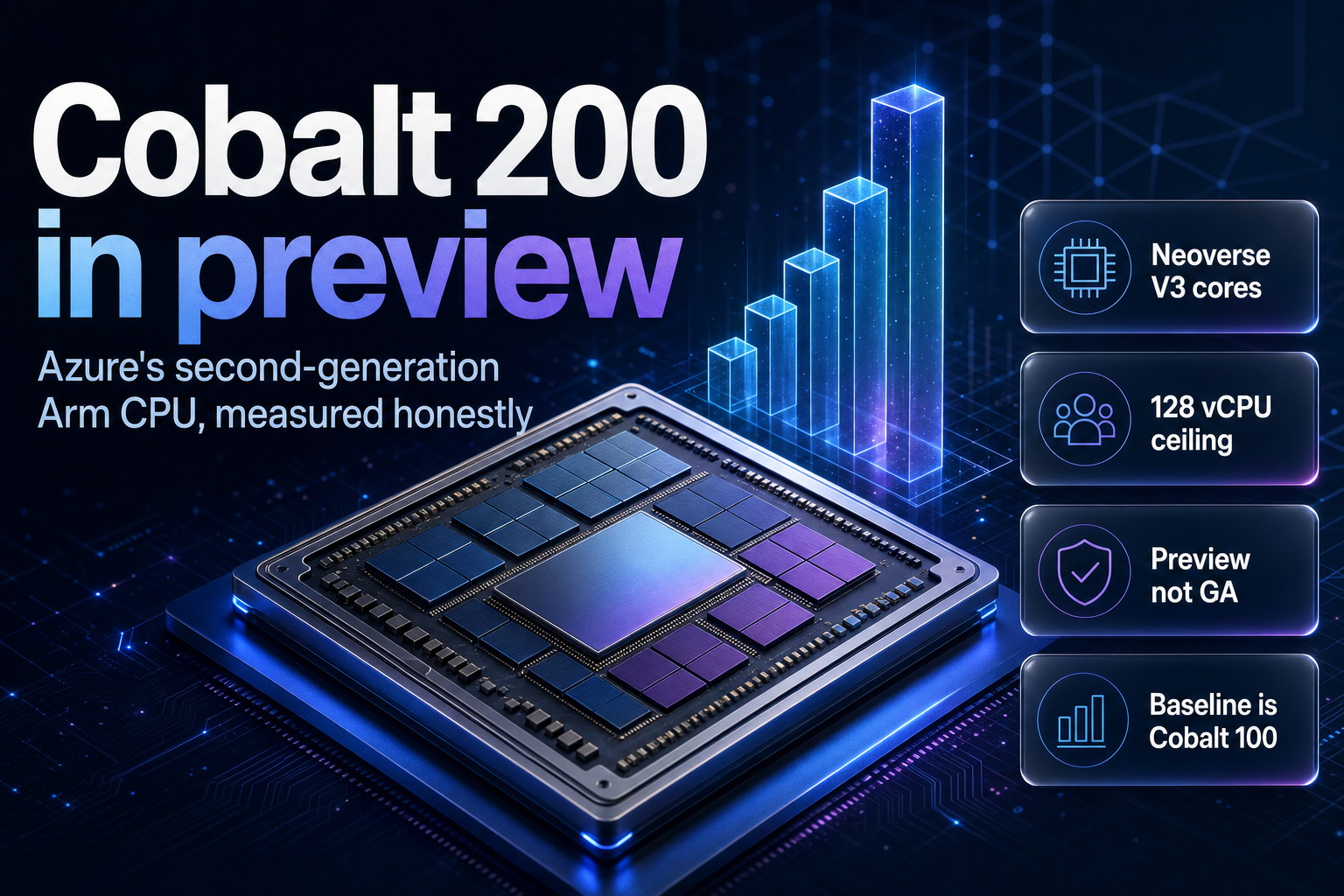
Azure Cobalt 200: what the 50% claim actually measures, and the 3 numbers that decide an Arm migration
Microsoft, AWS and Google all publish Arm performance gains, and all three use a different baseline. Cobalt 200 is measured against Cobalt 100, Graviton4 against Graviton3, and Axion N4A against x86. Here is how to read
Manu Shukla -
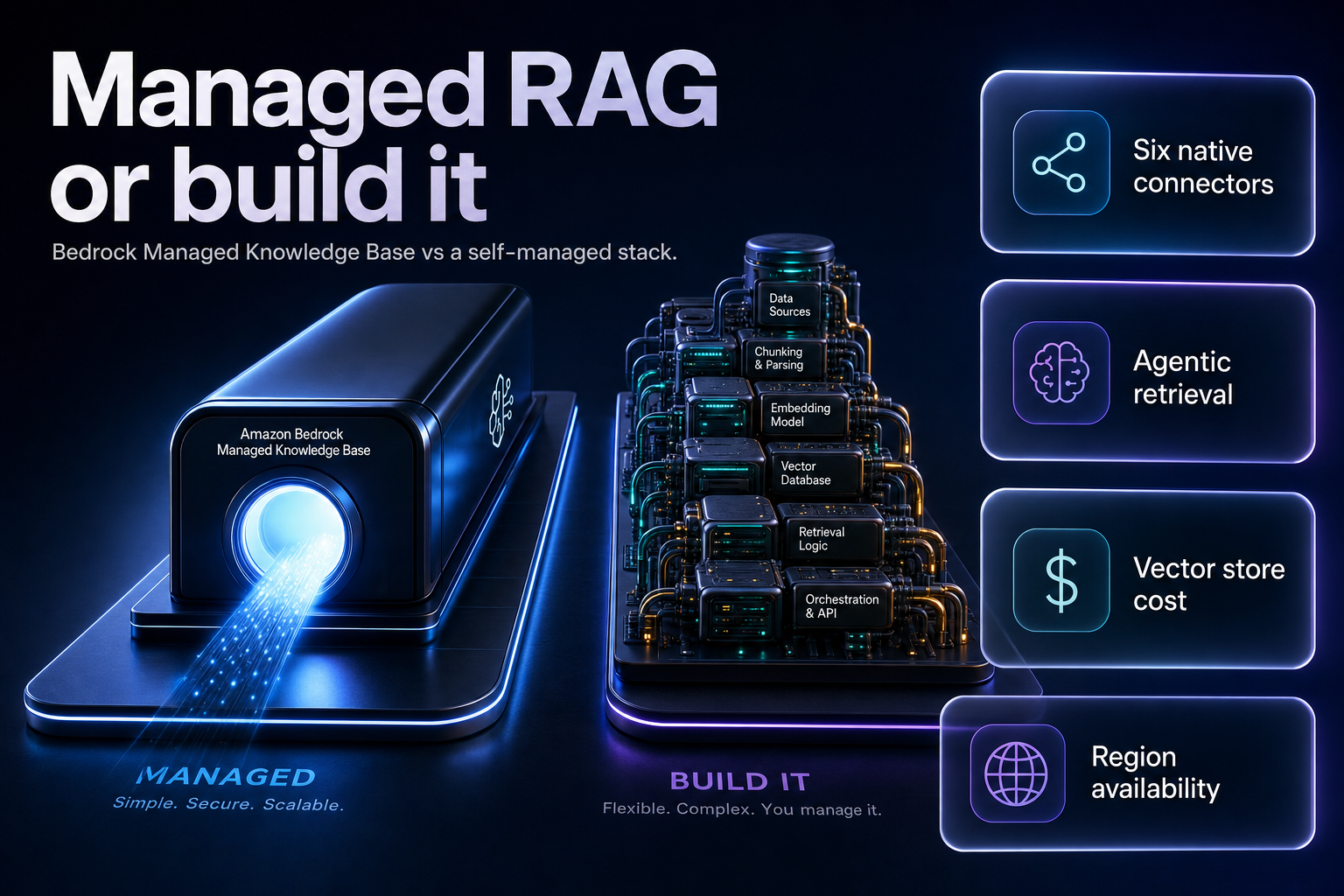
Bedrock Managed Knowledge Base vs self-managed RAG in 2026: 6 connectors, 8 regions, no Mumbai
AWS made Amazon Bedrock Managed Knowledge Base generally available on 17 June 2026. It removes the vector store, the parsing pipeline and the retrieval orchestration. It also removes some control, and it is not in
Manu Shukla -
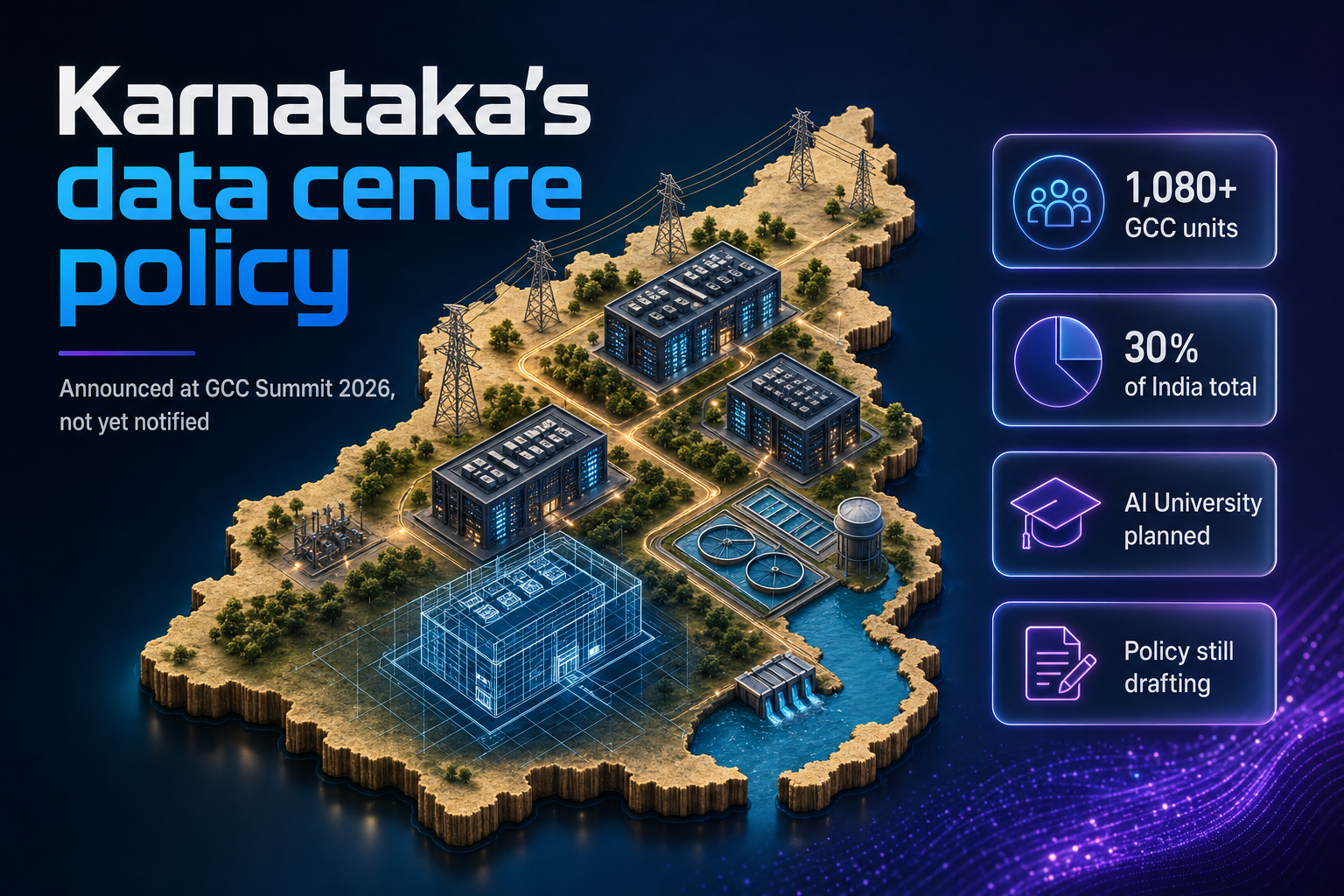
Karnataka's data centre policy in 2026: what was announced on 15 July vs what is already in force
Karnataka said on 15 July 2026 that a new data centre policy is coming. A 2022-2027 policy is already published, and the change that actually moved the economics this year came from the Union Budget.
Manu Shukla -
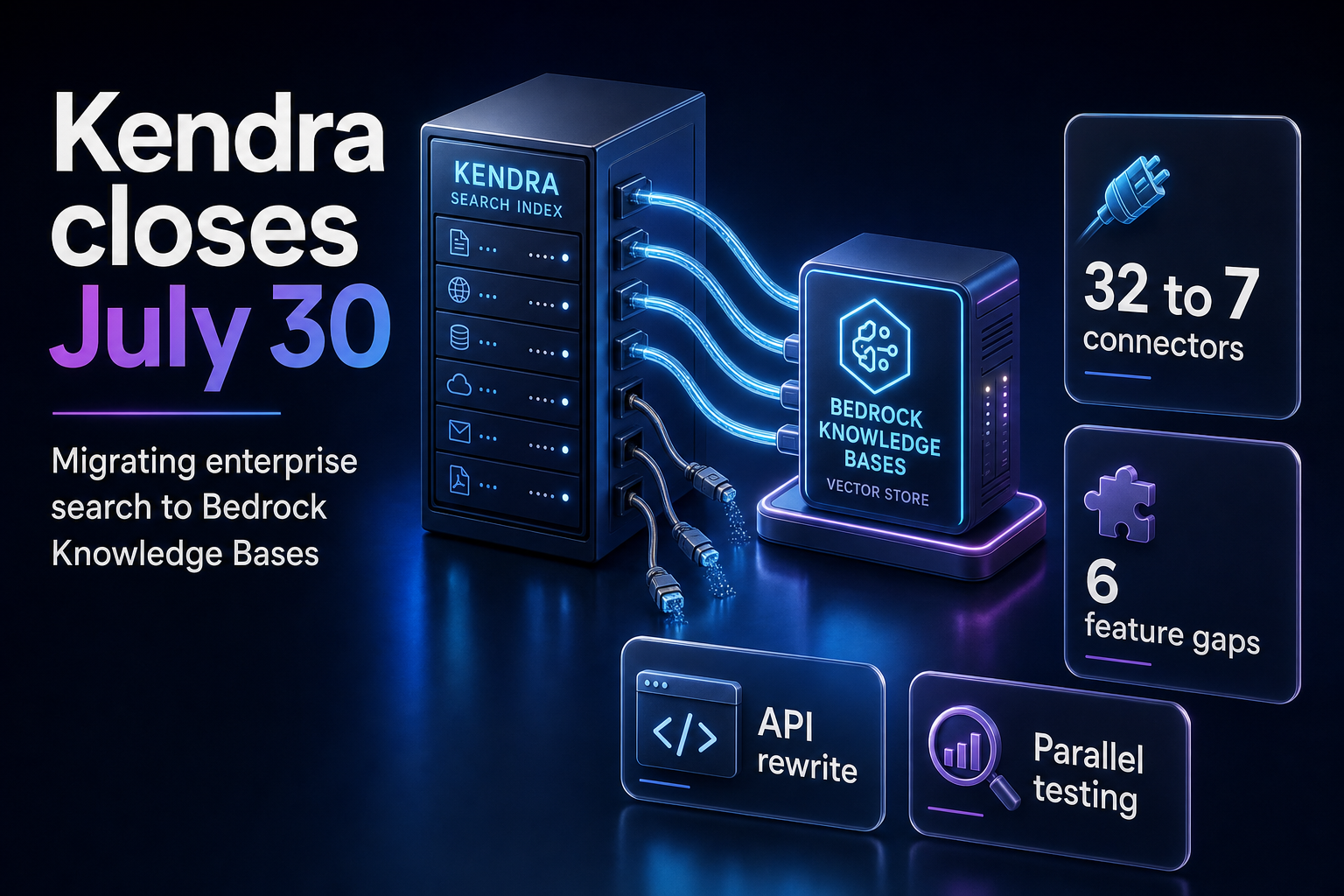
Amazon Kendra closes to new customers on 30 July 2026: 6 features Bedrock Knowledge Bases cannot replace
AWS put Amazon Kendra into maintenance mode on 30 June 2026 and closes it to new customers on 30 July. Migrating to Bedrock Managed Knowledge Base drops you from 32 connectors to 7.
Manu Shukla -
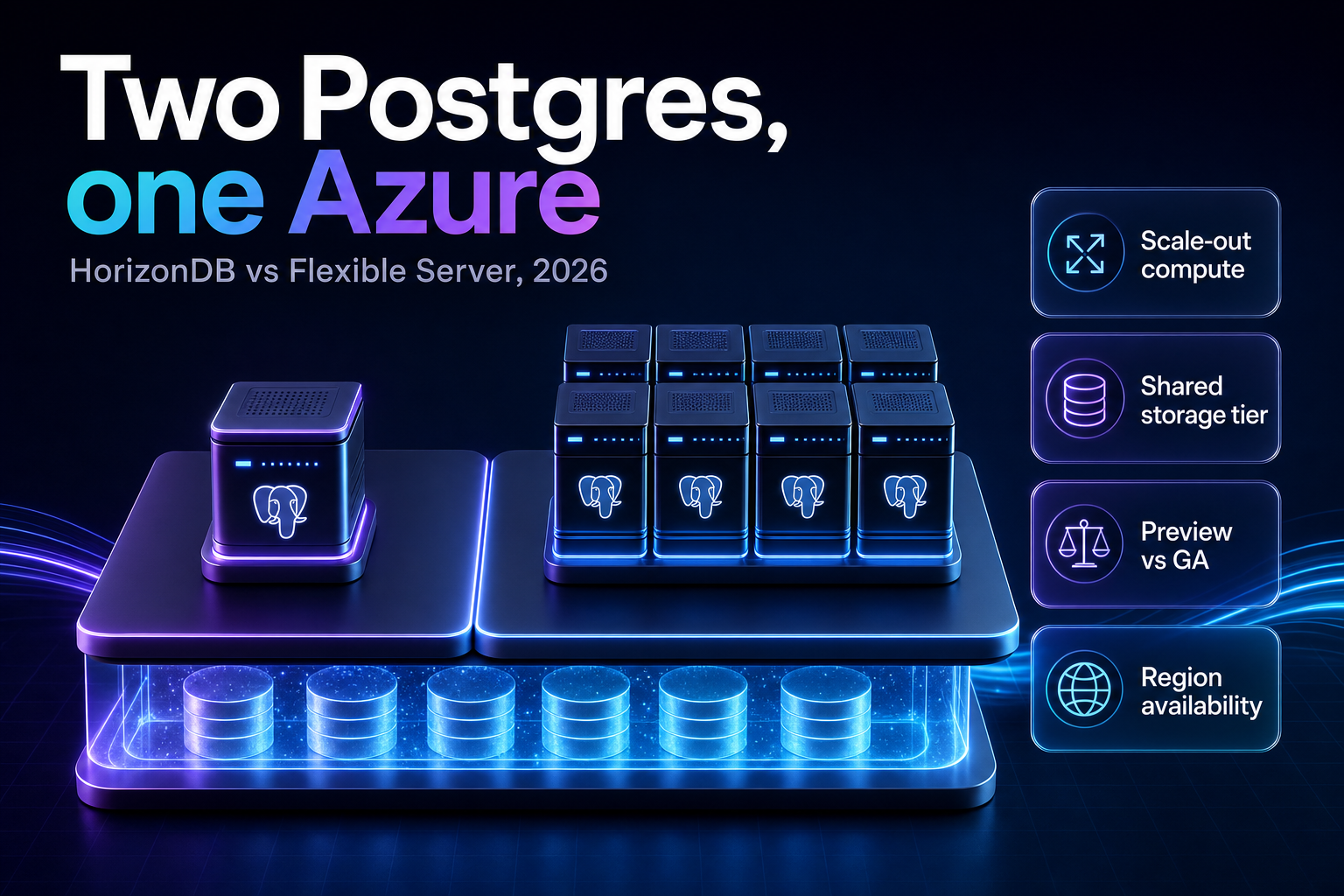
Azure HorizonDB vs Flexible Server in 2026: 8 limits that decide it for you
Microsoft now runs two managed Postgres services on Azure. HorizonDB's preview limitations list decides most of these choices before any benchmark does, and one of those limits rules it out for Indian workloads entirely.
Manu Shukla -
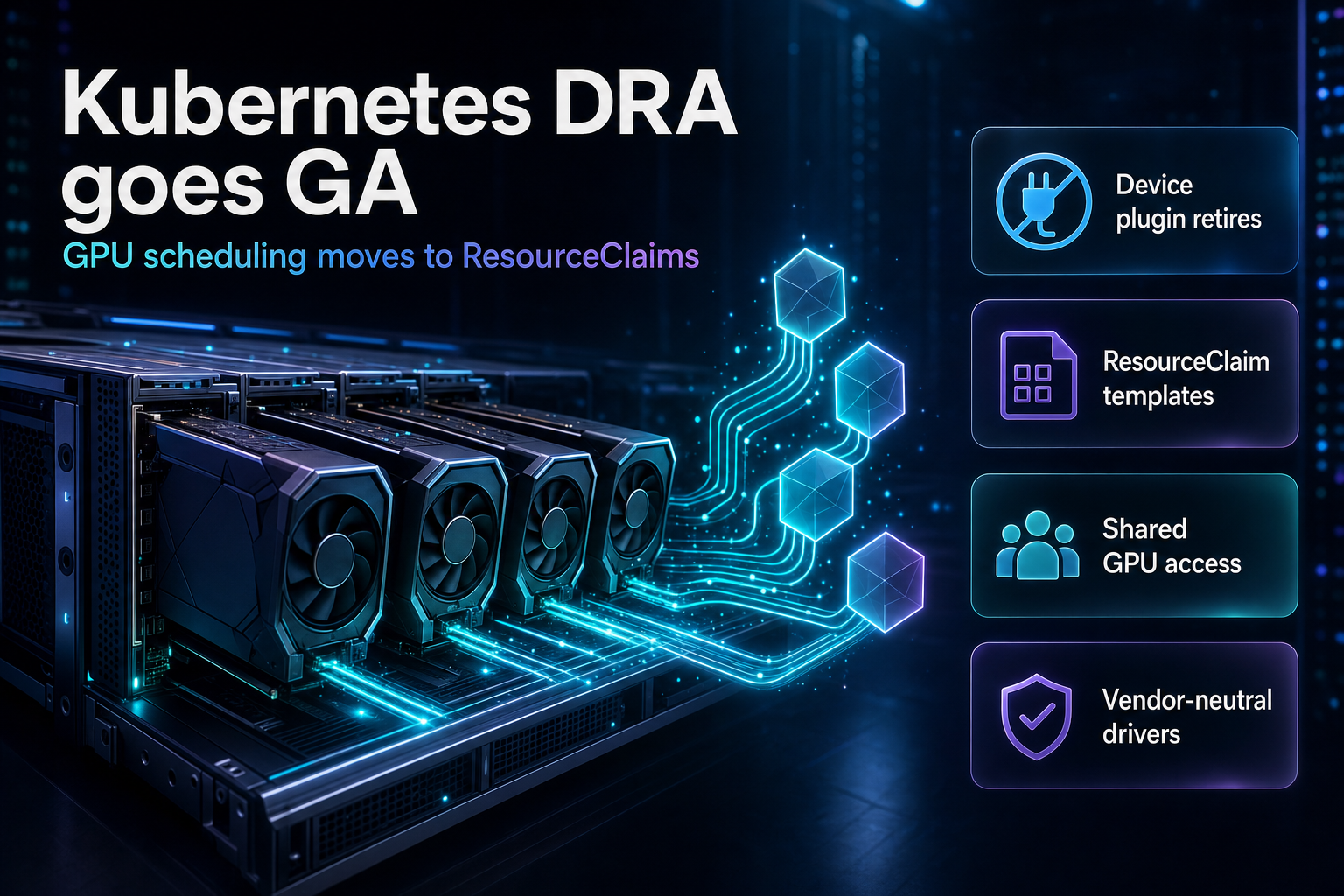
Kubernetes DRA hits GA in 1.35: migrating GPU workloads off the device plugin in 2026
Dynamic Resource Allocation is GA in Kubernetes v1.35, but NVIDIA's upstream driver still ships its GPU kubelet plugin disabled by default. Here is what actually works today, with manifests.
Manu Shukla -
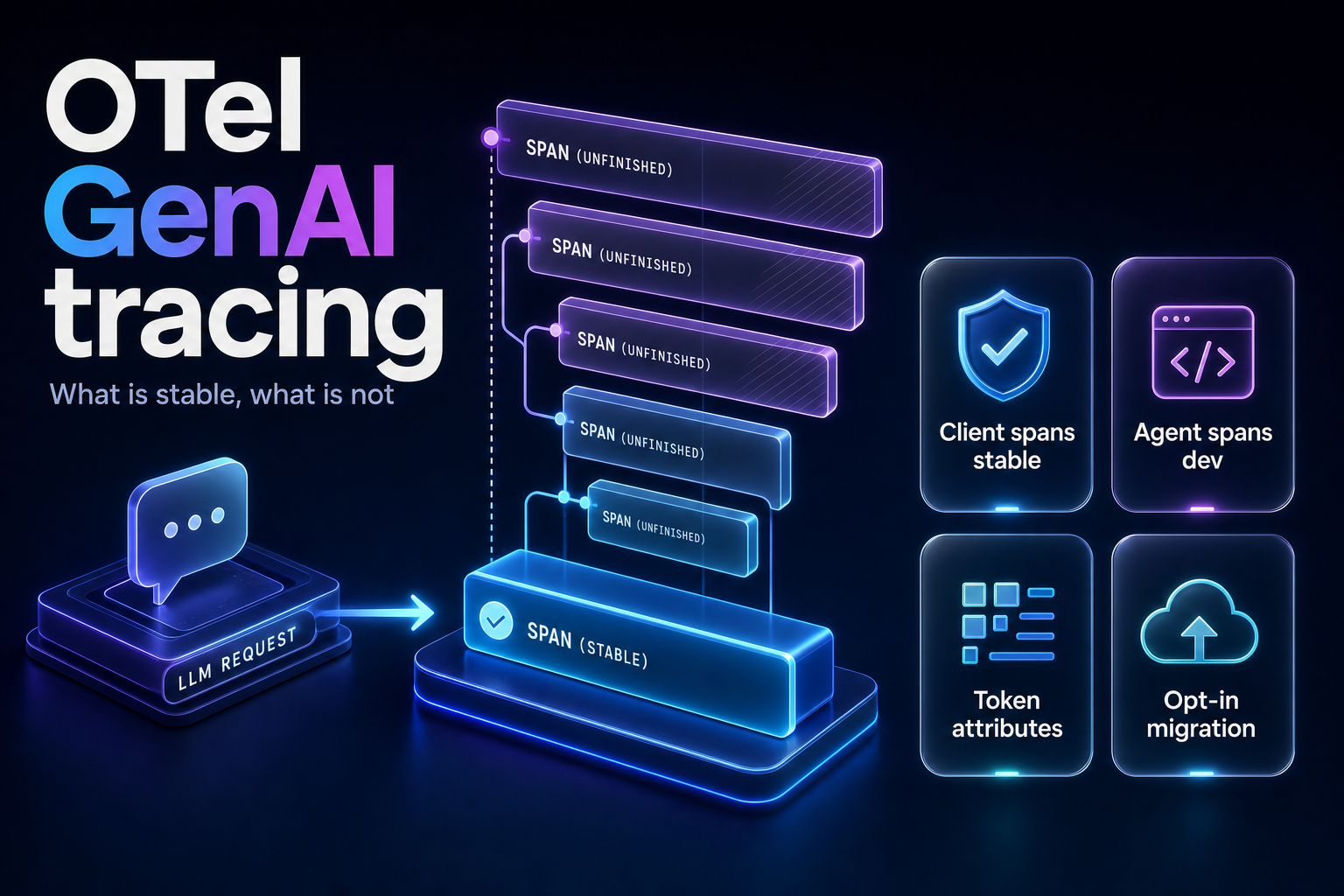
OpenTelemetry GenAI conventions: zero stable gen_ai attributes in 2026, and what to ship anyway
Vendor posts say OpenTelemetry's GenAI client spans went stable in early 2026. The specification says Development on every page, which sits below Alpha. Here is what that means for your instrumentation.
Manu Shukla -
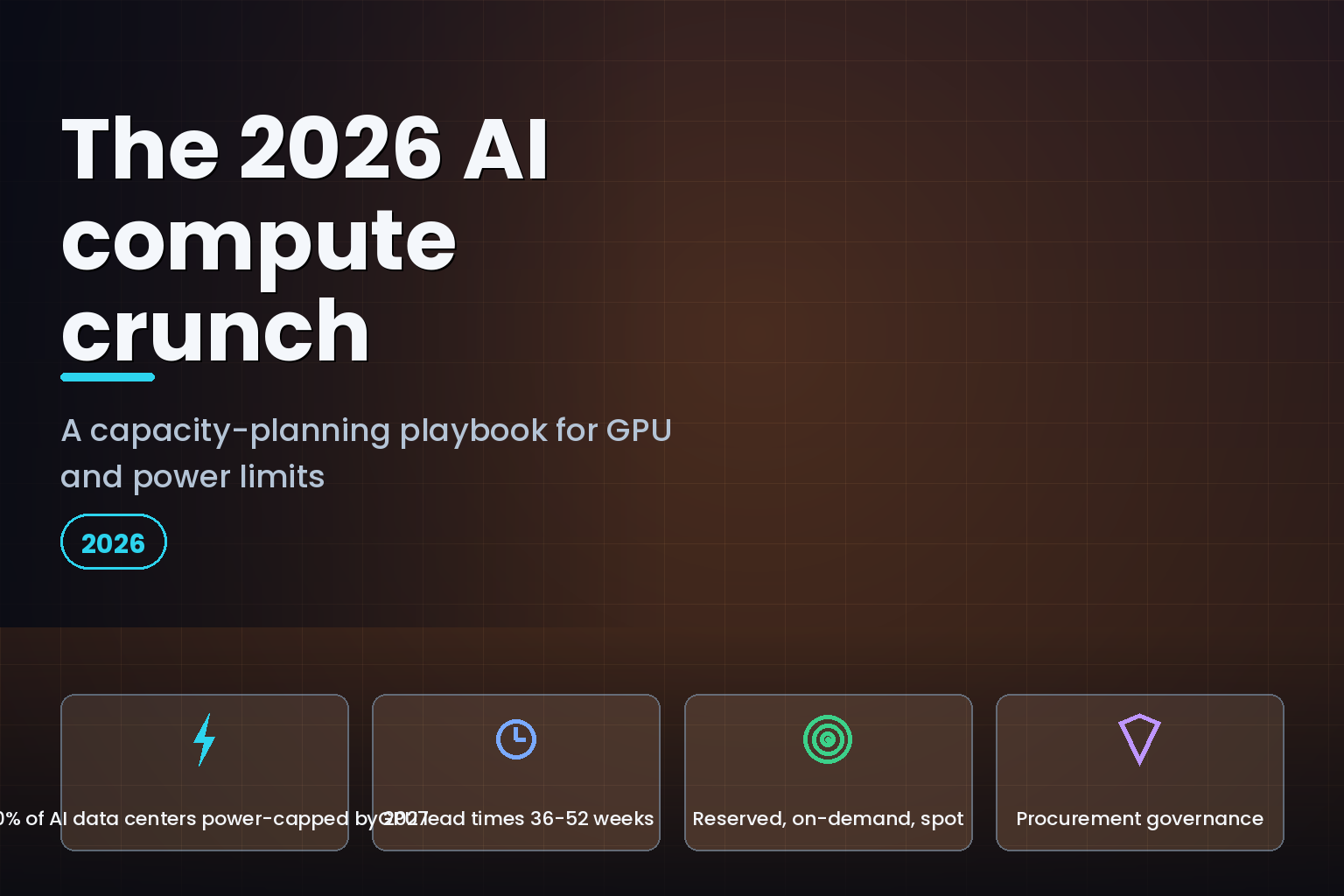
The 2026 AI compute crunch: a capacity-planning playbook for GPU and power limits
Gartner expects power to constrain 40% of AI data centers by 2027, and GPU lead times run 36 to 52 weeks. This 2026 playbook covers capacity forecasting, spot vs reserved, neo-clouds and procurement governance.
Manu Shukla -
NVIDIA B200 vs H100 in 2026: why the pricier GPU is cheaper per token
A 2026 cost-per-token comparison of the NVIDIA B200 and H100 for LLM inference, with MLPerf v6.0 throughput, real cloud hourly rates, the arithmetic that makes the pricier chip cheaper per token, and the cases where
Manu Shukla -
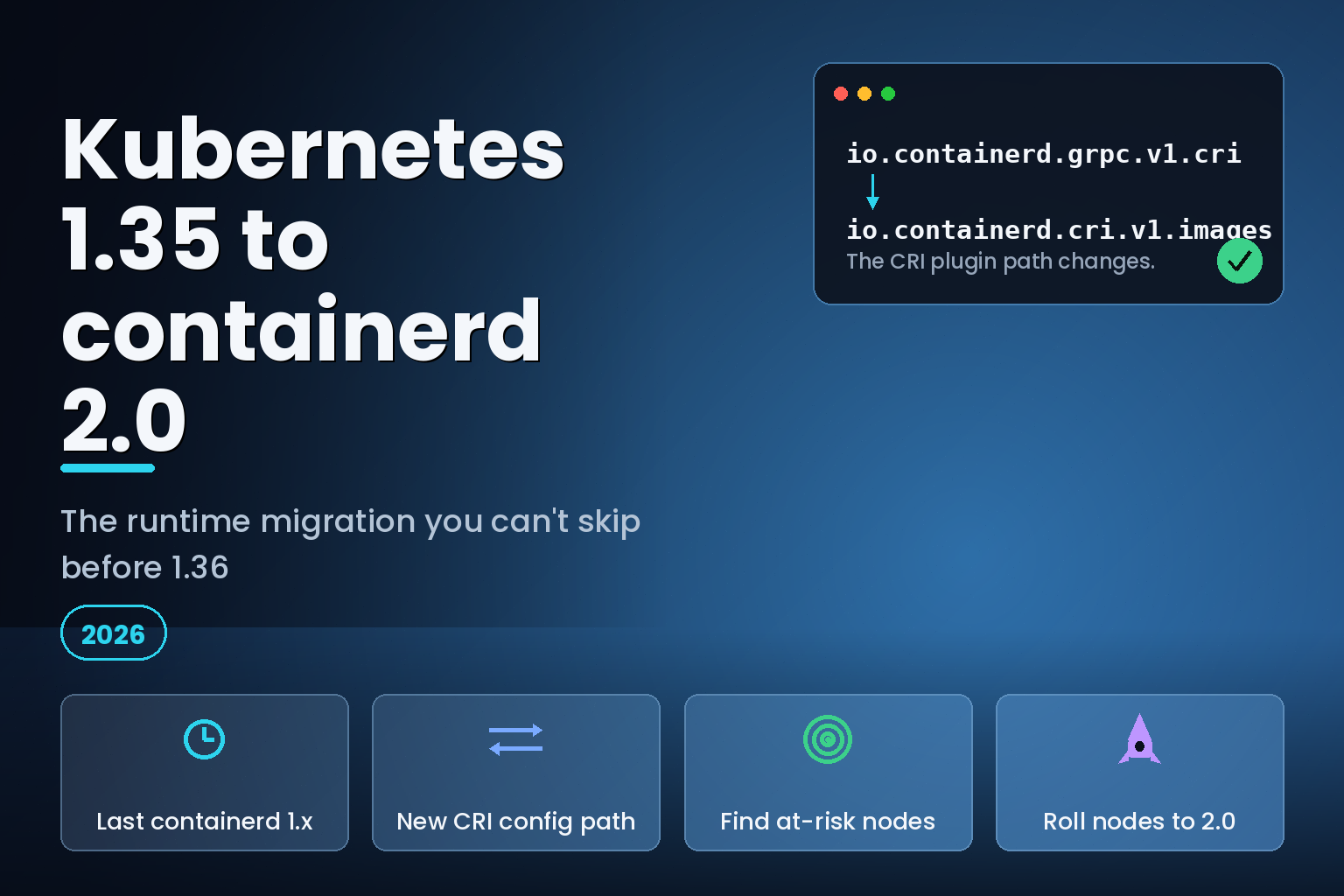
Kubernetes 1.35 is the last release supporting containerd 1.x: a 2026 upgrade guide
Kubernetes 1.35 is the last version to support containerd 1.x; from 1.36 containerd 2.0 is the floor. Here is what breaks in your node config, how to find at-risk nodes, and how GKE, EKS and AKS differ.
Manu Shukla -
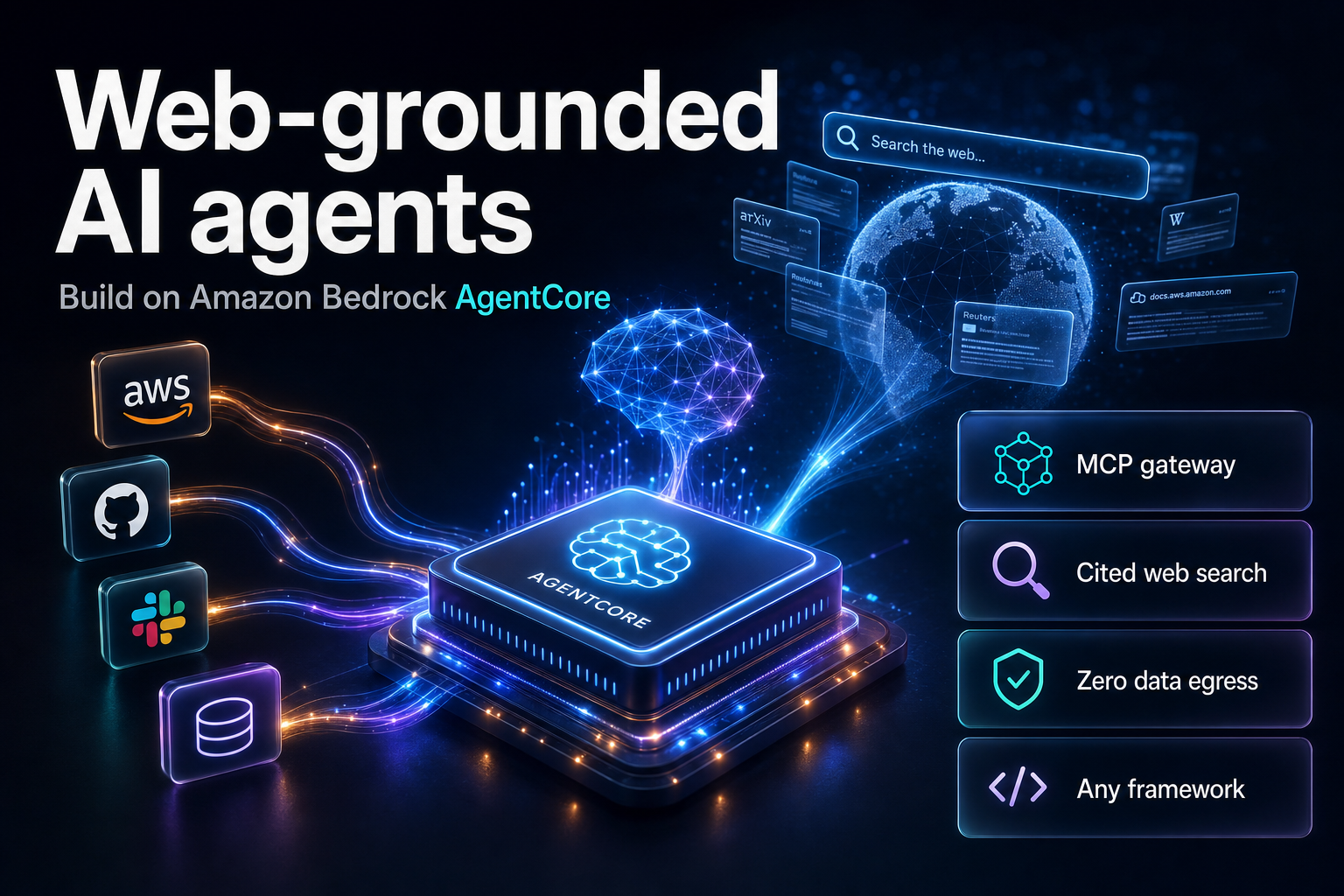
Build a web-grounded AI agent on Amazon Bedrock AgentCore: 2026 guide with code
Amazon Bedrock AgentCore is AWS's platform for production AI agents. Its Web Search tool reached GA on 17 June 2026 at $7 per 1,000 queries. Build a cited, web-grounded agent over MCP, with code and pricing.
Manu Shukla -
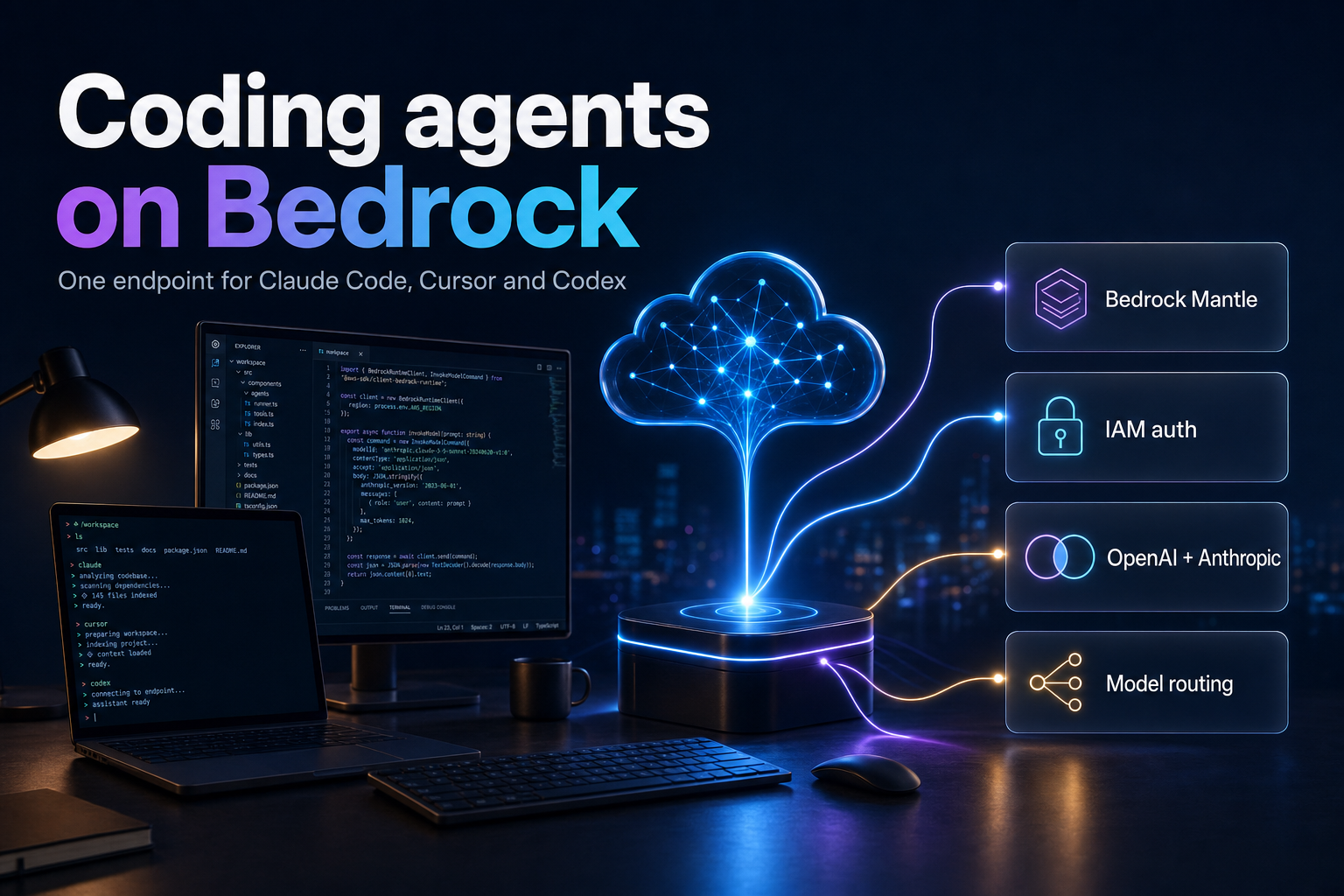
Connect Claude Code, Cursor and Codex to Amazon Bedrock's new console (2026)
Amazon Bedrock's new Mantle console connects Claude Code, Codex, Cursor and more to GPT, Claude and open-weight models with IAM or a Bedrock API key. Here is how to wire each coding agent through Bedrock.
Manu Shukla -
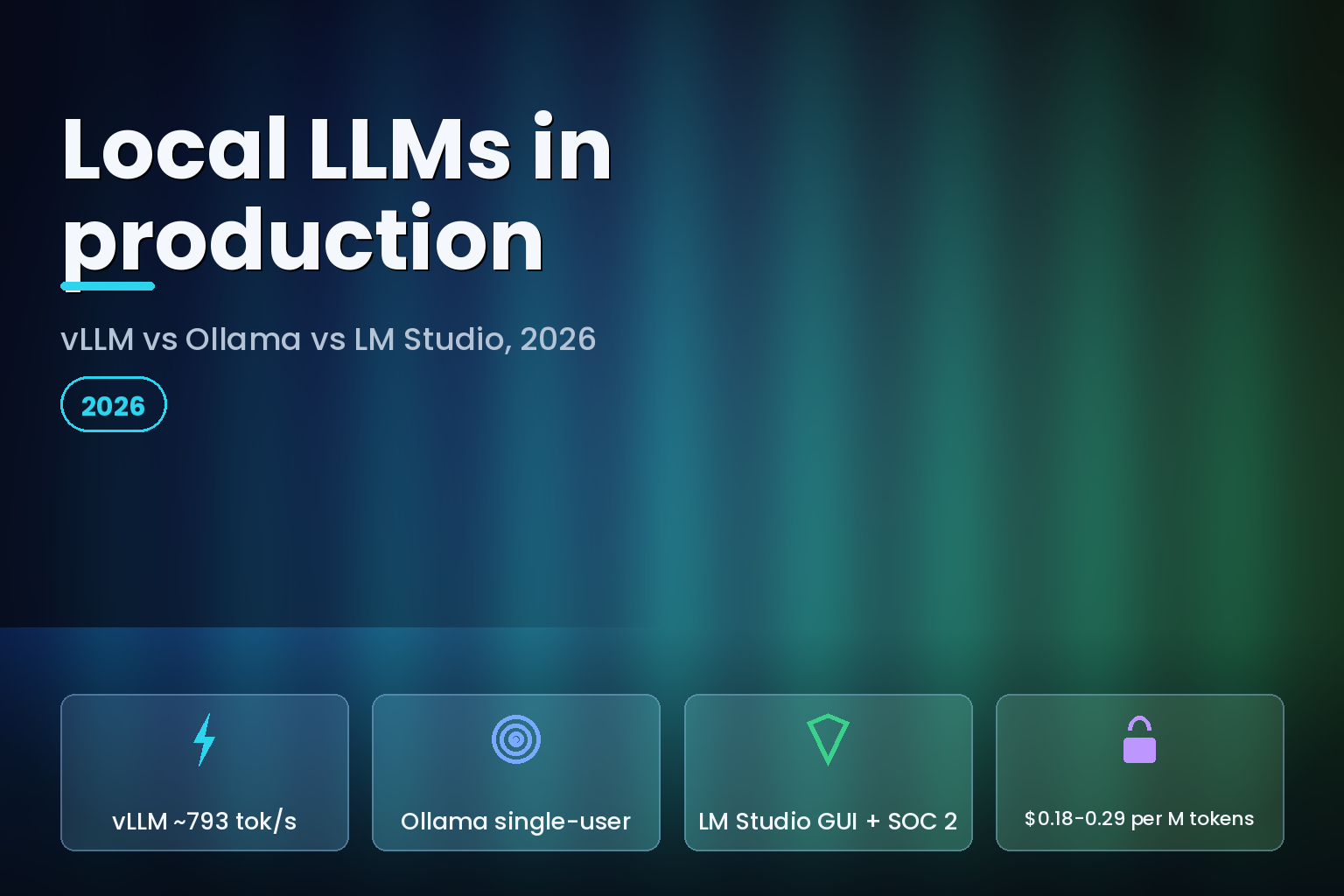
Local LLMs in production (2026): vLLM vs Ollama vs LM Studio, benchmarked
vLLM, Ollama and LM Studio solve different problems. Red Hat measured vLLM at 793 tokens/s versus Ollama's 41, and local inference costs about $0.18-0.29 per million tokens. Throughput, GPU cost, and when each wins.
Manu Shukla -
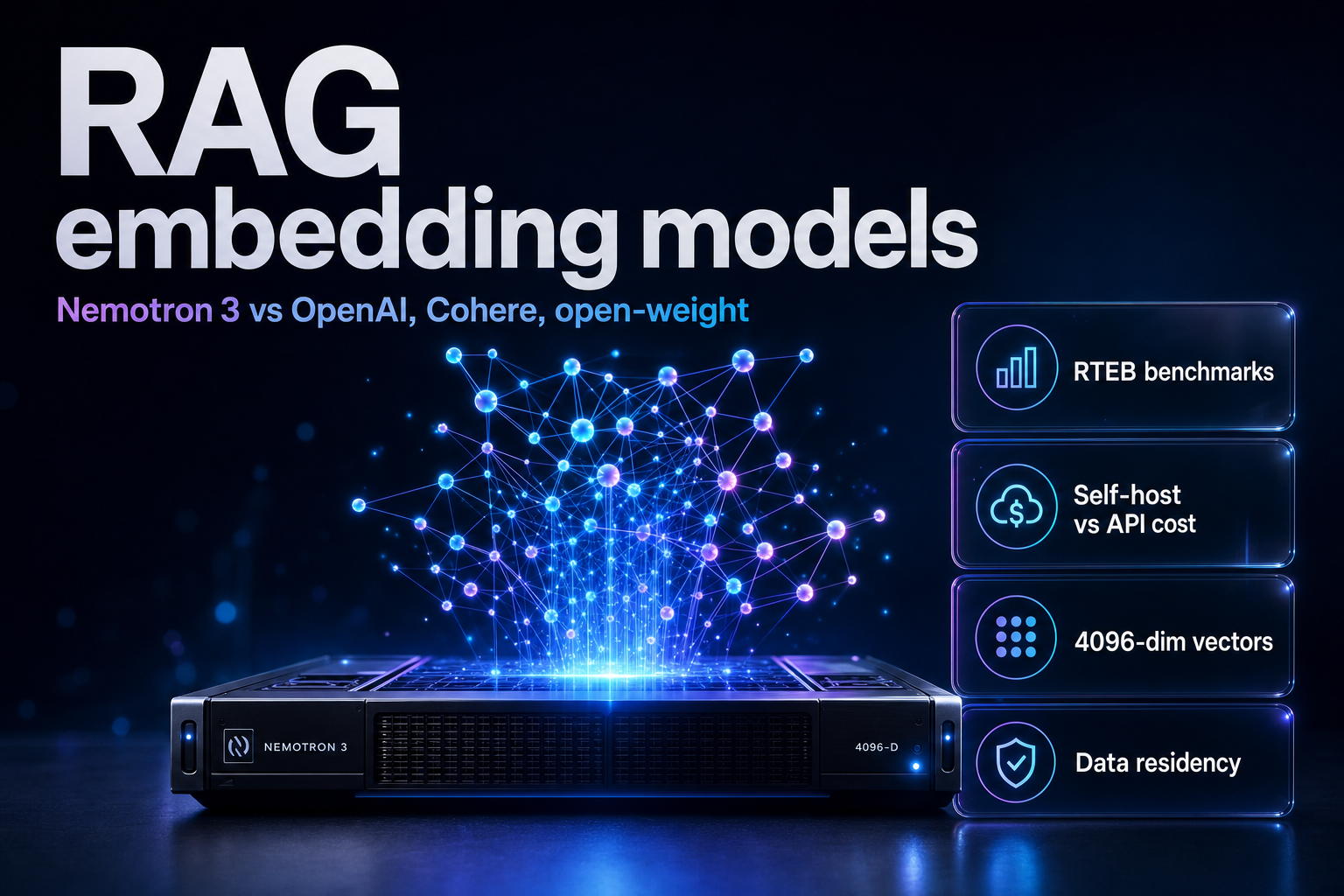
4 RAG embedding models compared in 2026: Nemotron 3 Embed vs OpenAI, Cohere and open-weight
A senior-engineer comparison of RAG embedding models in 2026: NVIDIA Nemotron 3 Embed, OpenAI text-embedding-3, Cohere Embed v4 and open-weight Qwen3, with RTEB benchmarks, pricing and self-host break-even math.
Manu Shukla -
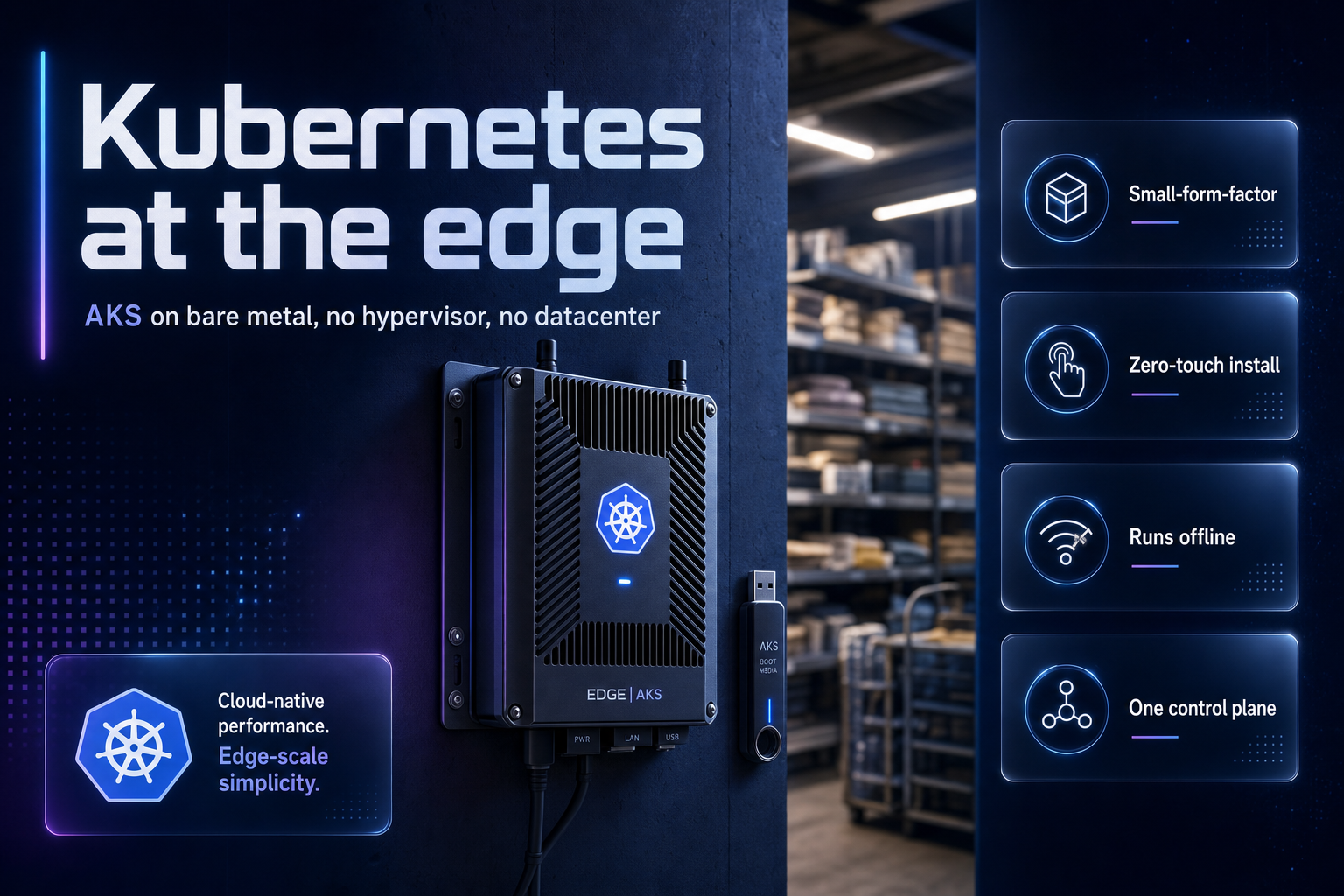
AKS on bare metal in 2026: an edge Kubernetes play, not the GPU story you read about
Microsoft shipped AKS on bare metal to public preview on 2 June 2026. The validated hardware list runs from a $2,762 rugged mini PC to an ASUS NUC, and nothing on it trains a model. Here is what the feature actually
Manu Shukla -
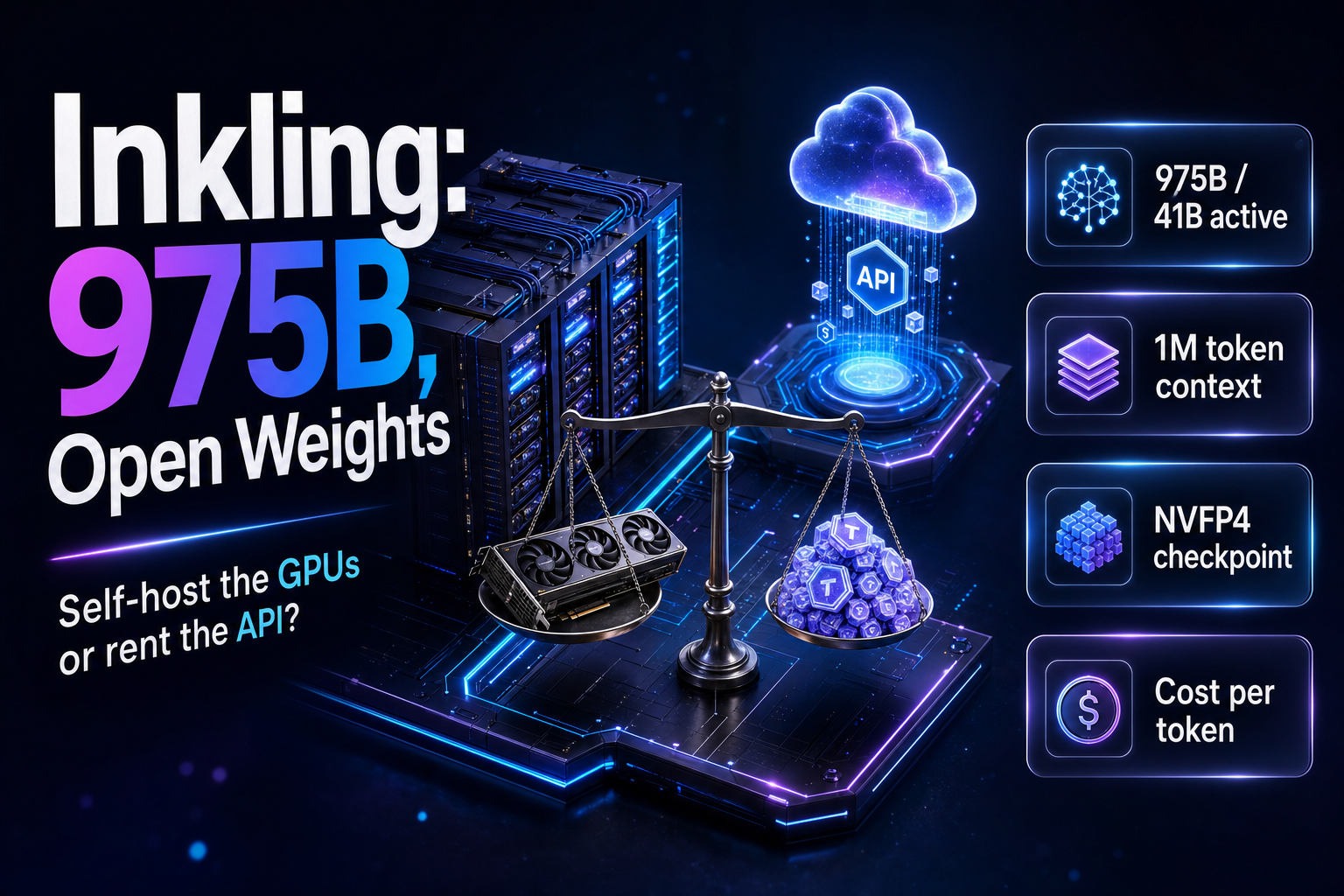
Inkling's 975B open weights: what self-hosting really costs vs the API in 2026
Thinking Machines released Inkling on 15 July 2026 under Apache 2.0: 975B parameters, 41B active. We priced the GPUs against the Tinker API using AWS and vendor figures, and the break-even is brutal.
Manu Shukla -
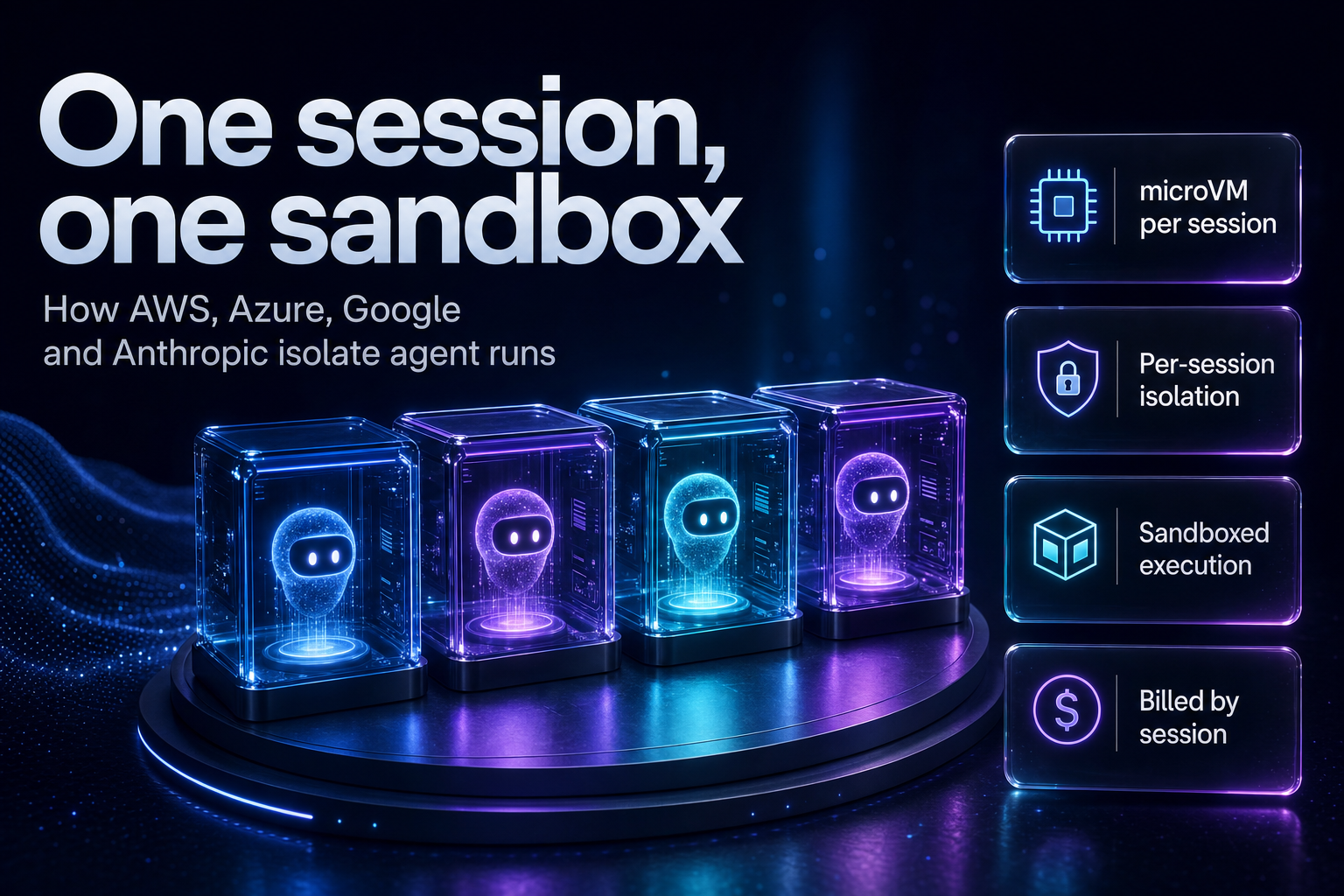
Agent session isolation compared: AWS microVM, Azure Foundry, Google sandbox and Anthropic Managed Agents
Four vendors rebuilt their agent runtimes around the session in 2026, and they agree on routing but disagree on the compute primitive underneath. A comparison of AWS AgentCore, Azure AI Foundry, Google Agent Engine
Manu Shukla -
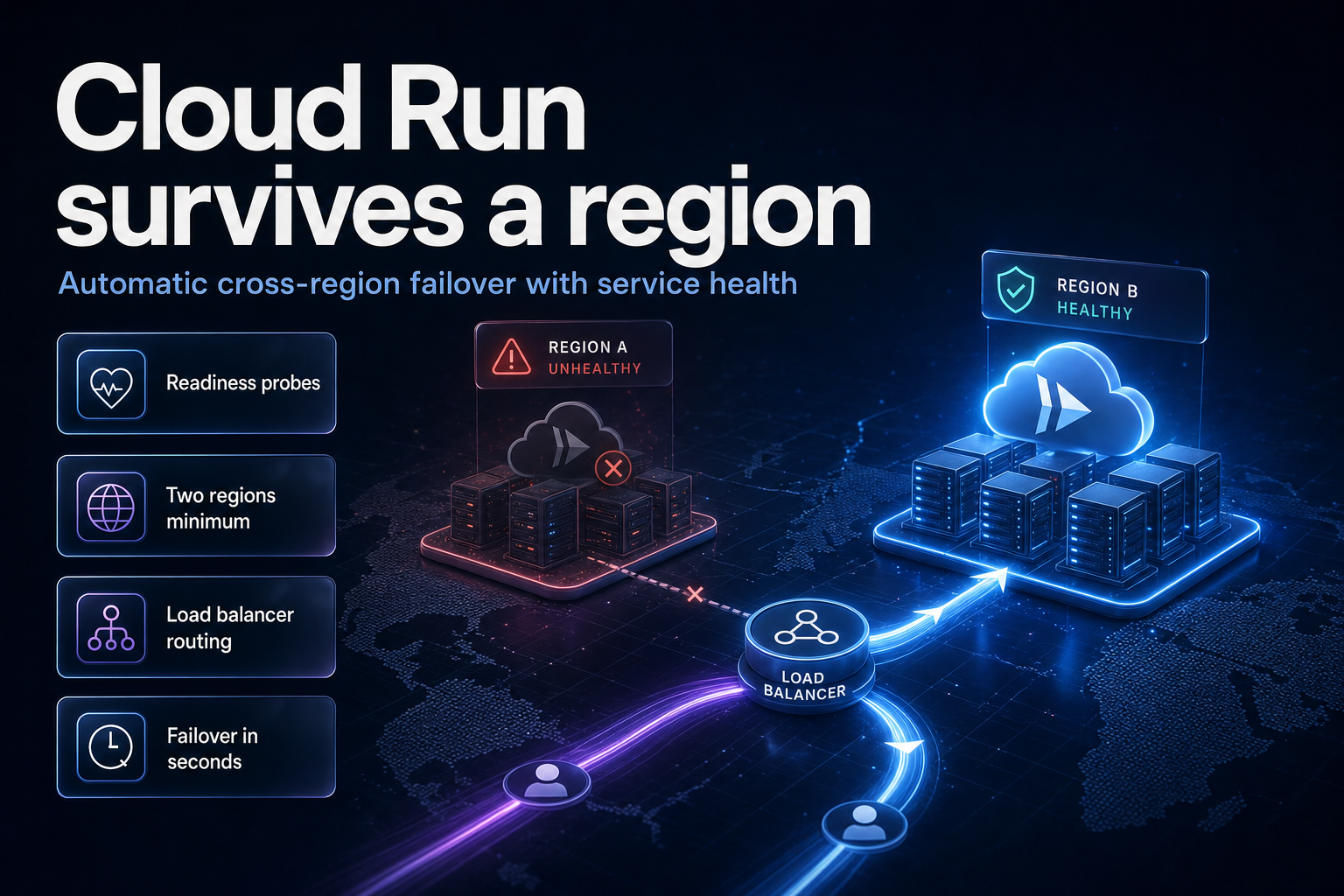
Cloud Run cross-region failover went GA on 29 June 2026: the service health setup that survives a regional outage
Cloud Run now fails over between regions automatically using readiness probes and serverless NEGs. Here is the working gcloud setup, plus the two defaults that silently break failover.
Manu Shukla -
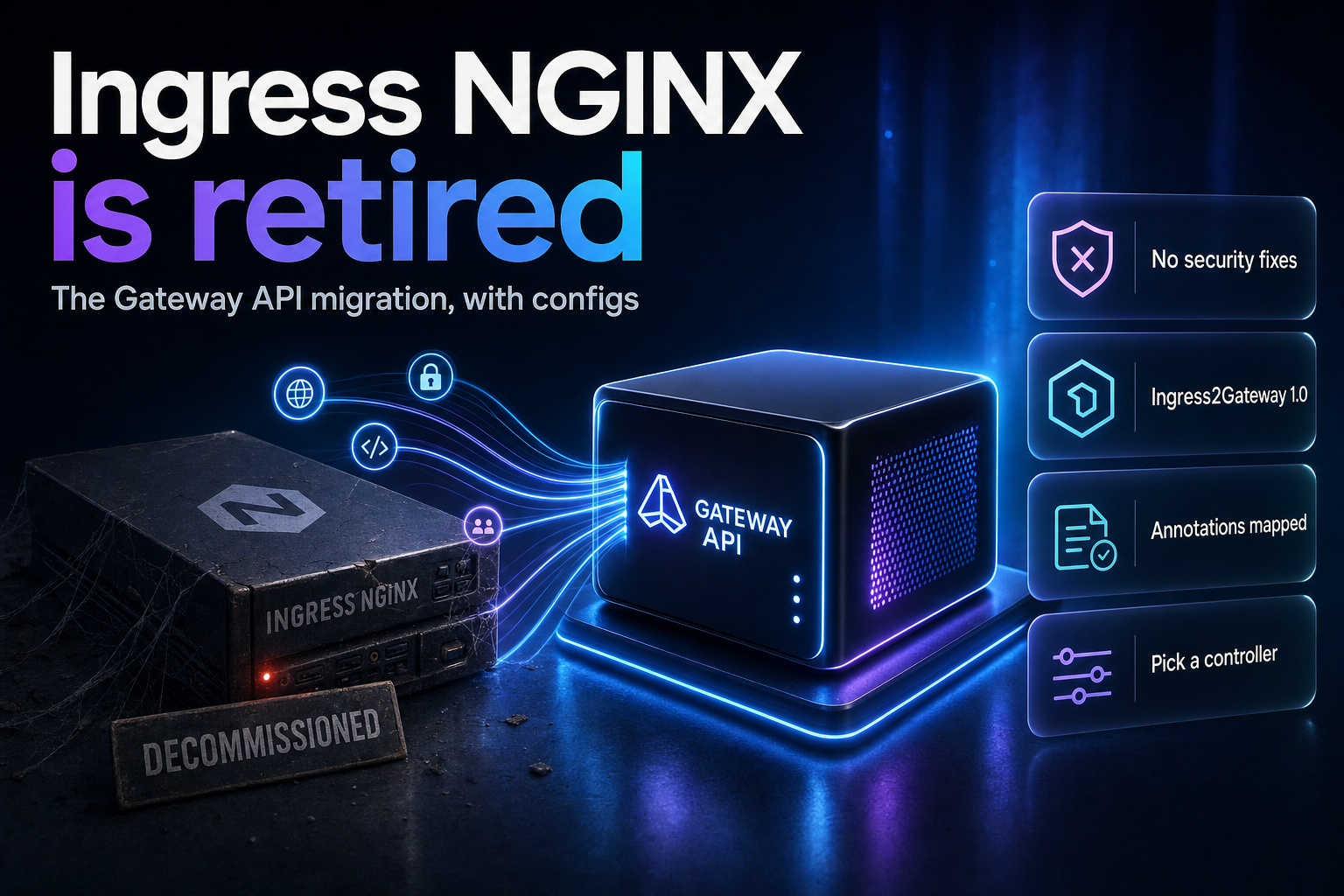
Ingress NGINX is retired: the Gateway API migration, 34 annotations mapped (2026)
Ingress NGINX maintenance ended in March 2026: no releases, no bugfixes, no security updates. ingress2gateway v1.1.0 maps 34 ingress-nginx annotations to Gateway API, refuses 7 more, and there are two NGINX providers
Manu Shukla -
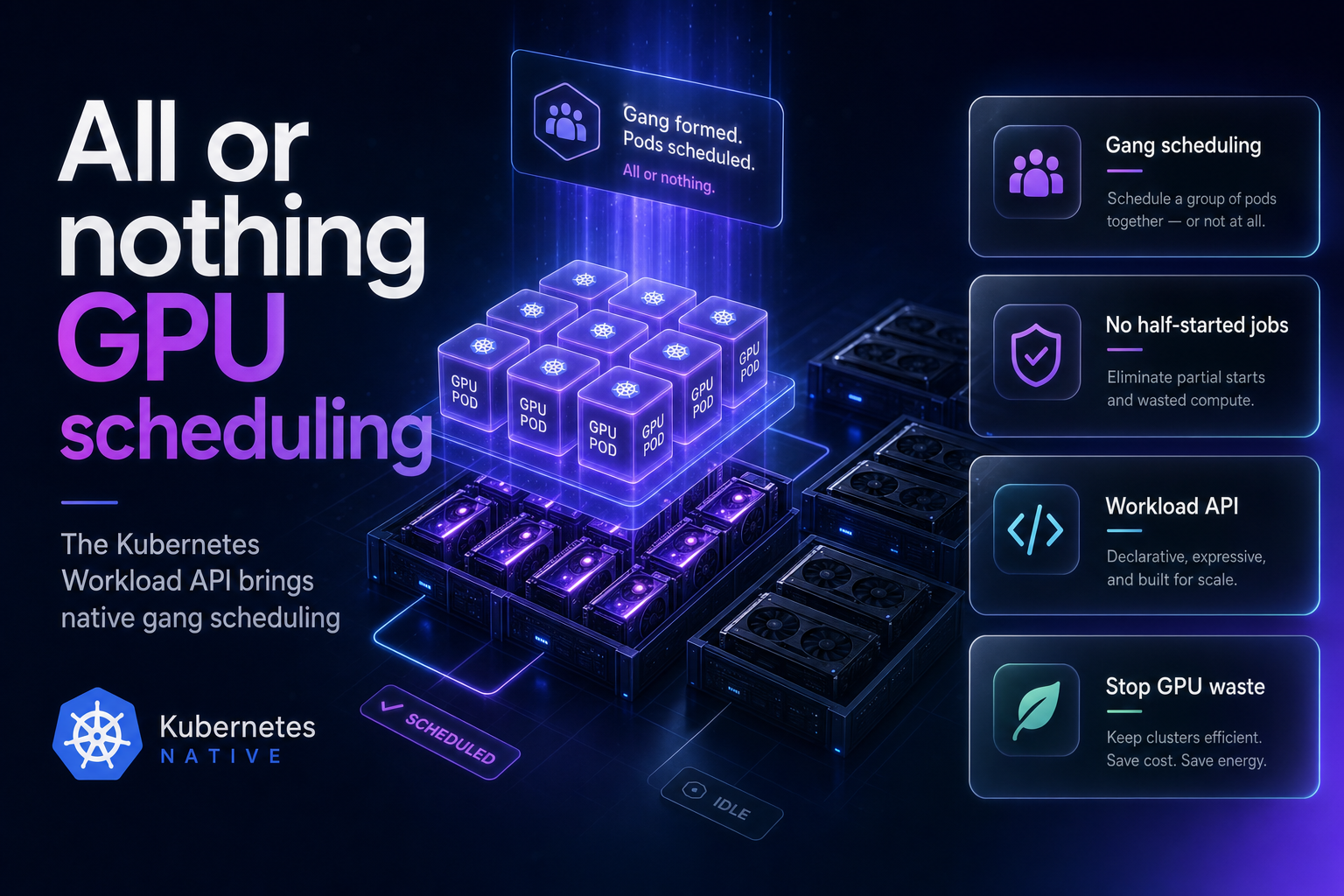
Kubernetes gang scheduling in v1.36: the Workload API rewrite your v1.35 manifests will not survive
Kubernetes v1.35 introduced the Workload API and native gang scheduling. Four months later v1.36 replaced the API version entirely. Here is the current shape, the migration, and the GPU maths that justifies it.
Manu Shukla -
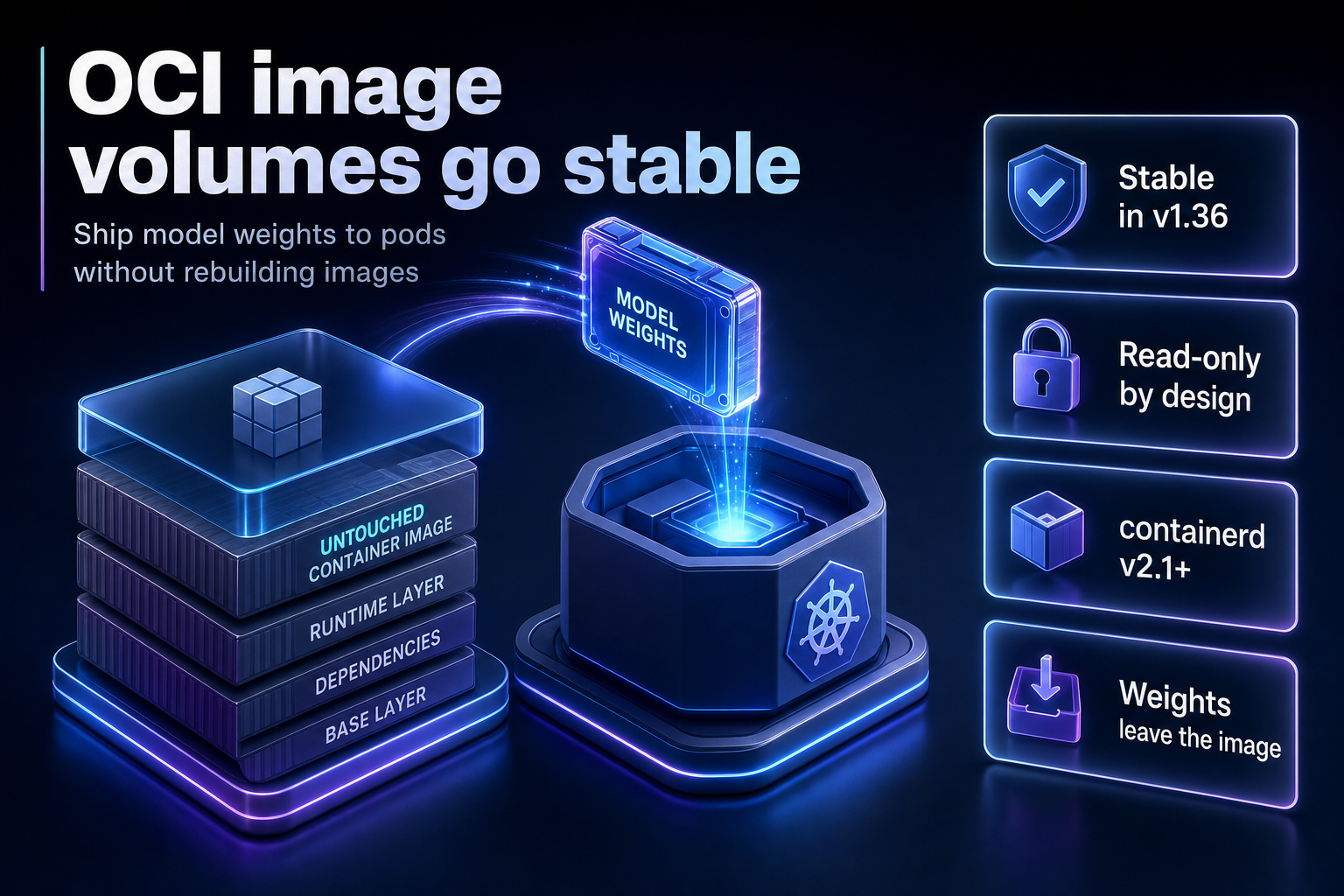
Kubernetes OCI image volumes hit stable in v1.36: ship model weights without rebuilding images
Kubernetes image volumes reached stable in v1.36 after starting as alpha in v1.31. You can mount model weights straight from an OCI registry, read-only, with no rebuild of your model-server image.
Manu Shukla -
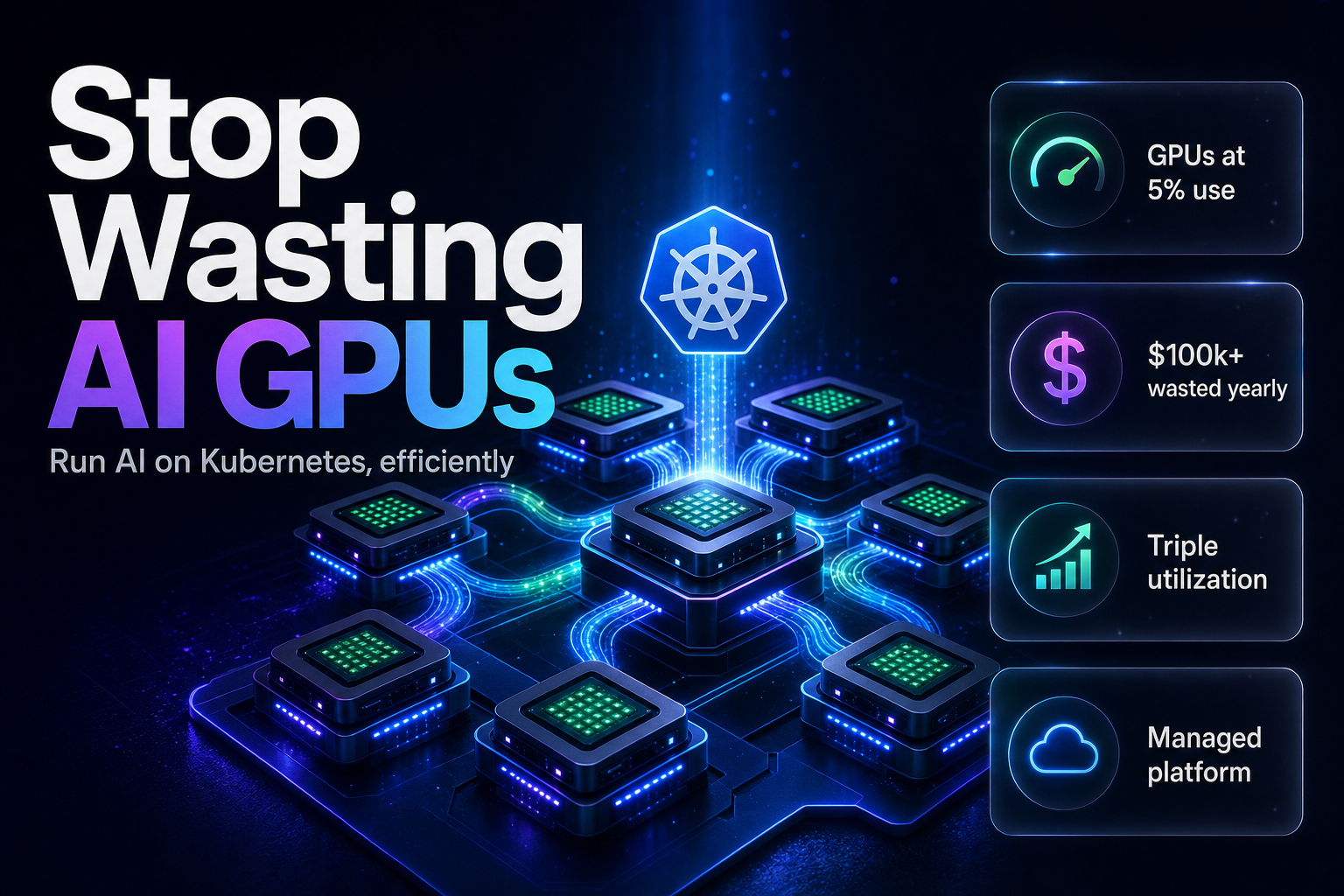
Running AI on Kubernetes in 2026: fix 5% GPU use with a managed platform
Kubernetes is the default home for AI, yet GPUs often run at 5% utilization, wasting over $100,000 a year. How a managed platform fixes GPU scheduling and cost for Indian enterprises running AI.
Manu Shukla -
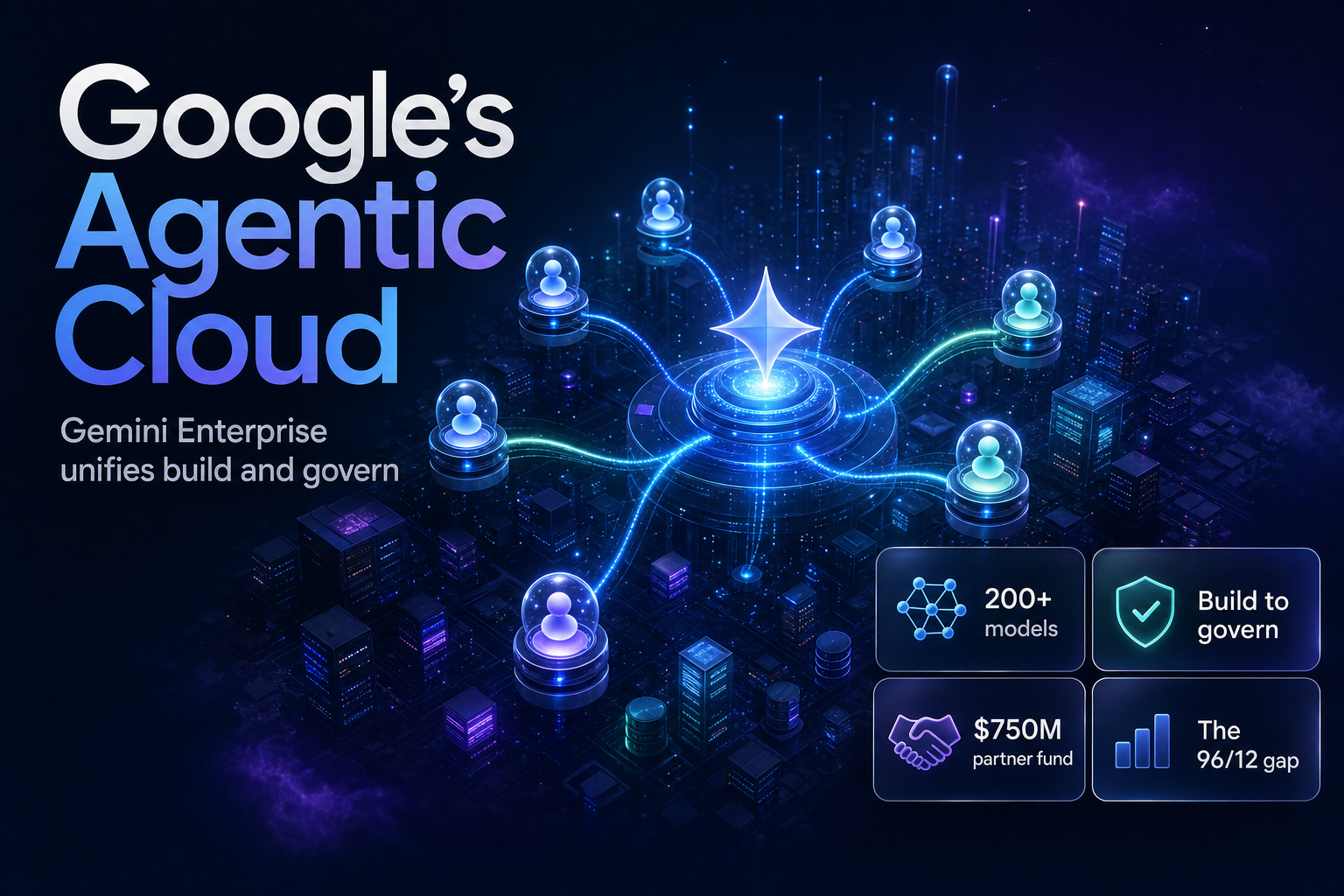
Google's Gemini Enterprise agent platform in 2026: build, govern, and the gap
At Google Cloud Next '26, Vertex AI became the Gemini Enterprise agent platform. With 96% of firms running AI agents but only 12% able to govern them, here is what it changes and how it compares to Microsoft and AWS.
Manu Shukla -
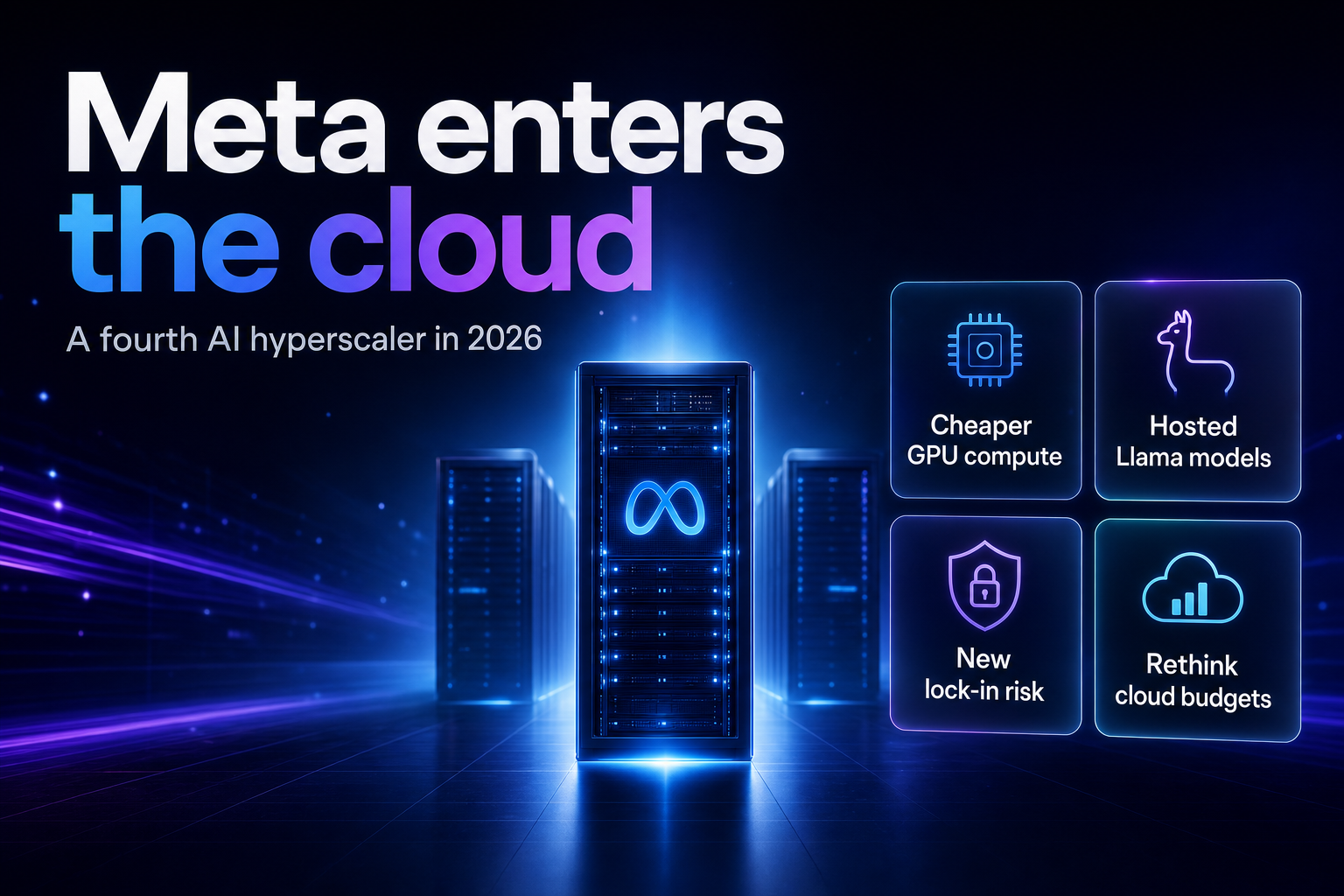
Meta entered the cloud market in 2026: what it means for your AI budget
Bloomberg reported on July 1, 2026 that Meta is building a cloud business to rent out AI compute and host Llama models. A fourth serious cloud vendor changes the math on price, negotiation, and lock-in for enterprise
Manu Shukla -
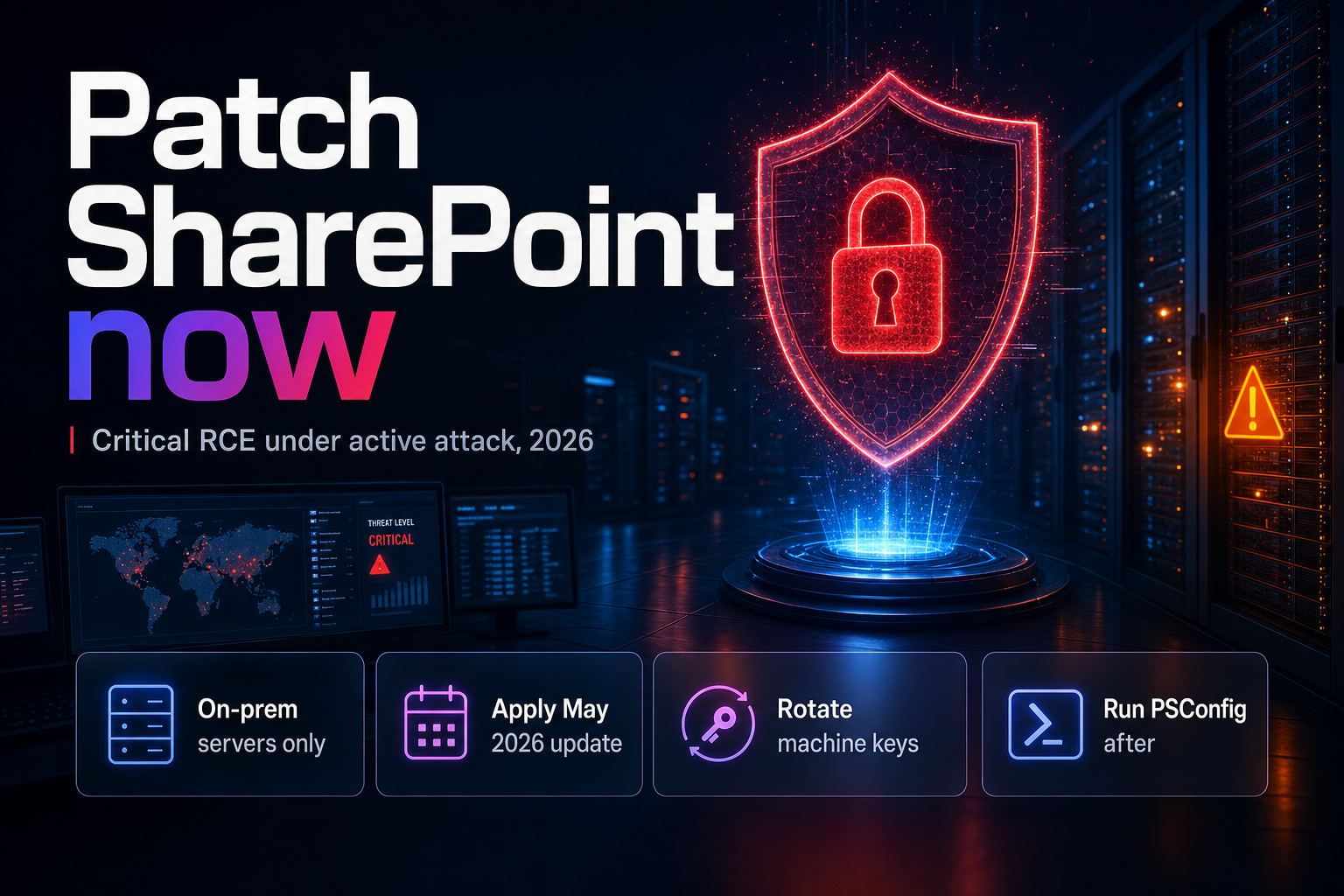
SharePoint RCE CVE-2026-45659: a 7-step patch-and-harden checklist for 2026
CISA added SharePoint RCE CVE-2026-45659 (CVSS 8.8) to its Known Exploited Vulnerabilities catalog with a July 4, 2026 federal deadline. Here is the defensive patch-and-harden checklist for on-premises SharePoint Server.
Manu Shukla -
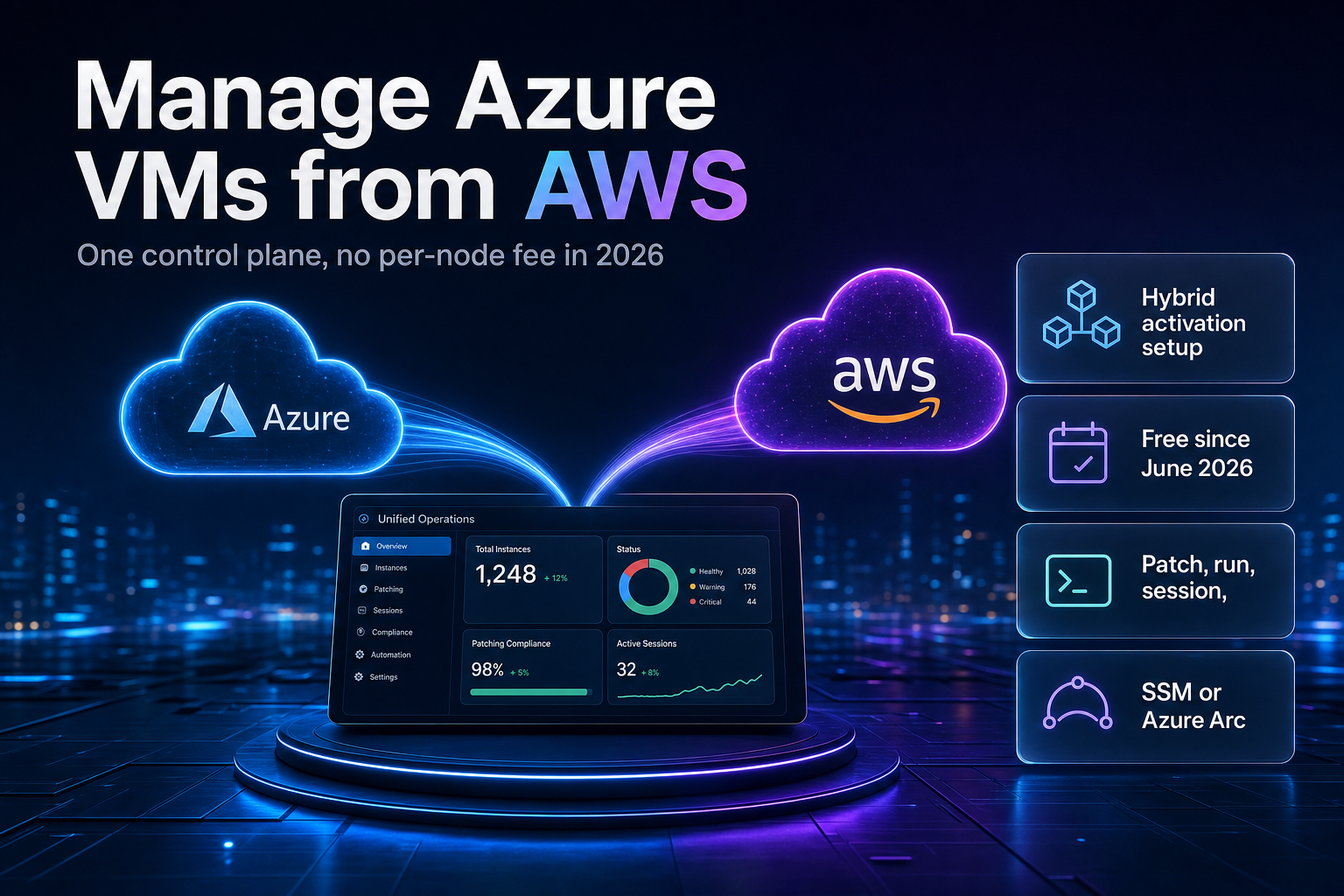
Manage Azure VMs from AWS in 2026: Systems Manager multicloud, now free
AWS removed its advanced-instances tier on June 30, 2026, so you can manage Azure VMs from AWS Systems Manager at no per-node charge. A setup walkthrough, an honest SSM versus Azure Arc comparison, and the App Manager
Manu Shukla -
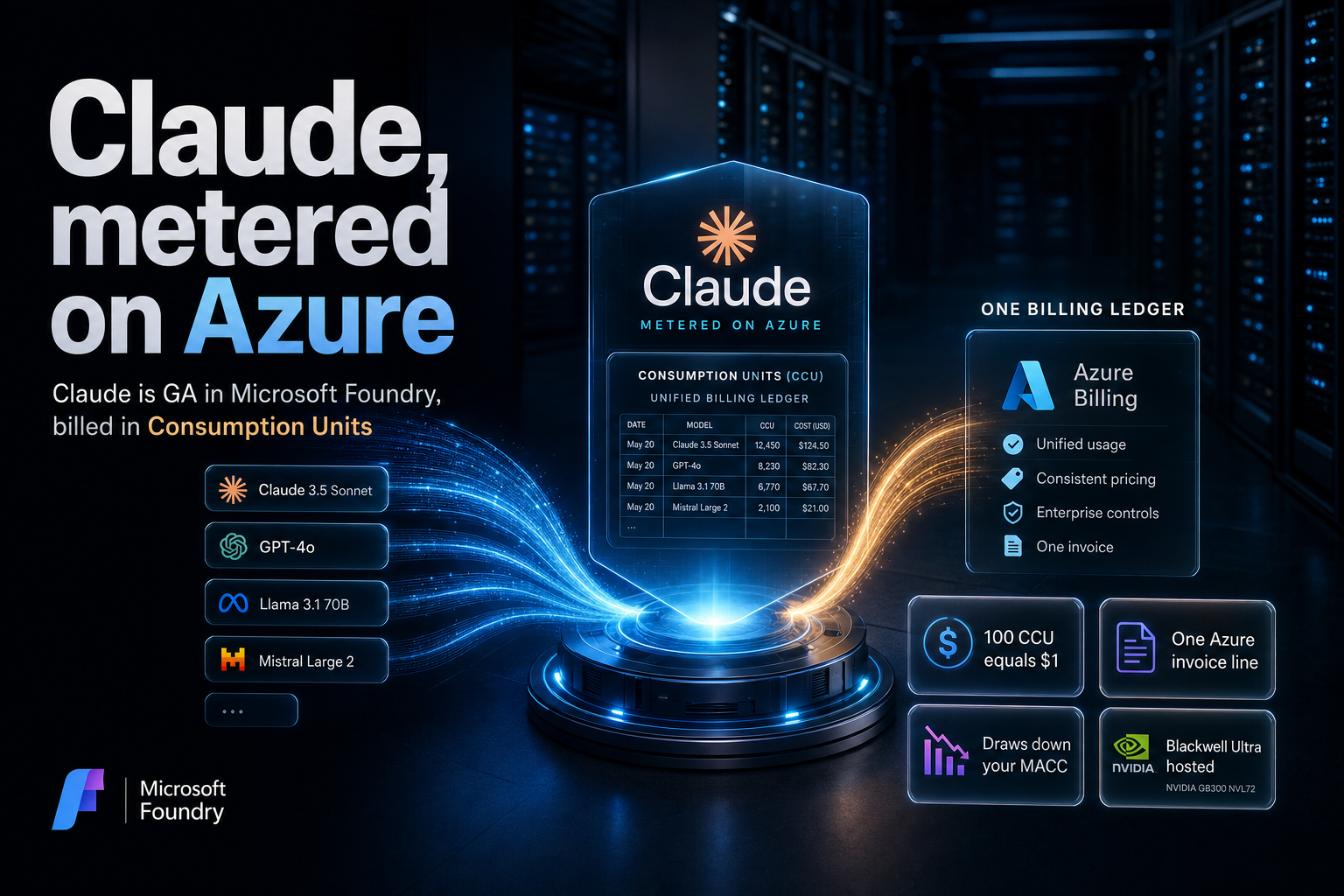
Claude hits GA on Microsoft Foundry: what Consumption Units mean for your Azure bill in 2026
Claude reached general availability in Microsoft Foundry in late June 2026, billed in Claude Consumption Units where 100 CCU equals $1. How CCU conversion works and what it changes for your Azure bill.
Manu Shukla -
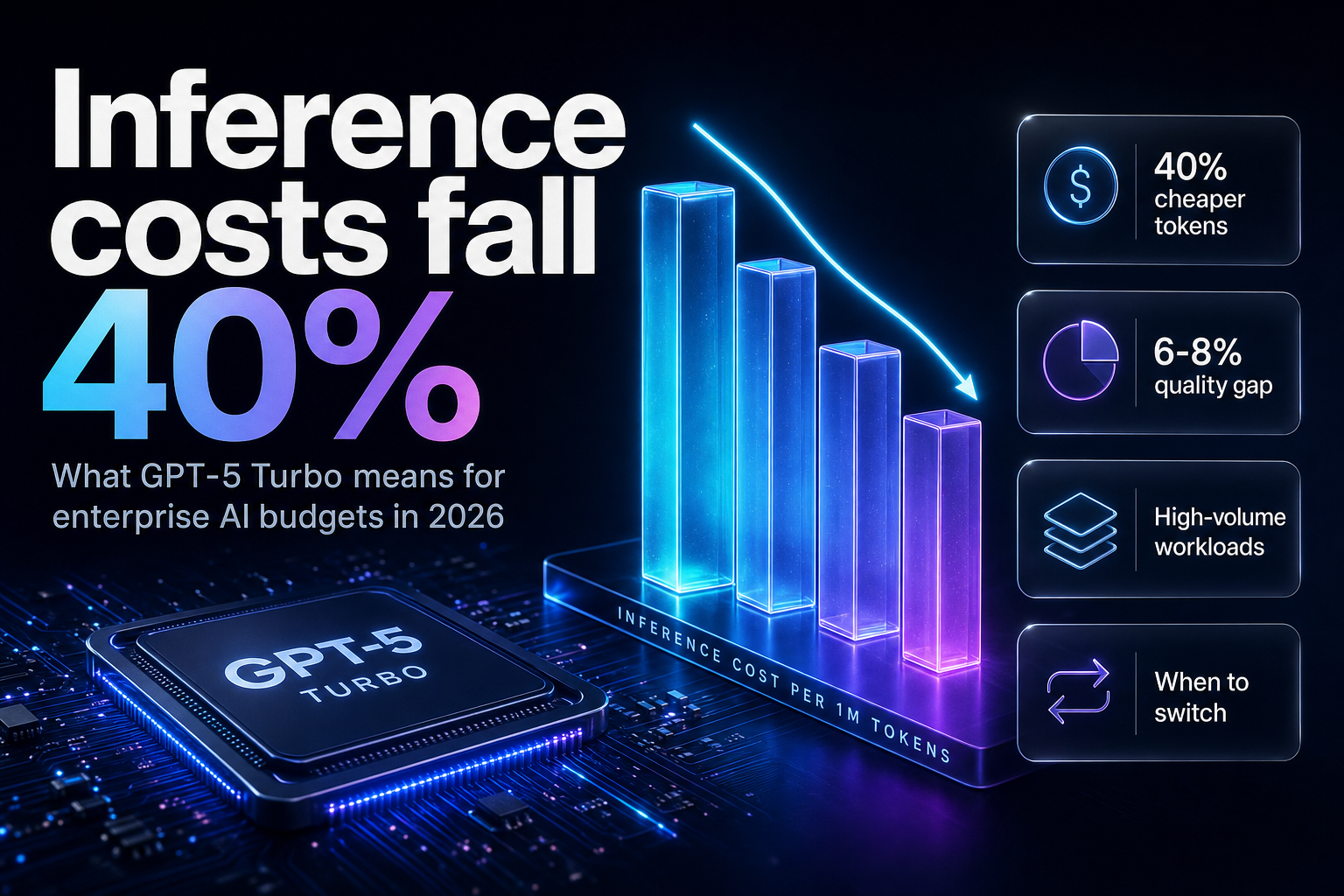
GPT-5.6's 3 tiers reset enterprise AI inference costs in 2026
OpenAI's GPT-5.6 (Sol, Terra, Luna) went public on July 9, 2026, with Luna at $1/$6 per million tokens. We compare the new tiers to Claude Sonnet 5 and Gemini, and the levers that cut inference bills 60 to 80 percent.
Manu Shukla -
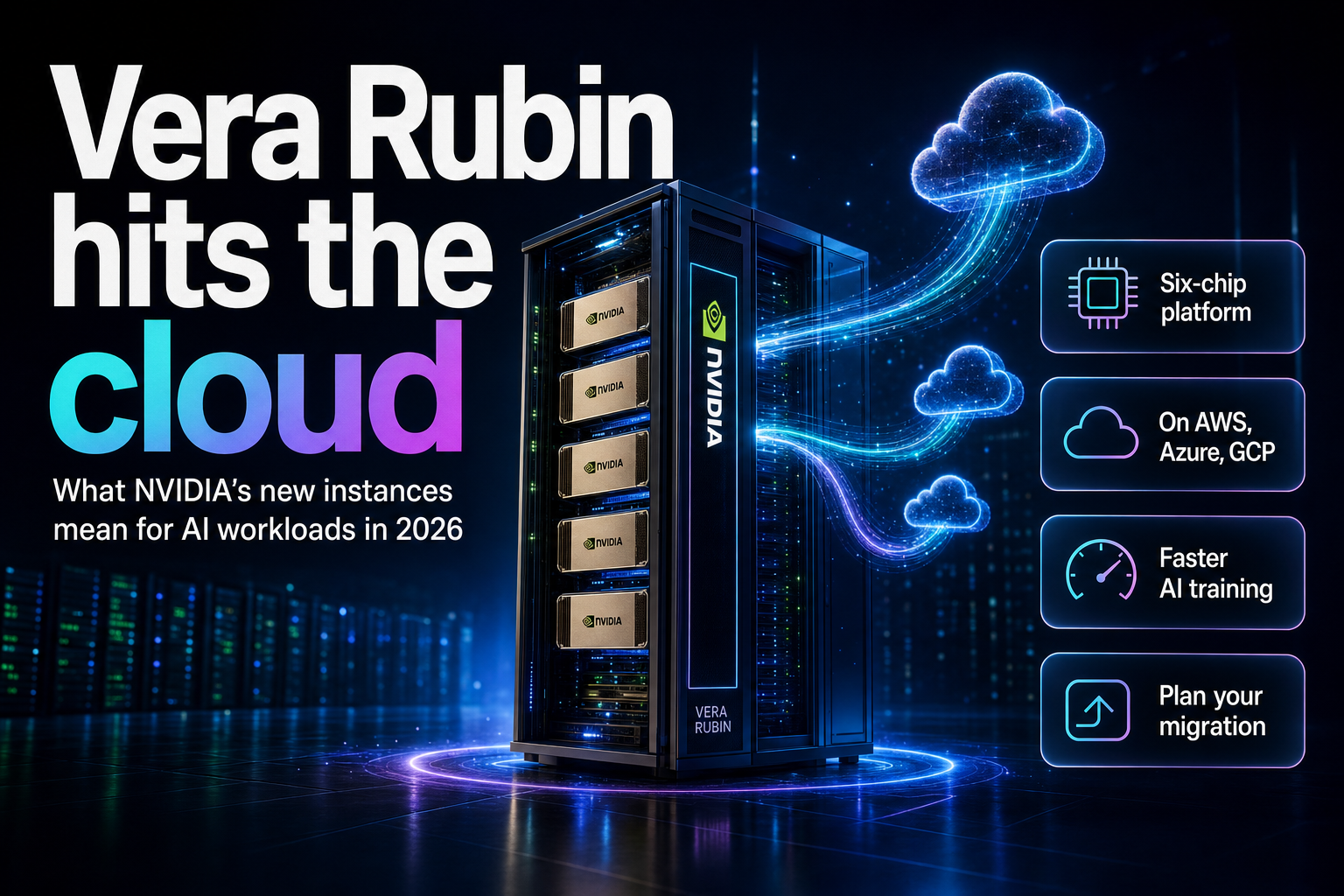
NVIDIA's Vera Rubin hits the cloud: what the new instances mean for AI workloads in 2026
NVIDIA's Vera Rubin platform entered full production on June 1, 2026 and ships to eight cloud partners this fall, promising 5x inference over Blackwell and up to 10x lower cost per token. Here is what infrastructure
Manu Shukla -
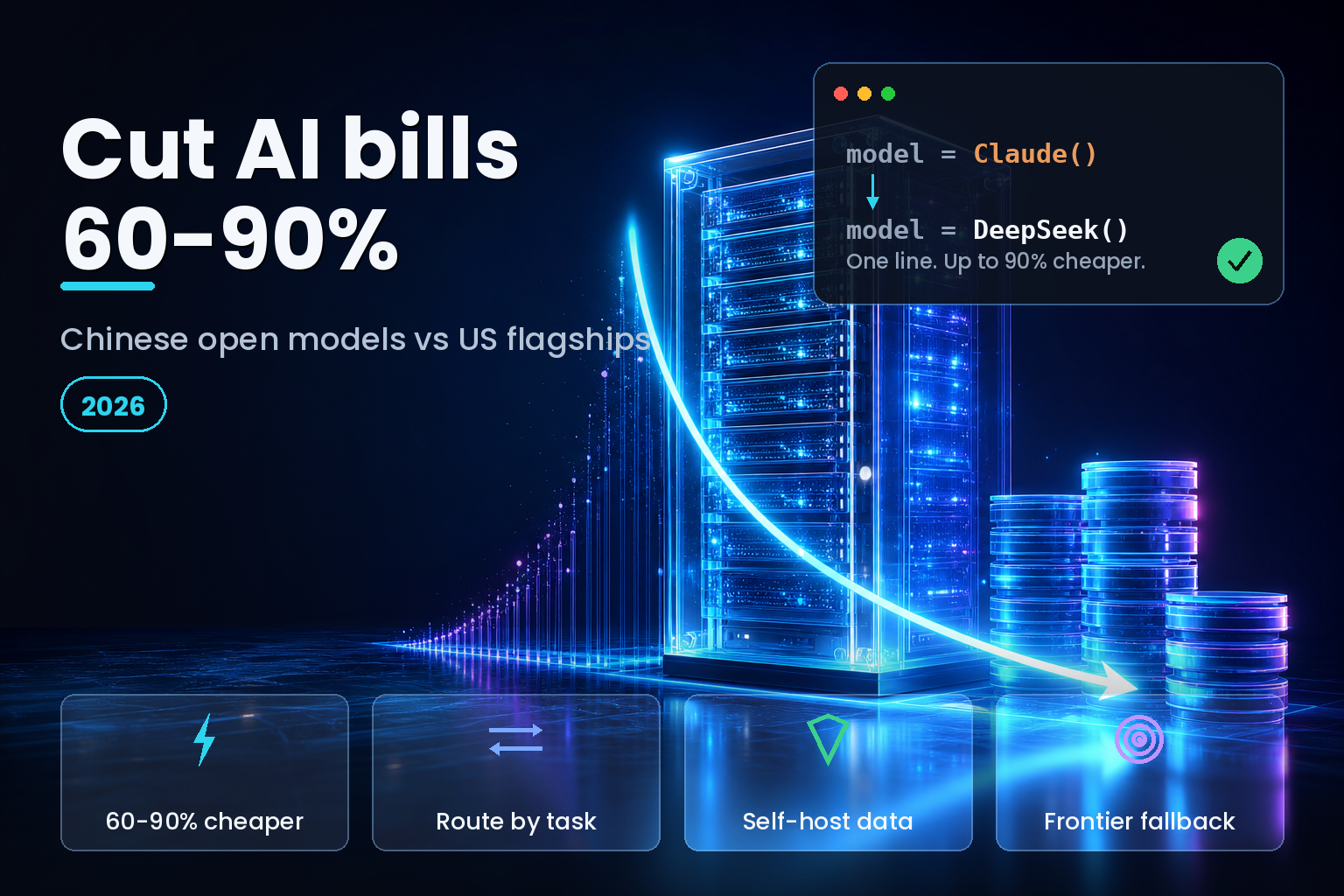
3 Chinese open models that cut enterprise AI bills 60-90% in 2026
US firms routed up to 46% of their OpenRouter tokens to Chinese open models in 2026 because they cost 60-90% less. Here is how DeepSeek, Qwen and GLM compare with OpenAI and Google on price, quality and risk.
Manu Shukla -
2026: AFM Cloud Pro vs Gemini frontier for your enterprise AI stack
Apple runs AFM 3 Cloud Pro on Nvidia Blackwell GPUs inside Google Cloud, refined by Gemini frontier models, while reportedly paying Google about $1 billion a year. What Apple's Google-Nvidia architecture means
Manu Shukla -
5 architecture decisions behind AFM 3 Cloud Pro on Nvidia GPUs (2026)
Apple extended Private Cloud Compute to Nvidia Blackwell GPUs in Google Cloud to run AFM 3 Cloud Pro, its ~1.2T-parameter server model. Here are 5 architecture decisions behind it, for private-cloud AI teams.
Manu Shukla -
AFM Cloud Pro on Nvidia GPUs: what it means for enterprise in 2026
Apple's AFM 3 Cloud Pro runs a frontier model on Nvidia GPUs in Google Cloud under Private Cloud Compute. What that architecture means for enterprise teams, and the observability gap it leaves.
Manu Shukla -
5 architecture decisions behind Apple Intelligence on Nvidia GPUs (2026)
At WWDC 2026 Apple extended Private Cloud Compute to Google Cloud on Nvidia Blackwell GPUs. Here are five architecture decisions CTOs should take from Apple's private-AI design.
Manu Shukla -
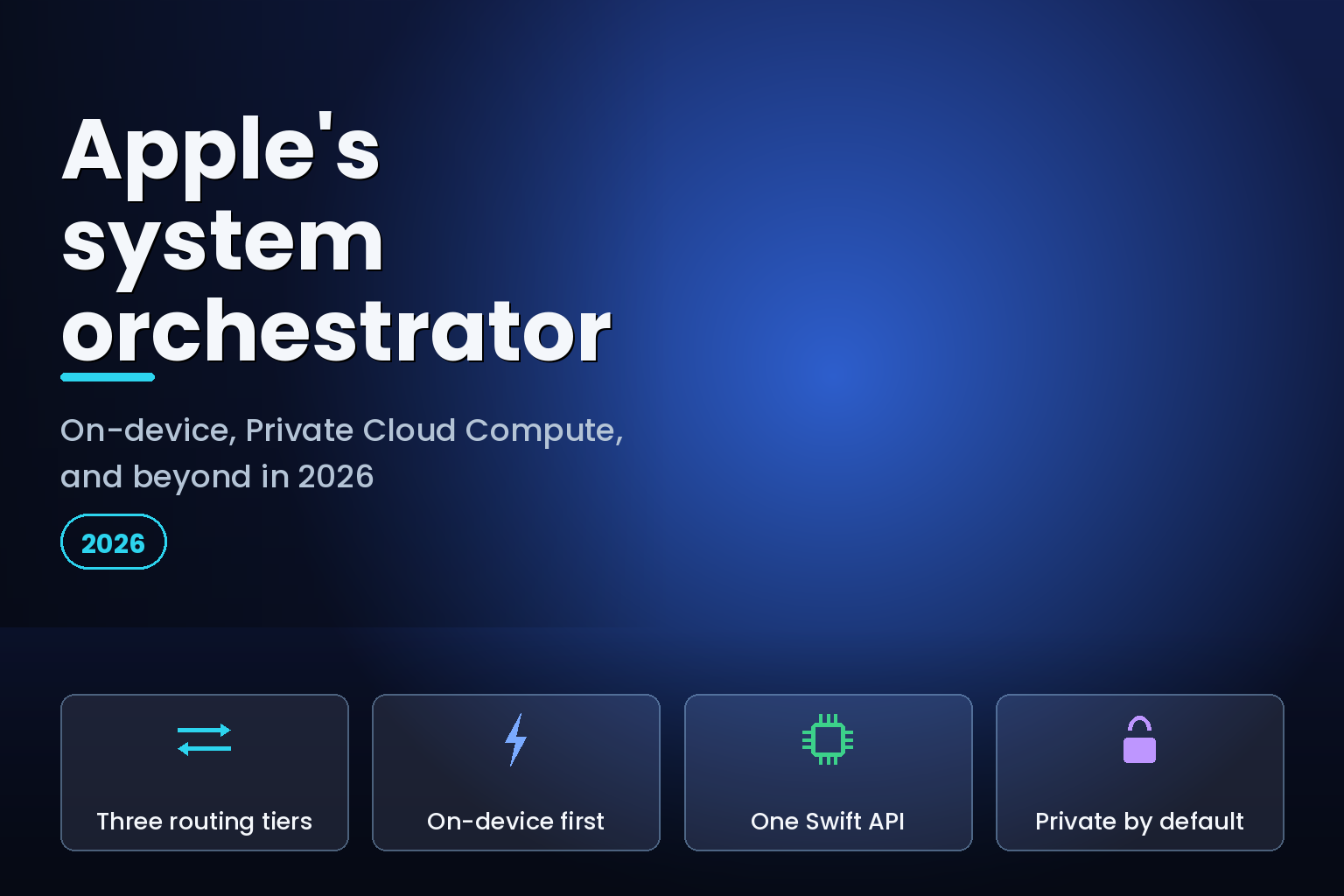
Apple's system orchestrator: how 3-tier AI routing works in 2026
At WWDC 2026 Apple detailed a system orchestrator that decides what runs on-device, what goes to Private Cloud Compute, and what reaches a cloud model. How the routing works, for engineers.
Manu Shukla -
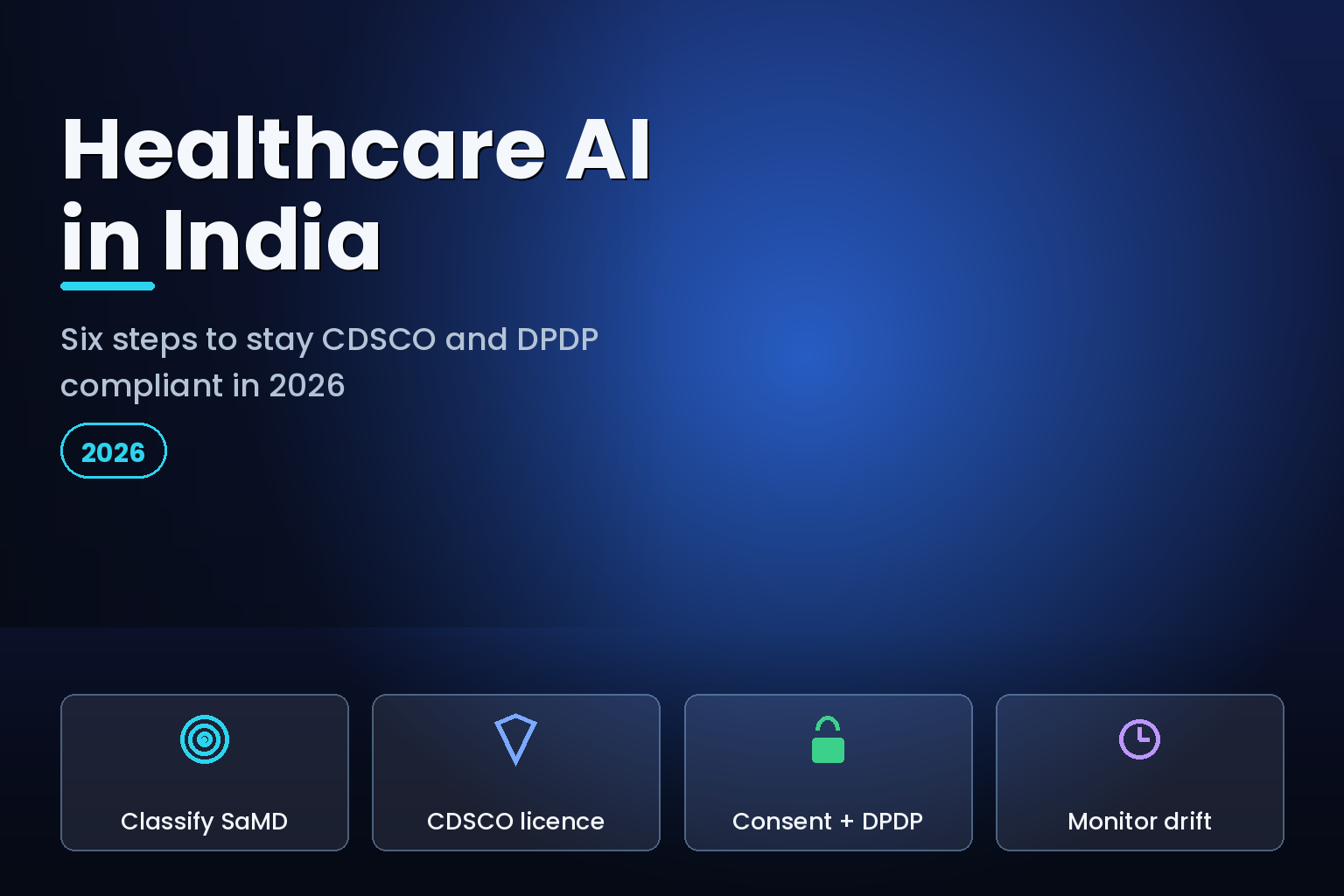
Healthcare AI in India 2026: 6 steps to stay CDSCO and DPDP compliant
India is moving healthcare AI from pilots to regulated deployment under CDSCO and DPDP. Here are six steps to classify, license, and run an AI medical-software product compliantly in 2026.
Manu Shukla -
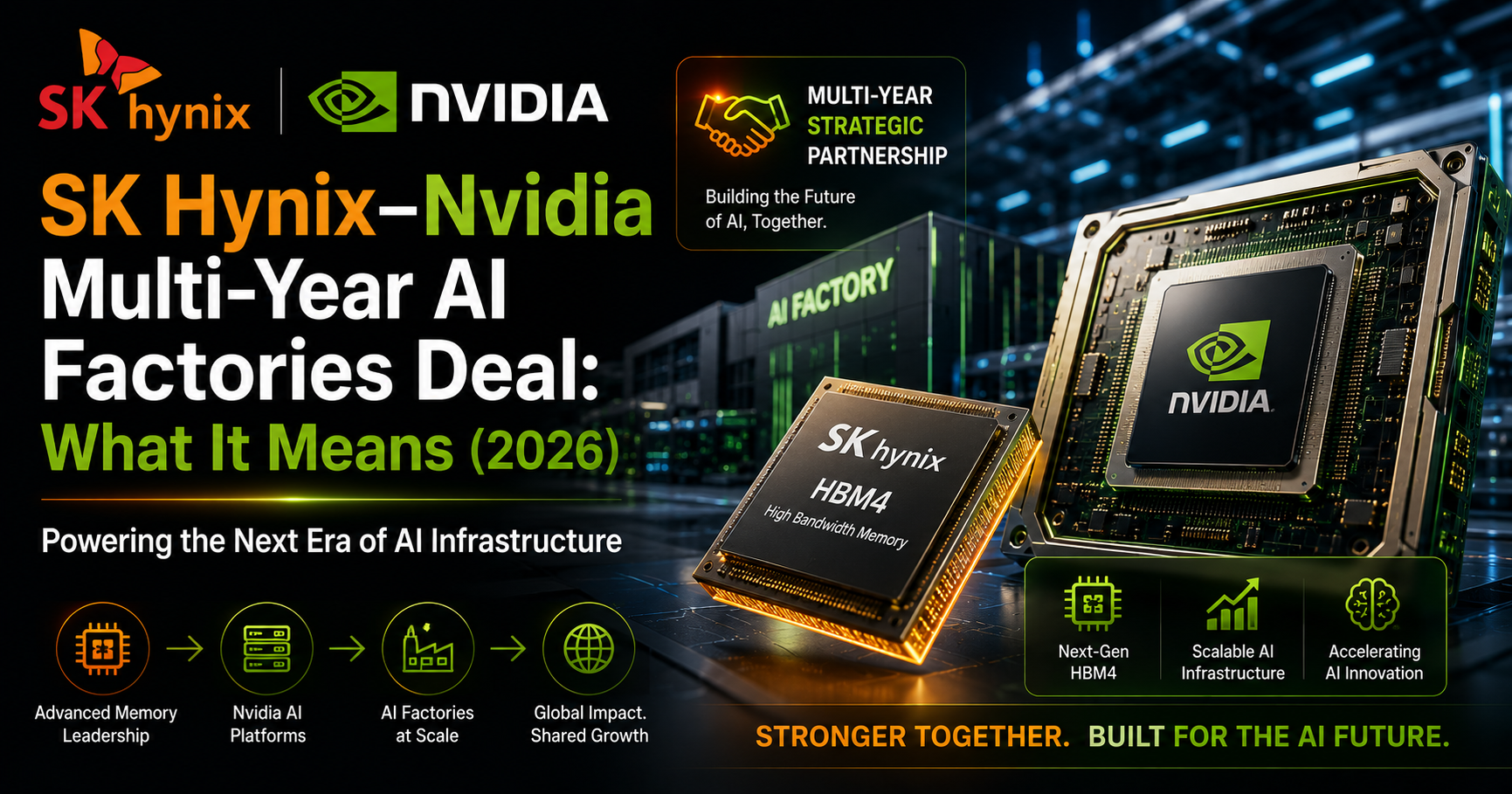
SK Hynix–Nvidia Multi-Year AI Factories Deal: What It Means (2026)
SK Hynix and Nvidia signed a multi-year technology partnership on June 7, 2026 to co-develop next-generation memory for Vera Rubin, Vera CPUs, RTX Spark PCs and Jetson Thor robotics.
Manu Shukla -
Nvidia's AI PC Push Bets on Unproven Demand Beyond Niche Users
Nvidia's RTX Spark superchip enters a skeptical AI PC market in 2026. What was announced, why demand is unproven, what enterprise buyers should know.
Manu Shukla