Coaching app development cost in India (2026 guide): custom vs white-label
What a coaching institute, tuition or test prep app costs in India in 2026: custom build ranges, white-label platform prices, running costs, store commission, GST and DPDP.

Founder of eCorpIT. Hands-on engineer leading senior-only delivery for AI apps, custom software, and cloud systems for global clients.
What a coaching institute, tuition or test prep app costs in India in 2026: custom build ranges, white-label platform prices, running costs, store commission, GST and DPDP.
OpenAI's dots are always-on AI agents inside ChatGPT. Here is what a dot can do, how to set one up, what it costs in India, and how to protect your data, money and accounts.
iOS 27.0.1 arrived on 28 September 2026 with three fixes, two of them for iPhone 18 Pro models. Here is what Apple fixed, what it left out, the security picture and who should install it now.
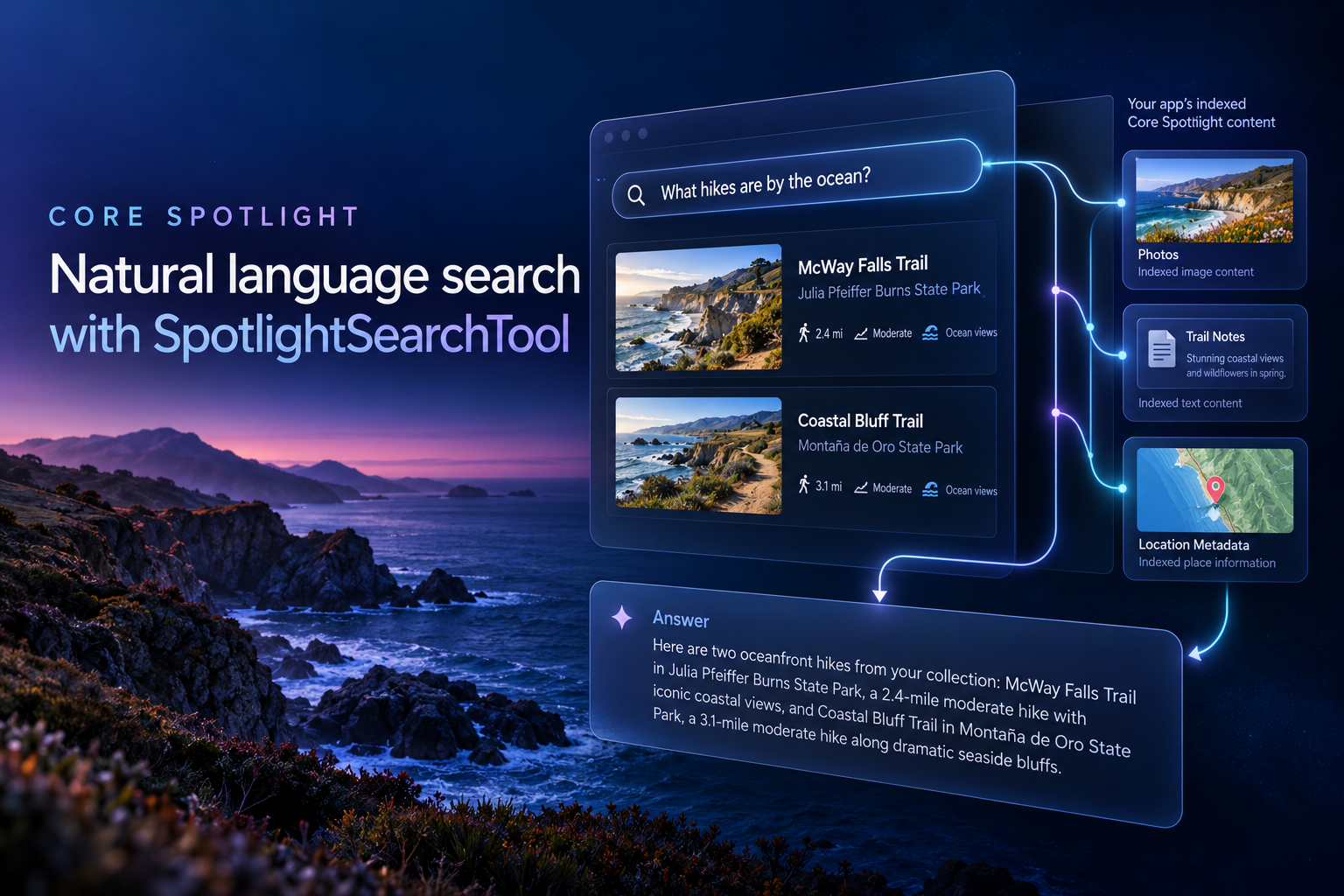
A close read of Apple's SpotlightSearchTool sample: indexing into Core Spotlight, fetch attributes, focused vs complete guides, streaming results, hydration and the production gaps.
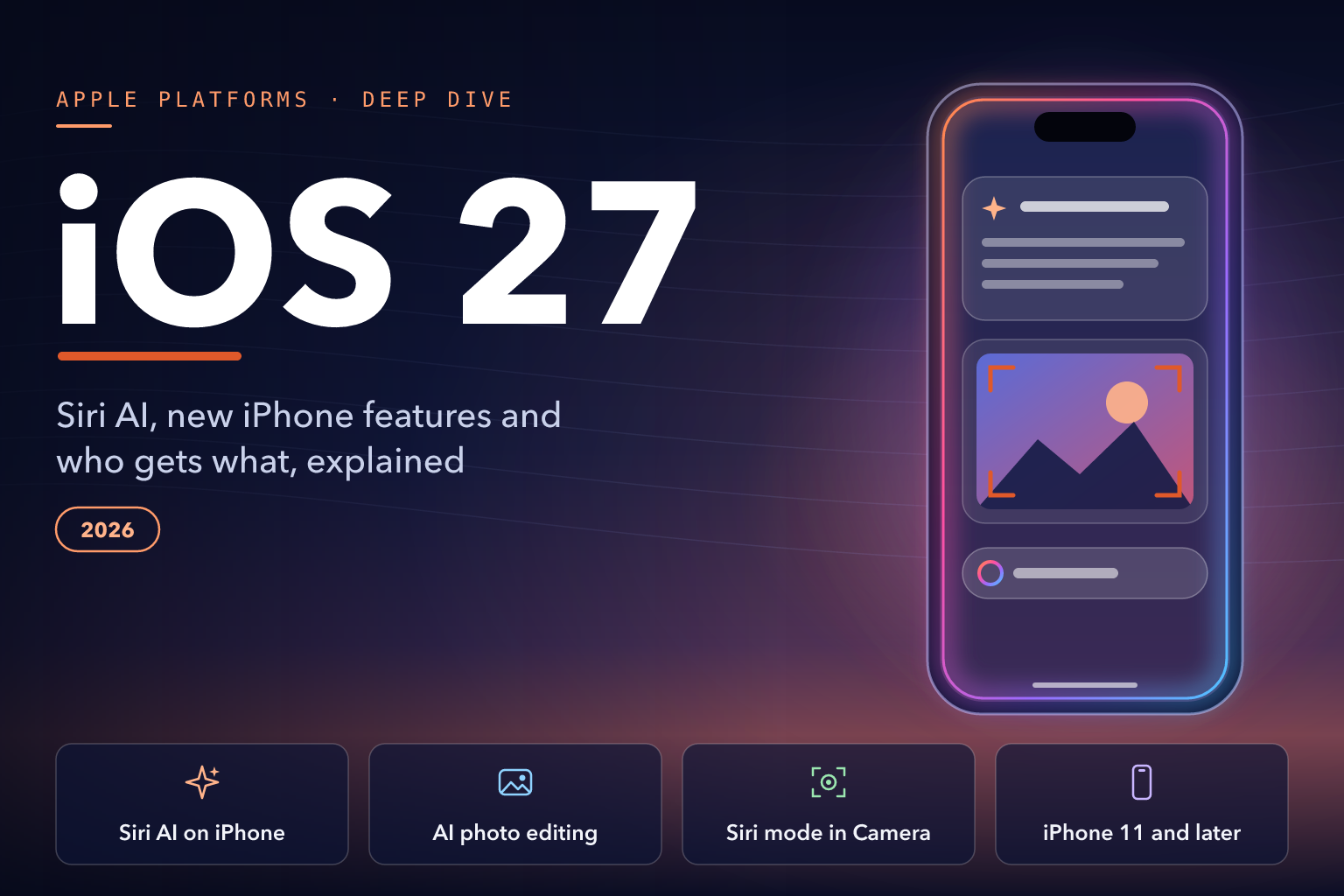
iOS 27 is out for iPhone 11 and later, with Siri AI and AI photo editing on iPhone 15 Pro and newer. Here is who gets which features, what India users miss and whether to update now.
iPadOS 27 brings Siri AI, Visual Intelligence with Apple Pencil and Siri in Notes to iPad. Here is which iPads get which features, what is delayed, and what developers and IT teams must change.
macOS 27 Golden Gate rolled out on 14 September 2026 with the Siri AI beta, Apple silicon-only support and major MDM changes. Here is what users, IT teams and developers need to know.
watchOS 27 brings Siri AI in beta, a dynamic app grid, a single tap gesture and new Workout Buddy insights. See which Apple Watch models get it, what it needs and what developers must change.
We published this as a rumour-stage planning guide. Apple has now announced the device as iPhone Duo, and several of the numbers everyone planned against were wrong. Here is the corrected plan.
The iPhone Duo brought a set of system UI changes with it: bars that run vertically, Split View on iPhone for the first time, and a Dynamic Island rotated onto the edge. Here is what each one does to your app.
The iPhone Duo ships on iOS 27.1, and that is also the release that opens Apple's arrangement APIs to third-party apps. Here is what the layout work actually involves, with Apple's own code.
iPhone Duo ships 23 October 2026 on iOS 27.1. Your app already runs on it. This is the ordered list of what to fix so it runs well, and what Apple says will be deprecated.
Nobody can quote iPhone Duo support from a feature list. The cost is set by four properties of your existing codebase. Here is how to find out which tier you are in before you commission anything.
Apple's iPhone Duo release omits RAM, resolution, refresh rate and battery capacity. Third-party spec sheets print numbers for all of them. Here is which figures have a source and which do not.
Google Play's API 36 submission floor took effect on 31 August 2026. Twelve days on, Google's own pages still describe the extension to 1 November 2026 in future tense. How to hire against it.
Mistral announced Leanstral 1.5's retirement in the same changelog entry that announced its release. Eighteen days out, the model card still badges it Public Preview and pricing files it under Labs.
The Echo Dot went from $49.99 to $79.99 overnight. Behind it: conventional DRAM contract prices roughly 3.4x to 3.8x their 4Q25 level, and two credible forecasts pointing opposite ways.
Azure auto-enrolled PostgreSQL 11, 12 and 13 servers in extended support on 1 August 2026 and bills from 1 September at $0.07 to $0.161 per vCore-hour. The upgrade escape hatch is narrower than it looks.
Cohere's ASR models are Apache 2.0 and free to try, but the only published production price is $3.75 per hour per instance. Here is the break-even, and three capability gaps in the docs.
The AWS CLI 2.36.30 reference lists four container-instance health check types. The ECS API Reference lists three. The drain threshold that triggers instance replacement is published in neither.
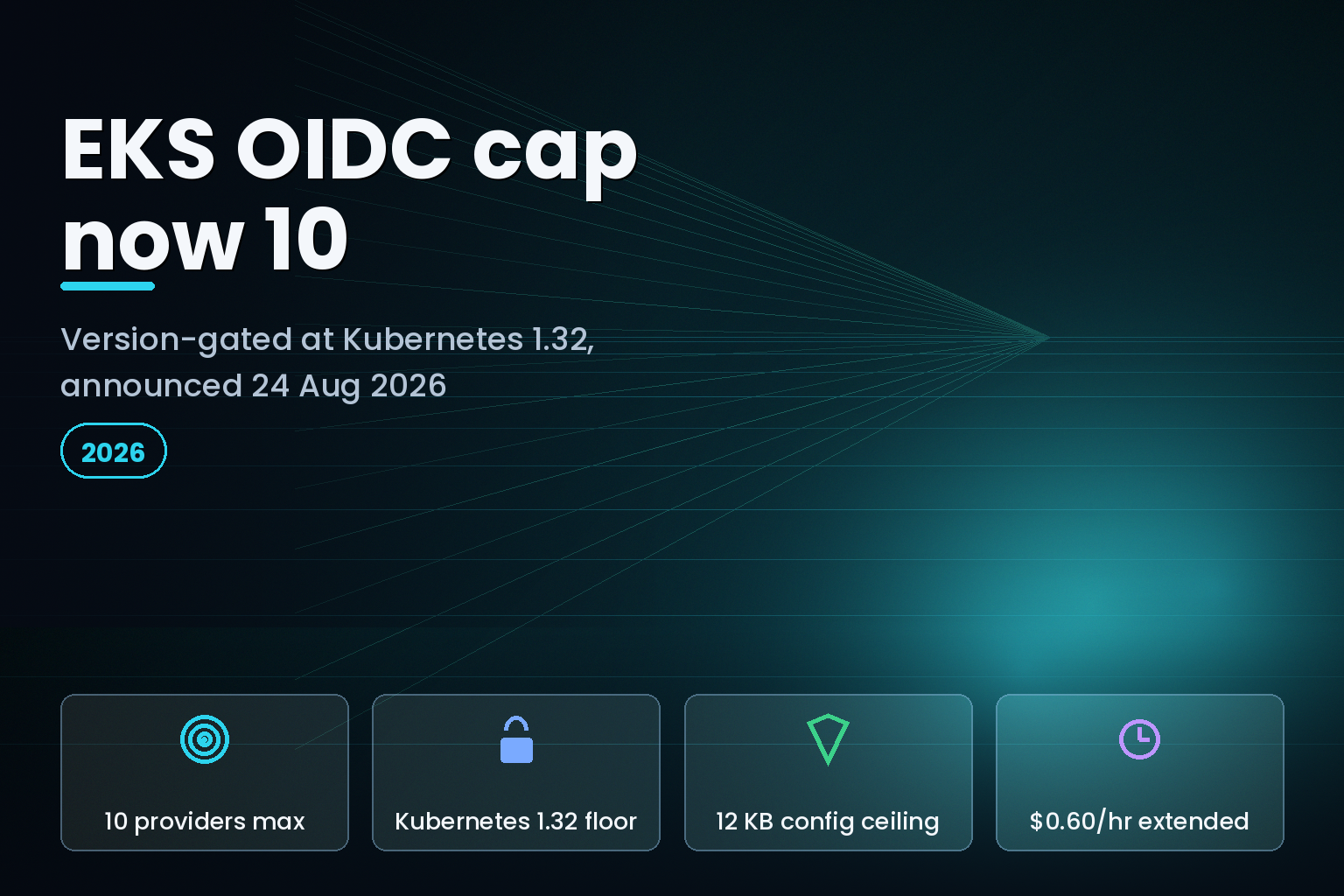
AWS announced 10 external OIDC identity providers per EKS cluster on 24 August 2026 at no extra charge. The user guide adds a Kubernetes 1.32 floor and a 12 KB ceiling the announcement never mentions.
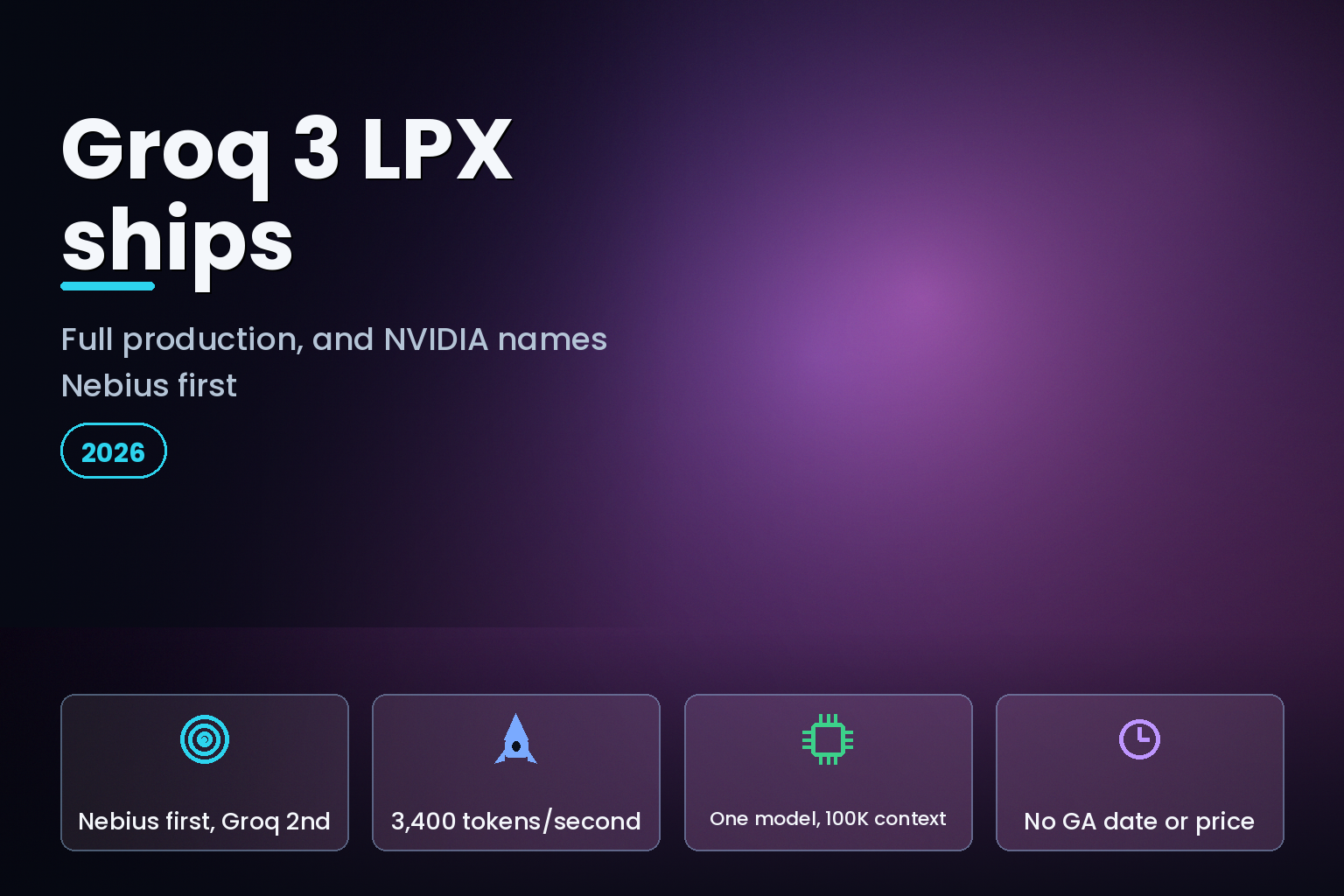
NVIDIA announced Groq 3 LPX in full production on 24 August 2026 and named Nebius the first cloud to adopt it. Groq's post the same day claims it is among the first. Neither published a date or a price.
Instinct's Terms of Service, revised 20 August 2026, take a perpetual, irrevocable licence over screen captures and keystrokes. Workspace data is carved out, so the same email can fall on both sides.
Lambda full IAM resource-based policies shipped on 25 August 2026 at no extra charge. The launch adds three APIs on a new 2026-07-09 path, keeps the old 20 KB ceiling, and leaves two AWS pages in conflict.
Amazon's 24 August 2026 post credits MySQL 8.4.11 with post-quantum TLS key exchange. The 8.4.11 release notes list no such feature, and RDS MySQL 8.4 is built on AWS-LC rather than OpenSSL 3.5.
The 24 August 2026 launch says Ray on SageMaker HyperPod needs a cluster and the KubeRay operator. The dashboards, IDE attach, Grafana panels and KV cache each need a separate add-on.
Customer managed keys for SageMaker MLflow arrived on 24 August 2026. They cover MLflow Apps in 16 AWS Regions and no MLflow Tracking Server, which is where most teams still are.
Sentence Transformers 6.0 published 18 August 2026 adds ColBERT-style late interaction. The gain is about one NDCG point on NanoBEIR. The cost is 311.5 MB where a dense index used 7.5 MB.
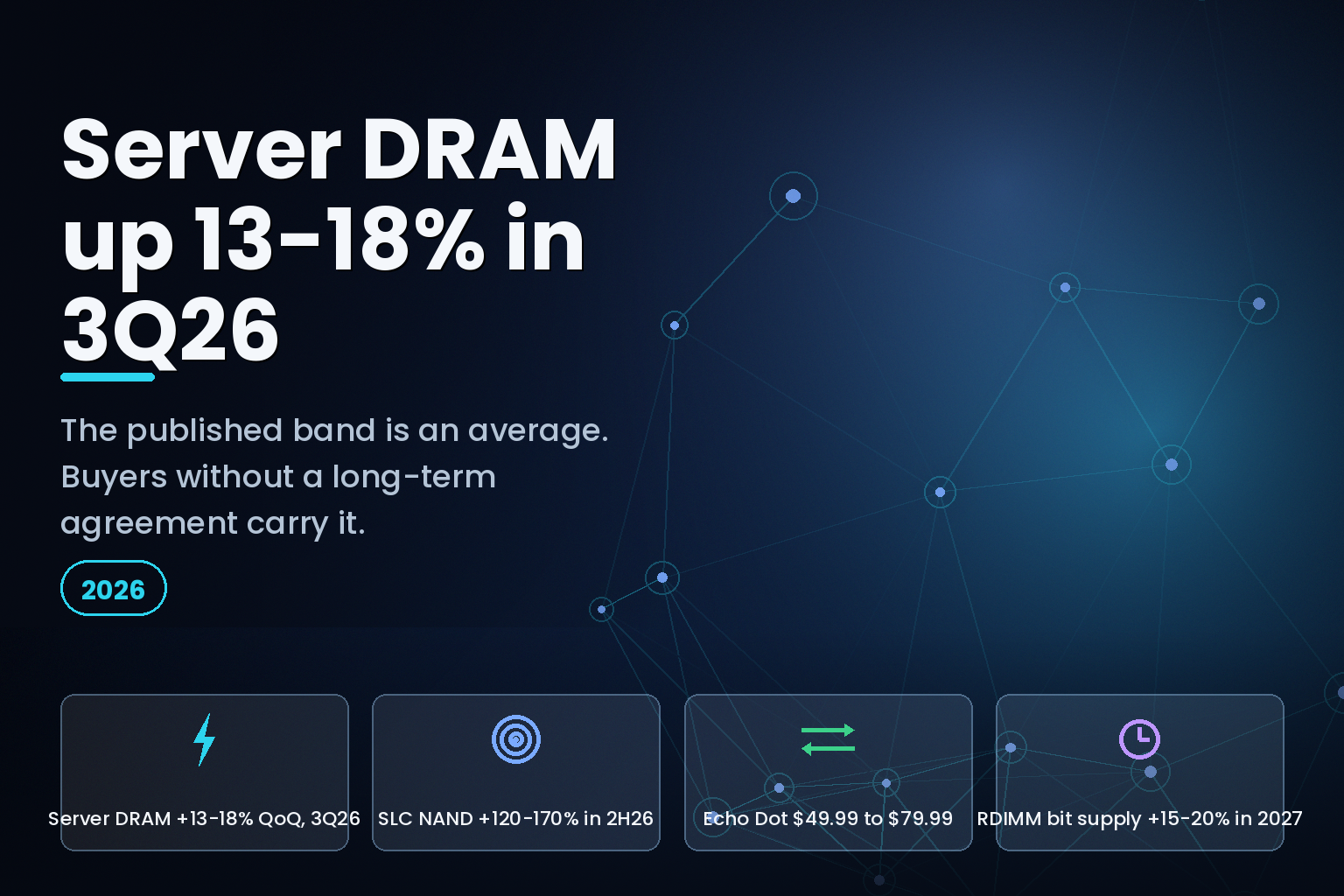
TrendForce forecasts server DRAM contract prices up 13-18% QoQ in 3Q26 and SLC NAND up 120-170% across 2H26. Amazon raised device prices by as much as 60%. The published averages hide who actually pays.
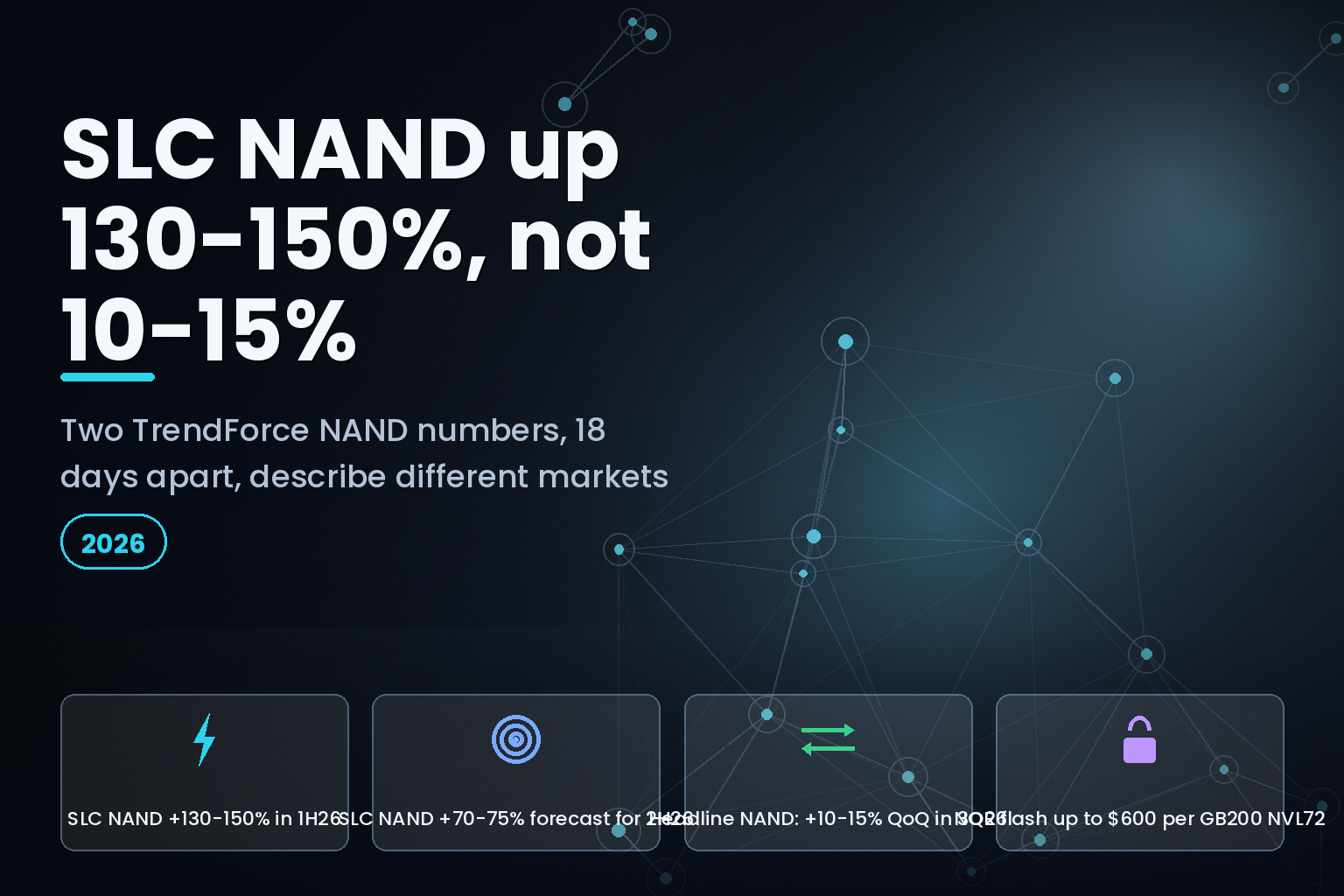
TrendForce published two NAND numbers 18 days apart in 2026: 10-15% QoQ for 3Q26, and 70-75% for SLC NAND across 2H26. Budget an industrial BOM off the first and you are wrong by five times.
Google's 24 August 2026 AAOS SDV post says adding a security-sensitive service means updating every VM in the mesh. The AOSP deployment page describes a default policy built to avoid that.
Microsoft's 24 August 2026 GA note says the eBPF host routing rollout respects existing connections. The enable page it links says the opposite and pins a Kubernetes version that died in July 2026.
Azure App Service published its Node 22 LTS retirement on 24 August 2026 and named Node 24 LTS as the target. The Node.js schedule puts Node 24 into maintenance 57 days later and ends it in April 2028.
Azure Application Gateway WAF can now return a custom status code and body instead of a bare 403. The announcement claims parity with Front Door, but only Front Door publishes the five permitted codes.
AWS ParallelCluster 3.16.0 shipped on 20 August 2026 and was announced on 24 August as an on-node diagnostics tool. Two deprecations and an NFS port change in the same release will stop clusters.
One Cerebras model page carries two different prices and two speeds for Gemma 4 31B. The GPT-OSS-120B page forks its free-tier limit 6x. Here is what each source says and which to plan against.
Anthropic's 19 August 2026 note retired the ce-user-management beta header, yet the Admin API reference still labels all 8 member and invite endpoints beta. Two header rules, two pagination styles, one API.
The skills-2025-10-02 header is gone, but a Claude Skill written for Claude Code will not run on the API: no network, no package installs, 5 GiB RAM, and no sync between the three surfaces.
Cloudflare says post-quantum key exchange for Email Security is enabled automatically for all customers, but only pre-delivery MX/Inline deployment puts Cloudflare in the SMTP chain at all.
Cloudflare's dashboard now stores your email, login method and last-used profile in the browser, up to 5 per device. The login, SSO and account-security docs it links to never mention the feature.
Cloudflare announced dashboard editing for Cloudflare Tunnel origin parameters on 18 August 2026. Its reference doc is dated 7 May, omits a fourth category, and locks two proxy parameters to config files.
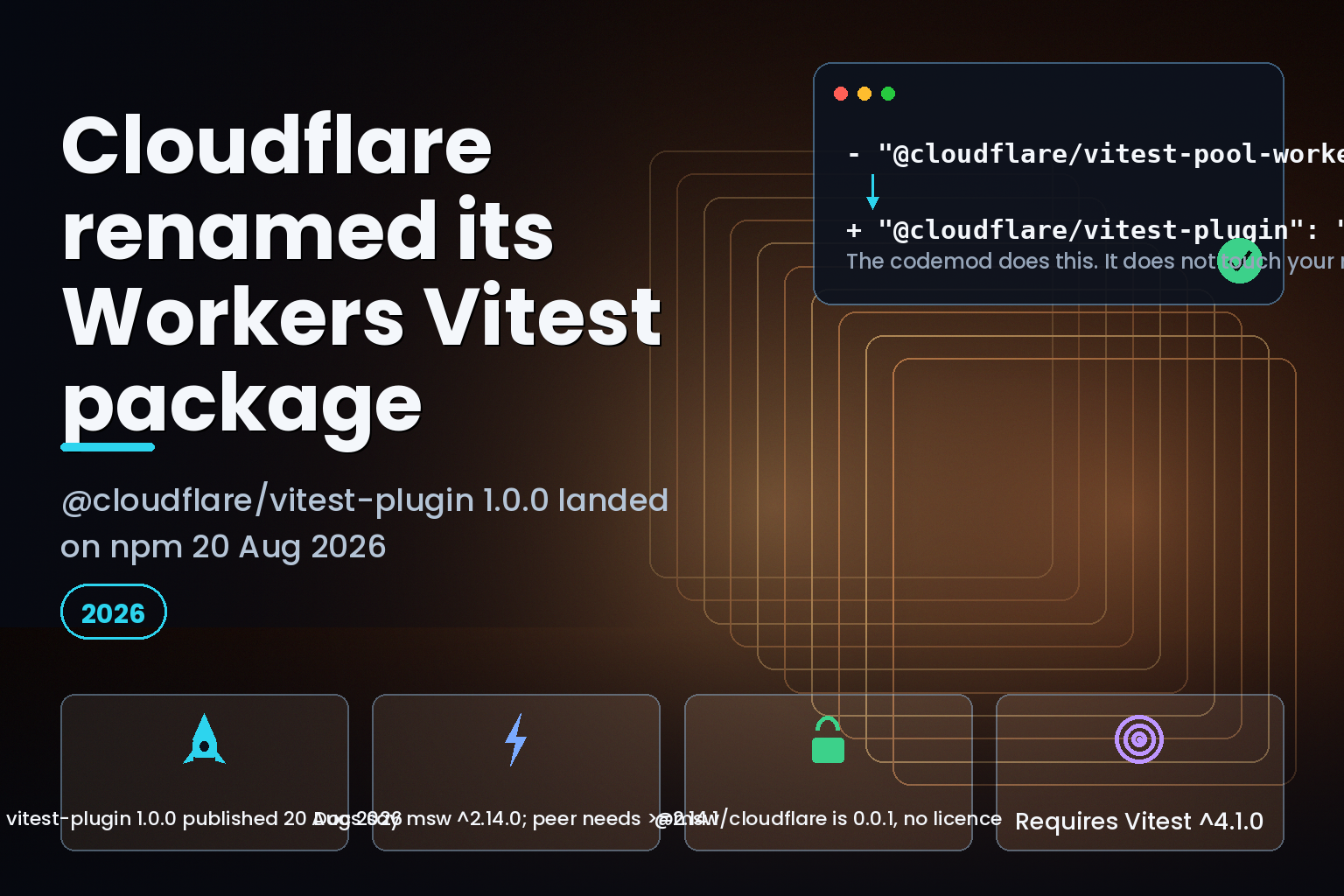
Cloudflare published @cloudflare/vitest-plugin 1.0.0 to npm on 20 August 2026 and called the API unchanged. Outbound request mocking now needs msw 2.14 and a 0.0.1 package with no licence file.
Cloudflare announced five WAF managed rules on 17 August 2026 for release on 24 August in Log mode. Its own override documentation contradicts that: ruleset and tag overrides apply to future rules.
Devin Desktop v3.8.20 lets you stop sharing terminal activity and local edits with third-party ACP agents, but both settings default to on and neither appears in the Agent Client Protocol documentation.
AWS announced GPT-5.6 Terra and Luna in AWS GovCloud (US) on 24 August 2026. Three other AWS pages, including the one the announcement links to, do not list either model in GovCloud at all.
Transparent backgrounds reached preview on gpt-image-2 on 20 August 2026. Image output bills at $30.00 per 1M tokens, yet the only published token table covers the older models.
Three hosted routes to DeepSeek-V4-Pro-0813 publish three different cache prices, and DeepInfra's cache-write charge of $1.625 to $2.60 per million tokens sits on the model page, not on the pricing page.
Mistral released Shieldstral 1.0 as Apache 2.0 open weights on 4 August 2026. On Mistral's own benchmark tables, GPT-OSS-Safeguard-20B leads 9 of 18 text rows to Shieldstral's 4.
OpenAI split Daybreak into Blue and Red tiers on 7 August 2026. Red bills 3.1x Blue's input rate, carries a long-context surcharge that can never fire, and is in no regional processing list.
OpenAI announced Ultrafast mode on 13 August 2026 as an API service tier up to 14x faster than Standard. Eleven days later the pricing page still publishes four tiers and no Ultrafast row.
SambaNova's Developer tier publishes 12,000 requests a day on DeepSeek-V3.1 and 48,000 on Llama-3.3-70B, then caps the account at 20M tokens a day in a note. Above 1,667 tokens a call, RPD stops mattering.
Stripe's npm beta dist-tag has pointed at 18.6.0-alpha.2 since 17 September 2025. It sits four majors behind 22.5.0, carries the alpha suffix Stripe reserves for private preview, and 18.6.0 never shipped.
Seven runtime rows across five languages lose Stripe SDK support at the September 2026 major release. All seven list their last compatible SDK as TBD, and three READMEs never mention it.
Together AI's 18 August 2026 DeepSWE study priced a DeepSeek V4 Pro rollout at $0.24 and GPT-5.6 Sol at $8.37. Three days later OpenAI cut Sol to $4 and $20. The routing advice rests on both numbers.
Always-on tracing went to beta on 21 August 2026 at $0.50 per 1M span units, a price only the changelog states. Trace retention stops at 3 days even where Observability Plus keeps 30 days of logs.
Vercel's 21 August 2026 CLI update added dns, domains and project subcommands and says all of them support JSON for scripts and agents. The reference docs say eight have no flag to skip confirmation.
Vercel's comments CLI landed on 20 August 2026 with a reference page stamped 2018-10-20, a permissions block that lists no permissions, and two sentences that disagree about confirmation in JSON mode.
Vercel's comments CLI landed on 20 August 2026 with a JSON mode aimed at agents. The reference page carries a last_updated date of 20 October 2018, truncates its permissions callout, and removes the delete confirmation
Vercel's 21 August 2026 changelog says every v0 connection mints a short-lived token with no long-lived secret to rotate. Its own Connect docs describe two connector types that store exactly that.
The WebView2 Runtime aligns to Edge's 2-week release cycle from version 153, not 152. Three Microsoft pages still name the wrong pivot version, and the Beta validation window drops from 21 days to 15.