On this page · 9 sections
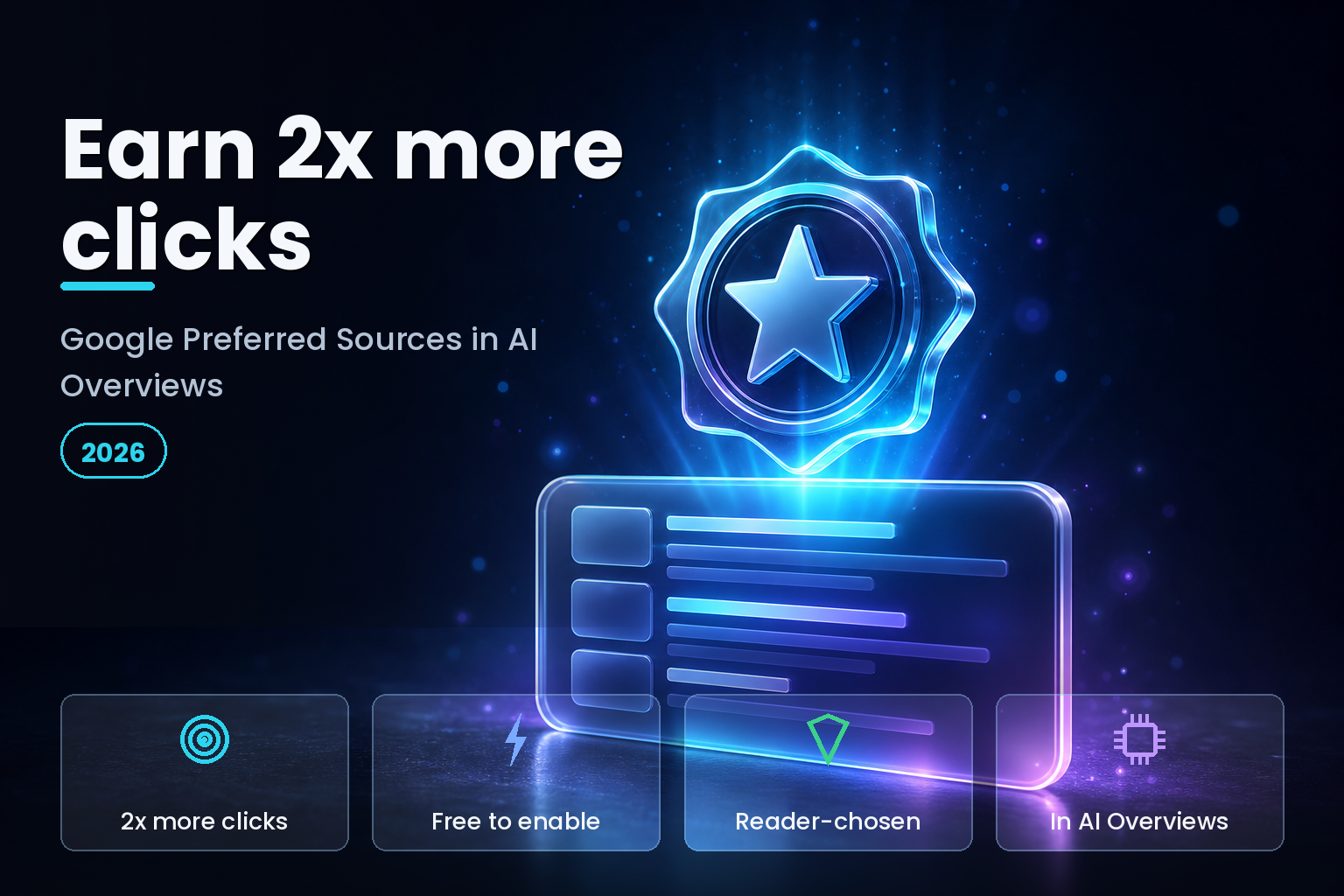
Summary. On May 27, 2026, Google extended Preferred Sources into AI Overviews and AI Mode, with the rollout beginning in June 2026. When a reader picks your site as a preferred source, a Google spokesperson says they click through to it "twice as often, on average." More than 345,000 sources had been selected by that May 27 announcement, up from about 90,000 in December 2025 and 200,000 on April 30, 2026. The feature costs ₹0 to enable and takes minutes. The catch: you cannot select your own site. Only your readers can, which turns audience trust into a direct AI-search visibility signal for marketers and content teams.
What Preferred Sources is
Preferred Sources is a reader-controlled setting in Google Search. A person marks the sites they trust at google.com/preferences/source, and Google then shows more of those sites' fresh articles, more prominently, in that person's results. It started inside Top Stories. Since the May 27, 2026 announcement, the same signal reaches into AI Overviews and AI Mode, the summary and conversational surfaces Google now shows across nearly 200 countries.
The mechanic is simple, and that is the point. You do not bid, pay or apply. A reader opts in, and your content gets a visibility lift for that reader whenever you publish something relevant. Google reports that chosen sites earn roughly double the click-through from those users.
Geertrui Laleman, Senior AI Search Optimization Specialist at Semrush, framed why this matters beyond a single click: "AI visibility is no longer only about being cited. It is about becoming a source people recognize, trust, and actively want to see."
Why it matters now
Preferred Sources moved from a niche news setting to a general AI-search signal in under a year. The timeline shows how fast the strategic calculus changed.
| Date | Milestone | Sources selected |
|---|---|---|
| June 2025 | Search Labs beta begins | Experimental |
| August 12, 2025 | Launch in the US and India (Top Stories) | Early |
| December 2025 | English expansion | ~90,000 |
| April 30, 2026 | All-language rollout | ~200,000 |
| May 27, 2026 | Extends into AI Overviews and AI Mode | 345,000+ |
Two facts change the game for content teams. First, the signal is now inside AI Overviews, so a loyal-reader base can lift you in the exact surface that is cannibalizing classic blue-link clicks. Second, eligibility is wide: Google says any site that publishes fresh content qualifies, not only news publishers. That puts the feature squarely in scope for B2B blogs, product sites and services businesses, not just media.
How to set it up
The setup is free and lives in Google's official Search Central guide. Work through it in order.
Check eligibility first. Only domain-level and subdomain-level sites appear in the source preferences tool. So https://www.example.com/ and https://code.example.com/ are eligible, but https://www.example.com/blog is not. Enter your site in the tool's search box; if it shows up, you are eligible.
Build your deeplink. Use the format google.com/preferences/source?q=your-domain. For example, google.com/preferences/source?q=example.com sends a reader straight to your site inside the preferences tool, pre-filled, so adding you is one tap rather than a hunt.
Add a button. Place an "Add us as a preferred source" button next to your other social calls to action. Google supplies ready-made button assets in 16 languages, including Hindi, or you can design your own.
Then launch it to the people who already trust you. A quiet footer link does little on its own; the signups come from asking loyal readers directly.
Where to put the button
Placement decides whether anyone actually clicks. Put the deeplink where your most loyal readers already are, not only in a footer nobody scrolls to.
| Placement | Why it works |
|---|---|
| Home page footer | Baseline visibility on every visit |
| Every blog post footer | Catches engaged readers at the end of an article |
| Newsletter and its confirmation page | Subscribers are your highest-trust audience |
| Author and about pages | Readers who reached them already value the source |
| Social posts and podcast episodes | Reaches your off-site loyal audience |
Treat the rollout as a campaign, not a checkbox. One 2026 earned-visibility playbook reports that publishers who run a dedicated launch, a subscriber email plus social and podcast mentions, see 8 to 15 times more signups in the first 30 days than those who only add a footer button. The work that earns the selection is the same work that earns loyalty: publish fresh, useful, trustworthy content on a steady cadence.
The honest limitation
Preferred Sources is earned, not bought, and that cuts both ways. You cannot enable it for your own site, and you cannot see, per reader, who has chosen you. Publishers have told Digiday that without granular reporting, it is hard to prove the feature's direct business impact. Treat it as one durable signal inside a broader plan, not a lever you can pull on demand. It rewards brands that already invest in an AI Overview content strategy and in the fundamentals of ranking in 2026; it does not replace them.
Measure what you can. Google Search Console now reports impressions inside AI Overviews and AI Mode, so watch that surface for lift after a launch. Pair Preferred Sources with the answer-first structure that wins citations, covered in our guide to AEO versus GEO versus SEO and the citation data behind AI Overviews.
India-specific considerations
India was one of the two launch markets on August 12, 2025, alongside the US, so Indian brands have had a head start most global teams did not. Google ships button assets in Hindi, which lowers the friction for Hindi-language and regional audiences. For an Indian services or D2C brand spending on content, the appeal is direct: the feature itself costs ₹0, and it converts an existing newsletter or loyal-reader base into AI-search visibility without new ad budget. The discipline is the same as any earned channel, publish consistently and ask your audience once, clearly.
FAQ
How eCorpIT can help
eCorpIT is a Gurugram-based, CMMI Level 5 technology and digital-marketing consultancy that helps brands stay visible as search shifts to AI. We set up Preferred Sources correctly, wire the deeplink and button into your highest-trust touchpoints, and connect it to an AEO-first content plan and Search Console reporting so you can see the lift. To build an AI-search visibility plan for your site, contact our team.
References
_Last updated: July 9, 2026._