On this page · 10 sections
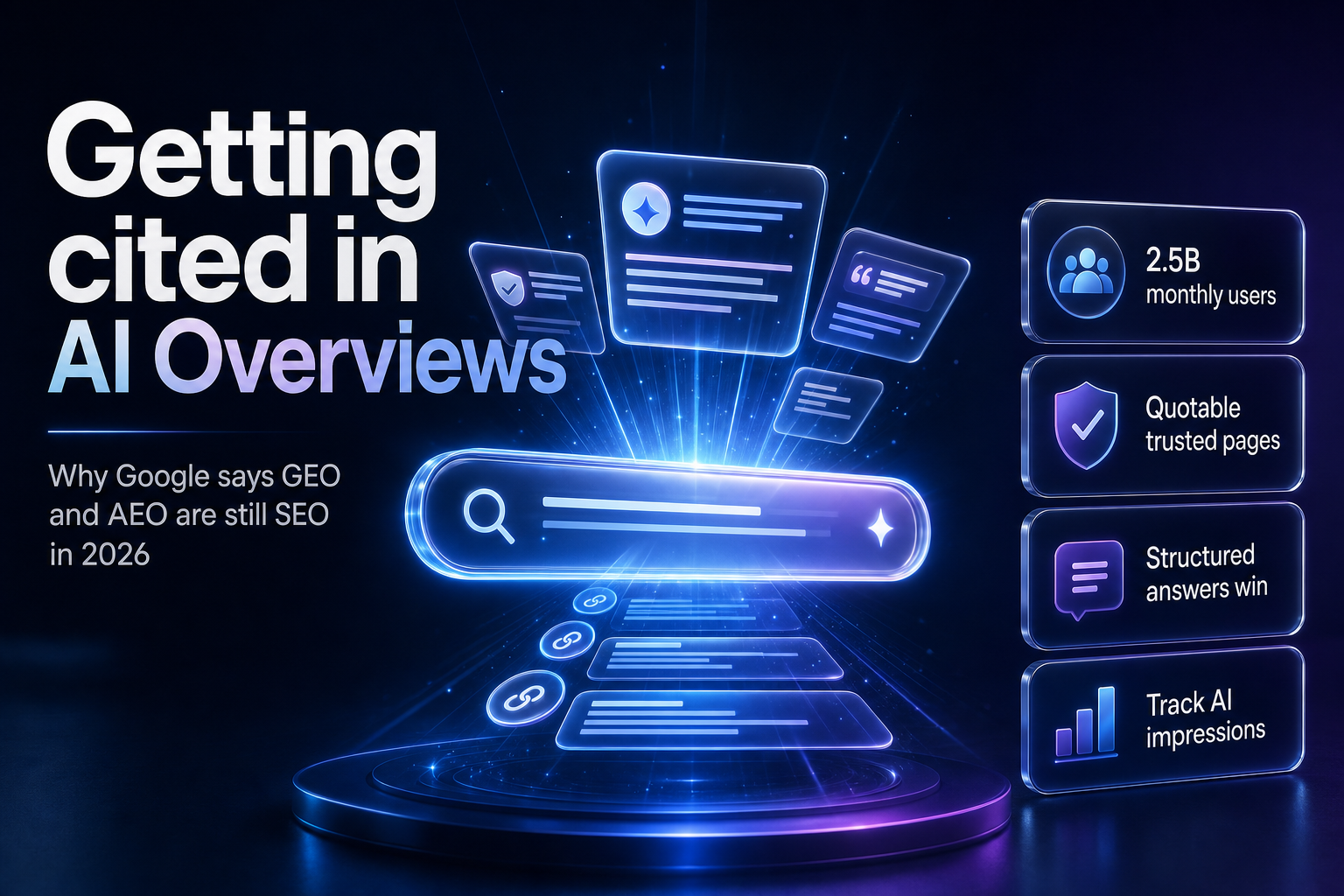
Summary. Google published its first official guide to generative-AI search on May 15, 2026, and its position is blunt: "optimizing for generative AI search is optimizing for the search experience, and thus still SEO." AI Overviews now reach more than 2.5 billion monthly users across 200-plus countries, and a Conductor study of 21.9 million searches found 25.11 percent triggered an AI Overview in the first quarter of 2026. So the surface is huge, but Google says the levers are the same crawlable, credible, useful pages that always ranked. The nuance, and where marketers should focus, is that independent research shows specific writing and markup choices reliably raise how often a page gets quoted. Here is what Google said, where the data adds detail, and exactly what to do.
What Google actually said
The guide, in Google Search Central, folds answer engine optimization (AEO) and generative engine optimization (GEO) into SEO rather than treating them as new disciplines. It also tells you what you do not need: no llms.txt or AI text files, no breaking content into small chunks for AI systems, and no AI-specific markup, markdown or rewriting. Google's own line is that unique, compelling, useful content will influence your presence in generative search more than any other tactic in the guide. Our AEO versus GEO versus SEO explainer covers the definitions; the 2026 update is that Google has now put its name to them being one thing.
Where independent data adds detail
Google tells you the foundation. Research from 2026 tells you the finish. These are correlations from citation studies, not Google statements, and they are consistent enough to act on.
| Element | Google's official position | Independent research |
|---|---|---|
| llms.txt / AI text files | Not needed | No proven citation lift |
| Chunking content for AI | Not needed | Self-contained 130 to 170 word passages get cited more |
| AI-specific schema or markup | Not needed | Structured data still shows ~2.5x citation rate |
| Unique, useful content | The main driver | Confirmed as the strongest long-term factor |
| Crawlability | Required, same as SEO | Required |
The apparent contradiction on schema is worth reading carefully. Google says you do not need special markup to appear in AI features, and separately, studies find pages with proper structured data are cited more. Both hold: schema is not a requirement or a shortcut, but it correlates with clearer, more machine-legible content, and Ahrefs notes the content still has to be worth quoting.
The tactics that actually earn citations
The pattern across 2026 citation research is that AI engines lift short, confident, evidence-backed passages. Write for that.
| Tactic | Evidence from 2026 studies | How to apply it |
|---|---|---|
| Answer-first capsule | AI Overviews extract 40 to 60 word answers near-verbatim | Open each section with a direct 40 to 60 word answer |
| Add statistics | Raised AI visibility by 22 percent | Use dated, specific numbers, not generic prose |
| Add quotations | Raised AI visibility by 37 percent | Include a named expert quote with a source |
| Semantic completeness | 8.5/10-plus scores are 4.2x more likely to be cited | Make each passage self-contained, 130 to 170 words |
| Definitive language | Cited text is 36.2 percent definitive versus 20.3 percent | Cut hedging; state the fact plainly |
| Structured data | Up to 40 percent more AI Overview appearances | Add Article and FAQ schema as a helper, not a fix |
Freshness matters too: one 2026 analysis found 65 percent of AI-bot hits target content published within the past year, so a dated last-updated stamp and genuine refreshes help. Our data on ranking versus AI-Overview citations goes deeper on the measurement.
Where the citations come from
Getting cited is partly about which domains AI engines trust. As of March 2026, Reddit is the most-cited domain across ChatGPT, AI Mode, Gemini, Perplexity and AI Overviews, with LinkedIn second and first for professional queries, and YouTube, Wikipedia and Forbes rounding out the top five. For a brand, the read is that owned content alone is not the whole game: presence and useful answers on high-trust community and professional platforms feed the same engines. Our query fan-out and topic-cluster guide covers the owned-content side.
Measure it
You no longer have to guess. Google Search Console expanded its AI performance reports, which show impressions and clicks inside AI Overviews and AI Mode, so you can see which pages already surface and which do not. Treat that report as the scoreboard for this work.
India-specific considerations
For Indian businesses, the good news is that this is cheaper insurance than chasing every algorithm change, because the same content quality serves classic and AI search at once. A GEO-ready content engagement in India typically runs ₹40,000 to ₹1,00,000 a month, far less than the traffic at risk when a quarter of searches now show an AI Overview. Focus that budget on answer-first structure and genuine expertise rather than on AI-specific gimmicks Google has said it ignores.
What to do this quarter
Rewrite your top pages to open each section with a 40 to 60 word answer, add dated statistics and a named quote to each, and cut hedging language. Keep passages self-contained at roughly 130 to 170 words, add Article and FAQ schema, and stamp a real last-updated date. Then watch the Search Console AI performance report to see which changes move citations, and double down on what does.
FAQ
How eCorpIT can help
eCorpIT is a Gurugram-based, CMMI Level 5 consultancy and a Google partner whose senior content and SEO teams build pages that rank in classic Search and get cited in AI Overviews. We restructure content answer-first, add evidence and schema, and track results in Search Console's AI reports. To make your site quotable by AI search, talk to our team.
References
- Google's new AI search guide calls AEO and GEO 'still SEO' - Search Engine Journal.
- Optimizing your website for generative AI features on Google Search - Google Search Central.
- A new resource for optimizing for generative AI in Google Search - Google Search Central Blog.
- Get cited in AI Overviews: 9 strategies - Maintouch.
- How to get cited in AI Overviews (2026 guide) - SmartClick.
- AI visibility 2026: the ultimate guide to getting cited in ChatGPT and Google AI Overviews - neuroflash.
_Last updated: July 10, 2026._