On this page · 13 sections
- What iOS 27 actually changed in Wallet
- Use case 1: turn plastic loyalty cards into Wallet passes
- Use case 2: membership and subscription passes
- Use case 3: event, launch, and pop-up passes
- Use case 4: digital gift cards and store credit
- Use case 5: order confirmations and delivery updates
- Use case 6: receipt bill-split for food and beverage D2C
- The India payments reality: plan for it, do not wait on it
- India-specific considerations
- How to get started this quarter
- FAQ
- How eCorpIT can help
- References
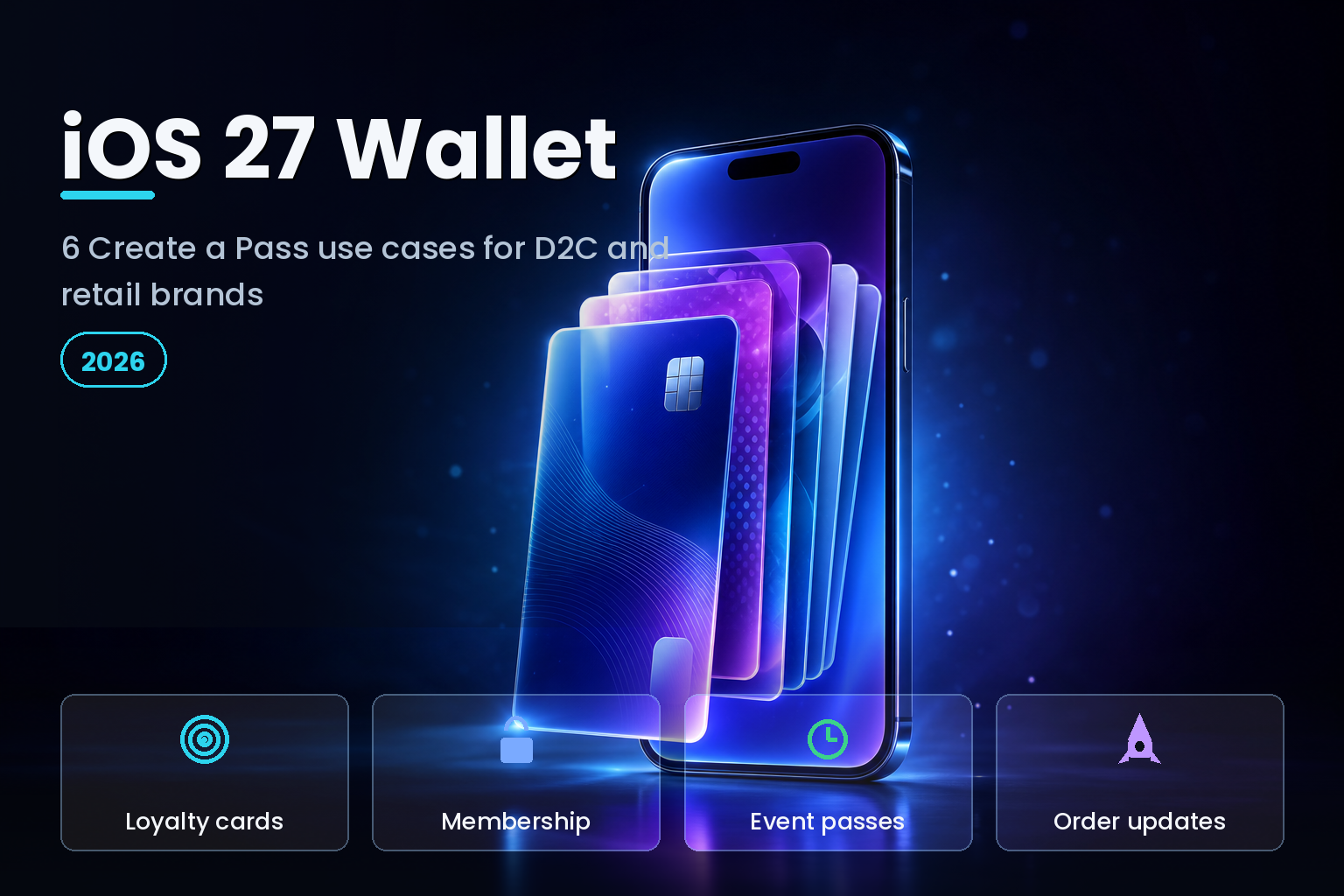
Summary. Apple announced a rebuilt Apple Wallet at WWDC 2026 on June 9, and iOS 27 adds six new Wallet features, led by Create a Pass and Apple Cash receipt bill-split. Create a Pass lets a customer scan any physical loyalty or membership card with the iPhone camera and save it to Wallet, while the bill-split feature uses Apple Intelligence to read a receipt, itemise it, and calculate each person's share of tax and tip. For a D2C or retail brand, the important split is geographic: passes built with Apple's PassKit framework, which needs a $99-per-year Apple Developer account, already work on Indian iPhones, but Apple Cash bill-split is United States-only, and Apple Pay itself is not live in India yet, with a launch reported for late 2026. Apple Pay already runs in more than 80 countries with over 11,000 bank and network partners, per the record of Jennifer Bailey, Apple's vice president of Apple Pay and Apple Wallet. This guide covers six use cases and, for each, whether an Indian brand can act on it today.
The honest headline for an Indian founder is this: the pass features are a real, usable channel now, and the payment features are a 2026 watch-item. Both deserve a place on your roadmap, but only one is shippable this quarter.
What iOS 27 actually changed in Wallet
Two changes matter for retail. The first is Create a Pass, a new option behind the plus button in the iOS 27 Wallet app. A customer can scan a physical pass with the camera and Visual Intelligence, or build one manually as a Standard, Membership, or Event pass, per 9to5Mac's rundown. In Siri mode, a user can point the camera at any card with a barcode, or even a screenshot of a digital one, and save it to Wallet. That removes the friction that kept casual loyalty cards out of Wallet for years.
The second is receipt bill-split. With iOS 27, users can split a bill using Apple Cash and Apple Intelligence from Messages, Wallet, or Visual Intelligence, as Apple's services announcement describes. "When users point their iPhone at a receipt using Siri mode, it can surface the relevant action to split a bill with Apple Cash and identify the items on the receipt," said Apple. MacRumors counts six new Wallet features in total, including an enhanced hotel key experience.
The catch for India is Apple Cash. It is a US-only service, so the automatic settle-up half of bill-split does not function on an Indian iPhone today. The receipt-reading intelligence is real; the payment rail behind it is not available locally.
| iOS 27 Wallet feature | What it does | Usable in India today? |
|---|---|---|
| Create a Pass (scan) | Imports a physical card into Wallet via camera | Yes |
| Create a Pass (manual) | Builds a Standard, Membership, or Event pass | Yes |
| PassKit brand passes | Lets brands issue loyalty, gift, and event passes | Yes |
| Receipt bill-split | Reads a receipt, splits tax and tip | No (needs Apple Cash, US-only) |
| Apple Cash settle-up | Sends the money after a split | No (US-only) |
| Enhanced hotel keys | Richer trip details and room keys | Limited, depends on partner |
Use case 1: turn plastic loyalty cards into Wallet passes
Most Indian D2C and retail loyalty still lives on plastic or inside a separate app that few customers open. Create a Pass changes the customer side: a shopper can scan your existing barcode loyalty card and keep it in Wallet, where it surfaces at the counter automatically. On the brand side, issuing a proper Store Card pass through PassKit gives you a cleaner card that updates points and tiers in real time. Apple's PassKit supports store cards for loyalty, discount, and points programmes, so the pass can carry a live balance rather than a static image. This is the single highest-value, lowest-friction Wallet play for an Indian brand, and it needs no payment rail at all.
Use case 2: membership and subscription passes
If you run a paid membership, a club, or a subscription tier, a Membership pass keeps it in the customer's Wallet next to their boarding passes and tickets. Create a Pass now lets customers add membership cards manually, and a brand-issued PassKit membership pass can show tier status, renewal dates, and member perks. For subscription D2C brands, a Wallet pass is a persistent, opt-in touchpoint that does not depend on push-notification permissions in a separate app. It also survives phone changes through iCloud, which reduces the churn that comes from customers losing track of a benefit they pay for.
Use case 3: event, launch, and pop-up passes
Event passes are a natural fit for D2C brands that run drops, sample sales, workshops, and pop-ups. An Event pass in Wallet carries the date, venue, and a scannable code, and it can send a push update if timings change. Because Create a Pass includes an Event option, even a small brand can produce passes without a ticketing platform, and a PassKit-issued event pass can be updated live for gate changes or capacity. For a launch in Delhi or Mumbai, a Wallet event pass gives you a clean check-in and a list of attendees who have opted into your brand, which is useful first-party data in a cookieless world. Our guide on building a first-party data strategy covers why that matters.
Use case 4: digital gift cards and store credit
Gift cards are a store-card pass type, and they can carry a balance that decrements as the customer spends. For an Indian D2C brand, a Wallet gift card is a way to run gifting and store-credit programmes without a plastic card or a separate app screen. The balance updates through PassKit, so a customer always sees the current value, and refunds issued as store credit can land straight in Wallet. This keeps a returned-order value inside your ecosystem instead of a bank refund that leaves. It works today because a gift-card pass is a pass, not a payment; the money movement still happens through your existing checkout.
Use case 5: order confirmations and delivery updates
A Wallet pass can be dynamic, and that makes it a strong post-purchase channel. Issue an order pass at checkout and update it through PassKit as the order is packed, shipped, and delivered, with a push notification on each change. For a D2C brand, this replaces a string of transactional emails that may never be opened with a single live pass the customer can glance at. It also gives a branded surface on the lock screen at the moment a delivery arrives. None of this needs Apple Pay, so it is available to Indian brands now, and it pairs well with the order-tracking most Shopify and custom stores already generate.
Use case 6: receipt bill-split for food and beverage D2C
For D2C cafes, cloud kitchens, and dine-in brands, receipt bill-split is the feature to watch, not yet the feature to build. In the United States, a group can scan your receipt, let Apple Intelligence itemise it, and settle up through Apple Cash. In India, the settle-up rail does not exist yet, so the practical step now is to make your receipts clean and machine-readable: clear line items, itemised tax, and a visible total. When Apple Pay reaches India, well-structured receipts will work better with any receipt-reading feature. Treat this as a design decision for your billing system today and a payments decision for later.
The India payments reality: plan for it, do not wait on it
Apple Pay is not available in India as of mid-2026. Reporting from Business Standard and The Paypers puts a launch by late 2026, pending regulatory approval and deals with card issuers including HDFC Bank, ICICI Bank, and Axis Bank, alongside Visa and Mastercard. The initial version is expected to be card-on-file contactless, without UPI at first; UPI integration would come later with the National Payments Corporation of India. Developers spotted English-India localisations for Apple Pay in the iOS 26.4 beta in February 2026, a sign that groundwork is under way.
The strategic read is simple. Build your Wallet pass programme now, because it works and it compounds. Prepare your billing and receipts for a payments launch you do not control the timing of. For a comparison of channel bets, see our note on retail and D2C technology priorities.
| PassKit pass type | Best for a D2C brand | Example |
|---|---|---|
| Store card | Loyalty, points, gift cards, store credit | A points card that updates live |
| Membership | Paid tiers, clubs, subscriptions | A member pass with renewal date |
| Event ticket | Drops, pop-ups, workshops | A launch pass with a scannable code |
| Coupon | Time-boxed offers | A festive-season discount pass |
| Generic | Anything with a balance or ID | A prepaid class pack |
India-specific considerations
Two India factors sit on top of the payments timeline. First, data protection: a Wallet pass programme collects opt-in customer identifiers and behaviour, so treat it as in-scope for the Digital Personal Data Protection Act, 2023 (DPDP), with a clear consent flow and a retention policy. Second, app-free adoption: because Create a Pass and PassKit let customers join a programme without downloading a brand app, they suit the Indian market, where app-install friction is high and storage on mid-range devices is tight. The pass becomes the loyalty programme, which is faster to adopt than yet another app. A brand that issues clean, updatable passes now will be ready to layer Apple Pay on top the moment it arrives.
How to get started this quarter
You do not need a large project to begin. Start with the pass type that maps to your strongest programme, because a focused first pass teaches your team the mechanics before you widen. For most retail and D2C brands, that is a Store Card loyalty pass. Set up an Apple Developer account, which costs $99 per year, then either build a PassKit integration or use a pass platform that handles signing and distribution so you are not managing certificates by hand.
Design the pass to update. A static image in Wallet is a missed opportunity; a live Store Card that shows current points, tier, and balance gives a customer a reason to open Wallet at your counter. Wire the pass to your existing loyalty or order data so changes push automatically, the same way an order pass moves from packed to shipped to delivered.
Then make it easy to add. Put an "Add to Apple Wallet" link in your post-purchase email, on your thank-you page, and on a receipt QR, and let customers who already hold a plastic card scan it in with Create a Pass. Because none of this depends on Apple Pay, an Indian brand can run the whole programme today. Layer a clean, itemised receipt design on top so that when Apple Pay and, later, UPI reach India, your billing is already structured for whatever payment features arrive. Keep a documented consent step for the customer data the programme collects, in line with the DPDP Act.
FAQ
How eCorpIT can help
eCorpIT is a Gurugram-based technology organisation with senior-led engineering teams that build commerce and loyalty systems for D2C and retail brands. We can design and ship your Apple Wallet pass programme with PassKit, wire live loyalty and order updates into your store, and prepare your billing for Apple Pay's India launch so you are ready on day one. If you want a Wallet roadmap that separates what works today from what waits on payments, contact us. You can also browse the eCorpIT blog or read about our team.
References
_Last updated: July 5, 2026._